
Why Textile Wastewater Is a Unique Compliance Challenge in the Philippines
Textile waste now accounts for roughly 267,711 tons per year in the Philippines, or about 1.6% of total municipal solid waste (per enviliance.com, 2025), and that figure captures only the solid stream. The liquid effluent from the same mills — dye baths, scouring rinses, indigo wash, abaca retting water — is largely unmeasured in national statistics, even though a single 100 m³/day dyeing line can discharge more pollutant load than 10,000 households. For a plant manager discharging to the Marilao or Meycauayan River under EMB-NCR scrutiny, the practical question is not whether you will be sampled, but which standard you will be measured against.
Three sub-sectors dominate Philippine textile wastewater generation. Denim and jeans wash houses produce heavy indigo, pumice fines, and high-volume alkaline rinses. Polyester dyeing lines generate high-temperature (60–90 °C) disperse-dye effluent loaded with leveling agents and carriers. Abaca and natural-fiber finishing mills add pectin-rich, high-BOD retting water with persistent color. Synthetic fibers — polyester and nylon — are non-biodegradable and shed microplastics, which means dye-house wastewater is structurally harder to treat than the legacy cotton streams that older reference data was built on (enviliance.com, 2025).
The regulatory gap makes the problem sharper. RA 9003 (Ecological Solid Waste Management Act) and RA 11898 (Extended Producer Responsibility Act of 2022) cover solid waste and plastic packaging, not liquid textile effluent. There is still no national liquid-effluent rule specific to textiles, so DENR DAO 1990-36 remains the default discharge standard in 2026. The December 2025 Quezon City Textile Sustainability and Circularity Ordinance is the first LGU-level signal that effluent rules may tighten in 2026–2027, but for now every plant is judged against the 1990 effluent numbers (enviliance.com, 2025).
Typical Influent Characteristics for Philippine Textile Mills
Designing a treatment train against generic global textile data is the most common reason Philippine ETPs under-perform. The table below reflects typical ranges for Philippine dyeing, finishing, and denim wash houses as of 2026; treat each cell as a starting point for jar testing, not a contract value.
| Parameter | Typical Range (Philippine dyeing/finishing) | Notes |
|---|---|---|
| BOD₅ | 800–2,000 mg/L | Higher in sizing/de-sizing streams |
| COD | 1,500–5,000 mg/L | Reactive dye baths can exceed 6,000 mg/L |
| TSS | 500–1,500 mg/L | Denim wash adds pumice fines |
| Color | 1,000–5,000 Pt-Co | Indigo can read 8,000+ Pt-Co at wash-out |
| pH | 8–11 | Alkaline scouring and indigo wash |
| Temperature | 30–60 °C | Polyester dyeing up to 90 °C |
| Sulfide | 0.5–10 mg/L | Sulfur dyes; oxidize before biological stage |
| Cr / Cu / Zn | 0.5–5 mg/L each | Metal-complex and mordant dyes |
Sizing and de-sizing effluents should be segregated from dyeing streams whenever the plant layout allows. Starch-loaded desize liquor can drive COD above 5,000 mg/L and will shock a biological stage if mixed in. Routing it to its own equalization tank — and optionally a small hydrolysis step — protects the downstream MBBR or MBR from a daily slug of biodegradable starch.
Trace heavy metals are the other silent failure mode. Cr, Cu, and Zn from mordants and metal-complex azo dyes (phthalocyanine blues, acid blacks) can pass straight through a biological stage and stall color removal in a polishing carbon filter. Where the influent metal load is consistently above 1 mg/L, plan for a chemical precipitation stage (lime + sulfide) or an ion-exchange polish before the DAF rather than treating it as an afterthought. The upstream pressure is real: about 29% of Filipino adults discard an article of clothing after a single use (2017 survey, cited in enviliance.com 2025), and that fast-fashion churn is what keeps mill throughput — and wastewater load — high.
Philippine Discharge Standards: DAO 1990-36, DAO 2016-08, and ZDHC

For most Philippine mills, the binding number is DENR DAO 1990-36 Class C (inland waters). The table compares the three limits you will be measured against in 2026: national DAO, the LLDA-implemented DAO 2016-08 tighter parameters for receiving bodies like Laguna de Bay, and the ZDHC Wastewater Guidelines that export-oriented mills must meet to keep H&M, Inditex, Nike, and Adidas as customers.
| Parameter | DAO 1990-36 Class C | DAO 2016-08 / LLDA | ZDHC Wastewater (textile) |
|---|---|---|---|
| BOD₅ | ≤ 50 mg/L | ≤ 30 mg/L (Laguna de Bay) | ≤ 15 mg/L (indicative) |
| COD | ≤ 200 mg/L | ≤ 100 mg/L | ≤ 80 mg/L |
| TSS | ≤ 70 mg/L | ≤ 50 mg/L | ≤ 15 mg/L |
| Color | ≤ 100 Pt-Co (or 15% dilution-equiv.) | ≤ 100 Pt-Co | ≤ 20 Pt-Co (m-visible) |
| pH | 6.0–9.0 | 6.5–8.5 | 6.0–9.0 |
| Temperature | ≤ 40 °C | ≤ 35 °C | Site-specific |
| Residual Cl₂ | ≤ 1.0 mg/L | ≤ 0.5 mg/L | < 0.1 mg/L (ZDHC) |
Design rule for 2026: meet the tightest applicable row, not the easiest one. For an export mill near Laguna de Bay, that is LLDA BOD₅ ≤ 30 mg/L plus ZDHC color ≤ 20 Pt-Co — a meaningfully harder target than DAO 1990-36 alone, and the reason tertiary polishing (sand + carbon or RO) is now standard rather than optional. The December 2025 Quezon City Textile Sustainability and Circularity Ordinance is the first LGU signal that local effluent rules may tighten city-by-city through 2026–2027 (enviliance.com, 2025), so even Metro Manila plants not in Quezon City should plan headroom now.
The 2026 Treatment Train: Stage by Stage
A 2026-ready textile ETP in the Philippines runs four stages. The objective of each stage is non-negotiable; the equipment choice inside each stage is plant-specific.
| Stage | Equipment | Design Parameter | Typical Removal / Target |
|---|---|---|---|
| 1. Equalization + pH | EQ tank, mixers, NaOH/H₂SO₄ dosing | HRT 8–12 h | pH 6.5–8.5; dampens 8–11 swings |
| 2. DAF (color, TSS) | Micro-bubble saturator 4–6 bar | Bubble 20–80 μm | 70–90% color, 80–95% TSS, 50–70% COD |
| 3. Anaerobic + aerobic | UASB → MBBR or MBR | MBR MLSS 6,000–10,000 mg/L; flux 10–18 LMH | 70–90% COD, 80–95% BOD |
| 4. Polishing | Sand filter + activated carbon, or RO | RO recovery 60–75% | Color ≤ 100 Pt-Co (DAO) or ≤ 20 Pt-Co (ZDHC) |
Stage 1 equalization is the cheapest insurance on the plant. An 8–12 hour HRT tank with mechanical mixing absorbs the 8–11 pH swings that batch dye houses produce and lets the downstream DAF chemistry run steady. Inline pH probes with NaOH and H₂SO₄ trim do the rest.
Stage 2 is a DAF micro-bubble flotation system sized for 20–80 μm bubbles at 4–6 bar saturation. A well-tuned DAF removes 70–90% of color, 80–95% of TSS, and 50–70% of COD before the biological stage, which is the difference between a stable MBBR and a constantly washed-out one. Coagulant (PAC 100–300 mg/L) and flocculant (anionic polyacrylamide 1–5 mg/L) are the standard chemistry in 2026.
Stage 3 is where the real work happens. Streams with influent COD above 2,000 mg/L benefit from a UASB or hybrid anaerobic reactor upstream — at 30–37 °C, a UASB removes 60–80% of COD with negligible aeration cost, and the biogas offsets roughly 30–50% of the plant's LP-gas use. The aerobic stage is either MBBR (carriers filled to 30–60% of tank volume, HRT 6–10 h) or an integrated MBR membrane bioreactor system operating at 6,000–10,000 mg/L MLSS and 10–18 LMH design flux. MBR's higher MLSS and solids retention make it the better choice for plants with a water-reuse target.
Stage 4 polishing is the discharge-or-reuse decision. For DAO 1990-36 compliance only, a sand filter plus activated carbon is usually enough to bring color to ≤ 100 Pt-Co. For ZDHC-aligned reuse (cooling tower make-up, dyeing wash), brack in RO with 60–75% recovery. The full process flow runs: raw effluent → bar screen → equalization → DAF → UASB → MBBR/MBR → clarifier → sand/carbon or RO → disinfection → outfall, with internal recycle of DAF float and MBR waste-activated sludge to a plate-and-frame filter press for dewatering.
Equipment Selection: DAF vs MBBR vs MBR for Philippine Mills
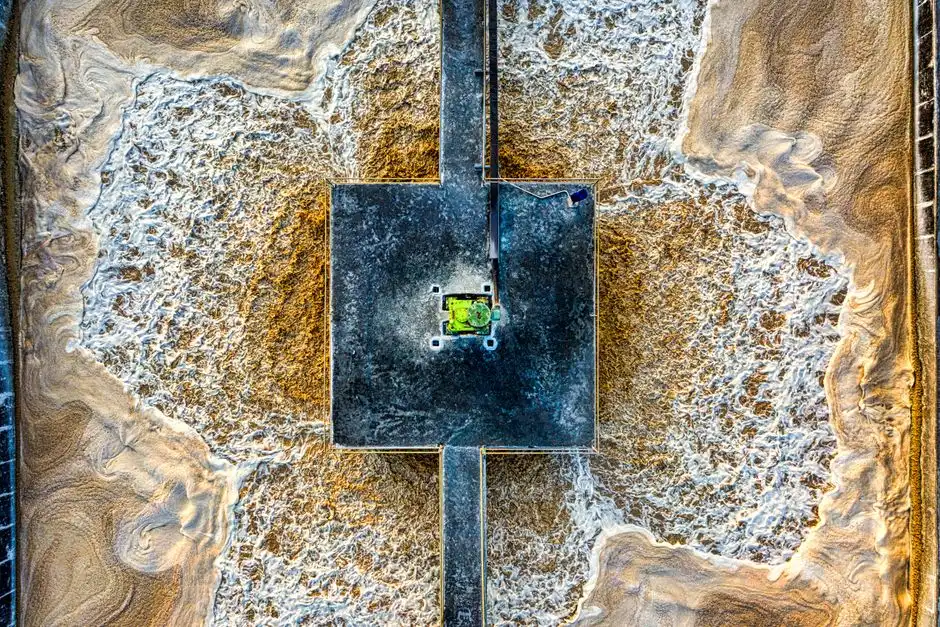
The choice between MBBR and MBR is the single biggest equipment decision a Philippine textile mill makes in 2026. The table below frames it on the metrics that actually drive CAPEX and OPEX — the ones a board will ask about.
| Criterion | DAF (upstream) | MBBR | MBR |
|---|---|---|---|
| Primary role | Color + TSS removal | BOD/COD removal | BOD/COD + solids separation |
| Relative CAPEX (50 m³/d) | Low | Moderate | High |
| Relative OPEX | Chemical-driven | Aeration-driven | Aeration + membrane replacement |
| Effluent TSS | 50–150 mg/L | 30–80 mg/L | ≤ 5 mg/L |
| Footprint vs CAS | ~50% smaller | ~40% smaller | ~60% smaller |
| Water-reuse ready | No | No | Yes (with RO polish) |
Decision rule for 2026: every plant needs a DAF upstream regardless — it protects the biological stage from color and TSS shock. Downstream of DAF, choose MBBR when daily flow is below 100 m³/day, there is no water-reuse target, and grid reliability is poor (Philippine diesel at PHP 70–90/L makes MBBR's lower aeration cost attractive). Choose MBR when flow exceeds 200 m³/day, footprint is constrained (Metro Manila land runs PHP 40,000–80,000/m²), or the plant is targeting 30–50% water reuse. The 60% footprint advantage of MBR over conventional activated sludge is decisive in central Luzon industrial estates where land is the binding constraint.
For the MBR itself, a PVDF flat-sheet MBR membrane module is the common 2026 selection for textile service in the Philippines because of its tolerance for the residual hair and lint that escapes upstream screening — a hollow-fiber module fouls faster on the same feed.
Sludge, Chemical Dosing, and Water Reuse Considerations
Designing only the liquid side is the most common budget mistake on a Philippine textile ETP. Three sub-systems quietly break the OPEX if they are not sized upfront.
First, chemical dosing. The DAF chemistry — coagulant, flocculant, pH adjuster — must be PLC-controlled to handle the load swings that batch dyeing produces. A PLC-controlled chemical dosing skid with online pH and streaming-current monitoring typically pays back in 12–18 months through reduced chemical consumption and steadier DAF float solids.
Second, sludge. Textile biological sludge yields 0.15–0.35 kg DS per kg COD removed (HydropureWater field data, 2026), which means a 200 m³/day plant at 2,000 mg/L COD can produce 60–140 kg DS/day. A plate-and-frame filter press dewatering to 25–35% DS cuts hauling volume by roughly 80% and is the standard 2026 selection; centrifuges are cheaper to buy but more expensive to run on textile sludge. Always confirm sludge is non-hazardous via TCLP before sending to a sanitary landfill.
Third, water reuse. An MBR + RO polish can return 30–50% of treated flow to dyeing wash or cooling-tower make-up, which in 2026 Metro Manila saves PHP 15–30/m³ against fresh water tariffs. For disinfection, an on-site chlorine dioxide generator is the safer pick where chlorination would push residual chlorine above DAO 1990-36's 1.0 mg/L limit or trip ZDHC's tighter 0.1 mg/L guidance.
2026 CAPEX and OPEX Benchmarks for Philippine Textile ETPs
The table below gives a defensible 2026 envelope for management budget reviews. All figures are indicative turnkey ranges from recent Southeast Asia textile ETP projects, not binding quotes — civil works, freight, and import duty will move the final number by 10–25%.
| Capacity (m³/day) | Train | CAPEX (USD) | CAPEX (PHP) | OPEX (USD/m³) |
|---|---|---|---|---|
| 50 | DAF + MBBR | 80,000–150,000 | 4.5–8.5 M | 0.40–0.70 |
| 50 | DAF + MBR | 150,000–280,000 | 8.5–16 M | 0.70–1.10 |
| 200 | DAF + MBBR | 220,000–420,000 | 12–24 M | 0.45–0.80 |
| 200 | DAF + MBR | 420,000–780,000 | 24–44 M | 0.80–1.30 |
OPEX is dominated by three line items: electrical aeration at 40–55% (largest for MBR), chemical dosing at 15–25%, and sludge hauling at 10–20%. Membrane replacement, amortized over 5–7 years, adds roughly USD 0.05–0.15/m³ for MBR. In 2026, most suppliers quote membrane skids in USD and civil works in PHP, so budget reviews need a two-currency view to avoid FX-driven surprises (USD/PHP at PHP 56–58 in early 2026). For a side-by-side view of how MBR OPEX behaves across different plant sizes, the MBR operating cost in 2026 breakdown is a useful cross-check. Plants supplying export denim brands should also size for ZDHC compliance from day one — retrofitting later typically costs 1.3–1.5× the original CAPEX.
Frequently Asked Questions
What is the Philippine discharge limit for textile wastewater in 2026?
DENR DAO 1990-36 Class C inland water limits apply: BOD₅ ≤ 50 mg/L, COD ≤ 200 mg/L, TSS ≤ 70 mg/L, color ≤ 100 Pt-Co (or 15% dilution-equivalent), pH 6.0–9.0, and temperature ≤ 40 °C. Mills discharging to Laguna de Bay face tighter LLDA limits of BOD₅ ≤ 30 mg/L and COD ≤ 100 mg/L.
Is DAF alone enough to treat dye-house wastewater?
No. A DAF typically removes 70–90% of color, 80–95% of TSS, and 50–70% of COD, which still leaves the effluent above DENR DAO 1990-36 limits for BOD and COD. DAF must be followed by biological treatment (MBBR or MBR) and a polishing step (sand + activated carbon, or RO) to hit discharge and reuse targets.
MBR or MBBR — which is better for a Philippine textile mill?
For flows below 100 m³/day with no water-reuse target, MBBR is the lower-OPEX choice and tolerates Philippine grid outages better. For flows above 200 m³/day, constrained land (PHP 40,000–80,000/m² in Metro Manila), or any reuse goal, MBR is the better fit because it delivers ≤ 5 mg/L TSS effluent and pairs directly with an RO polish for 30–50% reuse.
Do Philippine textile mills need to comply with ZDHC?
There is no Philippine law that mandates ZDHC, but export-oriented mills serving H&M, Inditex, Nike, and Adidas must meet ZDHC Wastewater Guidelines as a buyer requirement — typically BOD ≤ 15 mg/L, COD ≤ 80 mg/L, and color ≤ 20 Pt-Co. Designing to ZDHC from day one avoids a costly retrofit.
How much does a 50 m³/day textile ETP cost in the Philippines in 2026?
A turnkey DAF + MBBR system for 50 m³/day runs USD 80,000–150,000 (PHP 4.5–8.5 million); a DAF + MBR equivalent runs USD 150,000–280,000 (PHP 8.5–16 million). OPEX is USD 0.40–0.70/m³ for MBBR and USD 0.70–1.10/m³ for MBR, with aeration, chemicals, and sludge hauling as the three largest line items.