Why Crab Orchard, Tennessee Sets a Higher Bar for Mining Pretreatment
Crab Orchard Creek is a 28.9-mile tributary of the Emory River draining 47.3 square miles across Morgan and Cumberland counties on the upper Cumberland Plateau, and its 303(d) history is the single biggest reason a 2026 discharger in that watershed cannot design to the EPA categorical floor (EPA Section 319 success story, 2014-05). The entire 28.9 miles were placed on Tennessee's 1998 CWA 303(d) list for depressed pH and siltation from abandoned coal mines; a 1999–2000 TMDL study confirmed acid mine drainage impairments and biological failure (per EPA, 2014-05). After reclamation BMPs — 44 acres reclaimed, limestone treatment ponds, a constructed wetland, settling and sediment ponds, and revegetation — TDEC collected a 2007 biorecon at mile 3.1 that produced a perfect score of 15, documenting 17 EPT families, 11 intolerant taxa, and 31 total families, and a 2.3-mile segment was delisted in 2010 (EPA, 2014-05). The operative fact for any 2026 discharger is that the upstream reach of Crab Orchard Creek remains on the 303(d) list for manganese and pH problems due to mining, and the receiving water is still impaired for the exact parameters the local POTW is most likely to police. AMD chemistry explains the bridge from that legacy to today's metals-loading problem: pyrite (FeS₂) oxidation generates H⁺, sulfate, and dissolved Fe, Mn, and Al at low pH, and that same signature is what active base- and precious-metal concentrators on the Cumberland Plateau must strip from contact water before it can legally enter a municipal sewer. A control authority writing a 2026 permit against an impaired receiving stream will not accept a design sized to 40 CFR 440 categorical ceilings; it will write limits against the biosolids Part 503 pathway and the local TMDL, which is exactly the 30–50% tightening that downstream design choices have to absorb.
The 2026 Regulatory Stack: NPDES, 40 CFR 403, and 40 CFR 440
Every point-source mining discharge to a U.S. water or sewer is authorized under Clean Water Act §402 NPDES, and EPA's Industrial Wastewater program confirms that mining point sources — including discharges from associated impoundments — fall squarely inside that scope (epa.gov/npdes/industrial-wastewater). When the receiving system is a municipal sewer, 40 CFR Part 403 General Pretreatment Regulations make the local POTW the legal control authority for any industrial user, and the POTW's job is to (a) prevent pass-through, (b) protect workers, (c) avoid upset of biological treatment, and (d) protect biosolids quality under 40 CFR Part 503 (per 40 CFR 403). 40 CFR Part 440 (Ore Mining and Dressing) sets the categorical BAT/BCT effluent limits for active and inactive metal mining, but the local POTW is free to impose stricter numerical limits whenever the receiving stream, biosolids pathway, or treatment-train capacity warrants it — and in 2026 that discretion is being used aggressively on the Cumberland Plateau. The practical reading order for a permit reviewer is: 40 CFR 440 categorical ceiling → 40 CFR 403 general pretreatment standard → site-specific POTW local limit → site-specific TMDL allocation. The local limit almost always wins, and it is usually set by the biosolids Part 503 ceiling rather than the categorical ceiling, which is why Cu, Zn, and Ni are the three parameters that most often force a polishing step on a flow that was already compliant under 40 CFR 440 alone.
| Parameter | 40 CFR 440 categorical ceiling (typical) | Typical 2026 POTW local limit, Crab Orchard-area | Driver |
|---|---|---|---|
| pH | 6.0–9.0 (universal) | 6.5–8.5 | 40 CFR 403; biological treatment protection |
| TSS | ≤ 30 mg/L | ≤ 30 mg/L | POTW solids handling |
| O&G (HEM 1664) | ≤ 10–15 mg/L | ≤ 10–15 mg/L | 40 CFR 403 |
| Cu | Categorical band | ≤ 1–3 mg/L (often 30–50% tighter) | 40 CFR 503 biosolids ceiling |
| Zn | Categorical band | ≤ 1–3 mg/L (often 30–50% tighter) | 40 CFR 503 biosolids ceiling |
| Ni | Categorical band | ≤ 1–2 mg/L (often 30–50% tighter) | 40 CFR 503 biosolids ceiling |
| Pb | Categorical band | ≤ 0.5–1 mg/L | 40 CFR 503 biosolids ceiling |
| Cd | Categorical band | ≤ 0.1–0.5 mg/L | 40 CFR 503 biosolids ceiling |
| Total Cr / Cr(VI) | Categorical band | ≤ 1–2 mg/L; Cr(VI) often separately limited | 40 CFR 503; toxicity |
| Ag | Categorical band | ≤ 0.5 mg/L | 40 CFR 503 biosolids ceiling |
| Total cyanide | Varies | Detection-level; destruction step expected | Worker safety + toxicity |
Always confirm against the site permit — Tennessee control authorities are commonly 30–50% stricter than the EPA floor, and a single grab exceedance of any parameter can trigger a SNUR, a show-cause notice, or a 308(a) citation under CWA §308 (per 40 CFR 403 enforcement framework).
Designing the Pretreatment Train for a Crab Orchard-Area Mine
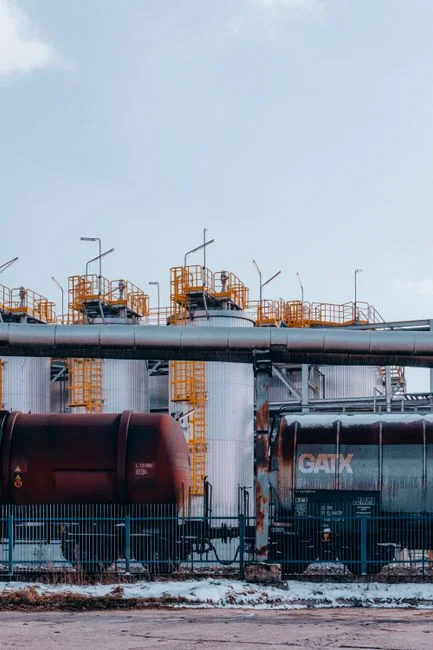
The 2026 default train for a Cumberland Plateau base- or precious-metal operation is a seven-step sequence, and each step has a defensible operating band that a control authority will accept on a P&ID review. Step 1 is equalization: 8–24 hours of residence, <1.5:1 turn-down ratio, rotary bar screens upstream to remove rags and large debris; a 2× flow excursion through the precipitation reactor is the most common cause of a metals breakthrough to the sewer, and adequate EQ volume is the single cheapest insurance on the train. Step 2 is pH adjustment with lime (Ca(OH)₂) or NaOH to 8.5–9.5 — the pH 9.0–9.5 window is the minimum-solubility band for Cu, Zn, Ni, Pb, and Cd hydroxides per standard solubility-product data — delivered through a HydropureWater PLC-controlled chemical dosing skid with a redundant pH loop and PID control on in-line probes. Step 3 is coagulation, flocculation, and metals precipitation: ferric chloride 30–80 mg/L as coagulant, anionic flocculant 0.5–2.0 mg/L in a flocculation zone with G around 50–75 s⁻¹; the reaction itself is fast (2–5 minutes) but the floc needs 15–30 minutes of gentle mixing to grow large enough for separation. Step 4 is solid–liquid separation: a HydropureWater dissolved air flotation (DAF) system at 25–40% recycle ratio for variable feeds and O&G carry-through, or a HydropureWater high-efficiency lamella clarifier for already-precipitated moderate-TSS feeds. Step 5 is a HydropureWater multi-media filter (anthracite over sand over garnet over gravel) polishing to <2 NTU and protecting any downstream RO. Step 6 is optional: a HydropureWater industrial RO system at 70–80% recovery and 0.8–1.5 kWh/m³ feed, justified when local limits drop below 0.5 mg/L on Cu/Zn/Ni or partial reuse is targeted — see the 2026 RO system OPEX breakdown for the energy and CIP budget. Step 7 is sludge dewatering on a HydropureWater plate-and-frame filter press to 25–35% dry solids, with cake volume reduction of 80–90% versus a 1–2% slurry feed; any cake that fails TCLP for a regulated metal is cement- or pozzolanic-stabilized before landfill disposal. The same step sequence is covered in a comparable DAF sizing guide for metal-bearing wastewater if the reader is sizing for a copper-concentrator feed specifically.
| Step | Unit operation | Design parameter | Typical 2026 band |
|---|---|---|---|
| 1 | Equalization + bar screens | Residence, turn-down | 8–24 h, <1.5:1 |
| 2 | pH adjust (lime or NaOH) | Reactor pH | 8.5–9.5 |
| 3 | Coagulation / flocculation | FeCl₃; anionic polymer; G; RT | 30–80 mg/L; 0.5–2.0 mg/L; 50–75 s⁻¹; rxn 2–5 min, floc 15–30 min |
| 4 | DAF or lamella | Recycle; underflow DS | 25–40% recycle (DAF); 2–4% DS underflow |
| 5 | Multimedia filter | Effluent turbidity | < 2 NTU |
| 6 | RO polish (optional) | Recovery; specific energy | 70–80%; 0.8–1.5 kWh/m³ |
| 7 | Plate-and-frame press | Cake DS | 25–35% DS |
Manganese, Cyanide, and Sulfide: Side-Streams Common in the Crab Orchard Watershed
Manganese is the named 303(d) pollutant on the upstream reach of Crab Orchard Creek (per EPA, 2014-05), and it deserves its own polishing step in any 2026 design. Hydroxide precipitation alone at pH 8.5–9.5 leaves residual Mn well above a 0.5 mg/L ceiling because Mn(OH)₂ has a higher minimum-solubility pH than Cu, Zn, or Ni; the standard fix is an oxidant — NaOCl or KMnO₄ — ahead of a manganese-selective polishing media or a strong-base ion-exchange unit when the permit ceiling drops below ~0.5 mg/L. Cyanide shows up at regional base-metal mills as a small flow from leach circuits or stamp-mill cleanup, and alkaline chlorination at pH > 10.5 with NaOCl and online ORP control targeting > 350 mV is the most common destruction route; biological polishing in a packed MBBR is a credible alternative for high-flow loads. Sulfide is the third side-stream: ORP < -100 mV indicates sulfide-reducing conditions, and the engineered response is FeCl₃ precipitation or stripping in a packed tower; sulfide and cyanide streams must never be combined without an engineered destruction step because mixed toxic-gas evolution is a worker-safety citation waiting to happen. A Tennessee-side 2026 plant typically adds one or two of these polishing side-streams to the base train, and the practical consequence is that the CAPEX band almost always moves from Option A toward Option B or C, as detailed in the next section.
CAPEX, OPEX, and Three 2026 Design Options for a 50 m³/h Mine
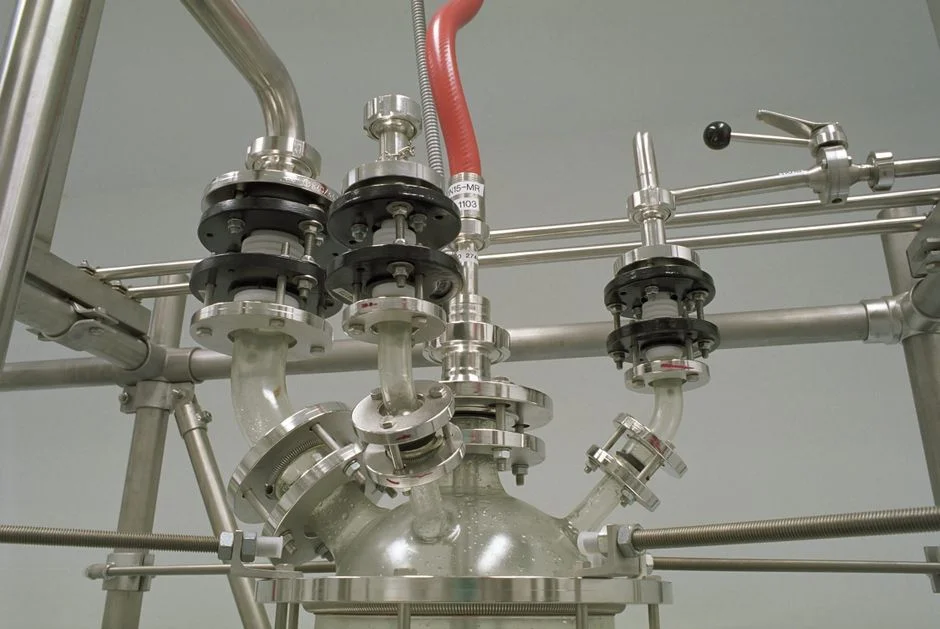
The design point is anchored at 50 m³/h, representative of a mid-sized Crab Orchard-area base-metal concentrator, and three configurations cover the practical 2026 design space (HydropureWater field data, 2026). Option A — Basic — is pH adjust + hydroxide precipitation + lamella clarifier, with CAPEX in the US$150,000–400,000 range; it is appropriate only when local POTW limits sit at the generous end of the 2026 bands and influent dissolved metals are already <20 mg/L each, and its main risk is that any pH excursion translates directly to a sewer excursion because there is no polishing step. Option B — Intermediate — is pH adjust + precipitation + HydropureWater dissolved air flotation (DAF) system + multimedia filter, with CAPEX in the US$400,000–1,200,000 range for a 50 m³/h system and OPEX dominated by lime, ferric chloride, polymer, and power; this is the 2026 default for most base-metal concentrators on the Cumberland Plateau and is operable by a 2-person wastewater crew per shift. Option C — Advanced — is the Option B train plus a HydropureWater industrial RO system (and optional ion exchange for Hg or Ag), justified when local limits are <0.5 mg/L on Cu/Zn/Ni, partial reuse is targeted, or the receiving stream is impaired; RO recovery is 70–80%, energy use is 0.8–1.5 kWh/m³ feed, and brine management is the dominant OPEX line. Decision drivers that should be weighted before locking in a tier: sulfide- or cyanide-rich feeds push toward alkaline chlorination or biological destruction as a side-loop; acidic drainage favors lime for cost per kg OH⁻ and NaOH for cleanliness; water scarcity pushes the train toward Option C; and high landfill tipping fees favor a higher-DS dewatering target on the HydropureWater plate-and-frame filter press, since a 25–35% DS cake reduces cake volume 60–70% versus a 1–2% slurry and is often the single largest OPEX lever in the whole train. A similar sizing logic is applied in the parallel Crab Orchard PA-region mining pretreatment guide.
| Option | Train scope (50 m³/h) | CAPEX (US$) | OPEX drivers | Per-m³ treated (US$) | Per-kg metal removed (US$) | Justification |
|---|---|---|---|---|---|---|
| A — Basic | pH adjust + hydroxide precipitation + lamella clarifier | 150,000–400,000 | Lime, NaOH, ferric chloride, polymer, power | 0.15–0.35 | 0.40–0.90 (feed < 20 mg/L each) | Generous local POTW limits; dissolved metals < 20 mg/L each in feed |
| B — Intermediate | A + DAF + multimedia filter | 400,000–1,200,000 | + DAF air, multimedia backwash, 2-person crew/shift | 0.35–0.75 | 0.90–1.80 | 2026 default for base-metal concentrators; meets typical POTW bands |
| C — Advanced | B + RO (and optional ion exchange for Hg/Ag) | 1,200,000–2,800,000 | + RO energy 0.8–1.5 kWh/m³, CIP, membrane replacement, brine disposal | 0.75–1.50 | 1.80–3.50 | Limits < 0.5 mg/L on Cu/Zn/Ni, partial reuse, impaired receiving stream |
All three options assume dewatering to 25–35% DS on a plate-and-frame press; cake-volume reduction is reported as 80–90% versus a 1–2% slurry feed (HydropureWater field data, 2026).
Monitoring, SOPs, and What Tennessee Control Authorities Look For in 2026
A 2026 inspector arriving at a Cumberland Plateau mine expects to see three monitoring pillars on day one, and the cheapest way to fail an audit is to skip any of them. First, online instrumentation: pH, ORP, conductivity, and turbidity on the SCADA, with PLC interlocks that trip chemical feed on a high-pH or low-ORP excursion before the discharge composite sampler even starts collecting. Second, a 24-hour flow-proportioned composite sampler on the discharge, with grab confirmation for any parameter that fails an online check; the 2026 default cadence is 24-hour flow-proportioned composites, and a chronic low-level breach is judged as seriously as a single large spill because the permit evaluates both the daily maximum and the monthly average. Third, airtight chain-of-custody — in 2026, electronic signatures and LIMS-integrated sampling are the audit norm, and a paper COC draws extra scrutiny. Three enforcement trends are converging on Tennessee mines in 2026: tighter metals limits as 40 CFR 503 biosolids rules tighten, more frequent POTW self-sampling with electronic reporting, and a clear preference for pretreatment that enables water reuse rather than just discharge. The most common 2026 compliance failures at mining sites are not hardware failures: they are pH excursions from unequalized batch discharges, slug discharges from process upsets or tank washouts, and unmonitored stormwater commingling with process sewer — all of which are SOP and training failures that an equalization basin, interlock logic, and segregated stormwater system would have prevented.
Frequently Asked Questions
What pH range must a mine meet to discharge to a POTW in 2026?
The universal 40 CFR 403 range is 6.0–9.0, but most control authorities tighten the daily maximum to 6.5–8.5 to protect biological treatment, and a Crab Orchard-area POTW in 2026 will sit at the tighter end (per 40 CFR 403).
How does a DAF compare to a lamella clarifier for mining wastewater?
A well-sized DAF targeting a 25–40% recycle ratio delivers <30 mg/L TSS and <10 NTU turbidity from a properly precipitated feed, handles O&G carry-through, and forgives pH or dose excursions; a lamella clarifier delivers 50–80 mg/L TSS, costs less in CAPEX, and is appropriate on already-precipitated moderate-TSS feeds (HydropureWater field data, 2026).
When is RO polishing justified at a mine?
RO is justified when local POTW limits drop below 0.5 mg/L on Cu/Zn/Ni, when partial reuse is targeted at 70–80% recovery, or when the receiving stream is impaired; RO is always paired with a DAF and multimedia filter upstream because the feed must already be <2 NTU turbidity and <5 mg/L TSS (per 40 CFR 403 framework).
How is manganese removed at pH 8.5–9.5?
It is not — Mn(OH)₂ has a higher minimum-solubility pH than Cu, Zn, or Ni, so residual Mn after hydroxide precipitation typically exceeds a 0.5 mg/L ceiling; the engineered fix is an oxidant (NaOCl or KMnO₄) plus a manganese-specific polishing media or strong-base ion exchange, which is exactly why the upstream reach of Crab Orchard Creek remains on the 303(d) list for manganese (per EPA, 2014-05).
What triggers a SNUR or 308(a) citation for a Tennessee mine in 2026?
A single grab exceedance of any permit limit can trigger a SNUR, a show-cause notice, or a 308(a) citation under CWA §308; in practice, the dominant causes are chronic low-level breaches and unmonitored stormwater commingling with process sewer, both of which are SOP failures rather than hardware failures (per 40 CFR 403 enforcement framework).
Related Equipment
- HydropureWater industrial RO system — specifications, capacity range, and technical data