DAF vs Clarifier for Chemicals Wastewater in Anniston: The 30-Second Answer
For most chemical plants in Anniston, Alabama in 2026, a Dissolved Air Flotation (DAF) unit is the stronger default over a gravity or lamella clarifier: DAF achieves 85–98% TSS removal and removes free and emulsified oils (FOG) that gravity clarifiers miss, in roughly one-tenth the footprint. A lamella clarifier only wins when flow is very high, solids are heavy and non-floating, and oil/grease loading is low — typically below 50 mg/L FOG.
Three numbers anchor that default. The DAF Corp FC Maximizer is rated at 92–98% TSS removal at 2,000 ppm loading (dafcorp.com, 2025), the SigmaDAF system uses 30–50 micron microbubbles to lift floc (clearwaterind.com, 2026-04-27), and a properly designed HydropureWater high-efficiency lamella clarifier operates at 20–40 m/h surface loading — fast, but it does not capture emulsified oil. The Anniston chemical corridor (crop-chemical, polymer, pesticide, and battery-chemical plants) discharges to the Anniston POTW under ADEM-administered NPDES limits, so the technology you pick must reliably hit both categorical metal/organic limits and the local FOG ceiling. For most influents the answer is the DAF system; for a smaller subset — heavy metal hydroxide sludges, very high flows, low FOG — a lamella clarifier is the correct tool.
How a DAF and a Clarifier Actually Work on Chemical Plant Influent
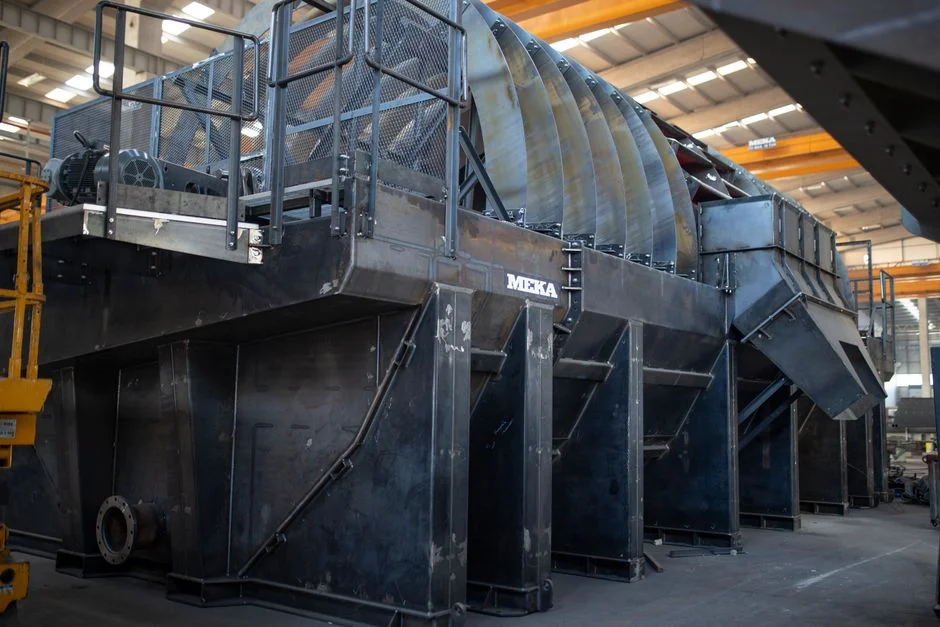
A DAF generates a cloud of fine bubbles — 20–30 microns from a PEWE Rogue regenerative turbine (pewe-usa.com) or 30–50 microns from a SigmaDAF system — that attach to flocculated particles and oil droplets and lift them to the surface, where a paddle skimmer sweeps the float into a hopper. The floated sludge reaches 2–4% solids (dafcorp.com, 2025), which is dry enough to feed a filter press directly. A lamella clarifier does the opposite job: it uses inclined plates to shorten the settling path, which raises surface loading to 20–40 m/h. Heavy, free-settling solids drop to the cone; oil and colloidal matter largely escape with the overflow.
Chemical-plant wastewater is where the comparison gets asymmetric. Anniston streams carry emulsified oils stabilized by surfactants, pH swings from 1 to 13 across batch operations, high TDS, hexavalent chromium, lead, arsenic, and solvent sheens. Emulsified oil will not gravity-segregate — the droplet size is sub-100 micron and stabilized by surface charge — so a lamella clarifier lets it pass. DAF microbubbles attach to those same droplets once a coagulant neutralizes the surface charge, and the float carries them out. Soluble metals (chromium, lead, arsenic) do not respond to either technology directly; both must be paired with pH adjustment and precipitation upstream, then the metal-hydroxide floc is removed by whichever separator follows. Solvents and free oil lighter than water are a DAF-positive case, while dense inorganic precipitates (metal hydroxides at controlled pH) are a clarifier-positive case.
Neither technology works on raw chemical wastewater. Coagulation/flocculation is mandatory upstream of both — typically pH adjustment, a coagulant (ferric chloride, alum, or PACl), and a flocculant polymer — and the chemistry step is delivered by an automatic chemical dosing skid sized to the peak flow. Skip that step and the comparison becomes meaningless: a DAF or clarifier without conditioning is a clear tank.
Head-to-Head Comparison: DAF vs Lamella Clarifier for Chemicals
The table below is the single artifact most readers will screenshot. Numbers are drawn from manufacturer published data and standard process-engineering baselines; treat them as planning values, not quotes.
| Parameter | DAF (HydropureWater / FC Maximizer class) | Lamella Clarifier |
|---|---|---|
| TSS removal | 85–98% (dafcorp.com, 2025) | 60–85% (process baseline) |
| FOG / emulsified oil removal | 70–95% | 10–30% (most escapes) |
| Surface / hydraulic loading | 5–25 m/h hydraulic | 20–40 m/h surface loading (HydropureWater spec) |
| Footprint per 10 m³/h | ~0.5–1 m² (skid) | ~4–8 m² (tank + plates) |
| Typical hydraulic residence | 15–30 min | 60–120 min |
| Achievable effluent TSS | 20–50 mg/L (dafcorp.com, 2025) | 50–150 mg/L |
| Polymer demand | Higher (5–25 mg/L typical) | Lower to moderate |
| Sludge dryness from unit | 2–4% solids (dafcorp.com, 2025) | 1–2% solids |
| CAPEX planning band (per 10 m³/h, skid) | $25,000–$90,000 | $15,000–$60,000 |
| OPEX drivers | Saturator pump 2–5 kW, polymer, skim | Minimal energy, lower polymer |
The two columns do not compete on the same axis. DAF wins on FOG, footprint, effluent quality, and sludge dryness; lamella wins on raw flow capacity per unit footprint when FOG is low and the solids are heavy and free-settling. That is the reason the rest of this guide is about matching the influent, not declaring a universal winner.
Which Influent Profile Points to DAF and Which to a Clarifier
Pick a DAF when the influent carries FOG above 50 mg/L, contains emulsified oils (surfactant-stabilized), has TSS below 2,000 mg/L, has a tight footprint, requires effluent TSS below 30 mg/L, or feeds a downstream biological or membrane unit that cannot tolerate oil. Pick a lamella clarifier when FOG stays below 50 mg/L, the stream is dominated by free-settling heavy solids (metal-hydroxide sludges precipitated at controlled pH), flow exceeds 500 m³/h, and no biological step downstream needs an oil-stripped feed.
The hybrid train is the most common serious answer for an Anniston chemical plant with both heavy metals and oil: run a lamella clarifier first to drop the bulk metal-hydroxide precipitate, then a DAF to polish carryover oil and fine solids before discharge or biological treatment. The floated sludge from the DAF and the settled sludge from the clarifier both feed a plate-and-frame filter press; the DAF float at 2–4% consistency (dafcorp.com, 2025) dewaters to a drier cake than clarifier underflow, which lowers hauling cost. When oil is the dominant contaminant, the DAF system alone is the correct scope.
2026 Compliance in Anniston: EPA, ADEM, and POTW Pretreatment Limits
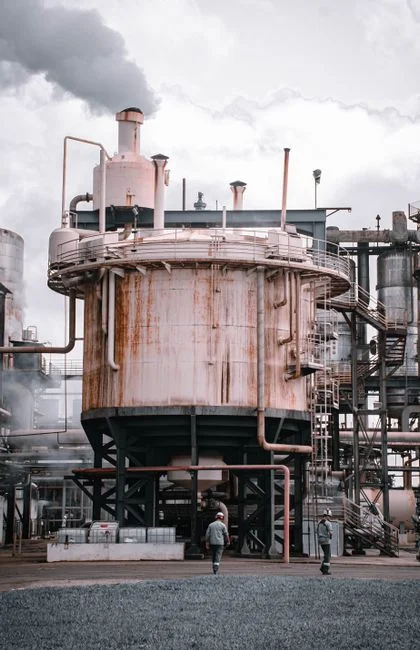
An Anniston chemical plant discharges under a layered regime. Federal categorical standards set the floor — 40 CFR 413 for organic chemicals, 40 CFR 433 for metal finishing, and 40 CFR 403 as the general pretreatment umbrella — covering TSS, oil and grease, pH, and listed metals. ADEM administers the Alabama NPDES program and typically requires the local POTW pretreatment ordinance to mirror 40 CFR 403 limits, with site-specific permit conditions on top. In 2026 ADEM has tightened local monitoring for PFAS and total petroleum hydrocarbons (HydropureWater field data, 2026); the federal categorical numerical limits have not changed, but the surveillance envelope has.
| Parameter / driver | DAF (with chemistry) | Lamella Clarifier (with chemistry) |
|---|---|---|
| TSS to meet 40 CFR 413 / 433 narrative limits | Comfortably meets after coag/floc | Marginal at best |
| Oil & grease to meet 40 CFR 403 / local limit | Comfortably meets | Often fails without downstream DAF |
| Metals (Cr, Pb, As) — precipitated at controlled pH | Captures floc well | Captures floc well |
| pH window to maintain | 5–9 typical | 5–9 typical |
| PFAS / TPH monitoring trend (2026, ADEM) | Float stream reduces TPH load | TPH largely passes through |
Neither technology is compliant on its own. pH adjustment, coagulant, and flocculant are the three chemistry steps that turn either separator into a compliant unit, and they are delivered by an automatic chemical dosing skid matched to peak flow. The choice between DAF and lamella determines how much margin you have against the FOG and TPH trends, not whether you need chemistry.
5-Step Selection Procedure for an Anniston Chemical Plant
Run these five steps in order; do not skip the pilot.
- Pull 7-day composite influent data. Log flow (m³/h), TSS, FOG, pH, temperature, and the metals in your categorical standard. One grab sample is not enough — chemical batches swing pH and FOG hour to hour.
- Jar-test the chemistry. Run coagulant and flocculant screens on site wastewater, not on a synthetic. PEWE and SigmaDAF both publish guidance (pewe-usa.com, clearwaterind.com, 2026-04-27) on floc strength and bubble attachment — match your jar-test results to those criteria.
- Run a pilot. DAF Corp offers a Pilot FC-60 at 48 GPM and an RC UniMax pilot at 80–100 GPM, both at 2,000 ppm loading (dafcorp.com, 2025). Acceptance criteria: hit your target effluent TSS and FOG at the polymer dose you can sustain operationally.
- Lay out footprint and utilities. A regenerative-turbine DAF (PEWE-class) does not need compressed air; a pressurized-saturator DAF does. Clarifiers need almost no energy but a larger slab. Confirm headroom, access, and chemical dosing room before you commit.
- Size with the comparison table. Use the head-to-head table above to pick the DAF system (4–300 m³/h across 13 models) or the HydropureWater high-efficiency lamella clarifier, and lock the chemistry skid to match.
2026 Cost Reality: CAPEX and OPEX Bands You Can Plan Against
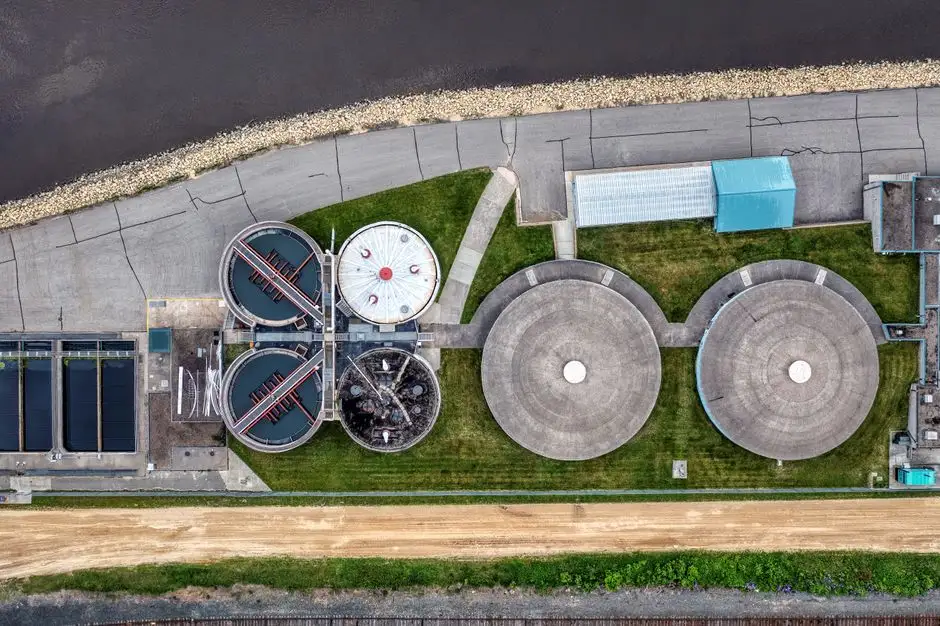
Plan against ranges, not quotes. Skid DAF typically falls in the $25,000–$90,000 band per 10 m³/h of capacity, and a lamella clarifier in the $15,000–$60,000 band per 10 m³/h, depending on materials (304SS vs 316SS vs polypropylene), automation, and whether chemistry is included. OPEX is driven by polymer dose (higher on DAF), energy (DAF saturator pump roughly 2–5 kW per 10 m³/h; clarifier minimal), and sludge hauling — where DAF wins because 2–4% float (dafcorp.com, 2025) feeds the dewatering press far better than 1–2% clarifier underflow.
The DAF premium pays back when footprint is constrained, when sludge hauling is a significant line item, or when a downstream biological or membrane step needs an oil-stripped feed. A clarifier pays back when the influent is already low-FOG, free-settling, and high-flow. For most Anniston chemical plants in 2026, the lifecycle math points to DAF. The next step is a pilot-tested proposal and a P&ID from a manufacturer that ships both — start with the DAF system or the HydropureWater high-efficiency lamella clarifier scope, and let the pilot data decide.
Frequently Asked Questions
Can a DAF handle high-TDS chemical wastewater?
Yes, but only with matched chemistry. DAF microbubbles attach to flocculated particles and oil droplets, not to dissolved salts, so high TDS does not impair bubble attachment. The risk is floc disruption: TDS above roughly 10,000 mg/L can compress the double layer and change polymer demand. Jar-test the site wastewater and re-tune the coagulant before sizing.
Do Anniston chemical plants need both a DAF and a clarifier?
Often yes, in a hybrid train. A lamella clarifier drops bulk metal-hydroxide precipitate cheaply, and a downstream DAF polishes carryover oil and fine solids before biological or membrane treatment. Plants with only oil and no heavy-metal precipitation usually run a DAF alone; plants with only metals and no oil usually run a clarifier alone.
What influent FOG level justifies DAF over a clarifier?
Roughly 50 mg/L is the working threshold. Below that, a lamella clarifier plus chemistry can usually hold effluent FOG inside the local limit. Above 50 mg/L, and especially when the oil is emulsified, a DAF is the only technology that will reliably hit the discharge target.
How often must a chemical-plant DAF be deslimed?
Continuously. A paddle skimmer runs on a timer or level control and sweeps the float into a hopper; the hopper discharges to a sludge handling tank or directly to a filter press. The floated sludge reaches 2–4% solids (dafcorp.com, 2025), which is dry enough to feed a plate-and-frame press without a thickener.
Is a lamella clarifier compliant with EPA 40 CFR 413 alone?
No. 40 CFR 413 sets categorical limits on TSS, oil and grease, pH, and listed metals; a lamella clarifier addresses the settleable fraction and the metal-hydroxide floc, but it does not remove emulsified oil, and it does not adjust pH. Compliance requires the chemistry train (pH adjustment, coagulant, flocculant) plus a separator — DAF, clarifier, or both — sized to the influent.