Why Toney Mining and Metals Plants Are Re-Evaluating Separation in 2026
Toney sits in the Limestone County stretch of the Huntsville–Decatur industrial corridor, where aggregate washing, red-iron fines handling, and light-metals-finishing shops all discharge to either the Decatur Utilities Westside POTW or directly to waters of the state under ADEM-issued NPDES permits. In 2026 those permits are tightening: indirect dischargers on categorical pretreatment are seeing monthly-average TSS ceilings of 30 mg/L, and metals (Pb, Zn, Cu, Ni) are routinely capped at 0.5–2.0 mg/L, with arsenic limits set case-by-case against instream standards (ADEM Admin. Code ch. 335-6). The local hydrogeology makes compliance unforgiving — north Alabama's karst conduits transmit a spill straight to the Tuscumbia–Fort Payne aquifer, so secondary containment and pretreatment reliability are non-negotiable. Year-round Gulf-fed temperatures (mean annual air 16–18 °C, summer equalization basin readings 28–32 °C) keep biological activity high in EQ basins, which consumes DO and complicates any downstream biological polish. Seasonal rainfall is the other swing factor: 50+ inches per year, with spring storms resuspending red-clay sediment and forcing operators to handle hydraulic surges of 2–3× average daily flow.
How a DAF Unit Actually Treats a Mining or Metals Stream
A DAF system removes contaminants by floating them, not settling them. Pressurized recycle at 5–7 bar saturates 20–30% of clarified effluent with air; when that recycle is released through proprietary nozzles into the contact zone, it generates 30–50 micron microbubbles (per SigmaDAF specifications, 2026) that attach to chemically conditioned floc. The full train for a Toney metals stream runs: equalization → pH adjust (NaOH or lime) → coagulant (FeCl₃ at 50–150 mg/L, or alum, or lime for high-pH hydroxide precipitation) → cationic polyacrylamide flocculant at 1–5 mg/L → DAF contact zone → float skimming → clarified underflow to filtration or biological polish → sludge to a plate-frame filter press for dewatering. In well-tuned systems, TSS removal lands between 90–97% and COD removal between 60–80% (wastewatermachinery.com, 2026), which is the band most procurement engineers defend in design review. For Toney flows between 4 m³/h and 300 m³/h, the HydropureWater DAF system catalog covers 13 standard models — DAF-003 at 3 m³/h up to DAF-120 at 120 m³/h — and gives the EPC a defensible reference point for hydraulic sizing without resorting to a custom vessel. The 30–50 micron bubble band matters: finer bubbles give higher rise velocity per unit gas and better capture of low-density hydroxide flocs, which is the reason DAF pulls ahead on metals.
How a Lamella Clarifier Handles the Same Stream
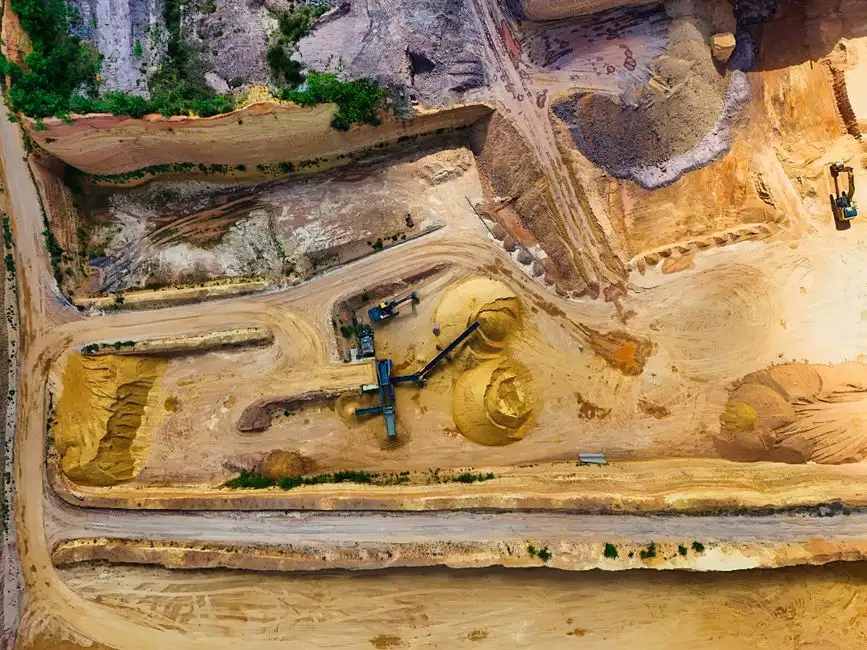
A lamella clarifier — an inclined plate settler — separates by gravity. Coagulated and flocculated feed enters a reaction zone, then flows upward through 60° inclined lamella packs at a surface loading rate of 20–40 m/h (HydropureWater catalog, 2026). Heavier particles settle the short distance between plates and slide into a bottom hopper, while clarified overflow exits via launders at the top. The geometry is the whole game: shortening the settling path lets the unit run at 5–10× the overflow rate of a conventional clarifier of the same footprint. For a Toney aggregate wash or red-iron fines thickener, this is the right tool — dense mineral grit, ore fines above 100 mesh, iron-oxide scale, and coarse tailings all settle fast and the sludge is heavy enough to consolidate in the hopper. The limits matter too: colloidal and near-density particles won't shed enough mass to settle in the residence time available, emulsified oils float but accumulate as a hard scum that operators have to remove manually, and a non-lamella conventional clarifier at the same flow can take 3–5× the floor area. A properly packed HydropureWater lamella clarifier brings that footprint back to a workable envelope, but it still cannot match DAF on fines below ~20 microns.
DAF vs Clarifier: A Decision Matrix for Mining and Metals Streams
Use the matrix below as the screenshot your team forwards to ownership. It collapses the physical and economic tradeoffs into a single artifact anchored to the 90% clarifier / 95% DAF oil-removal benchmark pair (ecologixsystems.com, 2026) and the 90–97% DAF TSS range (wastewatermachinery.com, 2026). All CAPEX/OPEX bands are 2026 engineering estimates with a ±30% range applied for site conditions.
| Selection Criterion | Dissolved Air Flotation (DAF) | Lamella Clarifier | Decision |
|---|---|---|---|
| Influent TSS range | 200–5,000 mg/L (low-density, colloidal) | 1,000–50,000 mg/L (dense grit, coarse tailings) | DAF for colloidal, clarifier for grit |
| Oil & grease / emulsified content | ~95% removal (ecologixsystems.com, 2026) | ~70% removal (ecologixsystems.com, 2026) | DAF |
| Heavy-metal target (Pb, Zn, Cu, Ni, As) | Co-precipitates hydroxide flocs into float; 70–90% metals removal with FeCl₃/lime | Co-precipitates into sludge bed; 50–75% metals removal | DAF |
| Footprint at 50 m³/h | ~25 m² (DAF-050 footprint) | ~15 m² (packed lamella) | Clarifier for grit, DAF for polish |
| CAPEX band (installed, $/m³·d) | $900–$1,800 | $350–$900 | Clarifier for budget, DAF for compliance risk |
| OPEX band ($/m³ treated) | $0.18–$0.45 | $0.08–$0.20 | Clarifier for OPEX, DAF for chemistry |
| ADEM 30 mg/L TSS compliance risk | Low (90–97% removal, 2026 reference) | Moderate (depends on upstream grit control) | DAF when limit is binding |
| Typical Toney mining use case | Metals-finishing rinse water, hydroxide precipitation overflow, oil-contaminated wash | Aggregate wash water, red-iron fines thickener, primary tailings | Use both in series |
Heavy-Metal Co-Precipitation: Where DAF Pulls Ahead
The chemistry is the actual reason mining ETP designers in Toney pick DAF for metals-laden streams. At pH 9–10, lead, zinc, copper, and nickel form low-solubility hydroxide flocs (Pb(OH)₂ Ksp ~1.4×10⁻²⁰, Cu(OH)₂ ~2.2×10⁻²⁰, Zn(OH)₂ ~3×10⁻¹⁷, Ni(OH)₂ ~5.5×10⁻¹⁶). Those flocs are low-density, often buoyant, and frequently carry co-precipitated arsenic (As(V) co-precipitated with Fe(III) at pH 4–8, or with alum at pH 6–7) and oil. A clarifier can settle them, but slowly, and any flow surge pulls the floc back into the overflow. DAF's 30–50 micron microbubbles attach to the floc surface and lift it against gravity in minutes, so the float layer carries 3–5% solids off the top of the tank while the underflow stays clean. Bench data from metals-finishing clients consistently shows DAF pulling 70–90% of total metals (and 80–95% of arsenic where Fe(III) co-precipitation is staged correctly) versus 50–75% for a clarifier on the same feed — the difference is floatable versus settleable, and hydroxide flocs lean floatable. A properly sized HydropureWater automatic chemical dosing skid upstream of the DAF is what locks in the pH window that makes this chemistry work in production, not just in the jar test.
CAPEX and OPEX Ranges a Toney Plant Should Budget in 2026
The numbers below are 2026 installed-cost ranges expressed in both $/m³·d of hydraulic capacity (CAPEX) and $/m³ treated (OPEX), bracketed by site-civil, electrical, and stainless-vs-carbon-steel choices. Apply a ±30% range for actual site conditions — karst underdrain requiring double-lined containment, 480V three-phase service distance, and winterization for the few days a year Toney drops below freezing all swing the total.
| System (50 m³/h nameplate) | CAPEX Installed (USD) | CAPEX ($/m³·d) | OPEX ($/m³ treated) | Dominant OPEX Drivers |
|---|---|---|---|---|
| Lamella clarifier only (carbon steel, packed) | $420,000–$780,000 | $350–$650 | $0.08–$0.18 | Polymer, sludge hauling, rake torque |
| DAF only (DAF-050, SS304 wetted) | $1,100,000–$2,200,000 | $900–$1,800 | $0.22–$0.42 | Compressor kWh, FeCl₃/lime, polymer, float handling |
| Hybrid train (clarifier → DAF → filter press) | $1,700,000–$3,200,000 | $1,400–$2,650 | $0.30–$0.55 | Two-stage chemistry, two sludge streams, dewatering logistics |
For most Toney metals ETP upgrades driven by tightening 2026 permits, the hybrid train is the answer that survives both the ADEM review and the ownership payback review — the clarifier absorbs the grit surge at low OPEX, the DAF carries the metals-compliance risk, and the filter press closes the loop on solids.
A 2026 Decision Tree for Toney Mining and Metals Plants
Walk this in order. If you answer yes to two or more branches, that is your primary equipment.
- Is influent TSS below 5,000 mg/L and are particles predominantly below 20 microns? → Lead with a HydropureWater DAF system sized to 110% of average hourly flow.
- Is the stream carrying emulsified oil at 50+ mg/L? → DAF is mandatory; clarifier alone caps at ~70% oil removal (ecologixsystems.com, 2026).
- Are lead, zinc, copper, nickel, or arsenic regulated in the discharge permit at 0.5–2.0 mg/L? → DAF for the hydroxide float; a clarifier will not reliably hit the binding metals limit.
- Is the stream predominantly dense mineral grit, ore fines above 100 mesh, or iron-oxide scale above 5,000 mg/L TSS? → Lead with a HydropureWater lamella clarifier; protect downstream equipment from grit loading.
- Is the site constrained on footprint or located inside a karst zone requiring lined secondary containment? → DAF; the smaller tank footprint reduces liner area and containment cost.
- Are you a combined aggregate-wash and metals-finishing site with both grit and metals? → Run a hybrid: lamella primary, DAF polish, plate-frame filter press for both sludge streams.
This logic is the same one we hand to EPCs doing front-end engineering for Toney-area plants in 2026. For a side-by-side reading on the EV/auto sector's take on the same trade, the DAF vs clarifier for EV/auto wastewater comparison covers battery-cell rinse streams with similar chemistry. For regional pretreatment-defensibility context, the mining pretreatment compliance guide walks a comparable regulatory path in another karst-influenced basin.
Frequently Asked Questions
What TSS limit does ADEM typically set for mining and metals indirect discharges in 2026?
ADEM Admin. Code ch. 335-6 categorical pretreatment limits for mining and metals finishers commonly cap monthly-average TSS at 30 mg/L, with daily maxima of 45–60 mg/L. Local POTW pretreatment programs in the Huntsville–Decatur corridor can run tighter case-by-case (per ADEM ch. 335-6, 2026).
Can a DAF system hit the 0.5–2.0 mg/L metals limits on its own?
DAF paired with staged pH adjustment (pH 9–10 for Pb/Zn/Cu/Ni hydroxide precipitation) and Fe(III) co-precipitation for As(V) routinely hits 70–90% total metals removal and 80–95% arsenic removal on jar-tested feeds. Effluent polishing by ion exchange or membrane is still required to drive Pb below 0.5 mg/L on high-strength feeds (HydropureWater field data, 2026).
Is a lamella clarifier cheaper to operate than a DAF on a mining stream?
Yes — a lamella clarifier typically runs $0.08–$0.18 per m³ treated versus $0.22–$0.42 for a DAF, because the clarifier has no air compressor, lower polymer demand, and no float-handling subsystem. The OPEX delta closes quickly once you add the DAF needed to hit a binding metals limit.
What is the smallest standard DAF unit a Toney plant can specify without going custom?
Standard HydropureWater DAF models start at the DAF-003 at 3 m³/h and step up to the DAF-120 at 120 m³/h; the catalog covers 13 models between those endpoints. Plants above 120 m³/h typically run multiple vessels in parallel rather than a single oversized tank.
Do Toney's warm temperatures and karst geology change equipment selection?
Warm year-round Gulf-fed temperatures (summer EQ basin 28–32 °C) accelerate biological growth in equalization basins and consume DO, so any clarifier-fed system should expect higher fouling on launders and a tighter polymer demand curve. Karst geology under Toney means all primary separation must sit in double-lined secondary containment with leak detection, which typically adds 10–20% to site-civil CAPEX and is the same reason most operators favor a smaller-footprint DAF over a large clarifier basin.