Why a Lonza CDMO Expansion Forces an ETP Redesign
A scale-up from a 2,000 L single-use bioreactor to a 5,000 L suite, combined with new small-molecule API trains and longer CIP/SIP campaigns, typically multiplies COD, nitrate and solvent load 2–4× faster than hydraulic flow at a contract development and manufacturing organisation (CDMO) site. The implication for the effluent treatment plant (ETP) is rarely "more of the same" — influent strength changes the biology, the equalisation volume, and the discharge envelope, so the existing activated-sludge basin is the first asset to fail. Per WTE Infra, equalisation is the most important practical ETP component when flow and pollutant load change significantly, because insufficient equalisation can send large pollutant loads directly to downstream processes.
Mammalian-cell suites add roughly 20–40 kg COD per m³ of bioreactor capacity per day once bleed, media-prep reject and buffer residuals are aggregated (HydropureWater field data, 2026). Small-molecule API trains are even more concentrated on a per-batch basis: 50–150 kg COD per kg of API is typical, driven by step yield and incomplete solvent recovery. The previous plant, designed for a 1,000 m³/day dilute API effluent at COD 1,500–3,000 mg/L, can be pushed above 8,000 mg/L within 2–3 batches once a new synthesis train is qualified, which raises effluent COD above the discharge consent and shifts the mass balance of any downstream zero-liquid-discharge (ZLD) brine system. The technical case for a redesign — supported by the pharma wastewater treatment guide and the MBR configuration guide — is that hydraulic capacity is no longer the binding constraint; biodegradability, inhibitory-solvent spikes and consent tightening are.
CDMO Wastewater Characterisation: The Streams a Lonza ETP Must Separate
Pharmaceutical wastewater can contain complex organic compounds, solvents, active ingredients and inhibitory substances, so characterisation, segregation of streams and careful biological-treatment design are critical (WTE Infra). Mixing high-strength mother liquor with dilute CIP/SIP neutralised flow is the single most common cause of pharma-ETP failure, because the toxic slug kills biomass faster than the equalisation basin can damp it. The table below summarises the four critical streams a mammalian-cell and API CDMO must keep apart until pretreatment is matched to each.
| Stream | Indicative COD (mg/L) | Indicative pH / Temp | Key contaminants | Initial handling |
|---|---|---|---|---|
| Bioreactor bleed + off-gas scrubber condensate | 1,000–4,000 | 6.5–7.5 / 25–35°C | Proteins, sugars, low-biodegradability residuals | Screening → equalisation → main biological stage |
| CIP/SIP caustics & acids | 2,000–8,000 | 1–13 / 40–70°C | NaOH, HNO₃, surfactants, hot rinse | Cooling + pH correction → equalisation |
| Buffer & media-prep reject | 500–2,000 | 6.8–7.4 / 20–30°C | Phosphates, nitrates, amino acids | Nutrient-balanced feed to biological stage |
| API mother-liquor / spent solvent | 30,000–80,000 | 2–11 / 20–40°C | THF, methanol, acetone, acetonitrile, residual API | Dedicated side-stream destruction (Fenton / ozone / evaporation) |
Segregation logic is straightforward once the streams are quantified: route the mother-liquor to a dedicated destruction train sized for 2–5% of total flow but 30–50% of total COD load, route CIP/SIP to cooling and pH correction before equalisation, and merge only the low-strength, near-neutral streams with bioreactor bleed into the main biological reactor. Oil, grease and colour from utility systems (boiler blowdown, glycol traces, dye-marked equipment) belong in the same dissolved air flotation (DAF) stage recommended by WTE for physico-chemical pre-treatment, not in the biological basin. A facility near an existing industrial cluster, like the chemical pretreatment example in chemical plants near Fernley, can adapt the same DAF-first approach. For a Southeast Asian sister plant, the local framework in Baku Mutu PP 22/2021 sets the headline BOD envelope that equalisation must protect.
The Process Train a Lonza CDMO ETP Should Run in 2026
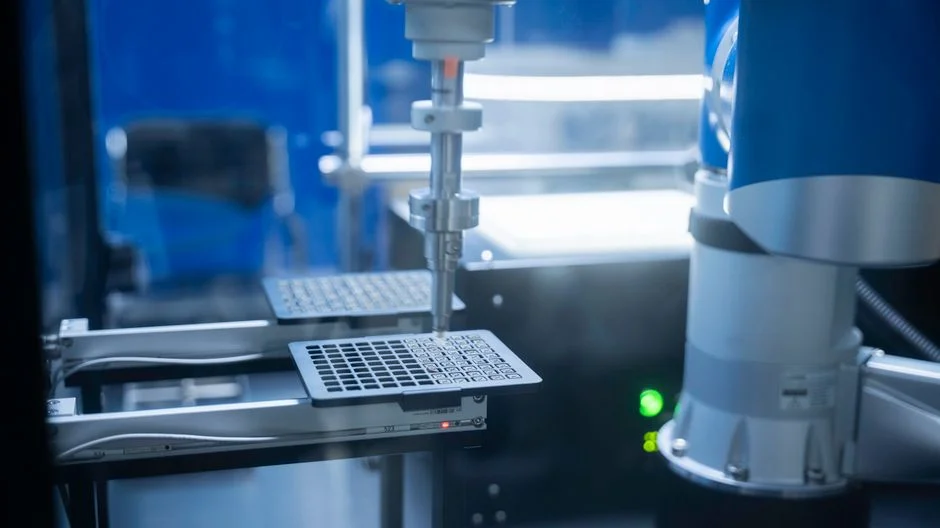
The defensible block flow for a 1,000–3,000 m³/day CDMO ETP in 2026 is: rotary bar screening → flow and load equalisation (24–48 h HRT) → DAF or lamella primary clarification → pH correction and nutrient (N, P) dosing → main biological reactor (MBR preferred) → tertiary UF → activated carbon → reverse osmosis (RO) for reuse → brine evaporation or crystalliser for the ZLD tail. WTE's biological technology menu lists MBBR (carrier-media biomass), SBR (timed batch) and MBR (membrane-coupled), and the selection rule is that MBR is preferred when inhibitory shock loads or footprint constraints dominate — both of which apply to a CDMO expansion.
| Stage | Equipment | Sizing target | Function in CDMO service |
|---|---|---|---|
| 1. Screening | Rotary bar screen, 3–6 mm aperture | Full peak flow | Remove plastics, wipes, packaging from CIP drain |
| 2. Equalisation | Equalisation basin with aerated mixing | 1.5–2× average daily hydraulic load, 24–48 h HRT | Dampen COD and solvent spikes before biology |
| 3. Primary clarification | Dissolved air flotation system or lamella | Surface load 5–10 m³/m²·h | Oil/grease, suspended solids, partial COD removal |
| 4. Mother-liquor side-stream | Fenton (Fe²⁺/H₂O₂) or wet air oxidation | 2–5% of total flow, 30–50% of COD load | Pre-destroy residual API, THF, acetonitrile |
| 5. Main biology | MBR membrane bioreactor system with DF-series PVDF flat sheet membrane modules | MLVSS 8,000–12,000 mg/L, HRT 24–48 h | COD/BOD removal, nitrification, <1 μm filtrate for downstream RO |
| 6. Tertiary + reuse | UF → activated carbon → industrial RO system | RO recovery 70–80% | Cooling-tower or CIP pre-rinse reuse water |
| 7. Sludge handling | Plate-and-frame filter press, 1–500 m² area | Cake dryness 22–28% | Dewater mixed waste and biological sludge |
| 8. ZLD tail | Mechanical vapour recompression (MVR) or crystalliser | ≥95% water recovery on brine | Brine volume reduction, salt recovery or disposal |
The MBR is justified for CDMO work on three points: <1 μm filtrate (per WTE), roughly 60% footprint reduction versus conventional activated sludge (CAS), and stable MLVSS at 8,000–12,000 mg/L under shock conditions. The mother-liquor side-stream is non-negotiable because the alternative — feeding 30,000–80,000 mg/L mother liquor directly to the biological basin — destroys nitrification within hours. Sludge from the DAF, biological waste and Fenton iron cake is co-dewatered on a plate-and-frame press sized for 1–500 m² filtration area depending on plant scale.
Sizing the Biological Stage: HRT, SRT, F:M and Oxygen Demand
For a CDMO effluent with BOD₅/COD of 0.3–0.5, target an MBR hydraulic retention time (HRT) of 24–48 h; raise it to 60–80 h when the mother-liquor side-stream is partially co-treated. A solids retention time (SRT) of 25–40 days is needed to retain slow-growing nitrifiers and tolerate inhibitory solvent excursions, and MBR enables this at the higher MLVSS that CAS cannot reach economically. The food-to-microorganism (F:M) ratio should sit at 0.05–0.15 kg BOD/kg MLVSS·d, with design oxygen demand at 1.1–1.3 kg O₂ per kg BOD removed plus 4.6 kg O₂ per kg NH₃-N nitrified.
| Parameter | MBR target (pharma CDMO) | Effect of design choice |
|---|---|---|
| HRT (biological basin) | 24–48 h (60–80 h with co-treated mother liquor) | Higher HRT → smoother effluent COD, larger tank |
| SRT | 25–40 d | Long SRT → complete nitrification, less waste sludge |
| MLVSS | 8,000–12,000 mg/L | Higher MLVSS → smaller basin, more oxygen demand |
| F:M ratio | 0.05–0.15 kg BOD/kg MLVSS·d | Lower F:M → better shock tolerance |
| BOD₅/COD (influent) | 0.3–0.5 | Ratio below 0.3 → strengthen Fenton side-stream |
| Oxygen demand | 1.1–1.3 kg O₂/kg BOD + 4.6 kg O₂/kg NH₃-N | Drives blower sizing and energy OPEX |
WTE cautions that insufficient equalisation can send large pollutant loads directly to downstream processes, so build equalisation to 1.5–2× average daily hydraulic load rather than sizing it to the design flow. The AAO process working principle article covers the pre-anoxic configuration typically added when total nitrogen discharge is regulated, and the IFAS hybrid fixed-film piece is a useful reference if the plant wants biofilm resilience on top of the MBR basin.
Choosing Between MBBR, SBR and MBR for a Lonza CDMO Effluent
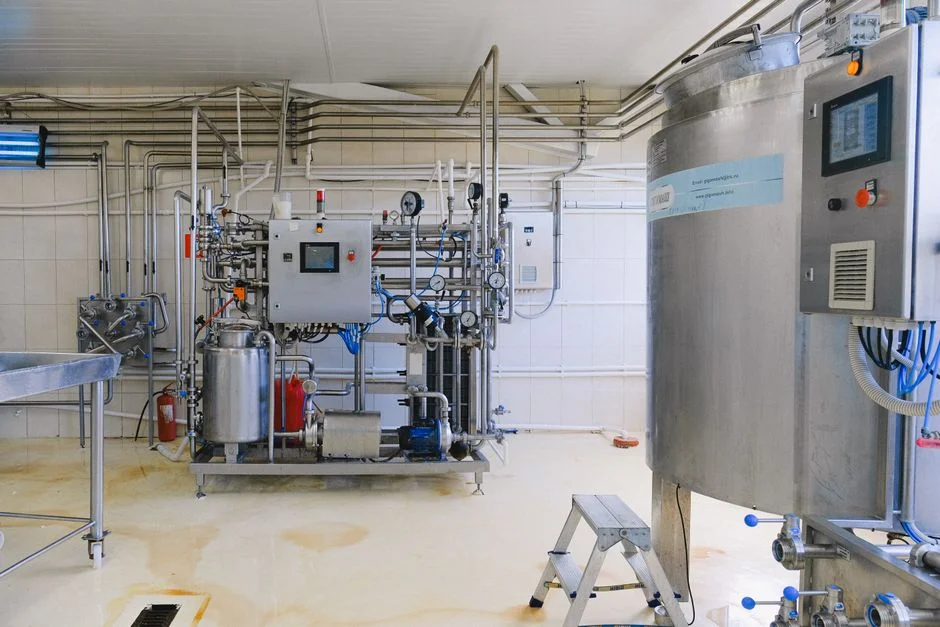
Technology selection should consider COD characteristics, biodegradability, toxicity, hydraulic variation, footprint and required treated-water quality (WTE Infra). For a CDMO plant, the three viable biological options each have a defensible niche — but they are not interchangeable once the consent and reuse envelope are fixed.
| Criterion | MBBR | SBR | MBR |
|---|---|---|---|
| Footprint | Compact | Large (multiple basins) | Smallest (~60% less than CAS) |
| Shock-load tolerance | Good (carrier biomass) | Good (batch flex) | Excellent at high MLVSS |
| Treated-water quality | Moderate (needs clarifier) | Good (decant dependent) | Excellent (<1 μm filtrate, ready for RO) |
| CAPEX (relative) | Low | Low–medium | Medium–high |
| OPEX (relative) | Low–medium | Medium (decant maintenance) | Medium (membrane cleaning) |
| Reuse-ready | No (extra filtration needed) | No | Yes — direct feed to UF/RO |
| Best fit for CDMO | Brownfield capacity add with civils available | Discharge-only with land available | Tight consent or reuse mandate |
The decision rule for a CDMO is: if the treated water goes to RO for reuse, or to a tight site-specific consent such as the PUB trade-effluent envelope in Singapore or BAT-AEL direct-discharge limits in the EU, choose MBR. If the project is discharge-only and civil space is not constrained, SBR remains defensible on CAPEX grounds. MBBR suits older plants adding capacity without major civils, where the existing basin footprint can be re-used. The deeper engineering treatment of the MBR option is laid out in the MBR configuration guide.
Regulatory Targets and Reuse Goals for a 2026 CDMO ETP
The CDMO regulatory frame depends on plant geography, and the ETP must be sized for the strictest envelope the site could face after the next permit cycle. EU IED BAT-AEL under Decision 2016/902 for pharmaceutical manufacturing sets COD ≤120 mg/L, TOC ≤35 mg/L and SS ≤10 mg/L for direct discharge after biological treatment, with site-specific limits frequently tighter at the receiving wastewater-treatment plant. US sites operate under 40 CFR 403 categorical pretreatment for pharmaceutical manufacturing (SIC 2834), and local POTWs may require BOD ≤250 mg/L and TSS ≤260 mg/L before acceptance. Singapore PUB trade-effluent limits for biologics sites include COD ≤400 mg/L with tight metals, which often pushes CDMOs toward on-site RO reuse. The global total-nitrogen discharge standard and the pretreatment-limits case study illustrate how the same compliance logic applies to other heavy-industry neighbours.
Reuse becomes economically justified once freshwater cost exceeds roughly 30% of the site's utility OPEX. The standard 2026 reuse train is UF followed by an industrial RO system at 70–80% recovery, with permeate directed to cooling-tower make-up or CIP pre-rinse. Brine from the RO is concentrated further in a mechanical vapour recompression (MVR) evaporator or a crystalliser to close the ZLD loop. MBR is the only one of the three biological options that delivers filtrate directly compatible with RO feed requirements without an intermediate polishing stage.
CAPEX, OPEX and Risk Allocation for the ETP Upgrade
Treatment cost should be evaluated as currency per kilolitre of treated water, together with chemical, energy and sludge costs, rather than considering only the initial equipment price (WTE Infra). For a CDMO plant processing 1,000–3,000 m³/day with the MBR + RO + ZLD train, the project-specific envelope is roughly USD 8–25 million in CAPEX and USD 1.5–4 per m³ in OPEX, scaling with influent strength and whether ZLD is included. The full-block MBR + RO + ZLD configuration sits at the upper end; an MBR + discharge configuration (no RO, no ZLD) typically lands in the USD 4–10 million CAPEX band at this scale. Operational benchmarks are detailed in the activated carbon OPEX guide and the constructed wetland OPEX breakdown.
The risk register for a CDMO ETP upgrade should call out membrane fouling from solvent breakthrough, mother-liquor thermal runaway in a poorly vented Fenton reactor, sludge disposal classification (often hazardous when API residues are present), and reagent price volatility for hydrogen peroxide and ferrous sulphate. A technically cheaper system can become expensive if it has high chemical consumption, unstable biological treatment or poor service support (WTE Infra) — a caution worth repeating in the EPC bid evaluation. Tie the budget conversation to uptime: a 24/7 CDMO campaign typically targets 99% ETP availability, which determines redundancy on blowers, MBR cassette spares and RO trains. Risk allocation should make clear which party owns membrane-replacement intervals and which party owns the Fenton reagent supply contract.
Frequently Asked Questions
What ETP capacity does a Lonza-scale CDMO expansion actually need?
A mammalian-cell CDMO expansion of 2,000 → 5,000 L single-use bioreactors plus one new small-molecule API train typically requires an ETP sized for 1,000–3,000 m³/day and 5,000–25,000 mg/L influent COD, with equalisation at 1.5–2× the average daily hydraulic load. The binding constraint is usually influent strength and solvent load, not hydraulic flow.
Which biological reactor is best for inhibitory pharma effluent?
MBR is the preferred option for inhibitory pharma effluent because it operates at MLVSS 8,000–12,000 mg/L with HRT 24–48 h, retains slow-growing nitrifiers at SRT 25–40 days, and produces <1 μm filtrate ready for downstream RO. SBR is acceptable for discharge-only sites with available land; MBBR suits brownfield capacity adds.
What regulatory limit applies to a Lonza CDMO discharge in the EU?
Under EU IED BAT-AEL (Decision 2016/902) for pharmaceutical manufacturing, the typical direct-discharge envelope is COD ≤120 mg/L, TOC ≤35 mg/L and SS ≤10 mg/L after biological treatment, with site-specific limits usually tighter. US sites additionally face 40 CFR 403 categorical pretreatment at the receiving POTW.
When is water reuse worth the membrane cost for a CDMO ETP?
Reuse via UF + RO becomes justified once freshwater exceeds roughly 30% of utility OPEX or when discharge consent tightening is forecast. RO recovery of 70–80% typically supports cooling-tower make-up and CIP pre-rinse, with brine routed to a mechanical vapour recompression evaporator or crystalliser for ZLD closure.