What 'Total Nitrogen Discharge Standard' Means in 2026
Total nitrogen (TN) is the regulated sum of four nitrogen species in wastewater: ammonia-N (NH3-N/NH4+), nitrite-N (NO2-N), nitrate-N (NO3-N), and organic nitrogen. Permits almost always reference either TN or NH3-N as separate parameters — they are not interchangeable, and a discharge compliant on ammonia can still fail on TN if nitrate is left un-denitrified. The standard analytical method is alkaline persulfate digestion with UV spectrophotometry, codified as HJ 636-2012 in China and SM 4500-N in the US, with a method detection limit typically around 0.05 mg/L N. The regulatory direction in 2026 is unambiguous: agencies are shifting from ammonia-only limits to composite TN limits because nitrate loading — not ammonia — drives downstream eutrophication and drinking-water blending-zone violations even when an effluent passes an NH3-N test. Industrial compliance engineers should treat the TN value on a draft permit as the binding number and design for it directly, with ammonia-N as a secondary safety check. For the engineering implications of treating the nitrate fraction specifically, the nitrate-specific treatment engineering guide covers denitrification kinetics, methanol dosing, and resin polishing in detail.
2026 Total Nitrogen Discharge Limits by Jurisdiction
TN limits in 2026 vary by more than an order of magnitude across jurisdictions, so the first engineering step is to confirm which document governs the discharge point. The matrix below consolidates the limits a compliance engineer will encounter in China, the EU, the US, India, Japan, and World Bank/IFC-financed projects. Several 2026 updates are worth flagging: China is tightening enforcement of GB 18918-2002, and provinces including Beijing and Zhejiang now require ≤10 mg/L TN for industrial parks that feed reclaimed-water reuse schemes. In the US, Chesapeake Bay jurisdictions enforce seasonal TN caps as low as 3 mg/L at POTW headworks, and California's Ocean Plan references a 10 mg/L TN ceiling for many industrial ocean outfalls.
| Jurisdiction | Standard / Document | Applicable Sector | TN Limit (mg/L) | NH3-N Limit (mg/L) | Notes |
|---|---|---|---|---|---|
| China | GB 18918-2002 (Class IA) | Municipal, sensitive areas | ≤15 | ≤5 (≤8) | Tightest tier; surface water source protection |
| China | GB 18918-2002 (Class IB) | Municipal, general | ≤20 | ≤8 (≤15) | Standard municipal discharge tier |
| China | GB 8978-1996 | Industrial, integrated to sewer | — | ≤25 | NH3-N only; TN governed by receiving POTW |
| EU | UWWTD 91/271/EEC | Municipal, sensitive areas >100,000 p.e. | ≤15 | — | Annual average; 11–15 mg/L typically for inland |
| EU | IED 2010/75/EU (BAT-AEL) | Industrial (sector-specific) | 10–15 | 1–10 | BREF-document dependent; range across sectors |
| USA | NPDES (40 CFR Part 122) | Industrial, site-specific | 3–10 (typical) | 1–10 (typical) | Set case-by-case; California Ocean Plan references 10 mg/L |
| USA | Chesapeake Bay jurisdictions | POTW headworks, seasonal | ≤3 (seasonal cap) | — | Winter/spring cap on major Bay tributaries |
| India | CPCB Schedule VI | Industrial, inland surface water | — | ≤50 | NH3-N only; TN typically controlled by state PCB |
| Japan | JIS K 0102 / prefectural ordinances | Industrial, municipal | 10–20 | 5–10 | Stringent in Tokyo Bay and Seto Inland Sea basins |
| Multilateral | World Bank/IFC EHS Guidelines | WB/IFC-financed projects | 10–20 | 5–10 | Project-specific; tighter in reuse or sensitive basins |
The full cross-jurisdiction matrix, including ammonia-only and total-N-only columns for every regional standard, is consolidated in our 2026 global TN limits deep-dive.
Translating a TN Limit into a Treatment Train

The next step after identifying the limit is calculating the required removal efficiency, then matching that efficiency to a process class. Typical industrial influent TN sits in the 40–80 mg/L range; to hit a 15 mg/L limit a 70–80% removal is needed, to hit 10 mg/L a 80–90% removal, and to hit 5 mg/L a 90%+ removal is required. Process classes map cleanly to those bands: chemical precipitation (struvite / MgNH4PO4) only removes the ammonia-N fraction and stabilises effluent NH3-N at 10–20 mg/L — it does not touch nitrate. Biological nitrification-denitrification (A/O, A2/O, SBR) reliably achieves TN of 5–15 mg/L with internal carbon, and an MBR with extended SRT pushes TN below 5 mg/L. Breakpoint chlorination and ion exchange are polishing steps only; reverse osmosis delivers 95–99% TN rejection but is justified almost exclusively for water-reuse or ZLD schemes rather than discharge compliance. A critical pitfall: nitrate cannot be removed by simple chemical precipitation. If the influent has already been nitrified, denitrification or RO/ion exchange is mandatory — the compliance engineer should confirm whether the existing plant runs in a nitrified-only or fully nitrified-denitrified mode before adding a polishing skid.
Biological Nitrification-Denitrification: Design Parameters That Hit TN ≤10 mg/L
Biological nitrification-denitrification is the workhorse for industrial TN compliance, and the design numbers below are the operating envelope that produces ≤10 mg/L TN with margin. The anoxic zone HRT is typically 1–3 h and the aerobic HRT 6–8 h, for a combined 8–12 h total HRT at 25–35 °C; below 12 °C the nitrification rate drops roughly 50%, so cold-climate sites need either a longer SRT or a covered reactor. SRT must be held at 10–20 days for stable nitrification, with DO controlled at 1.5–2.5 mg/L in the aerobic zone and below 0.5 mg/L in the anoxic zone. The carbon rule is non-negotiable: influent BOD5/TN must be ≥4–5 for autotrophic denitrification to consume the nitrate internally; below that, dose methanol at 2.5–3.0 mg COD per mg NO3-N removed, or substitute acetate or glycerol. Internal mixed-liquor recycle is typically 200–400% of influent flow, and the nitrate recycle returns 2–4× influent flow to the anoxic zone. The MBR variant — pairing a submerged 0.1–0.4 μm PVDF membrane with a biological tank — allows MLSS of 8,000–12,000 mg/L and SRT of 20–30 days, producing effluent TN ≤5 mg/L and TSS ≤1 mg/L simultaneously, which is why MBR is the default answer for permits below 8 mg/L.
| Parameter | Conventional A2/O | MBR (Submerged PVDF) | Unit / Notes |
|---|---|---|---|
| MLSS | 3,000–5,000 | 8,000–12,000 | mg/L |
| SRT | 10–20 | 20–30 | days |
| Anoxic HRT | 1–3 | 2–4 | h |
| Aerobic HRT | 6–8 | 6–10 | h |
| DO (aerobic) | 1.5–2.5 | 1.5–2.5 | mg/L |
| DO (anoxic) | <0.5 | <0.5 | mg/L |
| Internal recycle | 200–400 | 300–500 | % of Q |
| External C dose (if C/N <5) | 2.5–3.0 | 2.5–3.0 | mg COD/mg NO3-N |
| Effluent TN (design) | ≤10 | ≤5 | mg/L |
| Effluent TSS (design) | ≤20 | ≤1 | mg/L |
For plants targeting ≤5 mg/L TN, a submerged MBR system for TN ≤5 mg/L paired with a DF-series PVDF flat-sheet membrane module is the typical 2026 configuration, with a PLC-controlled methanol or acetate dosing skid sized to the design NO3-N load.
When the Standard Is Below 5 mg/L: Polishing and Tertiary Options
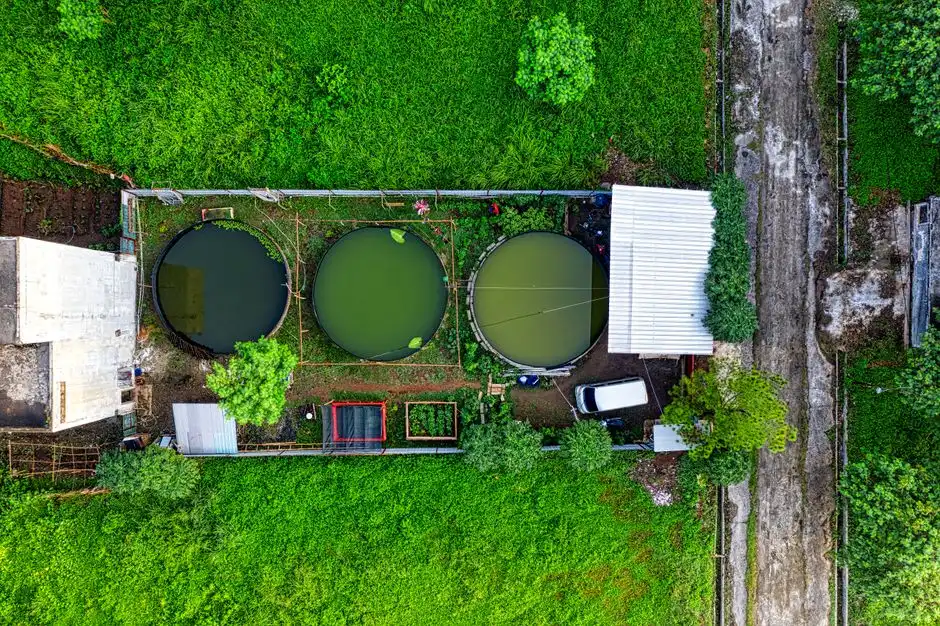
Biological treatment alone rarely delivers TN below 5 mg/L at industrial scale, so ultra-strict permits, water-reuse, or industrial-park TN caps of ≤5 mg/L require a polishing step. Breakpoint chlorination oxidises ammonia at a stoichiometric dose of 7.6–8.0 mg Cl2 per mg NH3-N, drives effluent NH3-N below 1 mg/L, but adds a chloride load and is energy-inefficient above ~50 m³/day; 2026 reagent cost is roughly $2.50–4.00 per kg of Cl2 delivered. Selective nitrate ion-exchange resin brings NO3-N below 5 mg/L but requires regeneration brine and is most cost-effective on low-flow polishing duty. Reverse osmosis delivers 95–99% TN rejection and is the right answer only when the same train is also producing reuse water or feeding a ZLD scheme. The decision rule for 2026: breakpoint chlorination for <50 m³/day polishing, ion exchange for 50–500 m³/day, and RO only if reuse or ZLD is on the table. Pairing a polishing step with an MBR biological stage is the lowest-risk configuration because the MBR already holds TSS below 1 mg/L, which protects downstream resins and RO membranes from fouling.
Industry-Specific TN Compliance: Where Limits Are Tightest in 2026
Industrial influent TN concentrations vary by more than an order of magnitude across sectors, and the typical 2026 target tracks that spread. Landfill leachate is the most demanding case, with influent TN of 500–2,000 mg/L and a typical TN permit of 10–20 mg/L — almost every site runs biological treatment followed by RO. Pharmaceutical and fine-chemical wastewater typically carries TN of 50–500 mg/L, and A2/O plus MBR is the default 2026 configuration to meet 10–15 mg/L; refractory organics sometimes force a Fenton pre-treatment ahead of the biological stage. Food processing — dairy, meat, brewery — has a more benign 30–100 mg/L TN with a high BOD/TN ratio, and A/O without external carbon often meets 10–15 mg/L. Petrochemical and landfill-leachate cross-jurisdiction details, including the exact permit ceilings for each major basin, are consolidated in the 2026 global TN limits deep-dive; pharma-precursor streams are covered in the PCB wastewater treatment engineering guide and the dairy wastewater compliance case study.
| Industry | Typical Influent TN (mg/L) | 2026 Typical Permit (mg/L) | Default Process Train |
|---|---|---|---|
| Landfill leachate | 500–2,000 | 10–20 | Bio + RO (ZLD in some jurisdictions) |
| Pharma & fine chemicals | 50–500 | 10–15 | Fenton/A2/O + MBR; sometimes RO |
| Petrochemical | 30–200 | 10–20 | A/O + MBR; oil/water separation first |
| Food processing (dairy, meat, brewery) | 30–100 | 10–15 | A/O without external carbon; equalisation first |
| Textile dyeing | 20–80 | 10–20 | A2/O + MBR; biological often preceded by Fenton/ozone |
How to Choose the Right TN Removal System: A 2026 Decision Framework
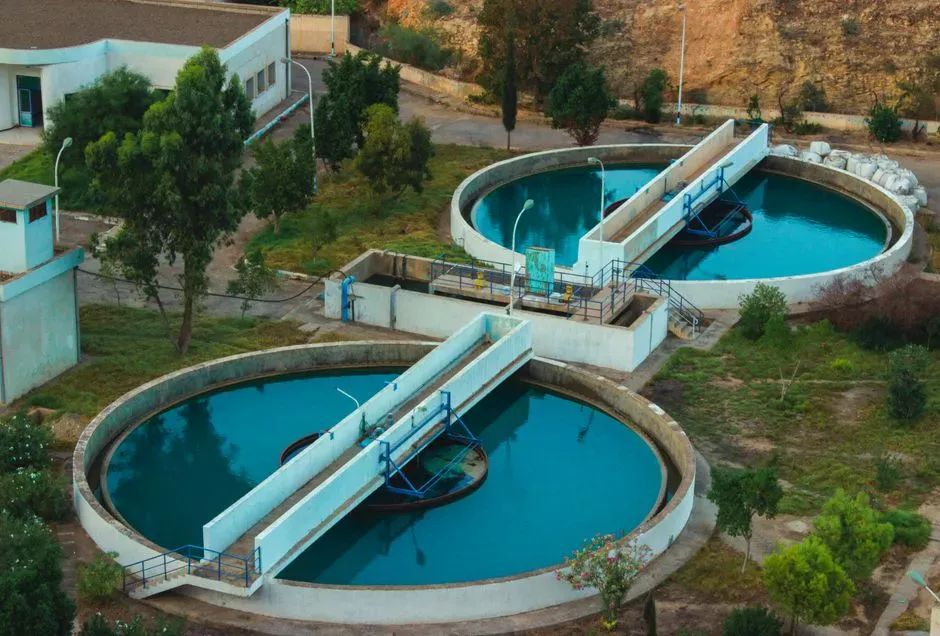
Process selection should be driven by four questions, in order, before any equipment vendor is contacted. Q1 — target TN ≥15 mg/L: an A/O or SBR with internal carbon is enough, and a WSZ underground A/O package plant typically handles this band with no external dosing. Q2 — target TN 5–15 mg/L: move to A2/O or MBR, and dose external carbon (methanol, acetate, or glycerol) if the influent C/N ratio is below 5. Q3 — target TN <5 mg/L: the answer is MBR with chemical polishing, or ion exchange on the nitrate-selective resin if the polishing flow is below ~500 m³/day. Q4 — water reuse also required: skip chlorination and route the MBR permeate to RO; a single submerged MBR system for TN ≤5 mg/L followed by RO covers both compliance and reuse in one train. The same decision flow applies whether the plant is in Beijing, Berlin, or Bengaluru: target TN first, then influent C/N ratio, then flow, and only then equipment vendor.
Frequently Asked Questions
What is the typical TN discharge limit for industrial wastewater in 2026?
Industrial TN limits in 2026 are 3–10 mg/L under most US NPDES permits, 10–15 mg/L in the EU under UWWTD or IED BAT-AELs, and 10–20 mg/L under World Bank/IFC EHS, with China's GB 18918-2002 Class IA at ≤15 mg/L. The exact value depends on the receiving water body and sector-specific BREF document.
Which treatment process reliably meets TN ≤10 mg/L?
Biological nitrification-denitrification in an A2/O or MBR configuration, with anoxic HRT 1–3 h, aerobic HRT 6–8 h, SRT 10–20 days, and influent BOD5/TN ≥4–5. MBR variants achieve ≤5 mg/L TN at MLSS 8,000–12,000 mg/L and SRT 20–30 days.
How much methanol is needed for denitrification when C/N is low?
Dose methanol at 2.5–3.0 mg COD per mg NO3-N removed when influent BOD5/TN falls below 4–5; acetate or glycerol can substitute at similar stoichiometry. A PLC-controlled methanol or acetate dosing skid sized to the design nitrate load is the standard 2026 answer.
Can breakpoint chlorination remove total nitrogen?
No. Breakpoint chlorination at 7.6–8.0 mg Cl2 per mg NH3-N removes ammonia-N to below 1 mg/L but does not affect nitrate-N, so it cannot lower TN on a nitrified effluent. It is a polishing step for ammonia, not a TN-reduction process.
When is reverse osmosis justified for TN compliance alone?
RO is rarely justified for discharge-only compliance at 95–99% TN rejection given the membrane and energy cost. It becomes the right answer when the same train is producing reclaimed water, when a ZLD scheme is in scope, or when the influent TN exceeds 500 mg/L (typical of landfill leachate).