

Data Center Cooling Blowdown Birmingham Sites Must Size for in 2026
Data center cooling blowdown birmingham volumes on a 15 MW hybrid adiabatic, free-air and chilled-water site typically reach 60–120 m³/day from about 300,000 L/day makeup. Of that intake, 20–40% leaves as cooling tower blowdown. That stream is already treated and heated, so the operator either discharges it under Environment Agency consent or recovers it for reuse.
Three local pressures converge in 2026 to make recovery compulsory rather than optional. The West Midlands sits in an Environment Agency Water Stress Areas class of "medium-to-high." The EA Catchment Data Explorer (2026 update) flags the Severn, Tame and upper Avon catchments for abstraction review against resource availability. A 100 MW facility can demand up to 2 million litres of water per day (IDE Tech, 2026).
Severn-Trent Water's PR24 Final Determination (2024) introduces a non-potable tariff from April 2026 that prices reuse against mains. Birmingham City Council planning policy DM5.13 (2024) expects water-neutral or water-positive design for new hyperscale builds on the city fringe. BREEAM Wat 01 v6 (2025 update) awards credits for ≥60% recycling with no chemical exceedances over 12 months. Generic recycle targets do not pass those three tests; a chemistry-aware treatment train does.
Cooling Tower Blowdown Chemistry: What Birmingham Operators Are Actually Discharging
Birmingham blowdown is a brackish stream dominated by silica, calcium carbonate and calcium sulphate. Those three species set how far any reverse osmosis stage can be pushed (IDE Tech, 2026). The cooling-water chemical programme adds residual oxidising biocides (free/total chlorine, chlorine dioxide), isothiazolinone-based non-oxidising biocides, phosphonate scale inhibitors (HEDP, ATMP), and molybdate or zinc-based corrosion inhibitors. Field data for a Severn-Trent-fed West Midlands loop at 4 cycles of concentration (CoC) typically lands in the envelope below.
| Parameter | Typical range (4 CoC blowdown) | Driver / note |
|---|---|---|
| Total dissolved solids (TDS) | 800–2,500 mg/L | Scales with CoC and cycles since bleed |
| Hardness (as CaCO₃) | 720–1,120 mg/L | Derived from 180–280 mg/L Severn-Trent supply × 4 CoC |
| Silica (SiO₂) | 40–120 mg/L | Limits BWRO recovery to 75–80% without anti-scalant |
| Chloride | 150–400 mg/L | Corrosion concern for 304/316 stainless in trim coolers |
| Free/total chlorine | 0.1–0.5 mg/L | Must be neutralised (SBS) before any RO membrane |
| Phosphonate (as PO₄) | 2–15 mg/L | Carbon adsorption or DAF removal before RO |
| Iron / copper (trace) | 0.1–1.0 mg/L each | Corrosion product carryover from carbon steel pipework |
| pH | 7.5–9.0 | LSI already trending positive against CaCO₃ saturation |
Severn-Trent's supply hardness of 180–280 mg/L as CaCO₃ (STW Final Determination 2024, Appendix E water-quality baseline) already pushes the Langelier Saturation Index positive at 4 CoC. That shift appears before any chemical programme is added. A February 2026 TNFD case study (Water Utility Report, 2026-02) flags salts and heavy metals as the principal receiving-water risk from data-centre blowdown.
West Midlands EA permit submissions are therefore almost always interrogated on metals mass-balance, not just volume. Any train that cannot demonstrate metals removal downstream of softening will struggle at EPR2010 permit determination.
The Birmingham Treatment Train: From Side-Stream Filtration to ZLD Polishing
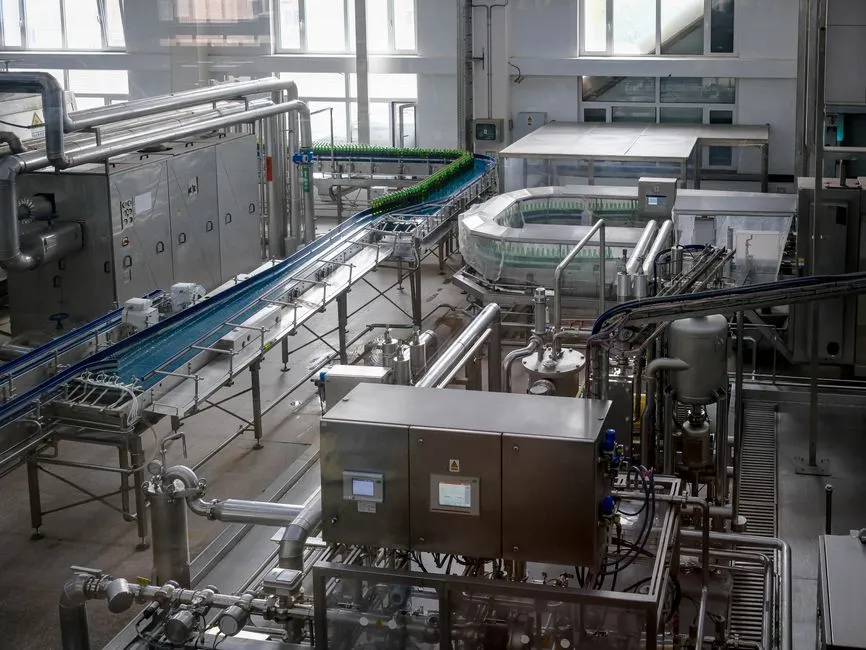
The 2026 process train for a 15 MW Birmingham site strings five unit operations in series. Each stage is sized against the 80–120 m³/day blowdown envelope from the 15 MW example, with headroom for ±20% seasonal swing. Most plants we size for West Midlands hybrid cooling run at the lower end in winter and climb toward 120 m³/day in peak summer trim.
- Stage 1 — Side-stream filtration. Automatic self-cleaning screen filters at 50–200 µm protect the rest of the train from suspended solids, biological carryover, and corrosion-product debris. A multi-media filter downstream polishes to <5 µm SDI, the threshold most RO membrane warranties require.
- Stage 2 — Dissolved air flotation. A dissolved air flotation system in the 4–300 m³/h range strips residual oils, floc carryover from the cooling loop, and insoluble phosphonate breakdown products. DAF fits here because the contaminant suite is light and floatable, not heavy and settleable.
- Stage 3 — Softening. Either lime/soda softening or weak-acid cation exchange, sized to drop hardness below 20 mg/L as CaCO₃ before the RO. Anticipated sludge production of 8–12% of feed volume is captured in Stage 5.
- Stage 4 — Brackish water RO. An industrial RO system operated at 75–80% recovery with anti-scalant dosing and interstage boosting produces permeate at <50 mg/L TDS suitable for cooling-tower makeup. An automatic chemical dosing system handles the pH correction, anti-scalant, and reducing-agent feeds (sodium bisulphite for chlorine neutralisation) that the membranes require.
- Stage 5 — Brine polishing and sludge handling. A mechanical vapour recompression (MVR) crystalliser or a fluidised-bed brine desalter (MAXH2O-style architecture, operating at ~95% recovery with permeate silica ≈1 mg/L) drives the train to ZLD or near-ZLD. Softening and DAF sludge are dewatered on a plate-and-frame filter press to cake DS ≥35% for off-site disposal.
For comparison, the Dammam data center ZLD design guide walks the same five-stage logic for a Gulf-source feed. The Birmingham equivalent differs mainly in the softening stage, where West Midlands hardness allows a smaller ion-exchange unit and a lower lime dose. Engineers sizing similar builds in Central Europe can cross-reference the Prague data center blowdown guide for hybrid-cooling blowdown chemistry.
How Effective Is Data Center Water Recycling on Severn-Trent Feed?
Data center water recycling on Severn-Trent feed is effective when BWRO runs at 75–80% recovery and the loop rises from 4 to 6 CoC with softening and anti-scalant. Net intake of ~300 m³/day at 4 CoC for the 15 MW Birmingham site then drops to ~120 m³/day. A brine polisher at 90–95% recovery removes liquid sewer discharge in >85% of West Midlands catchments. Severn-Trent Trade Effluent consent is still required before that claim enters an EA application.
The blowdown ratio follows 1/(CoC − 1): 4 CoC produces 25% blowdown, 6 CoC produces 20% (Genesis Water Tech, 2026). The common assumption that moving from 4 to 6 CoC cuts blowdown in half is wrong. The actual reduction is 5 percentage points, or 20% of the original blowdown volume.
Biological and scaling risk then rises sharply above 5–6 CoC. That is the most repeated number error in West Midlands sustainability business cases and should be flagged before planning consent.
| CoC | Blowdown / makeup | LSI risk (180–280 mg/L supply) | Silica risk at 6× | Treatment needed to push higher |
|---|---|---|---|---|
| 3 | 50% | Marginal | Low | None beyond standard chemical programme |
| 4 | 25% | Positive (scale forming) | Low | Softening recommended |
| 5 | 20% | High | Moderate | Softening + anti-scalant |
| 6 | 17% | Very high | High — 240–720 mg/L SiO₂ | Softening + DAF + BWRO 75% recovery |
| 7–8 (with ZLD polish) | 11–13% | Controlled via brine desalter | Removed as pellet | Full five-stage train as specified |
Do High-Purity Water Systems Fit Closed-Loop Data Center Cooling?
High-purity water systems for data center cooling are not the first stage for tower blowdown reuse. They polish permeate or closed-loop makeup after BWRO has already cut TDS below 50 mg/L. Closed-loop chilled-water and adiabatic trim circuits need low conductivity and low hardness to protect heat exchangers and stainless trim coolers. Tower blowdown itself remains a brackish waste that must be filtered, softened and desalinated before any high-purity polishing step is justified.
Water treatment for data center cooling towers in closed-loop systems therefore splits into two duties. The open tower loop needs side-stream filtration, biocide control and blowdown management at 4–6 CoC. The closed chilled-water loop needs corrosion control and occasional polish makeup.
Operators who feed untreated blowdown into a closed loop see chloride climb to 150–400 mg/L. Hardness then sits well above the <20 mg/L as CaCO₃ target used before RO. Keep the five-stage train on the blowdown side; reserve high-purity polish for the closed circuit only.
Environment Agency Permitting, BREEAM Wat 01 and Birmingham Planning
Birmingham cooling blowdown discharge pathway drives the consent route. On-site blowdown treatment with discharge to Severn-Trent sewer falls under Standard Rules SR2010 No.4. A bespoke EPR2010 Environmental Permit applies once volume or biocide loading exceeds the standard-rules threshold. Direct discharge to surface water always requires a site-specific EPR 2010 permit.
The application sets limits on temperature (typically <30°C rise above receiving water), pH (6–9), TDS, and metals including Cu, Ni, Zn and Fe. Midlands EA pre-application correspondence in 2025–2026 states that schemes without a metals mass balance will be returned incomplete.
On the planning side, Birmingham City Council policy DM5.13 (2024) requires evidence of water-neutral or water-positive design for new hyperscale data-centre builds on greenfield sites. The BREEAM Wat 01 v6 (2025) credit template is the usual evidence vehicle. To reach the 60% reuse threshold without a chemistry-aware train, an operator would need a very large rainwater buffer or a non-potable abstraction licence. Neither path is straightforward in the West Midlands.
The SBR aeration energy logic in our SBR energy efficiency guide covers a related OPEX question. It applies where cooling blowdown and sanitary flows share one packaged plant.
Capex, Opex and Payback for a 5–30 MW Birmingham Site
Order-of-magnitude CAPEX for a UK-built, factory-tested Birmingham treatment train at 2026 Q1 prices runs as follows. These bands assume the five-stage train above, UK factory acceptance, and a 9–12 month install window aligned with hall energisation.
| Site size | Train scope | CAPEX (GBP, 2026 Q1) | OPEX (% of CAPEX/yr) | Indicative payback |
|---|---|---|---|---|
| 5 MW | Filtration + DAF + RO (no ZLD) | £0.6–0.9 M | 18–22% | 4–5 years |
| 15 MW | Full 5-stage train, RO-only brine disposal | £1.3–2.0 M | 20–25% | 3–5 years |
| 30 MW | Full 5-stage train + MVR crystalliser (ZLD) | £4.5–7.0 M | 30–40% | 5–7 years (crystalliser power dominates) |
OPEX is dominated by electricity for the high-pressure RO pumps and, where fitted, the MVR compressor. Anti-scalant, membrane replacement every 5–7 years, and cake haulage add the rest. On the 15 MW reference case, recovering 60–70% of blowdown at the Severn-Trent 2026 non-potable tariff (~£1.20–1.60/m³) plus a Trade Effluent charge (~£1.40–1.80/m³) yields a combined avoided cost of ~£3.40/m³.
At ~11,000 m³/yr of recovered water, that is ~£35,000/yr of operating savings before EA levy offsets. Avoided mains water is extra. The figure aligns with the 3–5 year payback window in the Genesis Water Tech 2026 reference design for a comparable 15 MW site.
Selection Checklist for Birmingham Blowdown Trains
Plant engineers and EPC teams sizing a Birmingham train should lock the following before tender:
- Confirm supply hardness (180–280 mg/L as CaCO₃) and design CoC (4–6) with LSI and silica checks.
- Size filtration + DAF + softening for 80–120 m³/day blowdown at 15 MW, with ±20% seasonal swing.
- Set BWRO recovery at 75–80% with chlorine neutralisation and anti-scalant dosing.
- Decide RO brine disposal versus MVR/brine-desalter polish for BREEAM Wat 01 ≥60% reuse.
- Prepare metals mass-balance (Cu, Ni, Zn, Fe) for EA EPR2010 or SR2010 No.4 evidence.
- Align CAPEX bands (£0.6–0.9 M at 5 MW; £1.3–2.0 M at 15 MW; £4.5–7.0 M at 30 MW ZLD) with hall energisation timing.
- Obtain Severn-Trent Trade Effluent consent language before writing ZLD claims into the EA application.
Who This Is For / Who Should Look Elsewhere / Next Step
West Midlands plant engineers, EPC contractors and procurement managers sizing 5–30 MW cooling blowdown trains under Severn-Trent and EA rules are the primary audience. Operators running dry coolers only, with no evaporative tower blowdown, should look elsewhere — the five-stage train does not apply. Teams ready to match equipment to a site water balance can request a Birmingham blowdown treatment quote with design CoC, blowdown flow and discharge pathway.
Frequently Asked Questions
What permit does a Birmingham data centre need to discharge cooling blowdown to sewer in 2026?
Discharge to Severn-Trent sewer triggers Standard Rules SR2010 No.4 or a bespoke EPR2010 Environmental Permit once volume or biocide loading exceeds the standard-rules threshold. On-site blowdown treatment with a metals mass-balance is the usual West Midlands evidence package (per EA EPR2010 guidance, 2026). Direct surface-water discharge always needs a site-specific EPR 2010 permit with temperature, pH, TDS and metals limits.
How far can BWRO push recovery on Severn-Trent feed before silica scaling dominates?
Conventional BWRO on 180–280 mg/L CaCO₃ Severn-Trent supply plateaus at 75–80% recovery. Beyond that point, silica and CaSO₄ scaling dominate unless softening, anti-scalant and a brine polisher are added (IDE Tech, 2026). Field blowdown silica of 40–120 mg/L at 4 CoC is the usual binding constraint before chloride or phosphonate.
What recovery does an MVR crystalliser or MAXH2O-style brine desalter actually deliver on cooling-tower blowdown?
A brine desalter operating at ~95% overall recovery with permeate silica ≈1 mg/L is the unit that lets a Birmingham train reach BREEAM Wat 01 v6 ≥60% reuse and approach ZLD. It avoids the larger footprint of a forced-circulation evaporator (per IDE Tech 2026 field data). Softening and DAF sludge still need filter-press dewatering to cake DS ≥35% for off-site disposal.
How effective is data center water recycling without raising CoC?
Recycling without raising CoC still recovers 75–80% of blowdown volume through BWRO, but leaves the tower bleeding at 25% of makeup at 4 CoC. Combining RO with a move from 4 to 6 CoC is what cuts net intake from ~300 m³/day toward ~120 m³/day on the 15 MW Birmingham case. Skipping CoC increase leaves more of the avoided-cost case on the table.
When should a closed-loop high-purity polish be added after blowdown RO?
Add high-purity polish only after BWRO permeate is already below 50 mg/L TDS and the closed chilled-water or adiabatic trim loop needs tighter conductivity or hardness control. Feeding untreated blowdown into a closed loop pushes chloride into the 150–400 mg/L band and hardness far above the <20 mg/L as CaCO₃ RO feed target. Keep high-purity systems on the closed circuit, not on raw tower bleed.