
Why Pharmaceutical Wastewater in the UAE Is a Harder Problem Than the Generic Literature Suggests
Pharmaceutical manufacturing in the Gulf runs at an E-factor of 50–100 kg of waste per kg of active product — the band reported in the 2014 pharmaceutical wastewater review (S3) — which makes the wastewater stream one of the most chemical-dense any UAE plant will treat. The same review notes that endocrine-disrupting compounds and trace APIs persist through conventional activated sludge, which is why more than 40% of WWTPs globally report difficulty removing pharmaceuticals (EPA, 2021; S4).
Gulf conditions break a standard pharma train in three specific ways. Summer ambient of 45–50 °C suppresses nitrification rates and stresses the biofilm that drives biological removal, forcing cooling or derated flux. Feed TDS of 2,000–15,000 mg/L on Gulf bore-water supplies raises RO osmotic pressure, capping recovery at 65–75% rather than the 80–85% typical of US/EU industrial designs. And concentrate disposal is limited at inland KEZAD, ICAD, and JAFZA-back pharma parks with no marine outfall, which pushes the end-of-pipe toward ZLD. The co-stream picture is just as heavy: WHO 2020 reports healthcare facilities generate roughly 1,500 L/bed/day, and Baker et al. (2021) put the pharmaceutical-compound fraction at 30–75% of that volume — a load that often lands at the pharma park WWTP rather than a municipal plant. MBR is the workhorse here, and the configuration we lay out below is consistent with our MBR for enzyme manufacturing wastewater engineering guide.
UAE Regulatory Baseline in 2026: Federal Authority, MOCCAE, and Emirate-Level Limits
The UAE Federal Authority for Identity, Citizenship, Customs & Port Security issued the Industrial Effluent Regulations in 2021, which set the national compliance floor. Emirate-level authorities — Dubai Municipality and Abu Dhabi's Department of Municipalities and Transport (DMT) — overlay tighter, site-specific caps for any plant discharging to a municipal sewer or a marine outfall. MOCCAE sets the environmental policy direction and the reuse standards, and the Federal Authority bulletin is the document an engineer should pin to the wall before sizing a single tank.
The 2026 design targets an engineer should hit before a discharge permit is even discussed look like this:
| Parameter | Typical 2026 pharma discharge cap (UAE) | Notes |
|---|---|---|
| COD | ≤ 150 mg/L | Federal Authority floor; DMT often tighter |
| BOD₅ | ≤ 40 mg/L | Critical for marine outfall oxygen demand |
| TSS | ≤ 50 mg/L | RO pretreatment specification tracks this |
| Total nitrogen | ≤ 20 mg/L | Drives MBR SRT to 20–40 d |
| Total phosphorus | ≤ 5 mg/L | Co-precipitation or biological P removal |
| Oil & grease | ≤ 15 mg/L | Sets the DAF performance bar |
| pH | 6–9 | Equalization sized for batch swings |
| Temperature | ≤ 35 °C at outfall | Forces cooling before biological stage |
Reuse projects align to the UAE Reuse Standard, which in turn tracks WHO 2017 restricted-agricultural reuse and the GCC potable-reuse workstream for any boiler-feed or cooling-tower make-up water. Confirm the exact figures against the latest Federal Authority bulletin — the 2021 framework is the legal anchor but numeric values are updated periodically. Hospital co-discharges need their own pre-treatment leg because, as Baker et al. (2021) show, 30–75% of hospital wastewater carries pharmaceutical compounds that will push a pharma train past its design envelope if blended untreated.
Typical Pharmaceutical Effluent Characterization (the Numbers Behind the Design)
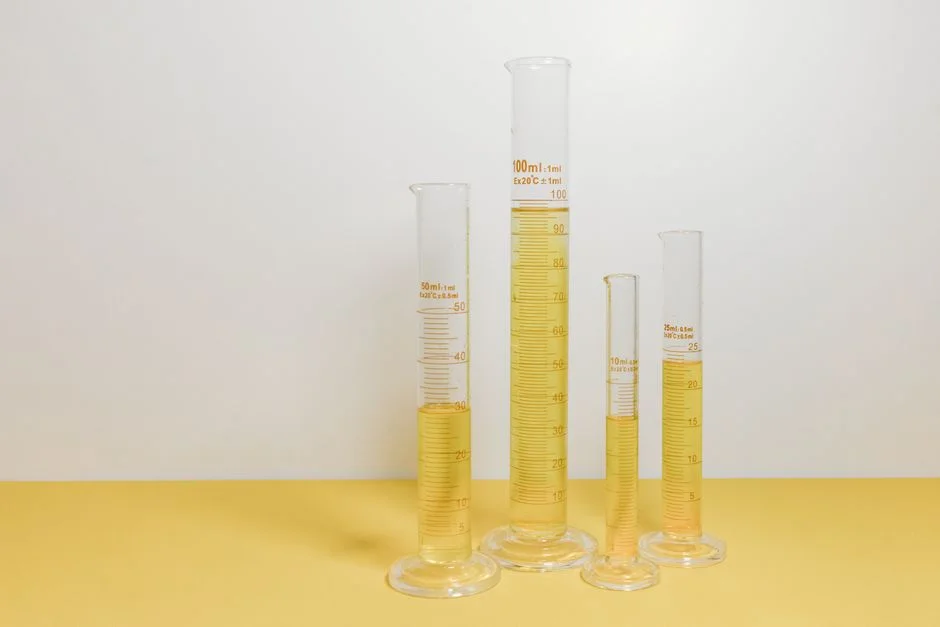
The influent envelope below is what we see on Gulf pharma characterization studies and what we size biological and membrane equipment against. Treat any single number as a mid-range target; the real envelope shifts with product mix, batch campaigns, and CIP discharge timing.
| Parameter | Typical Gulf pharma influent range | Design driver |
|---|---|---|
| COD | 1,000–8,000 mg/L | Aeration basin sizing, MBR F/M ratio |
| BOD₅ | 400–3,000 mg/L | Biodegradable fraction for MBR |
| TSS | 200–1,500 mg/L | DAF and equalization sizing |
| TDS | 2,000–15,000 mg/L | RO recovery and osmotic pressure |
| Total nitrogen | 50–300 mg/L | Nitrification HRT and SRT |
| Oil & grease | 50–500 mg/L | DAF hydraulic and air-to-solids ratio |
| pH | 4–11 (batch swings) | Equalization volume and pH correction |
| Temperature | 30–42 °C year-round, > 45 °C peak | Cooling tower duty before biotank |
| Trace APIs | ng/L to µg/L each | AOP/UV polishing dose |
API mass is trace but biologically active — Kümmerer (2009) documents bioaccumulation and endocrine effects at ng/L exposure. That is the reason polishing sits downstream of MBR rather than upstream. Equalization is sized for 12–24 h HRT to flatten pH 4–11 swings typical of batch API campaigns, and a dissolved air flotation system upstream removes the O&G pulse before it hits the bioreactor.
The 2026 Process Train That Actually Works: DAF → EQ → MBR → UF → RO → AOP/UV
The unit operations below are listed in flow order; each row is sized to deliver a removal target a permit engineer can defend.
| Stage | Equipment | Design parameter | Target removal / output |
|---|---|---|---|
| 1. DAF | ZQ/ZX series, 4–25 m³/h per unit | Hydraulic loading 4–25 m³/h, air-to-solids 0.005–0.015 | 70–90% O&G, 60–80% TSS |
| 2. Equalization + pH | Coarse-bubble mixed basin, 12–24 h HRT | 12–24 h HRT, pH probe + NaOH/H₂SO₄ dosing | pH 6.5–8.0, damped COD pulse |
| 3. MBR | Activated sludge + submerged flat-sheet membrane | MLSS 8,000–12,000 mg/L, HRT 6–10 h, SRT 20–40 d, flux 12 LMH (Gulf-derated from 15) | 80–90% API reduction (Zhao et al., 2014) |
| 4. UF guard | Hollow-fiber or flat-sheet, 0.01–0.05 µm | Flux 40–60 LMH, backwash every 30 min | SDI < 3 to RO |
| 5. RO (brackish, 2-pass) | BWRO elements, energy recovery on stage 2 | Feed pressure 10–25 bar, specific energy 1.8–2.4 kWh/m³ | 65–75% recovery, 95–99% salt rejection |
| 6. AOP / UV polish | UV/H₂O₂ or O₃ contactor | UV dose 40–80 mJ/cm², H₂O₂ 5–20 mg/L | > 90% diclofenac & ibuprofen removal (Yuan et al., 2019) |
For the biological and membrane core, an MBR membrane bioreactor system paired with an industrial RO system is the configuration we ship most often into JAFZA, KEZAD, and ICAD. Recovery is 65–75% on Gulf TDS — a Saudi Arabia municipal sewage engineering guide we published last quarter hit the same range for the same reason. AOP/UV is non-optional where the downstream use is cooling-tower make-up or boiler feed; it is the difference between a reuse permit and a reject stream.
MBR Sizing Math for a 500 m³/day Gulf Pharma Plant
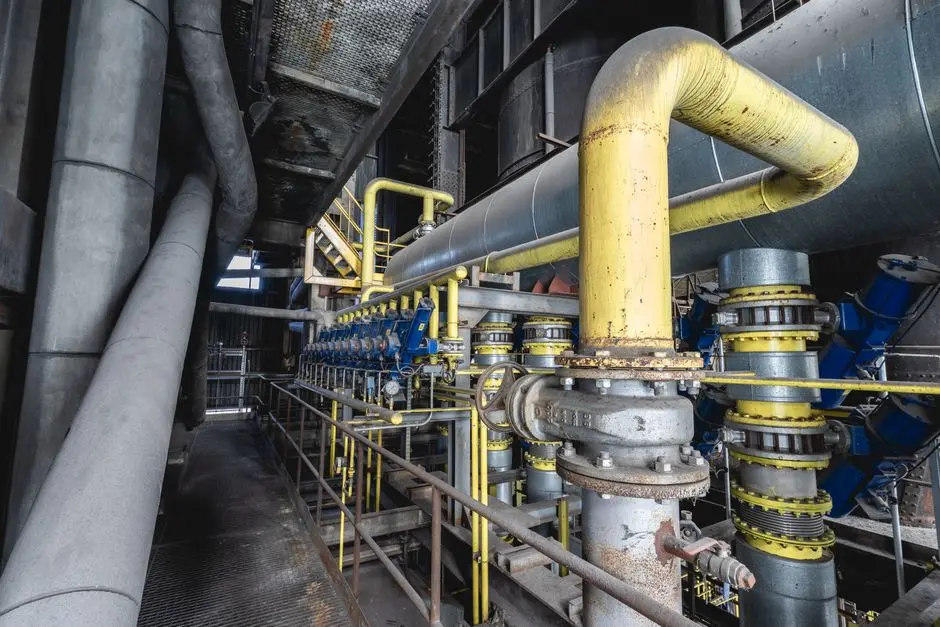
Assume average flow 500 m³/day with a peak factor of 1.3, running 24 h. That gives 20.8 m³/h average and 27 m³/h peak. The math below is the working calc a process engineer should be able to reproduce in front of a procurement review:
| Sizing step | Calculation | Result |
|---|---|---|
| Average flow | 500 m³/day ÷ 24 h | 20.8 m³/h |
| Peak flow | 20.8 × 1.3 | 27 m³/h |
| Tank working volume | 27 m³/h × 8 h HRT | ≈ 167 m³ → specify 180 m³ |
| Tank split | 2 × 90 m³ trains | Built-in redundancy for CIP |
| Membrane area (peak) | 27 m³/h ÷ 12 LMH | 2,250 m² |
| Module count | DF-225 at 225 m² each | 10 modules (with 1 standby) |
| Alternative for phased buildout | DF-160 at 160 m² each | 14 modules |
| Scour air | 0.3–0.5 m³/h per m² × 2,250 m² | 680–1,125 m³/h total → 2 blowers at 60% duty |
Flux is derated from a generic 15 LMH down to 12 LMH because the Gulf temperature band runs the mixed liquor at the upper edge of membrane manufacturer curves. The DF-series PVDF flat-sheet MBR module is what we typically spec for this duty because it tolerates the higher MLSS and survives the backwash chemistry Gulf plants actually run.
Reuse, Discharge, or ZLD: Picking the Right End-of-Pipe for the Site
The site decision is binary: do you have a sea-outfall, or don't you? The table below turns that into an equipment list and a USD band a procurement lead can defend.
| Site class | End-of-pipe | CAPEX band (USD, 500 m³/day) | OPEX band (USD/m³) |
|---|---|---|---|
| Coastal JAFZA with sea-outfall | MBR + RO polish + AOP/UV; brine to outfall | 1.8–2.6 M | 0.55–0.80 |
| Inland KEZAD, ICAD, Sharjah — no outfall | MBR + RO + brine concentrator + crystallizer (ZLD) | 3.2–4.4 M | 1.10–1.60 |
| Reuse target (cooling tower / boiler) | RO + mixed-bed IX or EDI polish to < 1 µS/cm | +0.3–0.5 M vs. discharge case | +0.10–0.15 vs. discharge case |
ZLD OPEX lands at roughly 2.0–2.8× the discharge case — the thermal crystallizer and brine concentrator are the cost drivers, not the RO. A packaged integrated water purification skid with RO plus EDI is the cleanest way to hit the < 1 µS/cm conductivity target for HP boiler feed without civil overbuild.
CAPEX, OPEX, and a 2026 Supplier Decision Matrix
For a 500 m³/day Gulf pharma plant, CAPEX lands between USD 1.8 M (coastal discharge) and USD 4.4 M (inland ZLD), with the spread driven by the end-of-pipe choice rather than the biological stage. OPEX runs USD 0.55–1.10 per m³ treated, broken down roughly as: electrical for RO plus aeration about 60%, membrane replacement on a 5-year cycle 8–12%, and chemical dosing — pH adjusters, anti-scalant, CIP chemicals — the balance. These bands are synthesized from HydropureWater project data and Gulf EPC references; confirm with an RFQ before locking a budget.
Use the decision matrix below to shortlist vendors in 2026. Anything that fails the first two rows should not make the shortlist.
| Criterion | What good looks like | Why it matters |
|---|---|---|
| UAE service footprint | Resident engineers in Dubai + Abu Dhabi, spares depot within 24 h | Membrane trains fail fast without local support |
| FAT / SAT documentation | Full FAT in factory, SAT at site, performance guarantee with liquidated damages | Defensible permit submission |
| Membrane source | PVDF flat-sheet, HMT or equivalent, with traceability | Replacement-cycle cost and CIP chemical compatibility |
| Federal Authority compliance pack | Pre-filled datasheets, COD/BOD/TSS/N/P performance curves, and a UAE reuse-standard compliance letter | Cuts permit review time by weeks |
| Gulf pharma references | At least two operating plants in JAFZA / KEZAD / ICAD with verifiable flows | Reduces technology risk for the EPC |
| Skid vs. civil scope | Packaged MBR skids at 10–200 m³/day suit formulation plants; civil-built MBR suits > 500 m³/day API plants | Civil schedule is the single biggest EPC risk in the Gulf |
A few ancillaries that show up on every disciplined RFQ: a PLC-controlled chemical dosing skid for pH and anti-scalant, a rotary mechanical bar screen ahead of the DAF, a chlorine dioxide generator for RO permeate disinfection, and a multi-media filter on the reuse loop.
Frequently Asked Questions
What RO recovery should I expect on a Gulf pharma plant?
Recovery is 65–75% at feed TDS of 2,000–15,000 mg/L; below 60% is unusual and usually points to a fouled train, a mis-sized high-pressure pump, or a concentrate backpressure valve drifting open. The generic 85% figure from industrial RO brochures assumes lower TDS feed and a multi-effect still downstream — neither applies to a stand-alone Gulf BWRO.
Can conventional activated sludge handle pharmaceutical wastewater in the UAE?
It can carry the BOD load, but it will not reliably remove trace APIs — Zhao et al. (2014) put MBR API reduction at 80–90% versus single-digit percent removal for many compounds in CAS. MBR also gives the SRT stability needed for the 20–40-day nitrification that total-nitrogen caps require.
Is ZLD mandatory for inland KEZAD or JAFZA-back pharma plants?
It is not legally mandatory across the board, but concentrate disposal options are constrained enough inland that ZLD is the default for any new API plant. Brine hauling costs in 2026 typically price ZLD in before the permit is even issued.
How hot is too hot for the MBR mixed liquor?
Target ≤ 38 °C in the biotank; sustained operation above 40 °C collapses nitrification and accelerates membrane fouling. A plate cooler or cooling-tower heat exchanger upstream of the MBR is standard on Gulf pharma trains where summer ambient pushes feed above 42 °C.
Where can I read the next-deepest dive on this topic?
See the biopharmaceutical wastewater sludge treatment guide for what happens to the wasted biomass after the MBR — the cake-handling and dewatering side of the train is where a lot of the real OPEX hides.