
Why Struvite Reactor Design Matters in 2026
Phosphorus is on the EU Critical Raw Materials list and a finite resource on the USGS mineral commodity summaries, which has pushed recovery from wastewater streams into mainstream plant design rather than pilot novelty. Struvite recovery reactor design in 2026 centers on fluidized-bed, stirred-tank, or electrochemical configurations that hold wastewater at pH 8.5–9.5 with an Mg:N:P molar ratio near 1:1:1 to crystallize magnesium ammonium phosphate hexahydrate. Field studies now report 95% P recovery at 0.03 kWh/kg P — two orders of magnitude below chemical recovery at scale, which lands at 1.7–12.9 kWh/kg P (per ACS ES T Eng, 2025-08). That gap is the engineering case for building a reactor: plants can recover a critical nutrient at a fraction of the energy of mineral fertilizer production. Uncontrolled struvite already forms hard scale in digesters, dewatering centrifuges, and heat exchangers, costing operators millions in unplanned cleaning; a designed recovery reactor converts that same scaling tendency into a saleable 5-28-0 plus ~10% Mg fertilizer product (per Sci. Total Environ., 2021).
Struvite Chemistry and the Supersaturation Window
Struvite is magnesium ammonium phosphate hexahydrate, formula MgNH4PO4·6H2O, with a fertilizer grade of approximately N-P2O5-K2O 5-28-0 and roughly 10% Mg by weight (per Sci. Total Environ., 2021). The reaction stoichiometry demands equimolar Mg2+, NH4+, and PO4 3- in solution, but most wastewaters are both P- and Mg-limited relative to ammonium, so operators dose MgCl2 or MgO to push the molar ratio to 1:1:1. The usable operating window sits at pH 8.5–9.5: supersaturation is high enough for nucleation and growth, but hydroxide concentration is not yet high enough to precipitate Mg(OH)2 as a competing phase (per Crit. Rev. Environ. Sci. Technol., 2008-09). Below pH 8.0, struvite stays soluble and recovery collapses; above pH 9.5, Mg(OH)2 fouls seed crystals and lowers purity. Mixing energy and seed loading control final crystal size, with 1–3 mm pellets being the typical recoverable fraction in a fluidized bed. Competing ions matter as well: Ca2+ above ~50 mg/L substitutes into the crystal lattice and can drop P2O5 content by 10–15%, while CO3 2- raises ionic strength and shifts the supersaturation index. The supersaturation index, defined as log(IAP/Ksp), should be held between 1.5 and 2.5 in the reactor body for stable crystal growth without spontaneous nucleation on walls.
Reactor Types Compared: Fluidized Bed, Stirred Tank, Electrochemical, and DAF-Coupled
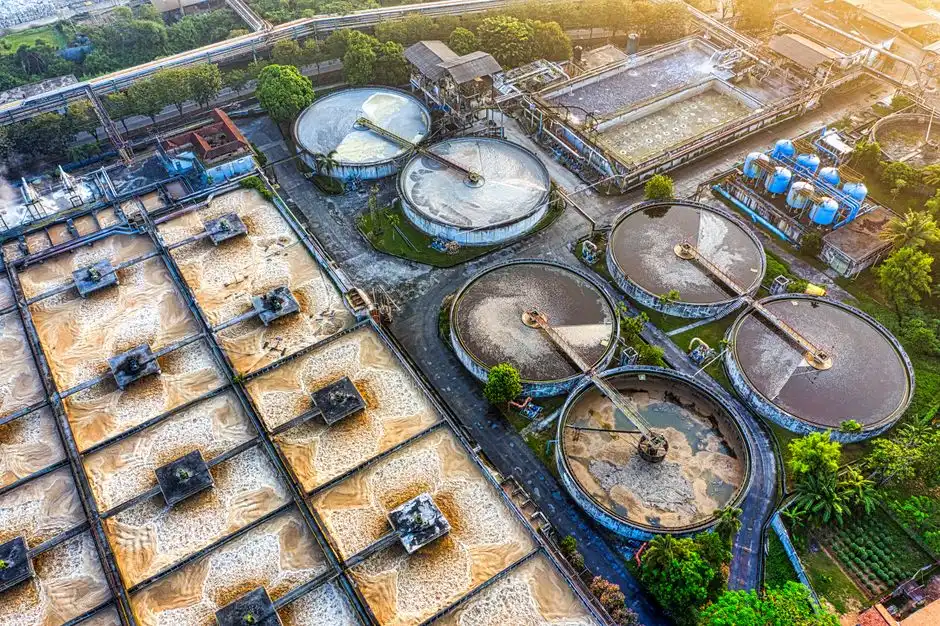
Reactor selection drives everything downstream, from seeding strategy to dewatering selection. The four configurations in commercial use today are summarized below; each trades energy use against crystal quality and Mg-source flexibility.
| Criterion | Fluidized-Bed Reactor (FBR) | Stirred-Tank Crystallizer (CSTR) | Electrochemical Cell | DAF-Coupled Reactor |
|---|---|---|---|---|
| Best influent | AD centrate, high NH4+PO4 | Municipal mainstream after biological P removal | Variable-strength sidestreams | Industrial streams with FOG |
| HRT | 1–3 h | 6–12 h | 30–120 min | 1–4 h |
| Key hydraulic parameter | Upflow velocity 50–100 m/h | G-value 300–800 s⁻¹ | Current density 5–20 mA/cm² | Recycle ratio 20–50% |
| Crystal size | 1–3 mm pellets | 0.1–0.5 mm fines | 0.2–1.0 mm | 0.05–0.3 mm floatable |
| Mg source | External MgCl2 or MgO | External MgCl2 or MgO | Sacrificial Mg anode | External MgCl2 |
| Energy use | 0.1–0.5 kWh/kg P | 0.2–0.8 kWh/kg P | 0.03 kWh/kg P (per ACS ES T Eng, 2025-08) | 0.3–1.0 kWh/kg P |
| Typical scale | 5–500 m³/d pilot to full | 50–2000 m³/d | 1–100 m³/d modules | 20–500 m³/d |
An FBR delivers the cleanest product because coarse pellets drain and dry to >90% solids without a separate dewatering stage, but it requires a tall reactor profile (typically 4–6 m) and reliable upflow control. A stirred tank is the easiest retrofit into an existing basin and tolerates influent variability, but the fine crystals need a DAF system or lamella clarifier for harvest. Electrochemical cells eliminate bulk Mg chemical dosing because the sacrificial Mg anode releases Mg2+ in situ; the key design variables are current density, electrode gap (typically 10–30 mm), and pulse frequency (per RSC Adv., 2025). DAF-coupled reactors make sense for high-FOG industrial streams where existing flotation infrastructure is already in place.
Key Design Parameters Every Engineer Should Lock In
Before sizing any reactor, lock these parameters into the P&ID. They determine whether the system actually crystallizes struvite at design flow or quietly underperforms.
| Parameter | Target / Range | Engineering Note |
|---|---|---|
| pH setpoint | 8.8–9.2 | Precision dosing matters more than dose rate; use a PLC-controlled chemical dosing system with in-line pH feedback |
| Mg:N:P molar ratio | 1:1:1 ± 10% | Municipal centrate typically needs 0.5–1.5 mol Mg per mol P added |
| HRT (FBR) | 1–3 h | Drives reactor volume; check against peak diurnal flow |
| HRT (CSTR) | 6–12 h | Larger basin; allow for sludge storage at base |
| HRT (electrochemical) | 30–120 min | Modular; scale by adding cells in parallel |
| FBR upflow velocity | 50–100 m/h | Below 50 m/h causes bed settling; above 100 m/h elutes nuclei |
| Seed loading | 5–20 g/L | Silica sand 0.2–0.6 mm or recycled struvite fines |
| Temperature | 20–35 °C | Below 15 °C slows nucleation kinetics roughly 3-fold per 10 °C |
| Supersaturation index | log(IAP/Ksp) 1.5–2.5 | Calculated from pH, Mg, NH4, PO4 analytics |
The pH setpoint is the single most leveraged control loop. A swing of 0.3 pH units around 9.0 changes the struvite saturation index by roughly an order of magnitude, which is why inline pH probes feeding PID loops outperform timed-dose systems in field operation.
Pre- and Post-Treatment Around the Struvite Reactor
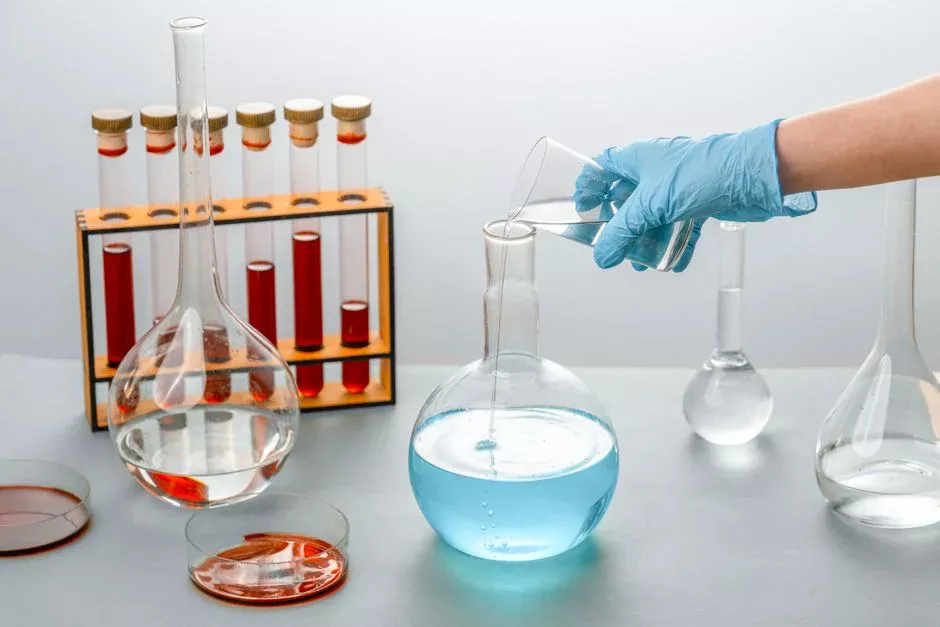
A struvite reactor does not stand alone; it is one unit in a sidestream train that includes screening, pH adjustment, crystal harvest, and dewatering. Upstream of the reactor, a GX series rotary bar screen removes rags and plastics that would otherwise seed wall fouling, and a flow equalization basin dampens diurnal swings in P and NH4 concentration. Downstream biological treatment must already be removing BOD so the centrate stream carries concentrated NH4 and PO4 — typically 50–200 mg/L P and 500–1500 mg/L NH4-N from an anaerobic digester. The single most common design error is omitting the pH adjustment step: even with NaOH available, an unconditioned centrate will sit at pH 7.0–7.5 and struvite simply will not form. Post-reactor, a HydropureWater lamella clarifier or DAF unit floats or settles the crystals, and a plate-and-frame filter press dewaters the slurry to >90% dry solids for bagging or bulk handling. The reject water from the press should be recycled to the reactor inlet, which typically lifts overall P recovery above 90% by capturing dissolved PO4 that did not crystallize on the first pass. For a deeper look at how DAF integrates with struvite harvest versus oily streams, see the DAF vs oil-water separator comparison.
Scale-Up Risks and How to Avoid Them
Most pilot-to-full-scale failures in struvite recovery come from water chemistry, not hydraulics. Trace Ca2+ in real centrate (often 40–200 mg/L) can substitute into the crystal lattice and drop P2O5 purity from 95% to 60% compared with synthetic feed, so every pilot must run on site water for at least four weeks before vendor commitments are signed. Wall scaling on the reactor, piping, and downstream centrifuges is the most common operational risk; design the reactor for a CIP acid wash every 4–8 weeks with a 2–5% citric or sulfamic acid solution, and avoid dead legs in the piping. Mg chemical OPEX typically dominates the operating budget at 1:1 dosing and MgCl2 prices around $400/ton, which is why electrochemical cells or seawater-Mg sources become attractive at larger scale. Finally, digester centrate P swings 50–200 mg/L day to day; include an equalization basin or an in-line PO4 analyzer that trims both pH and Mg dose setpoints in real time. For process engineers modeling scale-up, the digital twin for wastewater treatment plant workflow in 2026 is the most reliable way to test control loops before they hit the field.
Energy and Economics: What the Reactor Actually Costs to Run
The energy case for struvite recovery is now strong enough to stand on its own. Electrochemical cells deliver 0.03 kWh/kg P (per ACS ES T Eng, 2025-08), FBRs sit at 0.1–0.5 kWh/kg P, and conventional chemical P precipitation runs 1.7–12.9 kWh/kg P. For a 100,000 m³/d municipal plant with 8 mg/L P in centrate, that is roughly 24 kg P per hour recovered, equating to about 17 kWh/hr at the best-case electrochemical benchmark — under 1% of the energy the same plant spends on aeration. Struvite market value lands at $150–$400/ton as a slow-release fertilizer, which typically offsets chemical and energy OPEX within 3–7 years depending on reactor type and Mg source.
| Reactor Type | CAPEX Band (USD per kg P/day) | OPEX Driver | Payback (years) |
|---|---|---|---|
| Fluidized-bed (FBR) | $8,000–$15,000 | MgCl2 chemical + pumping | 4–7 |
| Stirred-tank (CSTR) | $5,000–$10,000 | MgCl2 chemical + mixing power | 5–8 |
| Electrochemical | $12,000–$25,000 | Electricity + electrode replacement | 3–5 |
| DAF-coupled | $6,000–$12,000 | MgCl2 + air supply | 5–7 |
For DAF-side budgeting, the 2026 DAF system pricing guide gives current capital ranges that pair with the reactor CAPEX above.
Frequently Asked Questions
What pH is required for struvite formation?
Struvite crystallizes effectively between pH 8.5 and 9.5, with the engineering sweet spot at 8.8–9.2. Below 8.0 the saturation index collapses and PO4 stays dissolved; above 9.5, Mg(OH)2 becomes the dominant precipitate and competes with struvite nuclei.
What molar ratio of Mg:N:P is needed?
The stoichiometric target is 1:1:1 molar, but most wastewaters are NH4-rich and both P- and Mg-limited, so operators dose 0.5–1.5 mol Mg per mol P to land within ±10% of the 1:1:1 ratio after reaction.
Do struvite reactors work on mainstream wastewater or only on sidestreams?
Commercial reactors run almost exclusively on sidestreams — anaerobic digester centrate, dewatering reject water, or industrial condensates — where P sits at 50–200 mg/L. Mainstream municipal wastewater at 5–10 mg/L P is too dilute for cost-effective crystallization without upstream concentration.
How much energy does an electrochemical struvite cell use?
Field-reported energy use is 0.03 kWh/kg P at the best-case operating point (per ACS ES T Eng, 2025-08), which is roughly 50× lower than chemical precipitation at scale (1.7–12.9 kWh/kg P) and competitive with mineral P fertilizer production (1.1 kWh/kg P).
Is recovered struvite safe to sell as fertilizer?
Yes, when produced from municipal or food-processing sidestreams struvite typically meets national slow-release fertilizer specifications (N-P2O5-K2O ≈ 5-28-0 plus ~10% Mg), with heavy-metal concentrations well below EU and US fertilizer limits in most municipal applications.