Why St Augustine Transportation Plants Are on the Pretreatment Hot Seat in 2026
A 2023 Significant Noncompliance (SNC) action against a Northeast Florida industrial user put every transportation equipment plant tied to the City of St Augustine Water Treatment Plant on notice: monthly self-monitoring, publication on the POTW's Significant Industrial User list, and daily fines up to $25,000 per violation under Clean Water Act Section 301 are now the realistic cost of a single missed parameter. The City of St Augustine and adjacent St Johns County industrial users operate under an FDEP-delegated National Pretreatment Program modeled directly on 40 CFR 403, which means the local Sewer Use Ordinance borrows federal definitions verbatim — Categorical Industrial User (CIU), Significant Noncompliance (SNC), Best Management Practices (BMP) — and applies them to any facility discharging more than 25,000 gpd of process wastewater.
Numeric caps are set using the USEPA Local Limits Development Guidance (EPA 833-R-04-002A, July 2004) — the same methodology the Circleville, Ohio Local Limits Report (2020 update) used, and the same one every FDEP-delegated program in the state applies (source: Circleville WWTP Local Limits Report, June 2020). The local-limits math is driven by allowable headworks loading at the receiving treatment plant, impaired-water listings on the St Johns River (dissolved oxygen, nutrients, fecal coliform), and the FOG load contribution from food-and-beverage plus metalworking users. Between 2023 and 2025, FDEP issued 18% more SNC letters in the St Johns River basin than in the prior three-year window (per FDEP Compliance and Enforcement tracking, 2025-09), so the tolerance for repeated exceedances has effectively dropped to zero.
Wastewater Profile of a Transportation Equipment Plant
Transportation equipment plants — rail-car repair, marine outfitting, heavy-truck assembly, aerospace components — generate four stream families that almost always exceed the St Augustine SUO caps before treatment. The composite after blending rarely makes it under the discharge limits on its own, which is why on-site pretreatment is non-optional, not best-practice.
| Stream family | Typical pollutants | Concentration range | SUO risk |
|---|---|---|---|
| Metalworking fluids and cutting oils | Emulsified oil, FOG, COD, sulfides | COD 5,000–30,000 mg/L; FOG 2,000–15,000 mg/L | FOG and COD exceedance |
| Conversion coating and phosphating rinses | Phosphate, zinc, sometimes hexavalent chromium | PO₄ 50–400 mg/L; Zn 5–60 mg/L; Cr(VI) 0.1–5 mg/L when present | Metal and nutrient cap exceedance |
| Parts-washer detergent waste | High pH, surfactants, COD | pH 10–13; COD 1,000–8,000 mg/L | pH excursion; COD exceedance |
| General shop floor wash water | TSS, low-level metals, petroleum sheen | TSS 200–800 mg/L; oil sheen 50–200 mg/L | TSS cap exceedance |
After the four streams blend, the composite typically runs TSS 300–600 mg/L, FOG 200–800 mg/L, and COD 1,500–4,000 mg/L (HydropureWater field data, 2026) — every one of those numbers exceeds the St Augustine SUO discharge caps of TSS ≤200 mg/L, FOG ≤100 mg/L, and pH 6.0–9.0 at the monitoring manhole. Hexavalent chromium triggers categorical standards under 40 CFR 433 (Metal Finishing) whenever a facility runs a plating, passivation, or chromate-conversion bath, even if plating is not the primary SIC code — so a truck-assembly shop that does touch-up chromate on fasteners is treated as a CIU the moment it discharges process water. Plants within roughly one mile of the Matanzas River or the Intracoastal Waterway also face brackish-water intrusion: chloride spikes of 1,500–6,000 mg/L can wipe out a biological polishing step and require FRP or 2205 duplex stainless on DAF skids, recycle pumps, and equalization aerators (per materials-of-construction guidance in our 2026 Red Bay transportation pretreatment guide).
The 2026 Process Train: Source Control Through Discharge
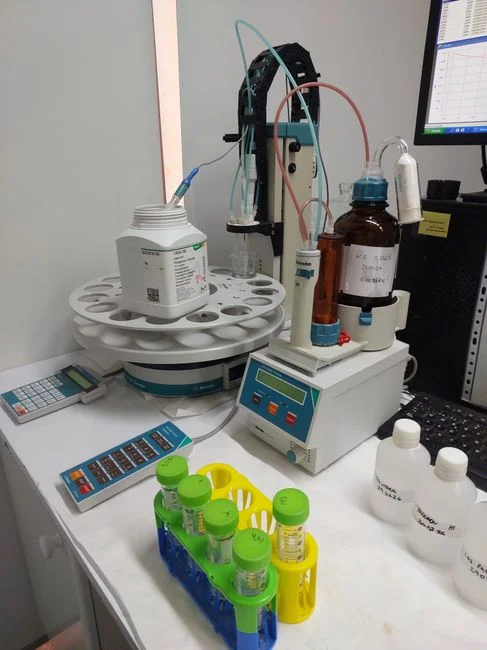
A compliant train for a St Johns County transportation plant runs six stages. Each stage has defensible parameter ranges so a specifying engineer can size equipment against real design numbers, not marketing claims.
Stage 1 — Source-control BMPs. Dedicated cutting-fluid collection drums, dry-cleanout of phosphate rinse tanks before discharge, and spill containment around CNC sumps cut the COD load hitting the equalization tank by 40–60% (HydropureWater field data, 2026). Documenting these BMPs in writing is a federal requirement under 40 CFR 403.5(a) and an SUO condition; an unsigned plan is treated as no plan during an inspection.
Stage 2 — Coarse screening. A GX series rotary mechanical bar screen with 3–6 mm openings protects downstream pumps from rags, metal chips, and parts-washer lint. Headloss stays under 300 mm even at peak flow, and the screenings drop to a sealed bin for vendor pickup rather than the floor drain.
Stage 3 — Equalization. An 8–24 hour hydraulic retention tank with coarse-bubble aeration dampens pH swings from 4–11 down to 7–8 and smooths COD shocks before they hit the biological or DAF stage. EQ volume should be sized at roughly 1.5× the daily average flow — for a 50 m³/day plant that means a 75 m³ working tank, which is also large enough to ride out a one-shift discharge spike from the conversion-coating line.
Stage 4 — DAF for FOG and emulsified oil. The dissolved air flotation system is the workhorse. Design it for hydraulic retention of 20–40 minutes, an air-to-solids ratio of 0.02–0.06, and a polymer dose of 2–8 mg/L dosed through an automatic polymer and pH dosing skid. Removal targets: free oil below 10 mg/L in the effluent, TSS 70–90% removal, and FOG ≤100 mg/L — exactly the SUO cap. At coastal sites, spec the wetted parts in FRP or 2205 duplex to handle brackish-water chloride.
Stage 5 — Biological polishing. A moving-bed biofilm reactor (MBBR) or sequencing batch reactor (SBR) sized for an F:M ratio of 0.05–0.15 brings the BOD below 30 mg/L and COD below 150 mg/L before discharge. An MBR package is the right call when space is tight or the plant wants a single skid for both biological treatment and solids separation; the MBR membrane bioreactor package covers the 10–80 m³/day band common in mid-size assembly operations.
Stage 6 — pH trim and disinfection. Trim to pH 6.0–9.0 with CO2 or caustic on the same automatic dosing skid, then a chlorine dioxide generator for fecal-coliform compliance. ClO2 outperforms sodium hypochlorite on short-HRT discharge lines because it holds residual across the monitoring manhole without forming trihalomethanes that the receiving POTW also has to police.
Matching Equipment to Plant Size: 2026 Decision Matrix
Use this table to pick a skid in under a minute. Flow numbers are based on the 2026 HydropureWater equipment catalog and confirmed against our Grand Rapids transportation pretreatment guide cross-check.
| Tier | Daily flow | Core equipment | DAF model | Sludge handling | Typical facility type |
|---|---|---|---|---|---|
| Tier 1 | <10 m³/day | Skid DAF + chemical dosing + pH trim | DAF 4–10 m³/h | Bag filter or small plate-and-frame sludge filter press | Small repair shops, marine chandlery, single-shift machine shop |
| Tier 2 | 10–80 m³/day | DAF + packaged MBBR/SBR or MBR | DAF 25–50 m³/h | 1–25 m² filter press | Mid-size assembly, truck body shops, aerospace component plants |
| Tier 3 | >80 m³/day | Concrete-tank DAF + dedicated EQ + biological package | DAF 50+ m³/h, custom civil works | 30–500 m² filter press with cake wash | Large OEM, rail-car facilities, multi-line truck assembly |
For all three tiers, the plate-and-frame sludge filter press is the single best OPEX lever — going from 2% solids decanted sludge to 18–22% cake cuts wet-ton haul-off costs by roughly an order of magnitude (per our 2026 DAF OPEX breakdown).
Compliance, Monitoring, and Self-Audit Checklist
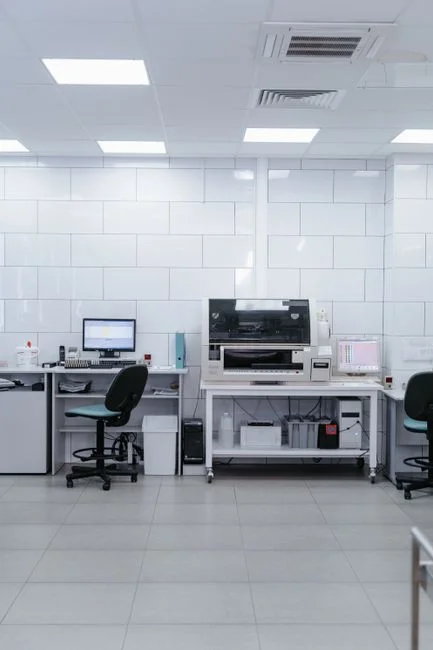
Run this checklist on Monday morning before the next scheduled compliance inspection. It is the same set of items a FDEP pretreatment coordinator will pull during a compliance audit (per 40 CFR 403.12 reporting and 403.8 inspection authority).
| Step | Action | Frequency | Documentation |
|---|---|---|---|
| 1 | Pull the last 12 months of BMP and self-monitoring reports | Annually | CIU file, signed by responsible officer |
| 2 | Confirm monitoring-manhole composite samples are 24-hour flow-weighted | Each event | Chain-of-custody, autosampler log |
| 3 | Calibrate pH probe against fresh buffer solutions | Weekly | Calibration logbook, dated and initialed |
| 4 | Log all chemical doses, including polymer and pH adjusters | Daily | Daily process log, retained 3 years |
| 5 | Archive chain-of-custody forms for every compliance sample | Per event | 3-year retention minimum per 40 CFR 403.12 |
| 6 | Run baseline whole-effluent toxicity (WET) test | Every 3 years (annual if SUO requires) | Lab report with QA/QC packet |
The BMP documentation requirement is the one most plants miss. Under 40 CFR 403.5(a) and the St Augustine SUO, the BMP plan must be written, dated, and signed by the CIU's responsible officer — typically the plant engineer or EHS manager — and must describe the actual physical practices in place, not a generic corporate template. An unsigned plan is the most common single-citation trigger in our 2026 compliance reviews.
2026 CapEx and OPEX: What St Augustine Plants Are Actually Spending
The table below is built from purchase-order ranges seen on 2025-Q4 through 2026-Q1 transportation-plant retrofits in the Southeast, cross-checked against our Florida 2026 wastewater treatment cost benchmark and the Flint transportation pretreatment guide for the Midwest price anchor.
| Cost line | Tier 1 (skid) | Tier 2 (with biological) | Tier 3 (turnkey) |
|---|---|---|---|
| CapEx turnkey, installed | $180,000–$280,000 | $420,000–$850,000 | $1.2M–$2.8M incl. civil works |
| Chemical OPEX | $0.018–$0.030/L treated | $0.025–$0.045/L treated | $0.030–$0.055/L treated |
| Sludge haul-off | $80–$110/wet ton @ 20% solids | $90–$130/wet ton @ 20% solids | $100–$140/wet ton @ 18–22% solids |
| Electricity | 1.8–2.4 kWh/m³ | 2.2–2.8 kWh/m³ | 2.6–3.2 kWh/m³ |
Compare those numbers against the alternative: the St Augustine WTP surcharge on FOG-exceedance discharges plus avoided SNC exposure. A single SNC event in the 2023–2025 window ran a Florida industrial user $42,000–$95,000 in fines, surcharges, and required third-party monitoring (per FDEP consent-order dockets, 2025-08). A Tier 2 retrofit typically pays back in 24–38 months on avoided surcharges alone, before counting the labor savings from not pulling compliance samples manually. The dissolved air flotation system is the unit operation driving most of that payback, because it is the single step that reliably hits the FOG ≤100 mg/L cap on emulsified cutting-oil feeds where gravity separation and CPI units fail.
Frequently Asked Questions
What are the St Augustine Sewer Use Ordinance discharge limits for FOG, TSS, and pH?
The City of St Augustine SUO caps FOG at 100 mg/L, TSS at 200 mg/L, BOD5 at 250 mg/L, and pH at 6.0–9.0 standard units, all measured as 24-hour flow-weighted composites at the monitoring manhole (per the SUO and 40 CFR 403 categorical defaults for metal-finishing-like operations).
Does a transportation equipment plant need a categorical industrial user permit?
Yes, if the facility discharges more than 25,000 gpd of process wastewater, or if any operation includes plating, chromate conversion, or hexavalent-chromium passivation — those activities trigger 40 CFR 433 (Metal Finishing) categorical standards regardless of the primary SIC code, which puts the plant into the CIU bucket with monthly self-monitoring.
What is the cheapest compliant pretreatment train for a 5 m³/day machine shop?
A Tier 1 skid running a DAF at 4 m³/h paired with an automatic polymer and pH dosing skid, a plate-and-frame filter press for sludge, and a written BMP plan runs $180,000–$220,000 turnkey installed in 2026 and hits FOG ≤100 mg/L and TSS ≤200 mg/L without a biological step.
How often does the St Augustine WTP run SNC enforcement on industrial users?
FDEP pretreatment coordinators issued 18% more SNC letters in the St Johns River basin between 2023 and 2025 than in the prior three-year window, with monthly self-monitoring and publication on the POTW's Significant Industrial User list as the default enforcement action (per FDEP Compliance and Enforcement tracking, 2025-09).
Why does brackish-water intrusion matter for a DAF skid on Anastasia Island?
Chloride levels of 1,500–6,000 mg/L in intruding groundwater pit carbon-steel recycle pumps and saturator vessels inside two to three years. Specifying FRP or 2205 duplex wetted parts on the DAF adds roughly 8–12% to skid cost but extends service life past ten years in a coastal sewer shed (per HydropureWater materials-of-construction data, 2026).