Why International Paper Is the Reference Case for Modern Mill Effluent Treatment
International Paper is the world's largest pulp-and-paper producer, with a global manufacturing footprint that mirrors the process mix found in a modern, well-capitalised kraft mill. Its published environmental disclosures, combined with decades of academic work on kraft-mill effluent, make it a defensible proxy for any engineer trying to understand what a paper mill wastewater treatment plant does day to day.
Paper mill wastewater is the combined stream leaving a pulp or paper operation: it carries suspended solids (fibre, fines, fillers), dissolved organics from residual lignin and hemicellulose, colour bodies that are hard to break down, and process chemicals that vary by grade. For a kraft mill specifically, the stream is hot, variable in pH, and typically shows influent total suspended solids (TSS) in the 1,000–5,000 mg/L range, chemical oxygen demand (COD) of 2,000–10,000 mg/L, biochemical oxygen demand (BOD₅) in the 1,000–4,000 mg/L band, and colour measured in the thousands of Pt-Co units (per BioResources; Doorma Journals, 2024-2025). Those numbers set the design envelope for everything that follows.
Using International Paper as a stand-in is useful for two reasons. First, its mills span the full kraft process menu—pulping, bleaching, stock preparation, paper machine, and converting—which is the same process menu a buyer or EHS manager at any other major mill is sizing equipment against. Second, the academic record on secondary sludge generation, biological performance, and reuse growth is anchored in real operating data, so the parameter ranges cited in this article are drawn from peer-reviewed studies rather than vendor cut-sheets (per BioResources, 2024; Water Air & Soil Pollution, 2021).
The following sections detail the flow of water from the head of the mill to the discharge outfall or reuse header, broken down by unit operation, contaminant removal, and equipment class.
The Full Paper Mill Wastewater Treatment Train at a Glance
Raw paper mill wastewater is screened and clarified to strip out rags, fibre, and grit, then equalised to smooth out production swings. From there, dissolved air flotation lifts colloidal solids and oil, an activated-sludge basin oxidises the dissolved organics, and a tertiary polishing step takes out residual colour, suspended solids, and refractory COD before the water is either discharged to a receiving body or sent to the reuse header.
A typical kraft-mill train follows this sequence:
- Mechanical screening — removes rags, plastics, and large fibre that would blind pumps or foul aeration diffusers.
- Primary clarification — settles out grit, fibre bundles, and readily settleable solids, with TSS removal in the 50–70% range on paper-mill influent.
- Dissolved air flotation (DAF) — lifts colloidal fibre, fines, fillers, and entrained pitch that primary clarifiers cannot catch; this is the workhorse step before biology in most modern kraft mills.
- Flow equalisation — buffers the shock loads from batch bleaching or grade changes; a kraft mill's influent is continuous but rarely steady.
- Activated-sludge biological treatment — a community of heterotrophic bacteria oxidises dissolved organics into CO₂, water, and new cell mass; this is where the bulk of the COD and BOD is removed.
- Tertiary polishing — coagulation, sand/anthracite filtration, membrane filtration, or activated carbon polish off residual colour, TSS, and refractory COD.
- Discharge or reuse — final effluent either meets permit limits for surface discharge or is sent to a cooling, shower, or process-water header.
A kraft mill generates secondary sludge at roughly 6% of its production capacity, and a de-inking mill can push that figure to 24% (per BioResources, 2024). That sludge must be thickened, dewatered, and disposed of, making the solids side of the train as critical as the water side for both OPEX and permitting.
| Stage | Primary target | Typical removal / outcome |
|---|---|---|
| Mechanical screening | Rags, plastics, large fibre | ~10–30% TSS; protects downstream equipment |
| Primary clarification | Suspended solids, grit | 50–70% TSS; ~25–40% COD |
| Dissolved air flotation | Colloidal fibre, fillers, pitch | 70–90% of residual TSS; ~30–50% COD |
| Equalisation | Flow and load swings | Smooths BOD/COD shock |
| Activated sludge | Dissolved organics | 80–95% COD; 90–98% BOD |
| Tertiary polishing | Colour, residual COD, TSS | 50–90% colour; TSS < 10–30 mg/L |
| Discharge / reuse | Final water quality | Permit envelope or process reuse |
Primary Treatment: Bar Screens, Clarifiers and Where DAF Fits
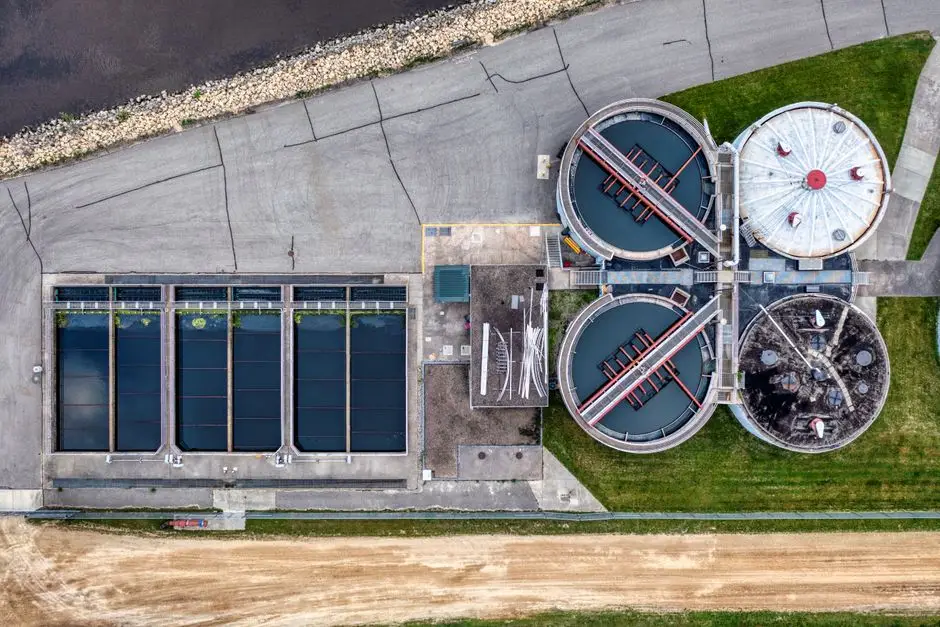
Primary treatment removes contaminants to reduce the load on downstream processes. Mills run the wastewater through rotary mechanical bar screens first to strip out rags, plastic strapping, and large fibre bundles that would otherwise jam pumps and clog aeration diffusers. A GX series rotary mechanical bar screen at the headworks is typical for paper-mill duty, with bar spacings in the 3–10 mm range depending on downstream protection requirements.
From the screens, the water flows to primary clarifiers, where settleable solids and grit drop out under gravity. On a paper-mill feed, primary clarifiers typically remove 50–70% of influent TSS and 25–40% of COD, with hydraulic retention times of 1.5–3 hours. The settled solids go to the sludge handling train; the clarified overflow moves forward to flotation.
Dissolved air flotation (DAF) injects a stream of micro-bubbles (typically 30–80 µm) that attach to colloidal fibre, fines, fillers, and entrained pitch, lifting them to the surface as a float that is skimmed off. DAF commonly removes 70–90% of the residual TSS the primary clarifier missed and another 30–50% of the COD, with hydraulic retention times of 20–40 minutes. A dissolved air flotation system covers the 4–300 m³/h flow band and is a common fit for paper-mill pre-treatment. The clarified, floated water is now low enough in suspended solids that the biological step can operate effectively without blinding.
Secondary Biological Treatment: Activated Sludge at a Kraft Mill
Activated sludge is the standard secondary treatment method for kraft mills. The aeration basin holds a mixed community of heterotrophic bacteria that oxidise dissolved organics into CO₂, water, and new cell mass, and a clarifier downstream separates those biological flocs from the treated water.
Across the aeration basin, a well-run kraft-mill activated-sludge system removes 80–95% of influent COD and 90–98% of BOD₅, with mixed liquor suspended solids (MLSS) operating in the 2,000–4,000 mg/L range and a food-to-microorganism ratio (F/M) of about 0.2–0.5 lb BOD/lb MLVSS·day. Hydraulic retention time is usually 6–12 hours, and dissolved oxygen is held at 1.5–2.5 mg/L. The secondary clarifier sends a portion of the settled biomass back as return activated sludge (RAS) to keep MLSS stable; the rest is wasted to the sludge handling train.
An increasingly common upgrade on a kraft mill is to replace the conventional secondary clarifier with an integrated MBR membrane bioreactor. MBR holds MLSS at 8,000–12,000 mg/L or higher, removes more COD on a smaller footprint, and produces a clarifier-free effluent with TSS typically under 5 mg/L, reducing the polishing load downstream.
Activated-sludge biology is the primary source of secondary sludge. A typical kraft mill produces secondary sludge at about 6% of its production capacity, with de-inking operations reaching 24% (per BioResources, 2024). This volume dictates the sizing of dewatering equipment and the disposal budget.
Tertiary Polishing and the Move to Reuse
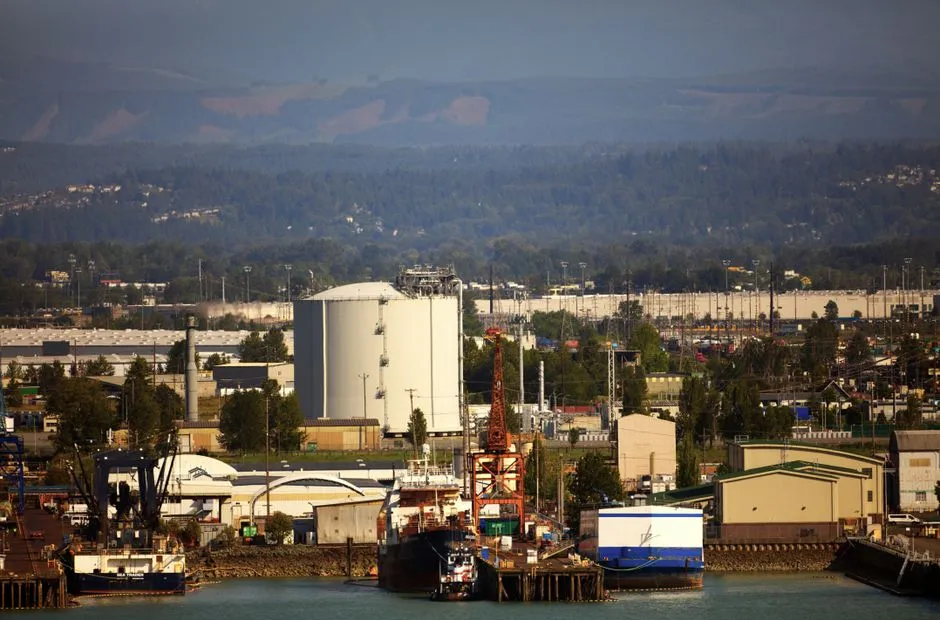
After the secondary clarifier, the water is biologically clean but still carries residual colour from lignin-derived chromophores, a few hundred mg/L of refractory COD, and 10–30 mg/L of TSS. Tertiary polishing removes these constituents before discharge or reuse.
Polishing typically involves a multi-stage process: coagulation/clarification to remove final colloids, sand or multimedia filtration to reduce TSS below 5–10 mg/L, and activated carbon or a membrane step to strip residual colour and refractory COD. Mills seeking near-reuse quality on a compact footprint increasingly run an industrial RO system downstream of the MBR or media filters, producing a permeate that can be blended into shower water or used for chemical make-up.
Treated wastewater reuse has grown at roughly 10–29% per year in Europe, the US, and China, and up to 41% in Australia (per Water Air & Soil Pollution, 2021). Where the endpoint is surface discharge, a typical US kraft-mill permit envelope runs 30 mg/L BOD₅, 30 mg/L TSS, and 100–200 Pt-Co colour units, with chronic whole-effluent toxicity testing required.
Final disinfection is usually performed with chlorine dioxide because it controls biofilm in the reuse header and handles residual colour better than free chlorine. A chlorine dioxide generator sized for 1–5 mg/L ClO₂ on the design flow is a common configuration.
Handling the 6%: Sludge Dewatering and Disposal
The secondary sludge leaving the activated-sludge clarifier runs at roughly 1.5% consistency—15 kg of dry solids per cubic metre of sludge (per BioResources, 2024). At a kraft mill generating 6% of its production as secondary sludge, this creates a continuous, mechanically demanding dewatering requirement that is often the second-largest OPEX line after energy.
The plate-and-frame filter press is the industry standard, compressing sludge in a batch cycle to produce a cake at 30–45% dry solids, suitable for landfill, incineration, or downstream valorisation. A plate and frame filter press sized on solids throughput (kg DS/h) is the typical selection; hydraulic diaphragms, polypropylene plates, and automatic cloth-washing are now standard. The pressate returns to the head of the plant, while the cake goes to disposal or reuse.
Some kraft mills are piloting protein recovery from secondary sludge as a feedstock for wood-adhesive formulations. This is a viable valorisation route because the activated sludge is rich in polysaccharides, nucleic acids, enzymes, and proteins (per BioResources, 2024). For most mills, landfill remains the baseline, with incineration utilized where tipping fees are high and energy recovery is permitted.
Mills can reduce polymer or coagulant use by pairing an automated chemical dosing for paper mill coagulation and flocculation package with the filter press, which typically cuts polymer consumption by 15–25% and produces a drier, more consistent cake. Engineers should cross-check disposal assumptions against a current 2026 wastewater treatment plant permit checklist before finalizing a dewatering design. For greenfield sites, the 2026 industrial wastewater treatment costs and standards provide a useful reference for the capex/opex split.
Frequently Asked Questions
What is the main biological treatment used at a paper mill?
Activated sludge is the standard. It uses a mixed community of heterotrophic bacteria in an aeration basin to oxidise
Frequently Asked Questions
What is the main biological treatment used at a paper mill?
The primary biological treatment utilized at International Paper mills is the activated sludge process, typically housed in large aerated stabilization basins (ASB) or conventional secondary clarifiers. These systems rely on aerobic bacteria to consume dissolved organic matter, reducing the Biochemical Oxygen Demand (BOD) by 90% to 95% before discharge.
How much sludge does a paper mill produce per tonne of paper?
On average, paper mills generate between 20 to 50 kilograms of dry solids per tonne of finished paper produced. This volume varies based on the furnish composition, the efficiency of the fiber recovery systems, and the specific chemical additives utilized in the wet-end process.
Does International Paper reuse its wastewater?
Yes, International Paper employs internal water loops and closed-cycle technologies to recycle significant portions of process water. Through advanced filtration and clarification, mills often reuse 60% to 80% of their treated process water within the facility for tasks such as pulp washing, shower water, and equipment cooling, minimizing freshwater intake requirements.
What does DAF remove in a paper mill?
Dissolved Air Flotation (DAF) is primarily used to remove suspended solids, colloidal particles, and emulsified oils from white water streams. By injecting pressurized air into the wastewater, the system creates micro-bubbles that attach to contaminants, floating them to the surface where they are mechanically skimmed off to achieve up to 98% removal efficiency for total suspended solids (TSS).
Why is colour removal so difficult for paper mill effluent?
Colour in paper mill effluent is primarily caused by complex, high-molecular-weight lignins and tannins derived from wood pulping, which are highly resistant to standard biological degradation. Because these aromatic compounds are chemically stable and often remain dissolved in the water column, they require aggressive tertiary treatment methods, such as chemical oxidation, membrane filtration, or specialized coagulants, to achieve effective decolorization.