Why Reactive Dyeing Bath Dumps Demand a Different ZLD Approach
Reactive dye wastewater represents a major global loss — over 20% of the roughly 700,000 tons of synthetic dyes produced annually ends up in the bath, making reactive baths the single largest textile ZLD case (Nature, 2023). Reactive dyes are not just colored salt water. They form a covalent bond with cellulose, which is why the dyehouse forces the reaction with alkali (Na₂CO₃ or NaOH, pH 10–11) and high electrolyte (NaCl or Na₂SO₄, 30–100 g/L). Disperse and vat dyes behave differently and do not carry the same hydrolysate problem. Once the dye–fibre reaction stops, the spent bath contains 10–30% of the original dye in hydrolysed form — a molecule roughly 1.38 nm in size that has lost its reactive group and cannot be re-used without a separate recovery step (Nature, 2023). The sizing driver for a reactive-dye ZLD is therefore not water reuse alone but simultaneous dye removal, salt recovery, and water reuse with the smallest crystallizer feasible.
Step 1: Characterize the Reactive Dyeing Bath Feed
Before any vendor meeting, the engineer needs a parameter checklist with real numbers, not textbook ranges. A medium-sized cotton dyehouse typically discharges 200–800 m³/d of spent reactive bath, plus 1.5–3× that volume of wash and rinse water. The two streams should be segregated: the bath is far more concentrated and routes directly to UF, while the wash water may be too dilute for thermal treatment and should be reused counter-current in the dyehouse. The bath exits at 60–90 °C, and that heat is the first energy decision — either pre-cool before UF to protect the membrane, or feed hot if the UF modules are rated for 50–60 °C continuous.
Chemistry matters more than flow. pH 10–11 from the alkali must be neutralized to 6.5–7.5 before RO because thin-film composite membranes are rated for continuous operation below pH 9; pH excursions above 9.5 hydrolyze the polyamide layer and shorten membrane life from 5 years to 18 months. Salinity is 50–100 g/L if the dyehouse uses NaCl electrolyte, or 30–80 g/L if it uses Na₂SO₄ (Glauber salt) — report it as TDS, not conductivity, because RO sizing uses rejection curves based on ionic composition. Color reaches 5,000–50,000 Pt-Co units, which is what the UF must remove before RO. COD sits at 800–3,000 mg/L, mostly from hydrolysate and surfactants rather than easily biodegradable organics.
| Parameter | Spent reactive bath (typical) | Rinse/wash water (typical) | RO feed limit |
|---|---|---|---|
| Flow, m³/d | 200–800 | 600–2,400 | — |
| Temperature, °C | 60–90 | 30–50 | <45 (most TFC RO) |
| pH | 10–11 | 7–9 | 6.5–7.5 (post-neutralization) |
| TDS, g/L | 30–100 (NaCl or Na₂SO₄) | 2–15 | <5 to first-pass RO |
| Color, Pt-Co | 5,000–50,000 | 500–5,000 | <50 (post-UF) |
| COD, mg/L | 800–3,000 | 200–800 | — |
Step 2: Define Recovery Goals and Where the Value Sits
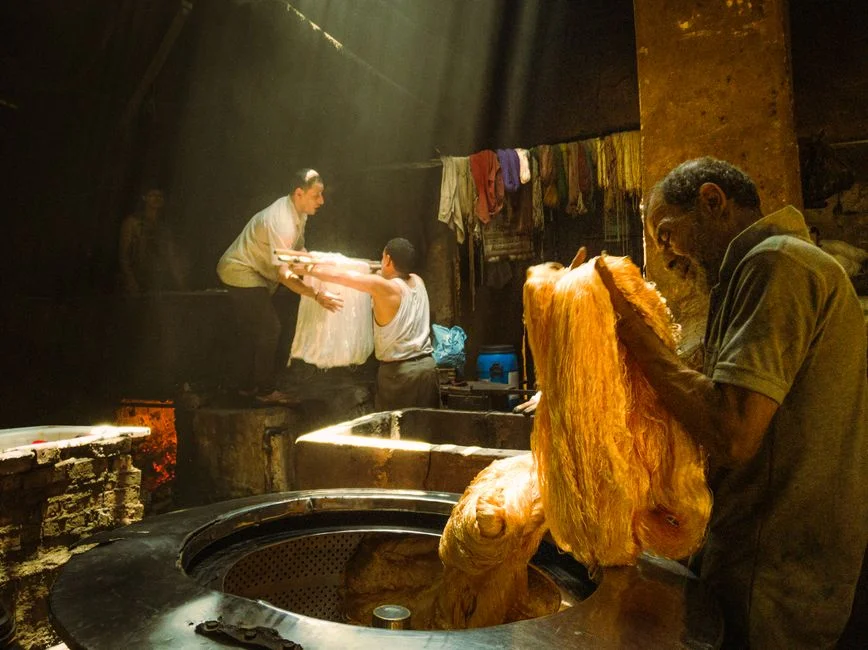
Generic ZLD says "recover the water." A reactive dyehouse ZLD has three competing recovery targets — water for the next dyeing batch, salt back to the dye bath, and energy embedded in the hot feed. The order in which the engineer ranks them changes the entire design. Reactive dye itself is rarely worth recovering chemically: the hydrolysate has lost its reactive group and can only be reused for dark shades after concentration, which most dyehouses avoid for shade-control reasons. The real value is decolorizing the concentrate so the plant avoids the dye levy or color discharge penalty that many jurisdictions now apply.
Salt is where the economics split. NaCl reuse is feasible if the crystallizer is sized for the NaCl phase; Na₂SO₄ reuse is rarely economic below 5 t/d because textile-grade Glauber salt demands 99.5% purity and the crystallizer mother liquor carries so much hydrolysate that the crystal purity drops. The recovery split should be stated explicitly before equipment is quoted — for example, 95% water recovery, 85% NaCl recovery to the next bath, 100% disposal of inert ash. The membrane stage does most of the water recovery; an industrial RO system (up to 95% recovery) handles the bulk volume and pushes the thermal stage to a much smaller, more economical size.
Step 3: Allocate Recovery Across the Process Train
The standard reactive-dye ZLD train takes recovery from 0% at the bath drain to roughly 99% at the crystallizer discharge. Each stage has a specific job and a specific number.
Equalization + cooling. Smooths the hourly peaks and absorbs the CIP return spikes. Design for 1.5× the daily average hourly flow, because ZLD systems fail on peaks, not averages (nextradebase, 2025). Most plants also need a 2–6 week stabilization period after startup before reaching normal recovery — size the equalization tank for at least 14 days of feed so the RO membranes can be brought online gradually.
Sand/MMF + UF. Removes suspended solids, fibre lint, and the bulk of the hydrolysed dye. Reactive hydrolysate molecules are around 1.38 nm; a UF membrane rated at 0.01–0.05 µm (10–50 nm cutoff) cuts color by 90–98% and protects the RO from fouling. A DAF pretreatment upstream of the UF handles surfactant-stabilized emulsions, while a multi-media filter protecting downstream RO catches the lint that would otherwise blind the UF modules.
Two-pass RO. The first pass operates at 70–75% recovery, taking TDS from roughly 10 g/L to about 40 g/L. The second pass operates at 50% recovery on the concentrate, pushing TDS to 80–120 g/L — high enough that further RO recovery is uneconomic because osmotic pressure exceeds pump capability. Industrial RO can reach up to 95% recovery when properly staged across two passes (HydropureWater catalog, 2026).
MVR evaporator. Mechanical vapor recompression takes the RO concentrate from 80–120 g/L to saturation and produces 70–85% water distillate, which is recycled to the dyehouse. The distillate is hot, deionized, and ideal for the next reactive bath — it actually saves the dyehouse the cost of softening fresh water.
Forced-circulation crystallizer. Produces NaCl or Na₂SO₄ crystals for sale or reuse; the mother liquor is the final disposal or further-treatment stream. The choice of salt dictates whether the crystallizer is a value-recovery unit or a disposal-cost unit.
| Stage | Recovery target | Output TDS / color | Key equipment |
|---|---|---|---|
| Equalization | Flow smoothing, not recovery | Unchanged | EQ tank, 24–48 h volume |
| DAF + MMF + UF | 90–98% color removal | <200 Pt-Co | 0.01–0.05 µm UF |
| First-pass RO | 70–75% water recovery | ~40 g/L TDS concentrate | Brackish RO, <5 g/L feed |
| Second-pass RO | 50% recovery on concentrate | 80–120 g/L TDS | High-pressure RO |
| MVR evaporator | 70–85% distillate | Distillate <10 mg/L TDS | MVR, 60–90 kW per 100 m³/d |
| Crystallizer | Salt sale or reuse | Solid NaCl or Na₂SO₄ | Forced-circulation + centrifuge |
Step 4: Size the Buffering, Utilities, and Salt-Split Decision
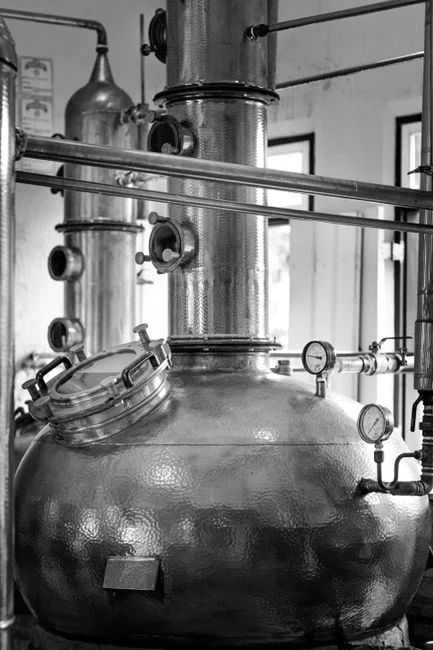
Utilities dominate the operating cost and the capex envelope more than the membrane stages do. The equalization tank should hold 24–48 h of bath dump flow — not 8 h, because reactive dye batches are scheduled in campaigns, and a black-dye Friday dump will flood a smaller tank. The UF-to-RO surge tank needs 4 h of RO feed at peak flux, which prevents the high-pressure pump from short-cycling during upstream interruptions. A lamella clarifier for hydrolysate floc removal can be inserted ahead of UF when the hydrolysate is poorly filterable.
MVR utilities are where the project gets expensive. A 100 m³/d MVR evaporator typically needs 60–90 kW of electric power for the vapor compressor, or 8–12 t/d of low-pressure steam if the plant has a boiler. That single line item dwarfs every other utility combined. Cooling water for the MVR condenser runs 1.2–1.5× the distillate flow. The salt-split decision is the capex lever: choosing NaCl recovery adds a crystallizer and centrifuge at roughly $300,000–$600,000 for a 50 t/d system, while choosing Na₂SO₄ disposal eliminates the crystallizer but adds a lined evaporation pond or secure landfill cost that is entirely site-specific. Per industry practice, oversize civil works, tank foundations, and pipe corridors for future growth while installing only the phase-1 process modules (nextradebase, 2025) — reactive dyehouses that add dark-shade capacity every 3–5 years will not regret the extra concrete.
Step 5: Validate Operability and Build a Worked Sizing Sketch
The worked example ties the framework to numbers an engineer can carry into a vendor meeting. Take 500 m³/d of combined bath and wash water, TDS 60 g/L as NaCl, color 15,000 Pt-Co, pH 10.5, temperature 70 °C. The UF operates at 95% recovery and produces permeate with color below 200 Pt-Co — well under the RO feed limit. The first-pass RO takes 475 m³/d of UF permeate at 70% recovery, producing 332 m³/d of reusable water and 143 m³/d of concentrate at roughly 200 g/L TDS. The second-pass RO runs at 50% recovery on that concentrate, yielding 71 m³/d of additional permeate and 72 m³/d of concentrate at 400 g/L TDS. The MVR evaporator at 80% water recovery produces 58 m³/d of distillate and 14 m³/d of brine sent to the crystallizer, which yields approximately 12 t/d of NaCl crystals. Total water recovery across the train exceeds 96%, and the only continuous discharge is a small purge from the crystallizer mother liquor.
Validation requires a 30-day pilot on real bath dump, not synthetic feed — reactive hydrolysate chemistry is not reproducible from NaCl plus a fresh dye, and pilots on synthetic feed routinely over-promise RO recovery by 10–15 percentage points. Upset scenarios belong in the SOP, not the equipment list: a CIP return with a pH 12 spike needs a diversion valve, a black-dye color shock needs a larger UF buffer, and weekend idle needs automatic RO flush to prevent membrane dry-out. The equalization tank and the RO feed should be instrumented with online conductivity, pH, and ORP — ZLD fails on hourly peaks, not annual averages.
| Stream | Flow, m³/d | TDS, g/L | Color, Pt-Co |
|---|---|---|---|
| Raw bath + wash | 500 | 60 | 15,000 |
| UF permeate (95% rec.) | 475 | 55 | <200 |
| 1st-pass RO permeate (70% rec.) | 332 | <0.5 | <5 |
| 1st-pass RO concentrate | 143 | ~200 | — |
| 2nd-pass RO permeate (50% rec.) | 71 | <1 | — |
| 2nd-pass RO concentrate | 72 | ~400 | — |
| MVR distillate (80% rec.) | 58 | <0.05 | 0 |
| Crystallizer NaCl product | ~12 t/d solid | — | — |
Throughout the train, PLC-controlled acid/caustic dosing handles the pH correction before RO, while a chlorine dioxide generator manages biofouling on the RO permeate side if the recycled water is stored for more than 24 h. Engineers sizing adjacent systems can compare with DAF sizing for textile white water or review RO membrane replacement OPEX to complete the cost picture, while those from other industries can reference ZLD sizing for oily industrial water for a contrast in feed chemistry.
Frequently Asked Questions
What is the typical feed TDS for a reactive dyeing bath dump?
Spent reactive bath TDS runs 30–100 g/L, depending on whether the dyehouse uses NaCl (50–100 g/L) or Na₂SO₄ (30–80 g/L) as the electrolyte. Report as TDS, not conductivity, because RO design uses ionic composition (Nature, 2023).
Why does reactive dye wastewater need UF before RO?
Reactive hydrolysate molecules are about 1.38 nm in size, and a 0.01–0.05 µm UF membrane removes 90–98% of the color while protecting the RO from organic fouling. Without UF, RO flux drops 40–60% within weeks (Nature, 2023).
What recovery can a two-pass RO achieve on reactive dye RO concentrate?
First-pass RO at 70–75% recovery takes feed from ~10 g/L to ~40 g/L concentrate; second-pass RO at 50% recovery takes that to 80–120 g/L. Industrial RO systems can reach up to 95% overall recovery when staged (HydropureWater, 2026).
Is Na₂SO₄ from a reactive dye ZLD worth recovering?
Below about 5 t/d, Na₂SO₄ recovery is rarely economic because textile-grade Glauber salt needs 99.5% purity and hydrolysate contamination drags crystal purity below sale spec. Most dyehouses send Na₂SO₄ to secure disposal and recover only NaCl.
How long does a reactive dye ZLD system take to stabilize after startup?
Most plants need 2–6 weeks of ramp-up before the membrane stages reach normal recovery. Size the equalization tank for at least 14 days of feed so the RO can be brought online gradually (nextradebase, 2025).