Why Bleach E-Stage Effluent Forces a ZLD Design
Hypochlorite bleach E-stage effluent cannot meet the 2026 regulatory envelope with biological treatment alone, and the cost of failing is quantifiable. AOX concentrations in sodium hypochlorite bleaching effluents exceed 1 mg/L — roughly an order of magnitude above the EU BAT 2024 limit of <0.1 mg/L AOX — and COD routinely lands in the 200–500 mg/L band against a ZDHC wastewater guideline of <60 mg/L COD (Springer 2025, "Cotton bleaching: evolution, current practices, and future perspectives"). pH runs 10–12, temperature 60–90 °C, and chloride sits at 3,000–8,000 mg/L when neutralization salts carry through.
Biological treatment fails on three counts: AOX is recalcitrant and inhibitory to mixed-liquor suspended solids (MLSS), chloride above 3,000 mg/L suppresses nitrification, and pH >10 collapses the microbial community within hours. Conventional activated sludge removes 20–40% of influent COD on this stream — far short of the <60 mg/L target.
Zero Liquid Discharge (ZLD) closes the loop: RO permeate and evaporator condensate return to the process, brine crystallizes to a disposable solid, and the mill eliminates liquid effluent. For a 50 m³/h E-stage stream the capex delta versus biological-plus-RO is recovered in 3–5 years through water-reuse savings and avoided discharge penalties (HydropureWater field data, 2026).
Step 1 — Characterize the E-Stage Stream and Build the Mass Balance
Characterization is the foundation of any ZLD basis-of-design memo. Pull a 24-h composite sampler on the E-stage discharge line, then overlay 8 grab samples across one production shift to catch process upsets — hypochlorite dosing peaks, temperature excursions, and pad-batch rinse transients all show up in grab data and disappear in composites.
Measure COD, BOD, AOX, TOC, pH, temperature, TSS, chloride, sulfate, total hardness, and true color (Pt-Co units). For the worked example below we use a 50 m³/h E-stage stream at COD 350 mg/L, AOX 1.5 mg/L, Cl⁻ 5,000 mg/L, pH 11.5, 70 °C — a typical Pakistani/Turkish/Indian mill profile.
Define the ZLD boundary explicitly before drawing P&IDs: RO permeate to process rinse or boiler feed; evaporator condensate to RO feed or direct reuse; RO concentrate to MVR; crystallizer solids to landfill or licensed salt recovery. This boundary determines every downstream mass-balance number.
| Stream | Flow (m³/h) | COD (mg/L) | AOX (mg/L) | Cl⁻ (mg/L) | TDS (mg/L) |
|---|---|---|---|---|---|
| Raw E-stage feed | 50.0 | 350 | 1.5 | 5,000 | 8,500 |
| Equalized RO feed (after neutralization, filtration) | 49.5 | 320 | 1.4 | 5,000 | 8,400 |
| RO permeate (75% recovery) | 37.1 | <8 | <0.05 | <25 | <50 |
| RO concentrate | 12.4 | 1,280 | 5.6 | 20,000 | 33,500 |
| MVR distillate | 11.8 | <30 | <0.01 | <10 | <40 |
| Crystallizer wet salt (8% moisture) | 0.6 t/h | — | — | ~78% NaCl | — |
Recovery 75% on the RO train yields 12.4 m³/h of concentrate; the MVR evaporator strips 11.8 m³/h of water as reusable distillate, leaving 0.6 t/h of wet NaCl/Na₂SO₄ salt cake (HydropureWater field data, 2026). For a parallel calculation method on a different feed, see the ZLD sizing methodology for soapstock water.
Step 2 — Equalization, pH Correction, and Pre-Treatment Train
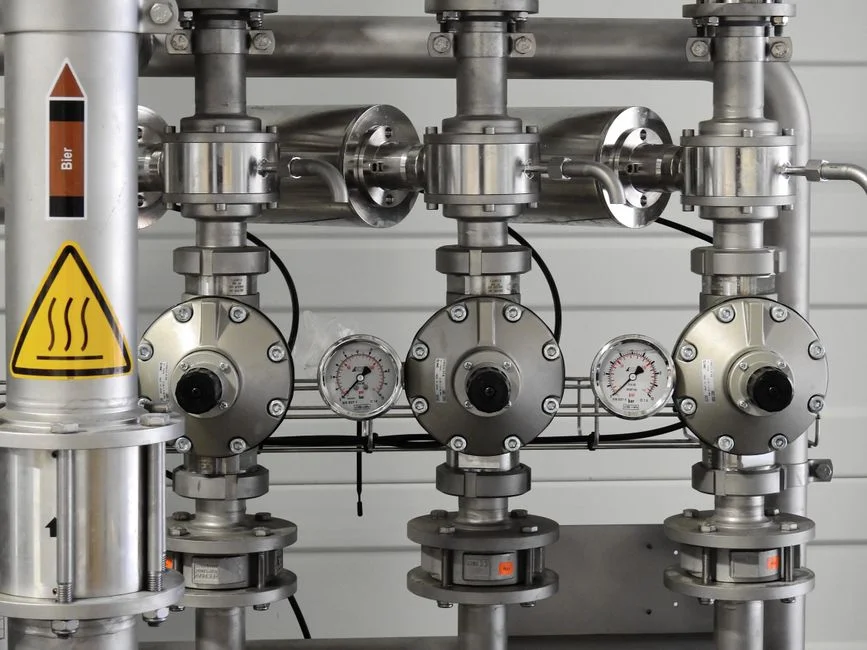
Downstream polyamide RO membranes fail fast on free chlorine, hardness, and SDI >5. The pre-treatment train must knock out each of these before the high-pressure pump.
Size the equalization basin for 8–12 h HRT — 50 m³/h × 10 h = 500 m³ working volume — to dampen pH swings from 10–12 down to a controlled 11–11.5 band. Trim pH to 7–8.5 with CO₂ (preferred, no sulfate loading) or 98% H₂SO₄ before RO; acid dose typically 0.4–0.6 kg/kg alkalinity as CaCO₃.
Dose sodium sulfite (Na₂SO₃) at 1.5–2.0× the measured residual ORP to reduce free chlorine and chloramine residual to <0.1 mg/L — the polyamide membrane limit. An automatic chemical dosing skid with redox feedback holds the dose within ±5% of setpoint.
Follow neutralization with a lamella clarifier or dissolved-air flotation (DAF) unit to strip suspended solids, color, and partially-hydrolyzed starch size, then polish through a multi-media filter (anthracite/sand/garnet) targeting SDI <3. A high-rate high-efficiency sedimentation tank upstream of the multimedia filter cuts backwash frequency from every 2 h to every 4–8 h and reduces chemical carryover.
Step 3 — Size the RO Train for Brine Minimization
For a 50 m³/h E-stage stream, the RO train is sized to balance recovery against osmotic pressure at the tail element and against calcium-sulfate scaling in the concentrate. Generic RO numbers (85–90% recovery, 20–25 LMH flux) do not apply here.
Cap recovery at 70–80% — above 80% the concentrate osmotic pressure approaches 35–40 bar, forcing inter-stage boosting and accelerating calcium-sulfate scaling on chloride-rich brines. Operate flux at 12–18 LMH (vs 20–25 LMH on clean water) to keep fouling within CIP intervals. Use 8-inch FRP pressure vessels in a 2:1 array (or 3:2:1 for the larger flow), with concentrate velocity held above 0.1 m/s to prevent particulate settling on the tail element.
Dose a phosphate-free, high-chloride-rated antiscalant at 2–5 mg/L and a non-oxidizing biocide (DBNPA or DTEA) at 50–100 mg/L on a weekly slug. CIP every 4–6 weeks with a two-stage sequence: alkaline surfactant (pH 11, 35 °C) followed by citric acid (pH 2.5, 35 °C). On cleaner feeds, recovery up to 95% is achievable with the standard industrial RO system — but 70–80% is the realistic ceiling for E-stage chemistry (HydropureWater RO spec, 2026).
| RO Design Parameter | E-Stage Specific Value | Generic Clean-Water Value | Rationale |
|---|---|---|---|
| Recovery | 70–80% | 85–90% | Cap osmotic pressure, avoid CaSO₄ scaling |
| Flux | 12–18 LMH | 20–25 LMH | Control fouling on high-COD/AOX feed |
| Antiscalant dose | 2–5 mg/L | 1–2 mg/L | Higher chloride, higher sulfate scaling index |
| Feed pressure | 15–25 bar | 10–15 bar | Osmotic pressure of 8,500 mg/L TDS feed |
| SDI target | <3 | <5 | Protect polyamide from particulate fouling |
| CIP frequency | Every 4–6 weeks | Every 8–12 weeks | Higher organic and AOX load |
For a starch-industry analog where high-COD feed drives similar flux derating, the RO sizing for high-COD starch effluent guide walks through the same recovery-flux trade-off.
Step 4 — Concentrate Management: Evaporator and Crystallizer Sizing
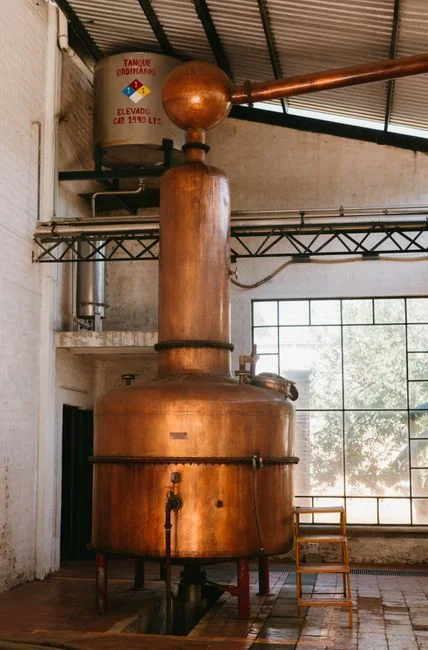
With 12.4 m³/h of RO concentrate at ~33,500 mg/L TDS, the evaporator-crystallizer train is the highest-capex line item and the largest energy consumer. Choose MVR over multi-effect evaporation (MEE) for flows in the 5–20 m³/h band: MVR specific steam consumption is 0.025–0.04 t steam per ton of water evaporated, versus 0.15–0.30 t/t for a 3-effect MEE (Springer 2025, "Zero Liquid Discharge (ZLD) and Minimal Liquid Discharge (MLD) Technologies").
Specify a falling-film evaporator for the bulk water strip, followed by a forced-circulation crystallizer with 4–8 h residence time to grow NaCl/Na₂SO₄ crystals to 200–500 µm — large enough to centrifuge to 8–12% moisture without fines carryover. Vapor body temperature 95–105 °C at atmospheric pressure; compressor ΔP 8–12 kPa.
Condensate spec must hit conductivity <50 µS/cm, AOX below detection (<0.01 mg/L), and COD <30 mg/L to qualify as RO feed or process rinse water. Recovery of this condensate loop reduces the RO feed by 11.8 m³/h, dropping net raw-water demand by ~24%. The solid output is a mixed NaCl/Na₂SO₄ cake at 0.6 t/h — hauled to licensed waste or, if pure enough, sold as industrial-grade salt.
Step 5 — Materials, Controls, and 2026 Compliance Anchors
Chloride stress-corrosion cracking (Cl-SCC) is the single largest failure mode in bleach E-stage ZLD systems, and 316L stainless is not adequate above 50 °C in 20,000 mg/L Cl⁻ brine. Specify Duplex 2205 (PREN ~35) for evaporator bodies, crystallizer shells, and brine piping up to 80 °C; specify super-austenitic 254 SMO (PREN ~43) for hot spots, vapor bodies, and any brine line above 80 °C. 316L is acceptable only on cold condensate lines below 50 °C (per ASTM A240 and NACE MR0175).
Lock down controls on a PLC with HMI: RO antiscalant dosing tied to flow and conductivity, CIP sequencing with conductivity endpoint, MVR vapor-body temperature and compressor suction pressure, crystallizer slurry density (target 25–35% w/w), and condensate conductivity trim. Modbus/TCP to the mill DCS for trend logging against the 2026 EPA wastewater discharge limits where U.S. discharge applies.
Compliance anchor checklist for the basis-of-design memo:
- EU BAT 2024 AOX <0.1 mg/L in discharged permeate/distillate
- ZDHC Wastewater Guideline COD <60 mg/L
- China GB 4287-2012 textile discharge limits (where applicable)
- Local water-reuse permit for RO permeate to process
- Operator training records on hypochlorite handling and Na₂SO₃ neutralization
Frequently Asked Questions
What AOX removal efficiency does a ZLD train achieve on bleach E-stage effluent?
RO at 75% rejection with thin-film composite polyamide membranes removes 96–98% of AOX, taking a 1.5 mg/L feed to <0.05 mg/L permeate; MVR distillate polishes AOX below 0.01 mg/L detection. Combined ZLD train AOX removal typically exceeds 99% versus the EU BAT 2024 limit of <0.1 mg/L.
What is the maximum RO recovery on high-chloride textile effluent?
Cap recovery at 70–80% on E-stage feed with 5,000–8,000 mg/L Cl⁻ and 8,000–12,000 mg/L TDS. Above 80% recovery, concentrate osmotic pressure exceeds 35 bar and calcium-sulfate scaling index breaches antiscalant capability on most phosphate-free formulations.
Which stainless grade prevents chloride SCC in a bleach E-stage crystallizer?
Specify Duplex 2205 (UNS S32205, PREN ~35) for evaporator and crystallizer bodies below 80 °C; specify 254 SMO (UNS S31254, PREN ~43) for vapor bodies and brine lines above 80 °C. 316L is unacceptable above 50 °C in 20,000 mg/L Cl⁻ service (per NACE MR0175 / ASTM A240).
Does a ZLD system meet ZDHC compliance for textile wastewater reuse?
Yes. RO permeate plus MVR condensate at conductivity <50 µS/cm, COD <30 mg/L, and AOX below detection satisfies the ZDHC Wastewater Guideline of <60 mg/L COD and aligns with EU BAT 2024 <0.1 mg/L AOX. The combined train typically delivers 95–99% water recovery for process reuse.