The phrase wastewter discharge standards us is a misspelling; the US framework is built from 40 CFR rules, NPDES permits, and POTW controls. The 40 cfr effluent guidelines npdes permit limits workflow starts with the facility activity, discharge destination, SIC code, and pollutant data. A Notice of Violation for 45 mg/L TSS or 30 mg/L BOD₅ may reflect permit conditions rather than one universal national number.
40 CFR effluent guidelines npdes permit limits: which rule applies?
US NPDES permit limits combine technology-based effluent limits with water-quality-based limits for the receiving water. The applicable 40 CFR subpart, discharge destination, source status, production basis, and permit monitoring language determine the enforceable result. The federal table is a starting point; the issued permit remains the operating control document.
Direct discharge to surface water requires an NPDES permit. Indirect discharge to a Publicly Owned Treatment Works (POTW) requires categorical pretreatment standards, local limits, and the control mechanism issued by the authority. Under 40 CFR Part 405, dairy ELGs are production-based, such as kilograms of pollutant per 1,000 kg BOD₅ input; §405.63 is reserved. Metal finishing BAT under 40 CFR 433 lists copper at 3.38 mg/L daily maximum and 2.07 mg/L monthly average. Limits are enforced through NPDES permits across 59 industrial categories.
How do engineers identify the applicable US category?
Facility applicability depends first on the process that generates wastewater, not on the equipment selected to treat it. Engineers should document the discharge point, process units, production rate, SIC/NAICS mapping, and every pollutant with reasonable potential.
- Determine Discharge Destination: Direct discharge to surface waters requires a National Pollutant Discharge Elimination System (NPDES) permit. Indirect discharge to a Publicly Owned Treatment Works (POTW) requires Categorical Pretreatment Standards.
- Lookup SIC/NAICS Codes: Industrial categories are tied to Standard Industrial Classification (SIC) codes. Metal finishing under SIC 3471 falls under 40 CFR 433.
- Assess Flow Thresholds: Many guidelines, such as meat and poultry products (40 CFR 432), apply only above stated production cutoffs—often more than 50,000 pounds of live weight killed per day—or a volumetric flow, often >30 m³/day.
- New vs. Existing Source: New Source Performance Standards (NSPS) are typically stricter than existing-source standards. Some NSPS paths push zero-liquid discharge (ZLD) or advanced membrane filtration.
- Identify Pollutants of Concern: Confirm whether the plant is a Categorical Industrial User (CIU) under EPA numeric limits, or a non-categorical user under local POTW limits only.
The EPA currently regulates 59 industrial categories. EPA's industrial effluent-guidelines table identifies the relevant 40 CFR part for each category and distinguishes the initial rulemaking from the most recent substantive revision. Plant teams should use that index to find the regulation, then read the subpart and permit together.
| Industrial Category | 40 CFR Part | Common SIC Codes | Primary Regulated Parameters |
|---|---|---|---|
| Dairy Product Processing | 405 | 2021-2026 | BOD₅, TSS, pH |
| Grain Mills | 406 | 2041-2048 | BOD₅, TSS, pH |
| Canned & Preserved Fruits/Veg | 407 | 2032-2038 | BOD₅, TSS, pH |
| Meat and Poultry Products | 432 | 2011, 2013, 2015 | BOD₅, TSS, O&G, Ammonia, Nitrogen |
| Metal Finishing | 433 | 3471, 3479 | Cd, Cr, Cu, Pb, Ni, Ag, Zn, Cyanide, TTO |
| Pulp, Paper, and Paperboard | 430 | 2611, 2621, 2631 | BOD₅, TSS, COD, AOX, Pentachlorophenol |
| Oil and Gas Extraction | 435 | 1311, 1381 | Oil & Grease, Produced Water, TSS |
| Centralized Waste Treatment | 437 | 4953 | Metals, O&G, TSS, COD |
npdes categorical pretreatment standards by sic
NPDES categorical pretreatment standards by SIC apply to industrial users that discharge process wastewater to a POTW, while direct dischargers use the applicable ELG and NPDES permit path. According to US EPA, categorical standards are codified in 40 CFR Parts 405–471 and can be expressed as pollutant quantity, concentration, or pollutant-property requirements.
EPA distinguishes Pretreatment Standards for Existing Sources (PSES) from Pretreatment Standards for New Sources (PSNS). EPA's current categorical-standards overview says PSES and PSNS exist for 35 out of 58 industrial categories, so the category name alone does not prove that a specific indirect discharge has a federal numeric table. The control authority may also impose local limits and more stringent conditions.
- Match the primary process and SIC code to the correct 40 CFR subpart.
- Separate regulated process wastewater from sanitary, noncontact cooling, and other excluded streams.
- Check whether the subpart contains PSES, PSNS, both, or neither.
- Compare the federal categorical standard with the POTW's local limits and control mechanism.
- Confirm sampling points, production-basis calculations, reporting periods, and bypass or upset procedures.
Most plants we size for indirect discharge need an auditable mass balance before selecting a treatment train. A pH correction stage may control metals, but it does not replace production records, flow measurements, or the categorical calculation used by the control authority.
EPA numeric discharge limits by industry
EPA numeric discharge limits by industry reflect Best Available Technology (BAT) where BAT is stricter than Best Practicable Control Technology (BPT). The comparison below keeps the article's working values and gives engineers a design screen; the issued permit can add water-quality-based limits or a different monitoring basis. According to US EPA, NPDES permit writers consider both technology-based limits and limits protective of receiving-water quality.
| Industry Category (40 CFR) | Regulated Parameter | Daily Max (mg/L) | Monthly Avg (mg/L) |
|---|---|---|---|
| Food Processing (Dairy - 405) | BOD₅ / TSS | 60 / 90 | 30 / 45 |
| Metal Finishing (433) | Copper (Cu) | 3.38 | 2.07 |
| Metal Finishing (433) | Zinc (Zn) | 2.61 | 1.48 |
| Oil & Gas (Offshore produced water - 435) | Oil & Grease | 42 | 29 |
| Pulp & Paper (BPT - 430) | TSS | 112 | 58 |
| Pulp & Paper (BPT - 430) | COD | 480 | 240 |
| Meat/Poultry (432) | Ammonia (as N) | 8.0 | 4.0 |
npdes metal finishing copper zinc limits
NPDES metal finishing copper zinc limits in the working table are 3.38 mg/L daily maximum and 2.07 mg/L monthly average for copper, plus 2.61 mg/L daily maximum and 1.48 mg/L monthly average for zinc. Those values are permit-design inputs, not permission to ignore pH, cyanide, total toxic organics, sludge handling, or the sampling definition in the applicable subpart.
Metal finishing treatment normally begins with source segregation and equalization. pH adjustment precipitates hydroxides, while coagulation and flocculation build settleable solids. Selective ion-exchange resins or reverse osmosis (RO) can provide a polishing step when the influent mixture, discharge point, or reuse target requires sub-ppm performance. For metal finishing hydroxides, a DAF vs API comparison shows why dissolved-air flotation can capture fine metallic solids that an API separator cannot remove efficiently.
40 cfr 405 dairy effluent bod limits
40 cfr 405 dairy effluent bod limits are production-based under the federal Dairy Products Processing category, so a fixed concentration table should not be treated as the entire Part 405 requirement. The article's 30/45 BOD₅/TSS monthly figures remain a common NPDES concentration-floor design reference, but the plant must verify the production basis and its Part 1 permit conditions.
Equalization is usually the first practical control for a dairy plant because cleaning cycles create short, strong loads. Aerobic treatment removes biodegradable organics, clarification or DAF captures solids, and polishing is selected from the permit's nitrogen, phosphorus, or reuse requirements. A dairy engineer should record flow, BOD₅ input, product throughput, temperature, pH, TSS, and cleaning chemicals before sizing aeration or membrane capacity.
Part 405 dairy ELGs themselves are production-based, not fixed mg/L tables; the 30/45 BOD₅/TSS monthly figures above are common NPDES concentration floors plants still design to. State agencies or local POTWs may set stricter caps than the federal floor. In water-stressed regions such as California or the Chesapeake Bay watershed, total nitrogen (TN) may fall to 3-5 mg/L and phosphorus to 0.1 mg/L. Cross-check every federal table against NPDES Part 1. Engineers comparing subpart-by-subpart thresholds may also want to read the wastewater emission limits in usa reference for parameter-by-parameter breakdowns.
epa bpt vs bat cost comparison: BPT, BCT, and BAT
EPA BPT vs BAT cost comparison starts with the pollutant class and the treatment tier required by the permit. Best Practicable Control Technology (BPT) is commonly associated with primary and secondary treatment, while BAT for toxic and non-conventional pollutants can require tertiary separation, membranes, ion exchange, or granular activated carbon. BCT is a cost-effectiveness test for conventional pollutants.
BPT standards are generally met with primary and secondary treatment. For a typical industrial flow of 100 m³/h, a BPT-compliant system (DAF + activated sludge) carries CAPEX of about $0.8 million to $1.2 million. Operating cost at this tier is driven mainly by aeration energy and polymer for solids separation. Most plants we size for food and dairy clients run at the lower end of that CAPEX band.
When a facility moves to BAT for toxic and non-conventional pollutants, CAPEX often doubles. The jump comes from tertiary stages such as membrane bioreactors, ion exchange, or granular activated carbon. For a plant upgrading from BPT to BAT, OPEX typically rises 30-40% from higher membrane pressure and specialized media replacement (HydropureWater field data).
BAT-level treatment often opens reuse. A poultry plant in the Southeast US upgraded from BPT clarification to BAT (MBR and UV) for stricter nitrogen limits. Initial CAPEX was $2.4 million; the plant reached a 2.1-year payback by routing high-quality effluent to cooling-tower makeup and crate washing. The water-reuse credit of $0.84/m³ offset higher OPEX and secured CAPEX approval from the corporate CFO.
Technologies that match the parameter
Industrial treatment technologies must match each regulated parameter's chemistry, load, and hydraulics. A one-size train often fails during peak load or cold weather, so the design basis should include equalization volume, peak flow, minimum temperature, chemical dose, solids production, and sampling location.
- TSS (Total Suspended Solids) < 45 mg/L: Sedimentation can miss light organic flocs. A DAF system routinely holds effluent TSS below 30 mg/L with micro-bubbles. A lamella clarifier after the DAF adds margin for high-flow events.
- Copper 2.07 mg/L monthly average and Zinc 2.61 mg/L daily max: These BAT metal limits need more than pH adjustment. Selective ion-exchange resins or reverse osmosis (RO) reach sub-ppm levels. For metal finishing hydroxides, a DAF vs API comparison shows DAF-enhanced precipitation captures fine metallic solids better than API alone.
- Oil & Grease (O&G) < 42 mg/L: For emulsified oils, a DAF with coagulation (alum or ferric chloride) and flocculation can cut effluent O&G to <10 mg/L, below the offshore produced-water monthly average of 29 mg/L.
- COD < 240 mg/L and BOD < 30 mg/L: High-strength industrial waste needs intensive biology. An MBR package plant pairs activated sludge with ultrafiltration, drops secondary clarifiers, and often yields BOD near the 2 mg/L non-detect floor.
- Phosphate < 1 mg/L: Low phosphorus needs chemical precipitation with alum or rare-earth coagulants, then a plate settler or tertiary sand filter to catch the solids.
npdes permit mass-based vs concentration limits
NPDES permit mass-based vs concentration limits changes how a permit treats flow reduction. A concentration limit measures pollutant strength, while a mass-based limit controls total pollutant load such as pounds per day. Water conservation can raise concentration even when pounds stay flat, so the permit writer must define flow, averaging period, sampling point, and the conversion equation.
Use the concentration basis when the receiving-water assessment, process chemistry, or categorical table is expressed in mg/L. Consider an equivalent mass limit only when the applicable rule and control authority allow it, and document the design flow used in the calculation. A mass limit cannot excuse a prohibited discharge, bypass, pass-through, interference, or a separate water-quality-based condition.
Permit-writing tips to avoid violations
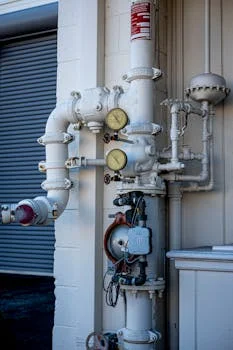
NPDES permit wording matters as much as equipment selection. EHS managers reduce paper violations when the permit matches how the plant actually runs and when the monitoring plan is technically achievable.
- Distinguish Daily Max vs. Monthly Average: EPA enforces hard on daily excursions. Size the train for Daily Max load, not average only. For batch processes, negotiate a 30-day rolling average instead of a strict 24-hour cap where the authority allows it.
- Include a Surge/Bypass Clause: Request upset language. Example: "Flow exceeding 110% of design capacity due to extreme weather triggers a bypass protocol that is recorded but not classified as a numeric violation," if the facility followed its O&M plan.
- Specify Analytical Methods: Cite the correct EPA method (e.g., Method 1680 for BOD, Method 200.7 for metals). An unapproved or overly sensitive method can create false-positive violations.
- Negotiate Monitoring Frequency: If discharge is steady, push for weekly sampling rather than daily. That cuts lab cost and the chance of a single outlier trip.
- Mass-Based vs. Concentration-Based Limits: Water conservation raises concentration even when pounds stay flat. Request mass-based limits (lbs/day) so saving water does not create a violation.
EPA's permit-limits overview states that the permit writer must consider both the technology available to control pollutants and the water-quality standards of the receiving water. That distinction is why a federal ELG value should be checked against the complete permit, including narrative conditions, local limits, monitoring requirements, and reporting forms.
Who this guide is for, and who should look elsewhere
This USA guide fits plant engineers, EHS managers, and EPC contractors at US industrial facilities that discharge directly to surface waters or indirectly to a POTW under categorical pretreatment standards. If you operate a semiconductor fab chasing sub-ppb reclaim targets, a ZLD feasibility study will do more than this federal-limits overview. For a separate regional comparison, use the India CPCB Effluent Discharge Norms 2026: Complete Engineering Guide or the India CPCB wastewater discharge standards reference; the permit analysis here remains US-only.
Selection checklist before equipment procurement
The selection checklist below keeps regulatory applicability ahead of equipment preference. A treatment train should be selected only after the permit basis and design loads are written down.
- Identify your 40 CFR subpart and SIC/NAICS code.
- Pull the Daily Max and Monthly Average limits from both 40 CFR and your NPDES permit.
- Confirm whether you are a new source (NSPS) or existing source.
- Map each regulated parameter to a unit operation with documented removal efficiency.
- Size the train for the Daily Max load at the lowest expected wastewater temperature.
- Add a reuse loop (cooling tower, scrubber, or crate wash) to recover BAT-level CAPEX.
- Lock in permit language for upsets, monitoring frequency, and mass-based limits.
For a sizing review or a side-by-side DAF/MBR/RO comparison tied to your specific 40 CFR subpart, send your flow and influent data through our inquiry form and our engineers will return a preliminary train sketch within two business days.
Frequently Asked Questions
What is the difference between BPT, BCT, and BAT?
BPT is the baseline technology tier for pollutants, BCT is a cost-effectiveness test for conventional pollutants, and BAT is the stricter tier for toxic and non-conventional pollutants. BPT commonly uses primary and secondary treatment; BAT can require MBR, RO, or GAC. The permit and applicable subpart determine which tier controls the design.
How do I know which 40 CFR subpart applies to my facility?
Match the facility's primary process to its SIC code, then read the corresponding 40 CFR part and permit conditions. Direct discharge to surface water follows the NPDES path, while discharge to a POTW may trigger categorical pretreatment standards. Flow thresholds, production cutoffs, and new-source status can change the applicable requirements.
What is the typical CAPEX range for an EPA-compliant industrial wastewater plant?
A BPT-compliant system at 100 m³/h runs roughly $0.8-1.2 million, while upgrading to BAT typically doubles that figure. OPEX can rise 30-40% because of membrane energy and media replacement. Actual cost depends on influent strength, peak flow, reuse targets, solids disposal, controls, and local labor rates.
Can I reuse treated wastewater to offset BAT-level treatment costs?
Yes, reuse can offset BAT-level treatment costs when the effluent quality matches a permitted non-potable use. Cooling-tower makeup, scrubbers, and crate washing are practical candidates. The article's Southeast US poultry example used a $0.84/m³ reuse credit and reached a 2.1-year payback after routing MBR and UV-treated water to those uses.
What should I do first if I receive a Notice of Violation?
Pull the last 12 months of self-monitoring reports, identify the parameter and averaging period, and compare the result with the permit limit. Then check flow, sampling, chemical dosing, equalization, sludge carryover, and membrane condition. Most NOV reviews should begin with records and a root-cause check before equipment changes are approved.