Why Ammonia Drain Is a Hostile Feed for MBBR Biofilm
Ammonia drain — the aqueous condensate stripped from coker overhead, hydrotreater separators, ammonia plant process water, and fertilizer plant waste streams — typically arrives at the wastewater plant with 200–2,000 mg/L NH3-N, less than 100 mg/L biodegradable COD, temperatures of 35–95 °C, pH 9–11, and 50–1,000 mg/L emulsified oil from upstream knockout drums. An MBBR receiving this feed directly will fail in one of three ways. First, oil and grease coat the HDPE carrier surfaces and prevent Nitrosomonas and Nitrobacter attachment, dropping nitrification efficiency to near zero within 48–72 hours. Second, free-ammonia (FA) at high pH and temperature shuts down ammonia-oxidizing bacteria before nitrification starts. Third, the near-zero biodegradable COD forces heterotrophs to outcompete nitrifiers, pushing the system toward filamentous bulking. An anaerobic MBBR evaluated in the Korean J Chem Eng AnMBBR study tolerated organic loading rates up to 6.3 kgCOD/m³/d on textile wastewater (PMC9999335, 2023), but that data does not transfer to ammonia drain — textile wastewater is high-COD, moderate-temperature, near-neutral pH; ammonia drain is the inverse on all three axes. The technical lever the engineer must control is the free-ammonia fraction, defined as FA/(FA + TAN) = 1/(1 + 10^(pKa − pH)), where pKa shifts with temperature from 9.40 at 25 °C to 8.82 at 40 °C. At pH 9 and 35 °C, roughly 50% of the measured total ammonia nitrogen (TAN) exists as FA, and 10–150 mg/L FA causes 50% nitrification rate reduction depending on acclimation (HydropureWater field data, 2026).
Pretreatment Stage 1 — Coarse and Fine Screening
The first defense is keeping rags, pipe scale, and catalyst fines out of the MBBR media retention sieves. A coarse bar screen with 10–25 mm aperture at the inlet protects transfer pumps; finer screening at 3–6 mm aperture ahead of the equalization basin protects the MBBR's 5 mm slot retention screens, which blind rapidly if the aperture upstream is too generous. For continuous duty on oily ammonia service, a GX Series rotary mechanical bar screen with stainless steel rake teeth, dual overload protection, and brush discharge is the standard selection — the self-cleaning rake prevents the oily rag fouling that stops traveling water screens. Sizing rule: 1 m bar length per 0.5–1.0 m³/s peak flow, with channel velocity held between 0.6 and 1.2 m/s to keep organics in suspension rather than settling in the screen channel.
Pretreatment Stage 2 — Grit, Suspended Solids, and Oil/Grease Removal
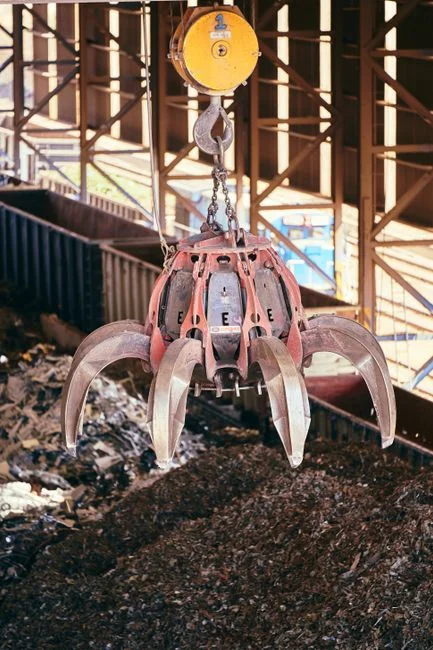
MBBR carriers tolerate oil and grease up to about 50 mg/L before biofilm attachment fails; the design target is 30 mg/L or less to preserve safety margin (HydropureWater field data, 2026). For hot, low-solids, emulsified oil in ammonia drain, dissolved air flotation (DAF) outperforms gravity API or CPI separators because micro-bubbles capture oil droplets that won't separate by density alone. A DAF system at 4–300 m³/h with 30–50 μm micro-bubbles, 20–40% recycle ratio, and 5–15 m/h surface loading handles ammonia-drain oil loads of 50–500 mg/L. When oil is emulsified, dose PAC or FeCl3 at 50–150 mg/L plus anionic flocculant at 1–5 mg/L through a PLC-controlled chemical dosing skid immediately ahead of the DAF contact zone. If TSS at this point exceeds 200 mg/L — common when the drain picks up carryover from a pre-scrubber — stage a high-efficiency lamella clarifier at 20–40 m/h surface loading upstream of the DAF; coagulant-assisted DAF alone can also handle this, but lamella-first reduces chemical consumption by roughly 30% (HydropureWater field data, 2026).
Pretreatment Stage 3 — Flow and Temperature Equalization
The equalization (EQ) basin dampens NH3-N swings, flow surges from upstream regeneration cycles, and the 35–95 °C temperature envelope that ammonia drain arrives in. Nitrifier growth rate halves between 30 °C and 40 °C and crashes above ~40 °C; the EQ basin — combined with a plate heat exchanger — is where you collapse that envelope to below 40 °C before biology. Design values:
| Parameter | Design Value | Notes |
|---|---|---|
| EQ basin HRT | 8–24 h | Size for the longer interval to absorb upstream regeneration pulses |
| Temperature ceiling at MBBR inlet | ≤ 40 °C | Plate heat exchanger upstream of EQ preferred over in-basin coils |
| Mixer tip speed | 4–6 m/s peripheral | Slow-speed submersible; do not aerate — retain CO2/H2S and avoid NH3 volatilization losses before the stripper |
| EQ outlet instrumentation | pH probe + NH3-N ISE | Feed-forward signal to stripper and MBBR for real-time control |
| Cooling water isolation | Plate exchanger in closed loop | Prevents cooling water contamination with ammonia |
Pretreatment Stage 4 — pH and Free-Ammonia Control
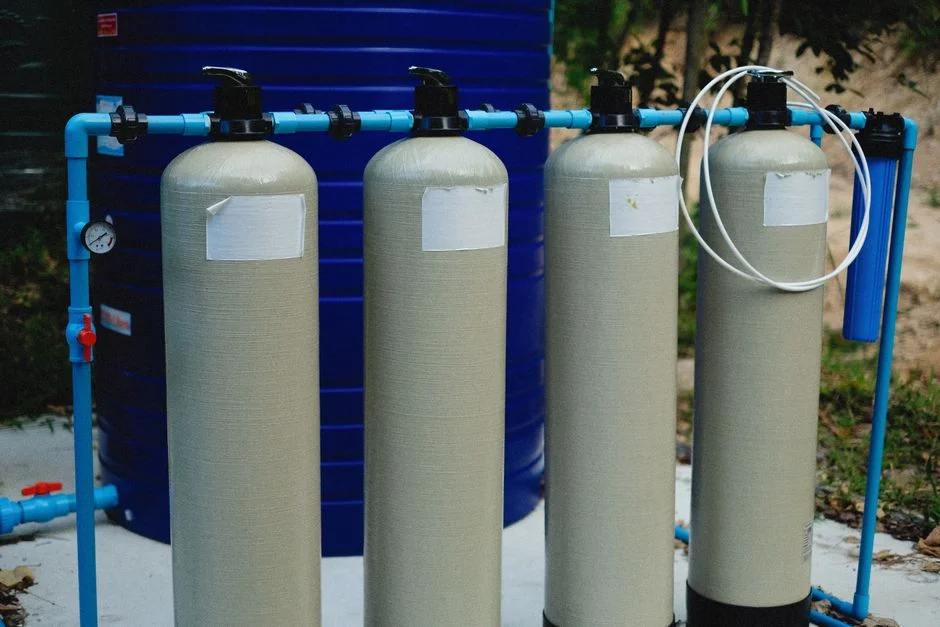
This is the technical heart of the train. The free-ammonia fraction is set by pH and temperature, and at ammonia-drain conditions it will inhibit MBBR within hours if not addressed. At pH 8 and 25 °C, only about 8% of TAN is FA; at pH 9 and 35 °C, the FA fraction climbs to roughly 50%, and the absolute FA concentration enters the 100–500 mg/L range where Nitrosomonas is severely inhibited. Two control options exist, and the choice is governed by feed strength and temperature.
Option A — Air stripping. Lift pH to 10.5–11.5 with caustic, run the stream through a packed tower, recover NH3 as ammonium sulfate, and send the stripped, cooled water to MBBR. Stripper design parameters: air:water ratio 2,000–4,000 m³ air per m³ water, packing height 4–6 m of structured packing or 2-inch Pall rings, water loading 2–5 m³/m²/h. The stripper removes 80–95% of TAN and protects downstream biology while generating a salable by-product.
Option B — Direct MBBR with pH adjustment and carbon dosing. Lower pH to 7.5–8.0 with sulfuric acid through a PLC-controlled chemical dosing skid, supplement carbon (see Stage 5), and let MBBR handle the load directly. The decision rule: feed NH3-N above 500 mg/L or temperature above 50 °C → stripper required. Below those limits, direct MBBR with pH adjustment is normally more economical once carbon and acid costs are netted against stripper capital and recovered ammonia value.
| Feed Condition | FA Fraction (approximate) | Predicted MBBR Effect | Recommended Path |
|---|---|---|---|
| pH 8, 25 °C, NH3-N 200 mg/L | ~8% FA (~16 mg/L) | Below inhibition threshold for acclimated biofilm | Direct MBBR after pH trim |
| pH 9, 35 °C, NH3-N 500 mg/L | ~50% FA (~250 mg/L) | Severe Nitrosomonas inhibition | Stripper required |
| pH 9.5, 40 °C, NH3-N 1,000 mg/L | ~60% FA (~600 mg/L) | Complete nitrification failure | Stripper + pH control to 7.5–8.0 |
| pH 7.5, 30 °C, NH3-N 300 mg/L after acid | ~1.5% FA (~4.5 mg/L) | Within operating envelope | Direct MBBR with carbon dosing |
Pretreatment Stage 5 — Nutrient and Carbon Balancing
Ammonia drain's measured C:N ratio typically sits between 0.5:1 and 2:1, well below the 3:1 minimum and 5:1 optimum for combined carbon oxidation and nitrification. Without supplementation, heterotrophs starve and filamentous organisms take over the carrier surfaces. Methanol is the cheapest carbon source at roughly 3.0–3.2 kg CH3OH per kg NO3-N denitrified; sodium acetate acclimates fastest but costs 3–4× more per kg COD delivered. For a pre-anoxic zone ahead of the MBBR, dose to a C:N of 5:1 — this ratio also controls filament growth. Phosphorus must be checked next: dose phosphoric acid to maintain a P:N of 0.05–0.10 if feed P falls below 1 mg/L, since nitrifiers will stop growing on the carriers without it. Finally, audit trace metals — Fe, Mo, Zn, Cu — at the EQ basin outlet; ammonia drain stripped of these micronutrients produces a yellow-brown biofilm that sloughs within days, and supplementation through the ion exchange ammonia removal polishing train is the standard fix (per the engineering specs in the linked 2026 guide).
Pretreatment Stage 6 — MBBR Inlet Conditioning and Alarms
The MBBR is the last line of biology, not the first. The final inlet buffer — typically a small aerated feed well at the reactor head — must hold these targets before media contact:
| Parameter | Inlet Target | Alarm Trip | Sensor |
|---|---|---|---|
| pH | 6.5–8.5 | High-high ≥ 8.5 → recycle to emergency basin | Glass-body pH probe |
| Temperature | < 40 °C | High-high ≥ 42 °C → isolate feed | RTD in feed line |
| NH3-N | < 200 mg/L (without stripper) | High-high above MBBR design envelope | UV-NIR probe or ion-selective electrode |
| Oil & grease | < 30 mg/L (target), < 50 mg/L (max) | > 50 mg/L → shut feed | Online IR oil-in-water analyzer |
| TSS | < 100 mg/L | > 150 mg/L → recycle | Optical TSS sensor |
| Dissolved oxygen (in basin) | 2–4 mg/L | < 1.5 mg/L → aeration alarm | Luminescent DO probe |
The MBBR/MBR module downstream — for example, the DF series MBBR/MBR module — is sized against these targets, not against raw ammonia drain composition. When all six upstream stages hold their setpoints, the reactor runs at 0.5–1.5 kg NH3-N/m³/d and produces < 10 mg/L NH3-N effluent in acclimated service.
When MBBR Fails: Mapping Symptoms Back to Missing Pretreatment
A sick MBBR is almost always pointing back at a missing or undersized upstream stage. Use this diagnostic map before pulling carriers or restocking biology:
- Symptom — gray, slimy biofilm replaced by an oily sheen on carriers: missing or undersized oil/grease removal. Return to Stage 2: confirm DAF is running at 20–40% recycle, check coagulant dose, verify oil & grease is < 30 mg/L at DAF outlet. A detailed DAF configuration for ammonia drain walkthrough is in the linked 2026 guide.
- Symptom — NH3-N effluent rises while NO3-N drops, worse in summer: FA inhibition from missing pH control or missing stripper, made worse by feed temperature. Recheck Stage 4 with the FA fraction table; if temperature is the driver, confirm the plate exchanger is online.
- Symptom — filamentous growth bridging MBBR screens: C:N imbalance from missing methanol or acetate dosing, or low DO from undersized aeration. Recheck Stage 5 stoichiometry and Stage 6 DO setpoint (2–4 mg/L).
- Symptom — MBBR retention screens blinding with rag and debris: missing fine screening. Stage 1 aperture is too coarse; drop to 3–6 mm and verify brush discharge is functioning.
For comparison, a parallel MBBR configuration for white water in pulp service runs at the same inlet targets but with a fundamentally different C:N starting point — confirming why ammonia drain cannot be designed against generic MBBR pretreatment lists.
Frequently Asked Questions
Q1 — What is the maximum NH3-N concentration MBBR can treat without stripping?
Acclimated biofilm tolerates 200–500 mg/L NH3-N if pH is held at 7.5–8.0 and temperature below 35 °C. Above 500 mg/L, a stripper is normally required to keep the FA fraction inside the operating envelope.
Q2 — Why does ammonia drain need a DAF before MBBR?
Oil and grease above 50 mg/L coats HDPE carriers and prevents biofilm attachment. A DAF with chemical conditioning reduces emulsified oil to below 30 mg/L and protects the biology.
Q3 — Do I need to cool ammonia drain before MBBR?
Yes, if the feed is above 40 °C. Plate heat exchangers are the standard solution and avoid in-basin cooling coils that mix cooling water with the ammonia stream.
Q4 — Is a pH adjustment step always required?
Yes. Ammonia drain at pH 9–11 must be adjusted to 6.5–8.5, otherwise the FA fraction will inhibit nitrifiers within hours of contact.
Q5 — Can I skip the stripper and just dose methanol into the MBBR?
Yes, if NH3-N is below 200 mg/L and temperature below 35 °C. Above those limits, the stripper is more economical and recovers ammonia as a saleable product rather than consuming it as oxygen demand.