Why Mining Pretreatment Is Non-Negotiable Under 2026 NPDES Rules
The Industrial Pretreatment Program derives directly from Section 402(b) of the Clean Water Act, which delegates NPDES authority to states and authorized tribes and obligates them to control industrial discharges into publicly owned treatment works (POTWs) (per CWA §402; confirmed in Nebraska DEE Pretreatment Program guidance, 2025-08). A mining or metals plant in Black Rock, US falls into two regulatory lanes depending on where its effluent goes: a direct discharger to a receiving stream needs an individual NPDES permit built around 40 CFR Part 440 effluent limits, while an indirect discharger to a Black Rock POTW must satisfy EPA's Industrial Pretreatment Program (40 CFR Part 403) plus any more stringent local sewer-use ordinance. The 2026 Multi-Sector General Permit (MSGP) renewal, published in 2025-09, is the active umbrella for stormwater from metal mining operations under Sector J and Sector M, and any site that reopens, expands, or re-permits a process in 2026 will be re-evaluated against it.
For 2026, EPA's effluent guidelines program is mid-cycle on a metal mining review that began in 2024 and is scheduled to publish a Notice of Data Availability in 2026-Q3 (per EPA Effluent Guidelines Plan 2024, current as of 2025-12). Permit writers in Arizona Department of Environmental Quality and EPA Region 9 are already flagging tightened lead, mercury, and selenium benchmarks in draft permits. The operational definition that matters in this article: "pretreatment" is whatever unit operations sit between the process generating the wastewater and either the final NPDES outfall or the head of a biological/reuse system. It is not "end-of-pipe treatment." Designing for compliance means moving contaminant removal upstream of any biological unit, any water reuse loop, and any point where dilution credits are claimed.
Wastewater Streams a Black Rock Mining or Metals Plant Must Characterize
You cannot size a pretreatment train until every stream is on the table. A Black Rock site typically generates four to five distinct wastewaters, each with its own pH, solids, and metals fingerprint, and the sampling grid below is what an ADEQ or EPA Region 9 reviewer will expect to see in your permit application.
| Stream | Typical Influent Characteristics | Key Contaminants | Typical Destination |
|---|---|---|---|
| Acid mine drainage (AMD) | pH 2–5; Fe 50–500 mg/L; sulfates 1,000–5,000 mg/L | Dissolved Fe, Al, Mn, sulfate, trace heavy metals | Lime neutralization + oxidation |
| Tailings water (process) | TSS 5,000–50,000 mg/L; pH 6–11 depending on ore | Residual reagents (cyanide if Au; xanthates if sulfide ore), suspended fines, base metals | Thickener → precipitation train |
| Metal finishing rinse waters | pH 1–9; flow varies | Hexavalent Cr, Ni, Cu, Zn, Cd, cyanide complexes | 40 CFR Part 433 categorical treatment if applicable |
| Contact stormwater | TSS 100–3,000 mg/L episodic | Total suspended solids, total metals, pH excursions | MSGP Sector J (mining) and Sector M (metal mining) BMPs and treatment |
| Sanitary sewage | BOD₅ 150–250 mg/L; TSS 150–200 mg/L | Conventional pollutants only | Package plant or Black Rock POTW — never co-mingled with process |
Keep sanitary segregated. Process waters carrying free cyanide, hexavalent chromium, or pH below 4 will kill a biological plant in a single slug; routing them through a package STP or municipal POTW without pretreatment is a categorical standards violation under 40 CFR Part 403.5. Cyanide-bearing tailings water in particular deserves its own destruction step (alkaline chlorination or SO₂/air) before it ever meets another process stream — see the online cyanide analyzer guide for online monitoring specs that satisfy MSGP benchmark monitoring.
The 2026 Pretreatment Process Train: Unit by Unit
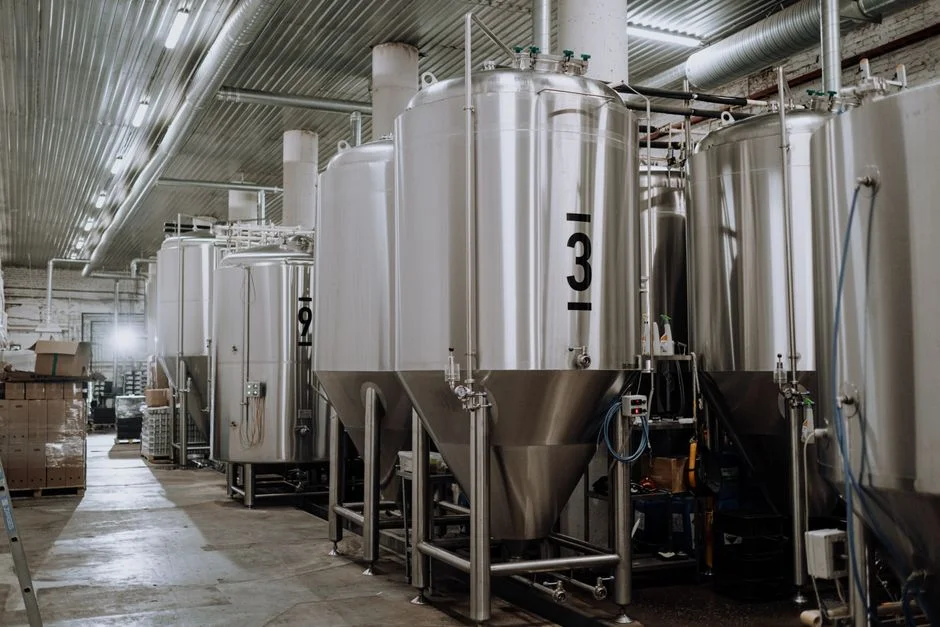
The train below is the configuration that consistently hits 40 CFR Part 440 daily-max numbers for ore mining and dressing subcategories. Order matters: each unit protects the next, and re-sequencing to save footprint is the most common design error reviewers flag.
- Headworks screening. A rotary mechanical bar screen with 3–6 mm openings protects downstream pumps and DAF nozzles from ragging. Indirect dischargers are expected to have this; it is the first thing a POTW pretreatment coordinator will ask about.
- Flow equalization. 8–24 hour hydraulic retention time (HRT) in a concrete or FRP basin damps pH excursions, metals spikes, and flow surges from batch leach cycles. A 24-hour HRT basin is the safer default for sites with gold/silver leach circuits where cyanide and pH swing together.
- pH adjustment. Lime (Ca(OH)₂) is the workhorse for AMD neutralization to a target of 6.5–9.0 because it adds alkalinity and generates gypsum, which co-precipitates sulfate. NaOH is preferred when tighter pH control (within ±0.2 units) is required for downstream sulfide precipitation, but it does not add buffering capacity. Two-stage pH adjustment — first to ~5.5 for iron oxidation and removal, then to 8.5–9.5 for the rest of the metals — is standard practice for high-alkalinity AMD.
- Metals precipitation. Hydroxide precipitation with lime or NaOH removes Cu, Zn, Ni, Cd efficiently at pH 8.5–10.5, with residual dissolved metals typically 0.1–2 mg/L depending on the metal. For mercury, silver, and lead to below 0.1 mg/L, sulfide precipitation is required: NaHS or FeS, dosed at a stoichiometric NaHS-to-target-metal molar ratio of roughly 1.0:1 to 1.5:1. Under-dose and you fail the daily max; over-dose and you carry residual sulfide into the DAF, which becomes a new compliance problem. An automatic chemical dosing system tied to a flow-paced signal is the only practical way to hold the ratio across a variable feed.
- Coagulation and flocculation. A cationic or anionic polymer (typically 0.5–5 mg/L) flocculates colloidal metal hydroxides that would otherwise pass straight through clarification. Jar testing per ASTM D2035 against the actual feed is the only way to pick the right product and dose.
- Clarification. A dissolved air flotation system achieves 90–95% TSS removal at hydraulic surface loadings of 4–8 m/h, and is preferred when feed streams contain oil, grease, or low-density floc. A lamella clarifier runs at 20–40 m/h and is the better choice for high-solids streams without oil, and as a polishing step downstream of DAF; the lamella clarifier sizing guide walks through the surface-loading math.
- Multimedia filtration. A multi-media filter with anthracite over sand over garnet polishes residual TSS to below 5 mg/L and protects any downstream ion exchange or RO from fouling.
- Polishing (if required). When effluent limits for dissolved species (selenium, hardness, sulfate) approach 0.05 mg/L, ion exchange or reverse osmosis is added. RO recovery is typically 70–80% on mining brine; the concentrate returns to the head of the train, not to the outfall.
| Unit Operation | Design Parameter | Typical Removal / Effluent |
|---|---|---|
| Rotary bar screen | 3–6 mm openings | Removes rags, debris > opening size |
| Equalization basin | 8–24 h HRT | Damps pH and metals spikes |
| pH adjustment (lime) | Target 6.5–9.0; 2-stage for AMD | Prepares feed for precipitation |
| Hydroxide precipitation | pH 8.5–10.5 per metal | Cu, Zn, Ni, Cd to 0.1–2 mg/L |
| Sulfide precipitation | NaHS:metal 1.0:1 to 1.5:1 molar | Hg, Ag, Pb to <0.1 mg/L |
| DAF | 4–8 m/h surface loading | 90–95% TSS removal |
| Lamella clarifier | 20–40 m/h surface loading | 80–90% TSS removal standalone; >95% post-DAF |
| Multimedia filter | Anthracite/sand/garnet, ~10 m/h | TSS to <5 mg/L |
| Ion exchange / RO | Per water analysis | Dissolved metals to <0.05 mg/L |
Matching Unit Operations to 40 CFR Part 440 Effluent Limits
40 CFR Part 440 is split into subparts by commodity: Ore Mining & Dressing (Subpart B, §440.40), Coal Mining (Subpart C, §440.50), and Mineral Mining (Subpart D, §440.60), and each subpart has its own daily-maximum and monthly-average effluent limits for TSS, settleable solids, pH, and individual metals. For a typical ore-mining subcategory the daily max numbers an engineer designs against are TSS 30 mg/L, settleable solids 0.2 mL/L, pH 6.0–9.0, total Fe under 2.0 mg/L, and total Mn under 1.0 mg/L (per 40 CFR Part 440 — always verify current subcategory-specific values at eCFR before submittal). The "10% rule" applies in practice: you size for the daily-max number, not the monthly average, because any single grab above the daily max is a permit violation regardless of long-term performance.
For indirect dischargers, 40 CFR Part 403 categorical standards and any local Black Rock POTW ordinance apply on top of Part 440. The more stringent of the two is the controlling limit. In practice, a municipal sewer-use ordinance often caps copper or zinc tighter than Part 440 ever did, so the local POTW discharge permit is usually the binding design case. A quick cross-reference table for submittal:
| Parameter | 40 CFR Part 440 (Ore Mining, daily max) | Typical Indirect Discharge Limit (40 CFR Part 403 / local) | Unit Operation Hitting It |
|---|---|---|---|
| TSS | 30 mg/L | 30 mg/L | DAF + multimedia filter |
| Settleable solids | 0.2 mL/L | 0.1 mL/L | Lamella clarifier |
| pH | 6.0–9.0 | 6.0–9.0 (often tighter) | Two-stage lime/NaOH |
| Total Fe | <2.0 mg/L | 1.0 mg/L | Oxidation + hydroxide ppt at pH ~5 then 8.5 |
| Total Mn | <1.0 mg/L | 0.5 mg/L | pH 9.5–10 with strong oxidation |
| Total Cu / Zn / Ni | Subcategory-dependent | 0.5–1.0 mg/L | Hydroxide ppt at pH 9–10.5 |
| Hg / Ag | Subcategory-dependent | <0.05 mg/L | Sulfide ppt (NaHS or FeS) |
Sludge from the precipitation train is almost always a candidate for RCRA hazardous-waste evaluation. Wastewater treatment sludges from metal finishing and certain mining processes are listed as F006 in 40 CFR §261.31, and even unlisted sludges must pass the Toxicity Characteristic Leaching Procedure (TCLP) to confirm non-hazardous status. Dewater that sludge with a plate and frame filter press to 25–35% dry solids before disposal; filterate returns to the head of the train, not to the outfall. For sites with mixed metal finishing lines, the metal finishing wastewater treatment process guide covers hexavalent chromium reduction and the Part 433 categorical requirements that often run in parallel.
Sludge Handling and Disposal: The Compliance Afterthought
Most pretreatment audits fail on the solids side, not the liquids. Metals hydroxide and sulfide sludges come out of the clarifier at 1–4% dry solids; a plate and frame filter press dewaters that cake to 25–35% dry solids, which cuts disposal volume by roughly a factor of ten and turns a perpetual hauling problem into a periodic one. Before any cake leaves the site, run TCLP on the eight RCRA metals (As, Ba, Cd, Cr, Pb, Hg, Se, Ag) per 40 CFR §261.24. A non-hazardous cake can go to a Subtitle D municipal solid waste landfill; a failing TCLP result forces routing to a Subtitle C TSDF, with a roughly 5–10× increase in per-ton disposal cost. Filtrate from the press is high in dissolved metals and must return to the head of the treatment train — sending it to a biological system or a stormwater outfall is a direct violation under both Part 440 and Part 403.
Frequently Asked Questions
What 40 CFR Part 440 subcategory applies to a typical Black Rock ore mining operation? Ore Mining & Dressing under 40 CFR §440.40 covers most base-metal and precious-metal facilities; subcategory-specific daily-max TSS, pH, and metals limits apply, and current values should always be confirmed at eCFR before submittal.
Do indirect dischargers to a POTW still have to meet 40 CFR Part 440? Yes, but the controlling limit is the more stringent of 40 CFR Part 440, 40 CFR Part 403 categorical standards, and the local POTW sewer-use ordinance — for a typical Black Rock site, the local ordinance often sets the binding number for copper and zinc.
What removal efficiency does a DAF system reliably hit for TSS in mining wastewater? 90–95% TSS removal at a surface loading of 4–8 m/h, provided the upstream coagulation and flocculation are properly dosed (HydropureWater field data, 2026).
When is sulfide precipitation required over hydroxide precipitation? When the discharge limit for mercury, silver, or lead is below 0.1 mg/L, because hydroxide residuals at pH 9–10.5 will not reliably hit that number; a NaHS:metal molar ratio of 1.0:1 to 1.5:1 is the working range.
Is precipitated metals sludge automatically a hazardous waste? Not automatically, but it must be TCLP-tested against the eight RCRA metals (As, Ba, Cd, Cr, Pb, Hg, Se, Ag) per 40 CFR §261.24; many metal-mining sludges are listed as F006 under §261.31 and require Subtitle C disposal.