The Short Answer: Four Triggers, One Outcome
Pharma parks in India mandate Zero Liquid Discharge for formulation and API plants when any one of four independent triggers fires: (1) the park sits in a CPCB Critically Polluted Industrial Area covered by Schedule VI (Ankleshwar, Panoli, Vatva, Badlapur, Tarapur are the canonical examples); (2) the state Pollution Control Board issues a site-specific ZLD order in the consent-to-operate; (3) the park's own CETP or SPV agreement refuses the unit's effluent on quality grounds — typically because the API stream exceeds roughly 20,000 mg/L COD; or (4) the park lies in a CGWB over-exploited or critical groundwater block where the CGWA NOC conditions push recycle above 90%. In 2026, all four paths remain active.
The triggers stack. A plant inside the Tarapur industrial area sits on a CPIA designation, holds a Maharashtra PCB consent with ZLD conditions, discharges to a CETP that caps high-COD streams, and overlays a CGWA-notified semi-critical aquifer — ZLD has to satisfy the strictest of the four, not the most lenient. The four-trigger model is the only one that maps cleanly to how Indian regulators actually write orders: a single "is ZLD mandatory?" question almost always has a yes because the state PCB clause fires even when the park is not on the CPIA list.
Trigger 1 — CPCB Schedule VI and Critically Polluted Industrial Areas
CPCB's Comprehensive Environmental Pollution Index ranks industrial clusters on a 0–100 scale, and any cluster scoring above 70 is notified as a Critically Polluted Industrial Area. The 2023–2024 re-survey, published by CPCB in early 2025, confirmed 88 clusters on the list, of which roughly 28 host formulation or API activity at scale. Schedule VI of the Environment (Protection) Rules then attaches a hard condition: pharmaceutical units in these areas "shall achieve Zero Liquid Discharge" — no partial compliance, no dilution argument, and no "we sent 95% to the CETP" carve-out.
The parks that bind the most API capacity under Schedule VI are the Gujarat cluster (Ankleshwar, Panoli, Vatva, Naroda, Nandesari), the Maharashtra cluster (Tarapur, Badlapur, Chandrapur, Mahad), and the older inland pockets at Ludhiana, Kanpur, Varanasi, and parts of Howrah. A formulation-only unit in Vatva with no API synthesis still inherits ZLD because the CPIA designation is applied at the cluster level, not the unit level — that is the most common compliance surprise for new entrants.
Enforcement has tightened in the 2024–2026 window. MoEFCC issued show-cause notices to defaulting pharma units in Ankleshwar and Vatva through 2024, and several consent-to-operate renewals at Tarapur were refused in 2025 until the unit filed a credible ZLD retrofit plan with a phased evaporator and ATFD schedule (per CPCB ZLD inspection summaries, 2025-09). Refusal of CTO is now the regulator's preferred lever — cheaper than closure and harder for the unit to appeal.
Trigger 2 — State Pollution Control Board Site-Specific Orders
Under the Water (Prevention and Control of Pollution) Act 1974, state PCBs can set consent conditions more stringent than CPCB norms, and that is the legal hook for site-specific ZLD orders outside any CPIA. The order is usually embedded as a consent condition rather than a standalone direction, which means a unit can be bound to ZLD without ever appearing on a national "ZLD list".
Examples from the 2024–2026 window: GPCB has issued ZLD directions to expansion units in Vatva and Panchayat-Phase-II of Ahmedabad (per GPCB consent orders, 2025-04); TSPCB has required near-ZLD performance for the Jadcherla API expansion and for new units in the Vizag API SEZ (≥95% recycle with limited controlled disposal); MPCB has moved Mahad pharma units onto incremental ZLD tied to expansion consent; and UPPCB has tightened conditions for industrial pockets at Sarifa and Sahibabad. Each of these was a state action, not a CPCB mandate — the unit's CPIA status was irrelevant.
Read the consent order for the red flags. Phrases such as "subject to achievement of Zero Liquid Discharge", "no effluent shall be discharged outside the premises", "installation of multiple-effect evaporator with ATFD", and "reuse of treated water for gardening/cooling" all signal that ZLD is the regulatory expectation. A second, more common wording — "near-ZLD with controlled disposal" — is not a loophole. It is a near-ZLD requirement that still needs a credible evaporation + ATFD train; the only thing the regulator has relaxed is whether 100% of condensate must be reused or whether a small controlled bleed is tolerated. For engineering purposes, the hardware is identical: MEE/MVR + ATFD, with a small downstream RO polishing the bleed.
Trigger 3 — Park-Level CETP and SPV Conditions
Every pharma park runs a Common Effluent Treatment Plant under a Special Purpose Vehicle, and the SPV signs a discharge agreement with each member unit. The agreement sets concentration and volume caps, and a unit that breaches the cap either pays a penalty, gets its consent flagged, or — at the limit — is told to self-treat. For API streams the practical limit is COD. Biological treatment in a CETP handles up to roughly 2,000–5,000 mg/L COD influent after equalisation; a multi-solvent API mother-liquor at 20,000–200,000 mg/L COD (Rototech field data, 2025) will poison the biomass and push the entire CETP past its consent. The SPV therefore refuses the stream or forces the unit to pre-treat to ZLD and send only the RO permeate to the CETP — the same physical outcome, but the unit owns the capex.
Recent park-level tightening makes this trigger more common than the CPIA path. The Hyderabad Pharma City SPV requires bulk-drug units in Phase II to demonstrate ZLD for API mother-liquors and to send only RO permeate to the park CETP (per HPC SPV guidelines, 2025). Indore Pithampur's bulk-drug expansion has the same language. Bengaluru EPIP and Vizag's API SEZ publish SPV conditions that mirror TSPCB orders, which means Trigger 2 and Trigger 3 fire together and the ZLD hardware is the same either way.
| Effluent parameter | Typical CETP acceptance cap | ZLD train target | Effect of breach |
|---|---|---|---|
| COD | ≤ 2,000–5,000 mg/L (after equalisation) | ≥ 95% reduction; condensate < 200 mg/L | CETP biomass upset; SPV forces pre-treatment to ZLD |
| TDS | ≤ 5,000 mg/L | Crystalliser salt recovery; condensate < 100 mg/L | RO scaling in CETP; reject stream must be self-managed |
| Sulfate | ≤ 1,000 mg/L | Crystalliser purge or ATFD cake | CETP anaerobic stage upset; cement kiln co-processing blocked |
| Ammonia-N | ≤ 50 mg/L | Stripper + scrubber to ammonium sulphate | CETP nitrification failure; consent revocation risk |
| Colour / solvents | No visible solvent layer; < 100 Pt-Co | Stripper column + decanter | CETP inlet fire/explosion risk; immediate disconnection |
Trigger 4 — Water-Stressed Aquifer and Groundwater Overlays
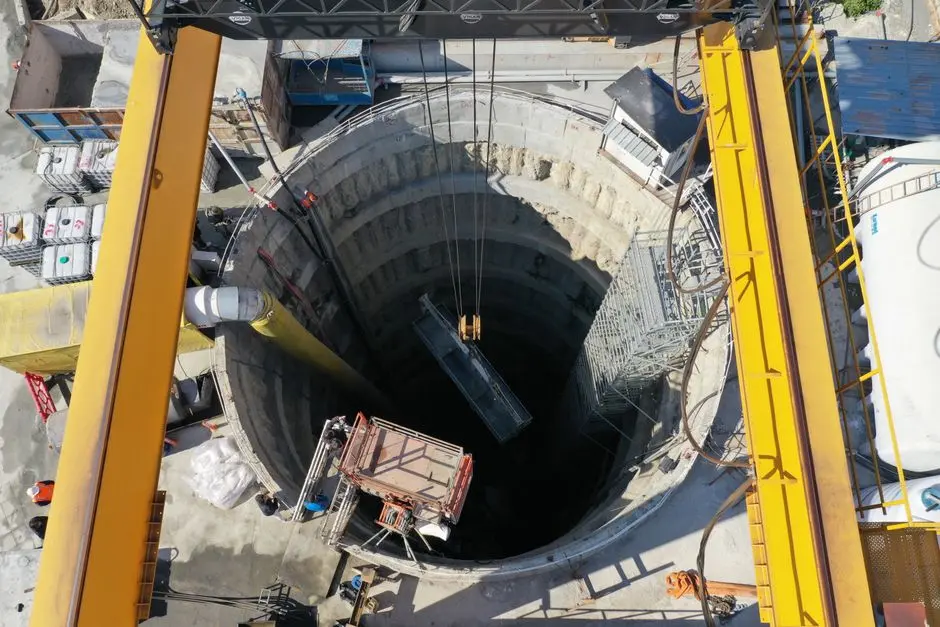
The newest and least-known trigger. CGWB's 2024 dynamic groundwater resource assessment reclassified a number of blocks underlying pharma parks as over-exploited or critical — extraction now exceeds recharge by more than 90% in some Telangana, Gujarat and Maharashtra blocks. The legal hook is the CGWA NOC: under the combined Water Act 1974 and Environment (Protection) Act 1986, the NOC can impose recycle thresholds above 90%, mandating an RO train with reject management that is, in practice, a ZLD train.
The specific blocks now flagged include Medak and Mahabubnagar in Telangana (over-exploited), several Gujarat blocks underlying Vatva and Naroda (critical), and Mahad in Maharashtra (semi-critical trending to critical). The 2024 assessment is the basis most CGWA regional offices use when they write 2025–2026 NOCs, so a new abstraction at any of these parks now reads as a 90%+ recycle condition from day one. On the financing side, Indian PSU banks and DFIs have started requiring a ZLD feasibility note as part of the environmental and social due-diligence for new pharma capex — a non-regulatory pressure that lands on the same hardware requirement.
When the Four Triggers Fire Together: A Decision Framework
Apply the four triggers as a matrix: for each park, mark whether the trigger applies, capture the evidence (CPIA list reference, PCB consent clause, SPV agreement clause, CGWA NOC), and read the strictest row as the binding condition. If even one row is "yes", ZLD is mandatory for the unit's effluent stream. Most pharma API parks in Gujarat and Maharashtra score 3 or 4 out of 4; a formulation-only SEZ in a water-rich, non-CPIA zone typically scores 0 or 1.
Worked examples. A Tarapur API unit scores 4/4 — Schedule VI CPIA, MPCB consent ZLD condition, Taloja CETP cap on high-COD, CGWA semi-critical overlay — ZLD mandatory, full train. A Hyderabad formulation unit outside the CPIA list, in a normal CGWB block, scores 0/4 unless the SPV at Hyderabad Pharma City flags API mother-liquor streams — in which case only the API expansion line is on ZLD, while formulation wash-water goes to the CETP. A Sikkim formulation unit in a water-rich, non-CPIA zone with a functioning CETP scores 0/4 — conventional CETP discharge is permitted, though consent renewal will still require a credible solvent-recovery step.
| Plant profile | CPIA? | State PCB order? | SPV/CETP cap? | CGWA overlay? | ZLD scope | Indicative train size |
|---|---|---|---|---|---|---|
| Tarapur API, multi-product | Yes | Yes | Yes | Yes | Full plant ZLD | Stripper 30–50 m³/d + MVR + 2× ATFD |
| Hyderabad formulation, new | No | No | No | No | None | CETP discharge only |
| Hyderabad Pharma City, API expansion | No | Yes (TSPCB) | Yes (SPV) | Yes (Medak block) | API line only | Stripper + MEE + 1× ATFD, RO permeate to CETP |
| Sikkim formulation, water-rich | No | No | No | No | None | CETP discharge with solvent recovery pre-step |
| Indore Pithampur bulk-drug expansion | No | Yes (MPPCB) | Yes (SPV) | Yes (critical block) | Bulk-drug line only | Stripper + MEE + ATFD with salt recovery |
For a high-salinity cost benchmark that applies to the evaporator and ATFD stages, the 2025 semiconductor wastewater treatment price breakdown and the microelectronics wastewater treatment cost engineering breakdown translate RO + MVR + crystalliser economics to a comparable high-purity baseline that an EHS head can adapt to an API mother-liquor stream. For the chromium consent clauses that often travel with ZLD orders, see the CPCB chromium standards guide; for cross-border API parks in South-East Asia, the Indonesian PP 22/2021 nutrient limits set a comparison point.
What the ZLD Train Looks Like Once a Pharma Park Says Yes
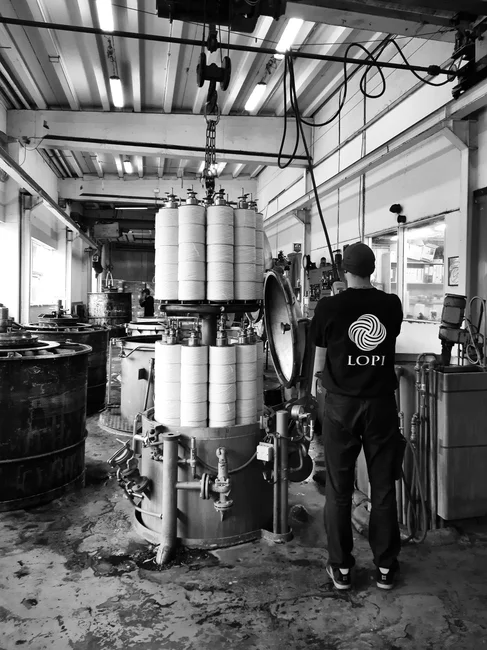
The standard pharma ZLD train runs in three phases. Phase 1 is solvent recovery: a stripper column at atmospheric or slight vacuum separates methanol, acetone, IPA, DCM and DMF, and that step alone removes 50–80% of the influent COD before any evaporator sees the liquor (Rototech field data, 2025). The recovered solvent is either reused in-process or sold — a 50 m³/d API plant typically recovers 200–400 t/yr of solvent, and the revenue stream usually pays back Phase 1 in 18–30 months. Phase 2 is volume reduction: an MVR evaporator (or MEE where steam is cheaper) takes the stripped liquor to 85–95% water removal. Phase 3 is solids finishing: an ATFD or forced-circulation crystalliser converts the concentrate to dry solids and a low-TDS condensate, with a downstream RO polishing the condensate for reuse in cooling or wash-water.
Equipment selection maps directly onto the upstream triggers. The stripper, MVR/MEE and ATFD are mandatory for any API mother-liquor; the industrial RO used for ZLD condensate polishing is what lets the unit reuse 70–90% of the water and shrinks the evaporator's hydraulic load. A DAF in front of the stripper is the standard move for oil and free-solvent removal — see the DAF unit sized for pharma influent. The filter press handling the ATFD and evaporator cake brings the dry-solids stream below 60% moisture for compliant disposal, and PLC-controlled chemical dosing for the ZLD pretreatment train is what keeps pH, anti-scalant and coagulant inside the tight band the evaporator needs. A membrane bioreactor (MBR) in front of the train is sometimes used where the formulation wash-water stream has to be polished before being mixed with the API line — the MBR integrated wastewater treatment unit is the typical reference design. For cost benchmarking on the RO + MVR + ATFD portion of the train, the ZLD cost breakdown for high-purity industrial wastewater is the most directly applicable piece of public engineering data.
Frequently Asked Questions
Is ZLD mandatory for every pharmaceutical unit in India?
No. ZLD binds only when one of the four triggers fires — a CPCB CPIA under Schedule VI, a state PCB site-specific order, an SPV/CETP cap on the unit's effluent, or a CGWA NOC with ≥90% recycle. A formulation plant in a non-CPIA, water-rich park discharging to a compliant CETP is not bound to ZLD as of 2026.
What influent COD load pushes an API stream out of the CETP and into ZLD?
Roughly 20,000 mg/L COD and above. Below that, an equalised and pre-settled API stream can usually meet a CETP cap of 2,000–5,000 mg/L COD with biological treatment; above it, the SPV will force the unit to pre-treat to ZLD or shut the line.
Does Schedule VI allow partial ZLD or near-ZLD?
No. Schedule VI requires 100% recovery of all liquid effluent — no discharge to stream, sewer or land. Near-ZLD phrasing is a state PCB or SPV term, not a Schedule VI carve-out, and the hardware required is effectively the same.
Can a formulation-only plant in a non-CPIA park avoid ZLD?
Generally yes, by discharging a compliant effluent to the park CETP — but only if the SPV agreement, the state PCB consent and the CGWA NOC all line up. Any one of those tightening to near-ZLD conditions flips the unit into a ZLD retrofit.
Which 2024–2026 pharma parks have been newly brought under ZLD?
The Vizag API SEZ expansion (TSPCB near-ZLD order, 2025), Hyderabad Pharma City Phase II (SPV guidelines, 2025), and the Indore Pithampur bulk-drug expansion (MPPCB consent conditions, 2025–2026) are the most-cited new entrants. All three bind bulk-drug lines, not formulation lines, which is consistent with the COD-threshold pattern that runs through the four triggers.