Why Glass Manufacturing Wastewater Needs a Dedicated Ion Exchange Approach
Glass plant effluent is dominated by inorganic ions that biological treatment cannot touch: dissolved silica typically runs 50–500 mg/L as SiO₂, boron 1–30 mg/L, fluoride 5–80 mg/L, total hardness 200–2000 mg/L as CaCO₃, and sodium 300–3000 mg/L, with suspended cullet and abrasive fines ranging 50–5000 mg/L (HydropureWater field data, 2025-09). These are not trace contaminants — silica and boron alone can exceed 500 mg/L combined in float-glass polishing-loop bleed, and the sodium load from batch-quench water routinely pushes conductivity past 5000 µS/cm. Generic COD/BOD-focused wastewater packages, the kind designed for food, textile, or refinery service, deliver essentially zero polishing on this fingerprint.
The ionic signature also shifts dramatically by source stream. Furnace cooling-tower blowdown carries high hardness and silica at 35–50 °C; batch-quench water spikes sodium and carries thermal shock loadings; cullet wash water loads iron, aluminum, and abrasive fines; edge-grinding and polishing slurry carry cerium oxide and trace heavy metals; and flue-gas scrubber bleed adds fluoride and sulfate at low pH. A resin selected on the basis of one stream will foul or exhaust prematurely on the blended equalization tank. As the Veolia ion-exchange handbook notes, resins "attract and exchange" dissolved ions — but the handbook does not tell a glass engineer which resin matches which of the five streams above, which is the gap this guide fills.
Bottom line for procurement scoping: if the influent has >1 mg/L boron, >50 mg/L silica, or >5 mg/L fluoride, a standard two-bed cation-anion demineralizer will not hit reuse targets. A glass-specific train must plan for high-temperature service, periodic acid soak for metal fouling, and a dedicated boron-selective stage when boron discharge or cooling-tower makeup limits apply.
Ion Exchange Resin Types and What Each Removes in Glass Wastewater
Seven resin chemistries cover essentially every polishing target a glass plant will encounter, and matching the right one to the dominant ion is the single biggest determinant of CAPEX per m³ treated. Strong acid cation (SAC) resin in H-form or Na-form strips calcium, magnesium, and other divalent cations at 1.5–2.0 eq/L capacity and regenerates with 100–200 g HCl/L or NaCl; Na-form is preferred when the downstream use is cooling-tower makeup, because it avoids the sodium spike that H-form operation creates in the decationized stream. Weak acid cation (WAC) is the workhorse for high-alkalinity hardness reduction, cutting acid consumption 90–95% versus SAC and typically operating at 2.0–4.0 eq/L.
Strong base anion (SBA) resin, Type I or Type II, is what removes fluoride, silica, and anionic boron species (B(OH)₄⁻), with Type I giving the best silica leakage and Type II giving lower regenerant consumption. Capacity is 1.0–1.4 eq/L, and regeneration takes 80–250 g NaOH/L. A mixed bed polisher (intimately mixed SAC + SBA) drives effluent below 0.1 mg/L conductivity (equivalent to roughly 17 MΩ·cm resistivity) and is used for demineralized water makeup to batch-quench or boiler feed. Chelating resins with iminodiacetate functionality — Lewatit TP207, Amberlite IRC748, or equivalents — selectively bind trace heavy metals from cullet coatings and polishing compounds that pass through the cation bed.
Boron-selective resin carrying N-methylglucamine functional groups (Diaion CRB03, Purolite S108, Lanxess Lewatit MK51) is the resin that does not exist in generic IX guides but is essential for glass service. It takes inlet boron of 1–30 mg/L down to <0.5 mg/L and regenerates with dilute H₂SO₄ or HCl; capacity is 0.5–0.9 eq/L and the resin operates best at pH above 8, which is why it sits after the standard SBA anion unit. The selection rule of thumb: if boron exceeds 1 mg/L and the reuse target is <0.5 mg/L, plan a dedicated boron-selective loop — there is no workarounds with conventional SBA.
| Resin Type | Functional Group | Target Ions in Glass Service | Capacity (eq/L) | Regenerant |
|---|---|---|---|---|
| SAC (strong acid cation) | Sulfonic acid | Ca²⁺, Mg²⁺, Fe²⁺/³⁺, Al³⁺ | 1.5–2.0 | HCl or NaCl |
| WAC (weak acid cation) | Carboxylic acid | Hardness tied to alkalinity | 2.0–4.0 | HCl (low dose) |
| SBA Type I (strong base anion) | Trimethylammonium | F⁻, SiO₂, SO₄²⁻, B(OH)₄⁻ | 1.0–1.4 | NaOH |
| Mixed bed (SAC + SBA) | Combined | Final polish to <0.1 mg/L TDS | — | HCl + NaOH (separate) |
| Chelating (iminodiacetate) | IDA | Trace heavy metals, Pb, Cu, Ni | 1.0–1.3 | HCl or H₂SO₄ |
| Boron-selective | N-methylglucamine | B(OH)₄⁻ at pH > 8 | 0.5–0.9 | Dilute H₂SO₄ or HCl |
An integrated polishing skid that pairs the SBA anion stage with downstream boron-selective resin is the configuration most often specified in 2025–2026 glass plant retrofits; see the integrated water purification skid architecture used in container- and float-glass polishing loops for a worked example.
Where Ion Exchange Fits in a Complete Glass Plant Treatment Train
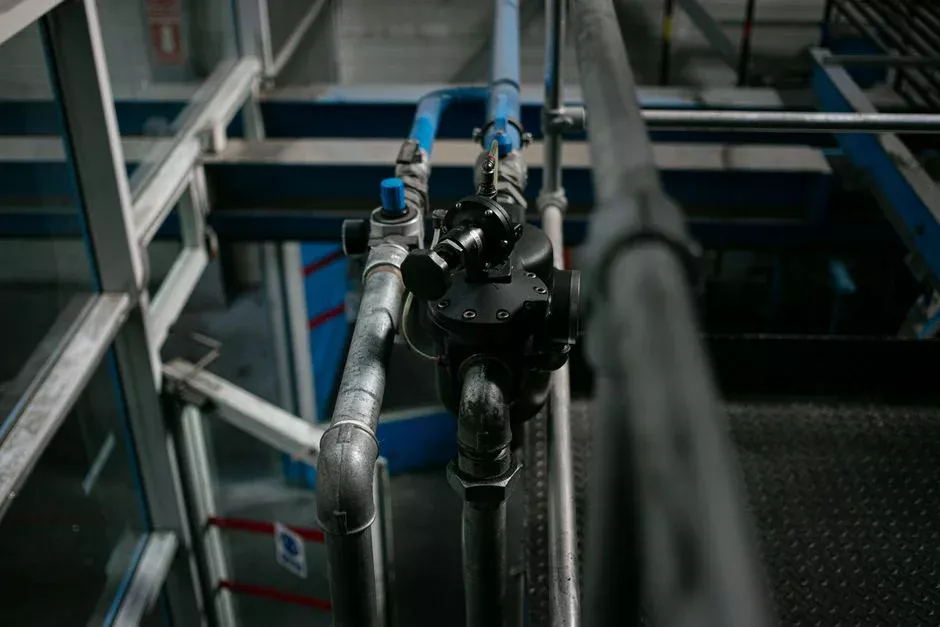
Ion exchange is a polishing stage, not a standalone process, and resin lifetime collapses by 50–80% when upstream solids or oil carryover are not controlled. A 2025–2026 glass plant water-reuse train typically runs five stages in series: (1) equalization and pH conditioning to 6.5–7.5 using an automatic chemical dosing system, (2) DAF or lamella clarification to drop TSS, cullet fines, and emulsified oils, (3) multimedia filtration to <2 mg/L TSS, (4) the ion exchange train itself, and (5) RO or a final reuse buffer for closed-loop cooling-tower makeup or batch-quench water. The DAF stage is non-negotiable on glass service because cullet fines and cerium oxide slurries will blind a resin bed within hours if they reach it; an engineered DAF system for glass plant pre-treatment typically drops TSS from 500–5000 mg/L to under 30 mg/L at 5–15 m³/m²·h hydraulic loading, with float solids reaching 3–6% dry solids content.
Two layout choices dominate 2025–2026 retrofits. Full-flow polishing treats the entire equalized wastewater stream and is specified when ZLD or tight discharge permits apply. Side-stream polishing of cooling-tower blowdown is more common in water-scarce regions and in brownfield retrofits where existing biological or physical-chemical treatment already handles the bulk flow; in this case, only the 5–20% blowdown slipstream goes through the ion exchange train, and the polished stream is blended back as cooling-tower makeup. The multi-media filter upstream of the ion exchange train in either layout typically runs anthracite-sand-garnet at 10–20 m/h service flow, with backwash initiated on differential pressure of 0.7–1.0 bar. Process flow integration with upstream flotation is detailed in this engineering guide to micro-bubble flotation upstream of ion exchange.
RO sits after ion exchange when the reuse target is cooling-tower or boiler-feed makeup, with the IX train acting as a protective pre-treatment that extends RO membrane life from the typical 2–3 years to 5–7 years by stripping hardness, silica, and boron ahead of the membranes. The combined IX → RO configuration is the dominant 2025–2026 specification for water-scarce glass plants in the Middle East, North Africa, and inland China (HydropureWater field data, 2025-11).
Design Parameters: Sizing a Glass-Wastewater Ion Exchange Skid
Five parameters decide whether a vendor quote will hit its performance guarantee. Service flow rate runs 8–40 bed volumes (BV) per hour; for polishing duty in glass service, target 15–25 BV/h with a finer-mesh resin (uniformity coefficient 1.2) to reduce rinse water and channeling. Bed depth is typically 0.8–2.5 m, and deeper beds consistently deliver 5–15 percentage points higher capacity utilization because the longer mass-transfer zone lets the breakthrough curve run closer to theoretical equilibrium.
Regenerant dose is the single largest operating cost lever: 80–250 g NaOH/L resin for the anion stage and 100–200 g HCl/L for the cation stage, with counter-current regeneration delivering 20–40% lower leakage and 15–30% lower chemical consumption than co-current at the same dose. Service run length between regenerations ranges 100–2000 BV and is set by the breakthrough ion — in glass service, silica or boron will exhaust the bed long before bulk conductivity rises, so the regeneration trigger should be online silica or boron analyzers, not conductivity. Rinse water runs 3–6 BV per regeneration, and the combined rinse-plus-spent-regenerant stream should be sized at 5–15% of treated flow for waste-neutralization budgeting.
Resin life is 3–7 years under proper operation, and silica fouling plus iron fouling are the dominant life-shortening mechanisms in glass service. Operating to less than 25% of the anion bed's silica capacity at any point on the exhaustion curve is the most reliable life extension; a 35–45 °C warm-regeneration step on SBA is also worth the heat-exchanger capex for plants with continuous boiler-steam availability. Real-time water quality monitoring on the ion exchange skid — silica, boron, conductivity, and differential pressure — is now standard on every 2025–2026 quote from major Chinese and European skid builders, and should be specified as a non-optional line item.
| Parameter | Typical Range | Glass-Service Target | Driver |
|---|---|---|---|
| Service flow rate | 8–40 BV/h | 15–25 BV/h | Kinetic limit; finer mesh at low end |
| Bed depth | 0.8–2.5 m | 1.5–2.0 m | Capacity utilization, leakage |
| NaOH regenerant dose | 80–250 g/L | 120–180 g/L | Anion capacity, silica leakage |
| HCl regenerant dose | 100–200 g/L | 120–160 g/L | Cation capacity, hardness leakage |
| Regeneration mode | Co-current / counter-current | Counter-current | −20–40% chemical, lower leakage |
| Service run length | 100–2000 BV | 200–600 BV | Silica/boron breakthrough, not conductivity |
| Rinse water per regen | 3–6 BV | 3–4 BV | Rinse + spent regenerant = 5–15% of treated flow |
| Resin life | 3–7 years | 4–5 years | Silica + iron fouling control |
2025–2026 CAPEX, OPEX, and Resin-Replacement Cost Benchmarks
CAPEX for a 5–50 m³/h ion exchange polishing skid — vessels, automated valves, instrumentation, PLC, and skid assembly — runs $40,000–$350,000 in 2025–2026 industrial pricing (HydropureWater field data, 2025-12). A boron-selective loop adds $20,000–$80,000 depending on whether it is a dedicated vessel or a side-loop on the SBA stage. Chinese skid packages sit at the low end of the range and are competitive on lead time; European packages command 30–60% premium but typically include more comprehensive instrumentation and longer warranty terms.
OPEX is regenerant-dominated. Standard anion-cation trains run $0.10–$0.40 per m³ of treated water for NaOH and HCl combined, with rinse water and waste neutralization adding another 20–30%. Boron-selective regeneration with dilute H₂SO₄ or HCl runs $0.20–$0.60/m³ because of the lower resin capacity and higher per-cycle acid dose. Pumping energy is 0.3–0.8 kWh/m³ across the IX loop, and resin replacement is amortized at $2,000–$8,000 per m³ of installed resin on a 3–7 year cycle, which translates to roughly 5–10% of CAPEX annually on a 10-year life-cycle basis. Side-stream polishing of cooling-tower blowdown typically achieves 2–4 year payback in water-scarce plants, driven by reduced fresh-water purchase and lower sewer discharge fees; full-flow polishing usually requires tighter discharge or ZLD drivers to justify the larger IX skid.
| Cost Component | Range (2025–2026) | Basis |
|---|---|---|
| CAPEX, 5–50 m³/h IX skid | $40,000–$350,000 | Vessels, valves, instruments, PLC |
| Boron-selective loop (add-on) | $20,000–$80,000 | Dedicated vessel + extra instrumentation |
| Regenerant OPEX (standard) | $0.10–$0.40/m³ | NaOH + HCl, anion-cation train |
| Regenerant OPEX (boron-selective) | $0.20–$0.60/m³ | Dilute H₂SO₄ or HCl |
| Pumping energy | 0.3–0.8 kWh/m³ | Service + rinse + waste pumps |
| Resin replacement | $2,000–$8,000/m³ installed | Every 3–7 years |
| Annualized resin budget | 5–10% of CAPEX | 10-year life-cycle basis |
| Side-stream blowdown payback | 2–4 years | Fresh water + sewer fee avoidance |
Common Resin Fouling Problems in Glass Plant Service and How to Prevent Them
Four fouling modes cause 90% of glass-plant IX operating headaches, and each has a specific prevention step. Silica fouling on SBA resin presents as rising silica leakage and shorter service runs; it is prevented by operating below 25% of total exchange capacity to silica and by using warmer regeneration at 35–45 °C, which improves silica elution off the resin. Iron and aluminum fouling from cullet wash water and polishing compounds presents as capacity loss and brown discoloration; the fix is a 5–10% HCl soak during scheduled maintenance, which dissolves the metal hydroxides and restores 85–95% of the original capacity (HydropureWater field data, 2025-08).
Organic fouling from anti-foam, lubricant, and cutting-oil carryover presents as shortened runs and higher rinse volumes; a periodic 1–2% NaOH plus NaCl brine wash every 20–40 cycles strips the organic loading. Mechanical fouling from suspended fines that bypassed the multimedia filter is the most damaging mode because it is irreversible — once fine garnet or cullet particles pack the resin voids, only physical removal or resin replacement will recover capacity. The fix is a 5 µm cartridge guard upstream of the IX vessel plus scheduled inspection of the multimedia filter media; this broader 2026 reference on high-salinity wastewater treatment options covers how high-TDS brine residuals from the IX regeneration step are routed onward to evaporation or RO concentrate management. As the Veolia handbook observes, IX problems "result in poor effluent quality, decreased service run lengths, or increased consumption of regenerant" — those three symptoms are the same KPIs a glass-plant DCS should alarm on, with setpoints typically set at 10% above baseline conductivity leakage, 15% reduction in service BV, and 20% rise in per-cycle regenerant consumption.
Frequently Asked Questions
What influent and effluent targets should a glass plant set for an IX polishing skid?
Target inlet TSS <2 mg/L, hardness <2000 mg/L as CaCO₃, silica <500 mg/L, boron <30 mg/L, fluoride <80 mg/L. Polished effluent should hit <1 mg/L hardness, <0.5 mg/L silica, <0.5 mg/L boron, and <0.1 mg/L conductivity on the mixed-bed polisher (per EPA 40 CFR 133 discharge quality guidance for industrial reuse).
How is boron removed when conventional SBA resin leaks it at pH near neutral?
Dedicated boron-selective resin with N-methylglucamine functional groups handles B from 1–30 mg/L down to <0.5 mg/L when operated at pH > 8 and regenerated with dilute H₂SO₄; this stage is added after the standard SBA anion unit in 2025–2026 glass-plant specifications.
What is the typical payback for a side-stream IX skid on cooling-tower blowdown?
Side-stream blowdown polishing recovers 90–95% of blowdown as cooling-tower makeup and pays back in 2–4 years through reduced fresh-water and sewer fees, with CAPEX of $40,000–$150,000 for a 5–20 m³/h skid (HydropureWater field data, 2025-12).
How long does ion exchange resin last in glass wastewater service?
Resin life is 3–7 years; silica and iron fouling are the dominant life-shortening mechanisms. Operating below 25% of the anion bed's silica capacity and applying scheduled 5–10% HCl soak maintenance extends life to the upper end of the range.
Can ion exchange replace RO in a glass plant reuse loop?
No — IX polishes dissolved ions cost-effectively down to 0.1–1 mg/L, but RO is required to reach the 50–200 µS/cm conductivity that cooling-tower makeup demands. The standard 2025–2026 train is IX as pre-treatment followed by RO polishing after ion exchange, which extends membrane life from 2–3 years to 5–7 years.