What a Chemical-Plant Cloud Monitoring Platform Must Do Differently
A chemical-plant cloud monitoring platform is a three-layer stack: field sensors and analyzers feed an OT gateway (PLC/RTU plus edge compute), which publishes time-series data to a SaaS cloud hosting dashboards, an alarm engine, and a compliance archive. The water-environment O&M cloud platform market reached $1.56B in 2025, with Water Quality Monitoring representing 31.8% of revenues and Wastewater Treatment applications holding 27.2% market share (per the 2024-2034 market research report).
A municipal SCADA platform treats wastewater as a biological and hydraulic problem, whereas a chemical-plant platform treats it as a chemistry problem first. Three engineering differences drive the entire architecture:
- Hazardous-area certification. Most equalization basins, reaction tanks, and clarifier launders sit inside ATEX/IECEx Zone 1 or Zone 2 boundaries. Analyzers, junction boxes, and gateways must carry Ex d IIB T4 or Ex ia IIC T6 certification with IP66 stainless enclosures, because the same cabinet that survives a 1,000 m³/d refinery will leak VOC in a chemical tank farm.
- Chemical-resistant wetted parts. PVDF, Hastelloy C-276, and PTFE reference junctions are non-negotiable when the stream carries free chlorine, sulfide, or hexavalent chromium. A standard EPDM O-ring swells and fails within 30 days in a 5,000 mg/L Cl⁻ matrix.
- Toxicity-aware alarm logic. Threshold-only alarms are insufficient. The platform must encode toxicity gates—a Cr(VI) excursion to 0.3 mg/L in the effluent cannot wait for an operator to acknowledge an email; it must trigger an immediate SMS, a dosing-system hold, and an automatic compliance-log entry.
The minimum viable Cr(VI) reduction monitoring kit, per Yokogawa's chromium wastewater application note, is a pH analyzer and an ORP analyzer with a gold electrode, both on a 4-20 mA loop, controlling reductant (FeSO₄ or NaHSO₃) injection. The cloud layer adds visibility, audit trails, and remote engineering support without replacing the local control loop.
The Measurement Layer: Sensors and Analyzers for Chemical Effluent Streams
Chemical effluent streams require a denser and more diverse analyzer bill-of-materials than municipal plants. The table below maps the standard parameters, the sensor technologies that survive chemical service, the hazardous-area classification, and the output protocol the cloud gateway reads.
| Parameter | Sensor / Analyzer Technology | Typical Range (chemical effluent) | Wetted Material | ATEX/IECEx Zone | Output Protocol |
|---|---|---|---|---|---|
| pH | Glass electrode with PTFE reference | 0-14 | PVDF / Hastelloy | Zone 1 (tank), Zone 2 (launder) | 4-20 mA + HART |
| ORP (Cr(VI) reduction) | Gold electrode, Pt100 temperature | -1500 to +1500 mV; setpoint 250-300 mV for Cr(VI) | PVDF / gold | Zone 1 | 4-20 mA + HART |
| Conductivity | 4-electrode toroidal | 0-2,000,000 µS/cm | PVDF | Zone 1 | MODBUS-RTU |
| Dissolved oxygen | Optical (luminescent) membrane | 0-20 mg/L | PVC / stainless 316L | Zone 2 | 4-20 mA + HART |
| COD (online) | UV254 + turbidity compensation, or colorimetric dichromate | 0-5,000 mg/L | Quartz / stainless | Zone 1 (reagent cabinet) | MODBUS-TCP |
| Cr(VI) | Online colorimetric (1,5-diphenylcarbazide) | 0-5 mg/L (DL 0.01 mg/L) | PMMA / PTFE | Zone 1 | 4-20 mA / MODBUS |
| Total cyanide | Amperometric membrane electrode | 0-10 mg/L | PVDF / gold cathode | Zone 1 | 4-20 mA + HART |
| Total suspended solids | Optical NIR (90° scatter) or ultrasonic | 0-50,000 mg/L | Stainless 316L / sapphire window | Zone 1 | MODBUS-RTU |
| Flow (sludge / chemical) | Electromagnetic or Coriolis | 0-200 m³/h | PTFE / Hastelloy liner | Zone 1 | 4-20 mA + HART / MODBUS |
For Cr(VI) reduction control specifically, the published operating window is pH 2.0-3.0 with ORP held at 250-300 mV measured against a gold electrode; deviation outside this band stops the reduction reaction and risks discharging unreacted chromate (per the Yokogawa reduction-monitoring application note). Upstream of the analyzer, a dissolved air flotation system strips suspended solids and oil that would foul the probes within hours, and the reductant is metered by a PLC-controlled automatic chemical dosing system that takes its 4-20 mA setpoint directly from the ORP controller.
Network Architecture: OT/IT Segmentation, Protocols, and Redundancy
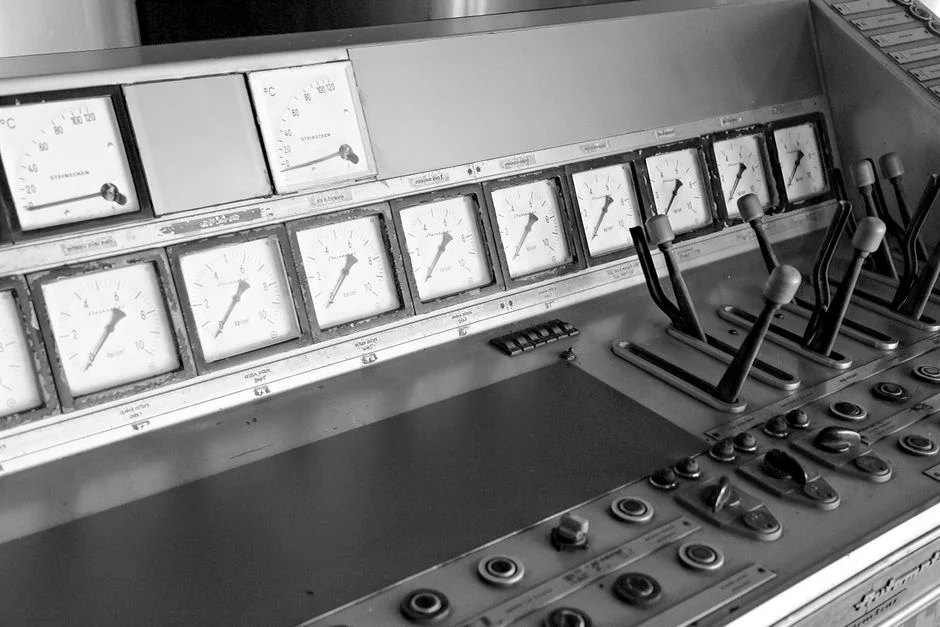
Cloud migration of a chemical effluent line succeeds when the network is segmented into the Purdue model and the field-to-cloud protocol stack is designed for hazardous-area noise immunity. This reference architecture spans five levels.
- Level 0-1 (Field): 4-20 mA + HART instruments and MODBUS-RTU analyzers wired through Ex d junction boxes to local PLCs (Siemens S7-1500, Allen-Bradley CompactLogix, or Schneider M580). PLC scan time must be ≤1 s for any loop tied to a safety interlock, such as a Cr(VI) high-high trip shutting the discharge pump.
- Level 2 (Control): Existing SCADA or HMI server on a dedicated control-room VLAN, with read-only access for the gateway that bridges to IT.
- Level 3 (DMZ): An industrial firewall or unidirectional data diode between the OT LAN and the IT LAN. No inbound traffic is permitted from IT to OT; only outbound MQTT publish from the gateway is allowed.
- Level 3.5 (Edge gateway): An industrial protocol converter—such as a Siemens IOT2050, HMS Anybus, or Moxa UC-8100—that polls MODBUS-TCP registers from the PLC and republishes them as MQTT-SN over TLS 1.3 to the cloud broker.
- Level 4 (Cloud): SaaS broker on AWS IoT Core, Azure IoT Hub, or Alibaba Cloud IoT Platform. Custom log-monitor metrics and threshold-alert rules are defined per the Cloud Monitor API (per Alibaba Cloud Cloud Monitor documentation, 2025).
Redundancy is required at three layers: WAN backhaul uses dual-SIM 4G/5G cellular with automatic failover, or fiber plus cellular for a primary/backup pair; cloud broker is deployed active-active across two geographic regions with data mirrored at 1-minute resolution; data retention holds 1 year of raw 1-minute data for trend analysis and 5+ years of compressed daily aggregates for compliance audits. Chemical plants that skip cellular redundancy typically discover the gap during the first regional fiber cut, when the dosing loop drifts because operators cannot see the ORP trend from their phone.
Cloud Platform Capabilities: Dashboards, Alarms, and Compliance Reporting
The SaaS tier delivers four specialized capabilities required for chemical wastewater management. The real-time KPI dashboard exposes influent and effluent pH, ORP, COD, Cr(VI), total cyanide, and instantaneous flow, plus derived indicators such as kg-reductant per kg-Cr(VI) removed and kWh per m³ treated—values operators currently calculate by hand from a lab logbook. The alarm engine is tiered: Tier 1 fires an SMS to the on-call operator with a target acknowledgement of 5 minutes for any threshold breach; Tier 2 posts an email and a red dashboard banner; Tier 3 is reserved for regulatory-limit crossings (for example, effluent Cr(VI) above 0.5 mg/L under GB 8978-1996 Class I) and auto-locks the event into an immutable compliance log with a cryptographic hash chain.
The compliance module generates daily, weekly, and monthly discharge reports against local rules—China GB 8978-1996 Class I, EU Industrial Emissions Directive 2010/75/EU, or US EPA 40 CFR Part 414 for the Organic Chemicals point source category—and exports them as CSV or digitally signed PDF. Multi-site aggregation is the fourth capability: corporate EHS sees all plants on a single world map with traffic-light rollups, while each plant's users see only their own data behind role-based access control and SAML SSO. The market research report on water-environment O&M platforms confirms that this combination of IoT sensor integration, SCADA hand-off, and compliance reporting is the core value proposition driving 27.2% of cloud-platform revenue into the wastewater treatment segment.
Total Cost of Ownership and 3-Year ROI for a Chemical Plant Deployment

A 50-200 m³/d chemical effluent line typically requires a CAPEX investment of $180K-$450K: $80K-$180K for field analyzers and probes (Cr(VI), cyanide, and COD analyzers are the cost drivers), $40K-$90K for hazardous-area conduit, glands, and intrinsically safe barriers, $30K-$60K for the edge gateway plus any PLC upgrade, and $30K-$120K for the cloud platform license and commissioning services. Annual OPEX runs $35K-$60K, consisting of $9.6K-$42K for the SaaS subscription at $800-$3,500/month, $1.2K-$4.8K for cellular backhaul, and $15K-$35K for probe maintenance and reagent replenishment.
The defensible savings case, drawn from operating data at chemical-plant deployments (HydropureWater field data, 2025), is four-fold. Operator manning on routine rounds drops 40-60% as the alarm engine handles first-line notification. Alarm response time compresses from a typical 30-45 minutes to under 5 minutes via SMS escalation. Closed-loop dosing from the ORP controller cuts reductant overuse 15-25%, which on a 100 m³/d line consuming 200 mg/L NaHSO₃ is roughly $8K-$14K/year. Avoided non-compliance events—a single GB 8978-1996 Class I violation in China carries a 100,000-500,000 RMB penalty plus remediation—are the largest swing factor. Typical payback lands between 18 and 30 months, and the risk-adjusted NPV is positive in 95% of cases for plants with annual non-compliance risk exposure above $50K. The asset-uptime half of the savings case is covered in the 2026 predictive maintenance engineering guide for wastewater plants.
Frequently Asked Questions
What does a cloud monitoring platform for a 100 m³/d chemical wastewater line cost in 2026? A complete deployment runs $180K-$450K CAPEX for a 50-200 m³/d line, plus $35K-$60K annual OPEX covering SaaS subscription, cellular backhaul, and reagent replenishment. The Cr(VI) and online COD analyzers are the largest individual line items, and most plants reach payback inside 18-30 months through manning reduction and avoided non-compliance penalties.
Which sensors are mandatory for Cr(VI) reduction monitoring? The minimum kit is a pH analyzer and an ORP analyzer with a gold electrode, both wired on a 4-20 mA loop, controlling reductant injection at pH 2.0