
Why Pesticide Wastewater Needs an Activated Carbon Stage
An activated carbon filter for pesticide wastewater is not a standalone treatment — it is an engineered polish step that works after biology or advanced oxidation, not before. Industrial pesticide streams from herbicide, insecticide and fungicide formulators, active-ingredient plants and container-rinse operations typically carry several hundred to more than 10,000 mg/L COD, suspended solids above 200 mg/L, and trace pesticide loads in the µg/L to mg/L range depending on the campaign. A granular activated carbon (GAC) contactor placed downstream of an activated-sludge or MBR stage, or after O₃, O₃/H₂O₂ or Fenton polishing, reliably captures the residual pesticide mass that biology and oxidation cannot mineralize.
The Orlandini chapter in the Routledge Handbook of Environmental Engineering validates GAC filtration as a long-term atrazine-removal and partial-biodegradation stage, while the General Carbon material science reference confirms that physical and chemical adsorption on a high-surface-area porous structure (500–1,500 m²/g for bituminous grades) is the mechanism that drives pesticide capture. Peer-reviewed 2020 Water Research work on long-term GAC performance against persistent organics, and a 2021 Chemosphere column study on in-situ regeneration of pesticide-loaded carbon, both confirm that the bed can be operated and renewed rather than dumped after a single cycle.
The headline compliance point, which a regulator will want to see on a P&ID: pesticide discharge limits are set by jurisdiction — US EPA effluent guidelines, EU Directive 2020/2184, India CPCB Schedule VI, China GB 21523 — not by the carbon supplier. The carbon stage is specified against the permit number, not against a generic "pesticide removal" claim.
Which Pesticide Classes Adsorb Well on Activated Carbon
Whether a given molecule sticks to GAC depends on its hydrophobicity, molecular weight, polarity and pKa — not on the brand of carbon. The matrix below summarizes the practical behavior the engineer should expect on a coal-based GAC, the default for industrial agrochemical duty (per General Carbon, bituminous-coal grades give the broadest adsorption envelope).
| Pesticide class | Examples | Adsorption on bituminous-coal GAC | Notes / pretreatment needed |
|---|---|---|---|
| Organochlorines | Lindane, DDT, endosulfan | High (hydrophobic, low solubility) | Excellent on GAC alone; long bed life |
| Organophosphates | Chlorpyrifos, parathion, malathion | Moderate, pH-dependent | Hydrolysis at pH > 8 reduces loading |
| Carbamates | Carbofuran, carbaryl | Moderate | Often needs EBCT at the high end of 20–30 min |
| Triazines | Atrazine, simazine, propazine | High (Orlandini-documented) | Desethyl and desisopropyl metabolites adsorb less well — consider AOP upstream |
| Pyrethroids | Cypermethrin, deltamethrin | High but hydrophobic | Risk of precipitation upstream of carbon; settle or DAF first |
| Glyphosate / AMPA | Glyphosate, AMPA | Poor (polar, water-soluble) | Oxidize to breakdown products before carbon, or send to AOP |
Two operational consequences follow. First, base-material choice matters: bituminous-coal GAC is the workhorse for broad-spectrum mid-MW pesticides; coconut-shell GAC, with its finer micropore structure, suits small polar molecules better but costs more per kilogram; wood-based GAC is reserved for color/odor polishing, not pesticide removal. Second, transformation products almost always adsorb less well than the parent compound, so the pilot must test for the metabolites the regulator actually writes into the permit, not just the active ingredient.
GAC vs PAC: Choosing the Right Carbon Format
The two formats are not interchangeable, and procurement will challenge any specification that does not justify the choice. GAC is a granular, fixed-bed unit process with 10–30 min empty bed contact time (EBCT), used as a continuous polishing step. PAC is a powder dosed at 5–50 mg/L into a rapid-mix contact basin, used as an aid, a shock-load buffer, or a short campaign before a planned media change (General Carbon, S3).
| Decision parameter | Choose GAC contactor | Choose PAC dose |
|---|---|---|
| Load profile | Continuous, regulated discharge | Variable, seasonal or shock load |
| Target compounds | Hydrophobic mid-MW pesticides | Polar pesticides, color, odor, short-chain phenols |
| EBCT | 10–60 min, fixed | Minutes to hours, contact-basin dependent |
| Bed life / dosing | Weeks to months per fill | Continuous, dose-controlled |
| Downstream impact | None — no solids carryover | Needs clarifier or filter to remove loaded PAC |
| CAPEX bias | Higher (vessel, internals, instruments) | Lower (tank, slurry feeder, mixer) |
| OPEX bias | Driven by media replacement / reactivation | Driven by continuous powder consumption |
The defensible rule for agrochemical duty: specify a GAC contactor for the continuous, regulated pesticide load; bring PAC in front of the GAC when the matrix is dominated by polar compounds such as glyphosate, or when the upstream process occasionally generates a solvent or surfactant slug that the fixed bed would otherwise pin. A useful industrial component reference is the supplier's FRP vessels, control valves and bulk filter media for GAC contactors — these are the items a maintenance planner will want on the BOM, not the carbon itself.
Designing the GAC Contactor: EBCT, Loading and Bed Geometry
Industrial GAC contactors for pesticide polishing are designed against four numbers: EBCT, hydraulic loading, bed depth and freeboard. EBCT selection is the first move — 10–30 min for a polish after biology or AOP, and 30–60 min if the carbon is the only barrier between a biologically-treated effluent and the receiving water (Orlandini, S1; General Carbon, S3). Below 10 min the bed saturates too quickly; above 60 min the vessel becomes uneconomically large for marginal incremental removal.
| Parameter | Typical range (pesticide polish duty) | Driver / consequence of straying outside |
|---|---|---|
| EBCT | 10–30 min (post-bio/AOP); 30–60 min (post-bio only) | Short EBCT → premature breakthrough; long EBCT → oversized vessel |
| Hydraulic loading (downflow) | 5–15 m/h | Above 15 m/h → channeling, media carryover |
| Hydraulic loading (upflow) | 10–20 m/h with underdrain | Higher loading possible; risk of bed fluidization |
| Backwash rate | 30–45 m/h | Controls biological fouling and TSS blinding |
| Bed depth (single vessel) | 1.5–3.0 m | Two vessels in series for longer EBCT without deep bed |
| Freeboard | 30–50% of bed depth | Accommodates backwash bed expansion |
Vessel specification for an agrochemical site: FRP or rubber-lined carbon-steel shell, PVC or PE laterals, top inlet distributor, bottom underdrain with strainer nozzles. Instrument with ΔP transmitters and sample taps every 0.5 m of bed depth so a breakthrough profile can be drawn at each media change. Pretreatment is not optional: a DAF pretreatment to keep suspended pesticide solids off the carbon bed should target <30 mg/L TSS upstream, free chlorine must be reduced (chlorine fouls GAC rapidly), and a multi-media filter to drop SDI below 5 ahead of the carbon stage is the standard guard if RO or a final UF step follows.
Pilot Testing and Breakthrough Monitoring
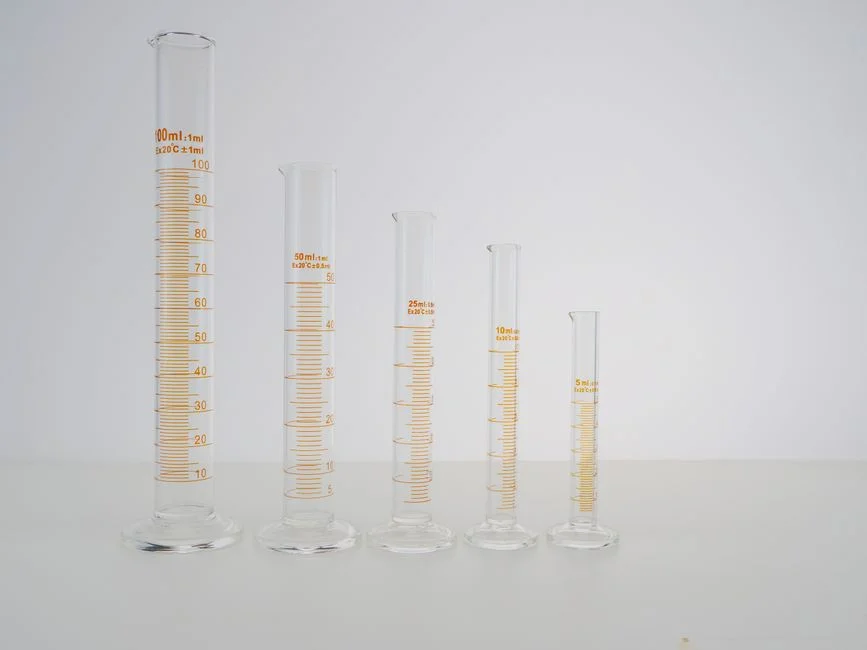
A vendor's generic isotherm is not a design basis. The pilot must be run on real effluent at real temperature, and the engineer must walk away with a documented breakthrough curve and a defensible replacement interval. The minimum pilot that supports full-scale design: three glass or PVC columns, 50–150 mm diameter, 1–2 m bed depth, each set to a different EBCT (commonly 10, 20 and 30 min) and run in parallel to at least 10,000–20,000 bed volumes — long enough to capture a 10% breakthrough on the target analytes.
| Pilot element | Minimum specification | Acceptance criterion |
|---|---|---|
| Column diameter | 50–150 mm | Avoids wall channeling at >100 mm |
| Bed depth | 1.0–2.0 m | Allows meaningful scale-up to 1.5–3.0 m |
| Parallel EBCTs | 3 (e.g., 10/20/30 min) | Generates the EBCT-vs-throughput curve |
| Run length | 10,000–20,000 bed volumes | Reaches 10% breakthrough on the target pesticide |
| Feed / effluent sampling | 2× weekly, pesticide + COD + TOC | GC-MS or LC-MS for the target analytes |
| Bed profile sampling | 3 depths (top, mid, bottom) | Detects channeling or premature front movement |
| Reporting deliverable | 10% / 50% / 100% breakthrough curves | Sets the full-scale replacement interval |
Three failure modes the pilot will expose if the upstream train is not right. Rising ΔP across the column points to biological fouling — almost always an oxidant residual problem or a nutrient leak from upstream biology. Particulate blinding (sharp ΔP rise in the top 0.5 m) means the upstream TSS target of <30 mg/L is not being met. Competitive adsorption from solvent carryover — common in formulators plants where reactor wash water joins the equalization tank — flattens the breakthrough curve and shortens bed life; if the pilot shows it, fix the equalization strategy before sizing the full-scale contactor.
Regeneration, Reactivation and Spent-Carbon Disposal
End-of-life routing is an OPEX decision that should be locked at design stage, not at bed changeout. There are three options. Thermal reactivation off-site in a rotary kiln at 800–900 °C restores 80–95% of virgin capacity and supports 3–5 reuse cycles per carbon charge (General Carbon confirms reactivation as the sustainable end-of-life route for spent GAC). In-situ chemical regeneration, evidenced by the 2021 Chemosphere column study on pesticide-loaded carbon, is a fit when off-site transport is restricted or the pesticide mix is unusual enough that a reactivation vendor will not accept the material. Single-use disposal as hazardous waste is the most expensive route per cycle but the simplest operationally, and is often the only legal route in jurisdictions where no qualified reactivation vendor is within reasonable transport distance.
Spent carbon from pesticide duty is almost always classified as hazardous because of the adsorbed actives. The manifest, packaging, transporter licensing and incinerator acceptance criteria (typically chlorine content <1%, PCB/PCDD acceptance limits per the receiving facility) must be agreed in writing before the first bed changeout, not negotiated under a shutdown deadline. The default 2026 plan for a 5–50 m³/h plant in a region with a reactivation vendor: contract off-site reactivation, run 3–5 cycles, then dispose the final spent charge as hazardous waste.
2026 CAPEX and OPEX for an Industrial Pesticide GAC Stage
Order-of-magnitude 2026 numbers for a polish stage downstream of biology or AOP, treating 5–50 m³/h. These are bands, not quotes — vendor selection, vessel certification and local installation cost push the final figure ±30%.
| Cost line | 2026 order of magnitude | Notes |
|---|---|---|
| Vessel + internals + instrumentation, FRP | Low six figures USD | Two-vessel series adds 60–80% |
| Vessel + internals + instrumentation, SS316L | Mid six figures USD | Aggressive matrices or high-temperature service |
| Virgin bituminous GAC, 8×30 mesh | Mid-USD per kg, freight-dependent | One-time fill plus 10–20% annual makeup |
| Off-site thermal reactivation | 40–70% of virgin carbon price per tonne | Plus transport each way |
| Single-use disposal (hazardous) | 2–4× reactivation cost per tonne | Varies sharply by jurisdiction |
| Annual OPEX (5–50 m³/h plant) | Carbon makeup + reactivation + pumping + lab | Reactivation payback typically 12–24 months at >10 m³/h |
With 3–5 reuse cycles the 5-year OPEX for a reactivation-based scheme typically drops 30–60% versus single-use disposal, and the payback period on the reactivation logistics contract is usually 12–24 months at >10 m³/h throughput (HydropureWater field data, 2026). The cost collapses if the carbon is sized against the wrong stream — placing a GAC contactor on raw, high-COD pesticide wastewater rather than on a polished stream multiplies both carbon consumption and disposal cost several-fold. The relevant industrial parts and consumables for the GAC train, including FRP vessels, control valves, strainer nozzles and bulk filter media, are catalogued on the supplier's water treatment parts, valves and filter media line, useful for the spare-parts BOM rather than the carbon itself.
Frequently Asked Questions
Does activated carbon work on pesticide wastewater?
Yes — but as a polish step, not a primary treatment. GAC reliably adsorbs triazines such as atrazine, organochlorines, and most carbamates; polar compounds such as glyphosate and AMPA adsorb poorly and usually require AOP upstream. EBCT of 10–30 min after biological or oxidation pretreatment is the standard industrial design band.
GAC vs PAC for pesticide wastewater — which should I specify?
Specify a GAC contactor for a continuous, regulated discharge where the pesticide suite is well characterized. Specify PAC — alone, or as a dose ahead of the GAC — for variable or shock loads, short campaigns, or matrices dominated by polar compounds such as glyphosate.
How long does a GAC bed last on pesticide duty?
Bed life is set by the pilot breakthrough curve, not by the vendor. Typical pesticide-polish duty runs 3–6 months between media changes for a virgin charge, extendable to 12–24 months equivalent through 3–5 thermal reactivation cycles at 800–900 °C (General Carbon, S3).
What EBCT do I size a pesticide GAC contactor to?
10–30 min when polishing after biology or AOP; 30–60 min when polishing a biologically-treated effluent that is the final barrier before discharge. Below 10 min the bed saturates too quickly; above 60 min the vessel becomes uneconomically large (Orlandini, S1; General Carbon, S3).
What pesticide discharge limits does the carbon stage have to meet?
Whatever the local permit says — US EPA effluent guidelines, EU Directive 2020/2184, India CPCB Schedule VI, China GB 21523. The carbon stage is specified against the permit number for each target analyte, not against a generic "pesticide removal" claim. For agrochemical matrix context outside pesticides, see the industrial wastewater compliance, technology and cost reference for the US.
Can spent GAC from pesticide duty be regenerated?
Yes, via off-site thermal reactivation at 800–900 °C (3–5 cycles, restoring 80–95% of capacity) or in-situ chemical regeneration for unusual pesticide mixes (per the 2021 Chemosphere study, S5). Single-use hazardous-waste disposal remains the fallback in jurisdictions without a qualified reactivation vendor.