Why Vaccine Effluent Is a Different Wastewater Problem
Vaccine manufacturing wastewater is biologically active until it is deliberately inactivated, and that single fact changes everything about how the plant is designed. Four distinct streams converge at the WWTP headworks, and each carries a different hazard:
- Fermentation harvest bleed — contains viable recombinant organisms (E. coli, yeast, insect cell lines), residual inducers such as IPTG (typically 0.1–1 mM in production) and doxycycline (used at 1–10 µg/mL for Tet-On systems), and intracellular proteins released on lysis.
- CIP rinse water — hot caustic (NaOH 1–2%, 70–85 °C) and acid rinse (HNO₃ or phosphoric 0.5–1%) carrying trace API, endotoxin, and cleaning surfactants.
- Equipment and filter backwash — periodic slugs of concentrated solids and protein precipitate, often 3–10× the strength of steady-state flow.
- HVAC condensate and boiler blowdown — low-COD but high-temperature, sometimes carrying glycol from chiller loops.
Because fermentation bleed contains BSL-2 organisms, segregating it from the main WWTP and applying a validated inactivation step before any biological treatment is not optional. The Veolia pharma treatment guide explicitly recommends keeping API-bearing streams separate from the bulk flow so that destruction technology does not have to be sized for the total plant volume (Veolia Water Technologies, Pharmaceutical Manufacturing Wastewater). pH swings across batches routinely span 2–12, COD swings span 500–15,000 mg/L, and conductivity can vary by an order of magnitude between a water-for-injection flush and a harvest bleed; equalization is therefore a regulatory-driven buffer, not a best-practice add-on. Under most national pharmaceutical GMP annexes (EMA EU GMP Annex 1, FDA 21 CFR 211, WHO TRS 986), biological API deactivation is a legal obligation that QA must sign off before the stream leaves the production block.
The 2026 Unit-Process Flow for a Vaccine Plant WWTP
Water moves through seven unit operations in the order below. Every step has a numeric operating target that the design must meet, and most steps have an inline instrument the control system will alarm on.
- Screening — a rotary mechanical bar screen with 3–6 mm apertures protects downstream biological units from rags, stopper fragments, and PET from media bottles.
- Equalization — buffered tank with mechanical mixing; target HRT 8–24 h to dampen pH and COD swings. The Veolia pharma guide identifies equalization specifically as a buffer for batch variability in pharma plants (Veolia Water Technologies).
- BSL-2 inactivation — either thermal hold at ≥60 °C for ≥30 min (validated per WHO Laboratory Biosafety Manual and EMA biosafety guidance) or chemical alkaline hold at pH ≥12 with NaOH for ≥1 h, followed by pH neutralization to 6.5–8.5 before discharge to the biological stage.
- Coagulation/flocculation + DAF — a dissolved air flotation unit removes emulsified oils from CIP and colloidal protein carried over from fermentation. Micro-bubble flotation typically achieves 90%+ TSS and 95%+ FOG removal in pharmaceutical and food matrices (HydropureWater field data, 2026).
- MBR — submerged PVDF flat-sheet or hollow-fiber membranes, pore size 0.1–0.4 µm, operating flux 10–25 LMH. The MBR membrane bioreactor system delivers a filtrate already below 1 µm, replacing the secondary clarifier and shrinking the biological footprint by roughly 60% versus conventional activated sludge.
- RO polishing — an industrial RO polishing system at 70–95% recovery drops conductivity and residual TOC, opening the door to cooling-tower and CIP pre-rinse reuse.
- ClO₂ disinfection — an on-site chlorine dioxide generator dosing 0.5–2.0 mg/L residual for ≥30 min CT. ClO₂ provides broad-spectrum control without the trihalomethane formation risk that chlorine carries on protein-rich effluent.
| Stage | Equipment | Key operating target | Typical performance |
|---|---|---|---|
| 1. Screening | Rotary bar screen, 3–6 mm | <5% bypass | Removes >90% of gross solids |
| 2. Equalization | Buffered tank, mechanical mixer | HRT 8–24 h | pH swing damped to ±1.5 |
| 3. BSL-2 inactivation | Thermal or alkaline hold | ≥60 °C / 30 min or pH ≥12 / 1 h | ≥6-log kill of recombinant organisms |
| 4. DAF | Micro-bubble flotation | Air-to-solid 0.02–0.05 | 90% TSS, 95% FOG |
| 5. MBR | PVDF submerged membrane | Flux 10–25 LMH, MLSS 8–12 g/L | Effluent TSS <5 mg/L |
| 6. RO | Brackish-water RO, 70–95% recovery | Feed pressure 10–15 bar | Conductivity rejection 95–99% |
| 7. ClO₂ disinfection | On-site ClO₂ generator | 0.5–2.0 mg/L, CT ≥30 min | ≥4-log reduction of coliforms |
Inactivation Skid vs. In-Line Thermal: Choosing the Right BSL-2 Barrier
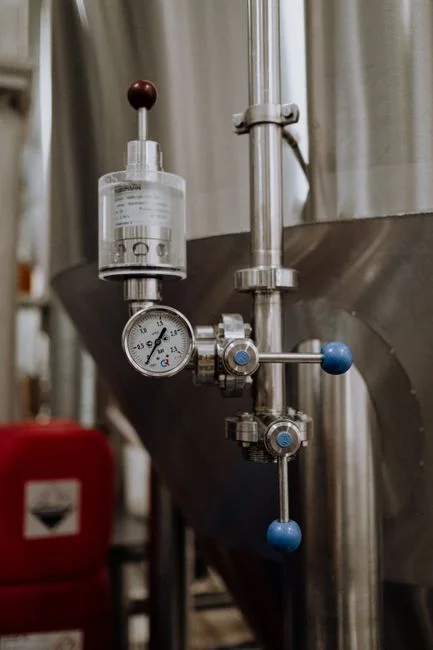
The inactivation step is the single design decision that has to be locked before equipment lists go out for bid, because both the reactor geometry and the validation protocol cascade through everything downstream. Three configurations dominate vaccine-plant practice.
- Batch thermal skid (steam-heated hold tank) — simplest to validate, simplest for QA to defend in an audit. Operating cost runs roughly $0.8–$1.5 per litre of waste treated, dominated by steam and 316L stainless wetted parts. Footprint is large for the same daily throughput.
- Continuous-flow heat exchanger — plate or shell-and-tube with a hold tube sized for the validated residence time. Footprint is much smaller, but validation is harder because residence time distribution is wider and the system needs a redundant train to keep the plant running during sanitization.
- Chemical alkaline hold — no heat required, but a 30–50% NaOH dosing skid, large acid neutralization downstream, and a 1–2 h residence tank. Cheaper on energy, more expensive on chemistry and on tankage.
- Chemical oxidative (peracetic acid, 100–500 mg/L) — fast contact time (5–20 min) but requires off-gas scrubbing for acetic acid vapour, and not all regulators accept it for BSL-2 without site-specific validation.
Decision rule: choose thermal if steam is available and effluent volume is below about 200 m³/day, choose alkaline chemical if the site is steam-constrained or batch production is intermittent, and choose continuous-flow heat exchange only when footprint is the binding constraint and the QA team is staffed to support the validation effort. In every case the site's biosafety officer must validate the cycle and the local competent authority must accept the validation — treat this as a gate activity on the project schedule, not a procurement line item.
| Method | Footprint | Validation effort | Energy/chemistry cost | Best fit |
|---|---|---|---|---|
| Batch thermal skid | Large | Low | $0.8–$1.5/L (steam-heavy) | <200 m³/day, steam available |
| Continuous-flow HE | Small | High | Similar to batch, lower per m² | Space-constrained sites |
| Alkaline (pH ≥12) | Medium | Medium | NaOH + neutralization acid | Steam-poor, intermittent batches |
| Peracetic acid | Small | High (regulator-dependent) | PAA + scrubber OPEX | Fast CT, small volume |
2026 Discharge and Reuse Limits You Must Hit
Two regulatory frameworks govern most vaccine WWTPs in 2026, and the design has to clear the strictest of whatever applies locally. In the United States, EPA 40 CFR Part 434 subparts for biological pharmaceuticals set daily maximum BOD₅ at 26–52 mg/L, TSS at 31–78 mg/L, and COD at 215–735 mg/L depending on production subcategory (40 CFR Part 434, 2024 ed.). In the European Union, the BAT Reference Document (BREF) for Common Waste Water and Waste Gas Treatment in the Chemical Sector applies BAT-AELs of total COD ≤100 mg/L, total suspended solids ≤10 mg/L, and total nitrogen ≤15 mg/L to pharma discharges (EU BAT-AEL, 2024 update; values confirmed against 2026 implementation guidance). For any reuse stream that touches product or feeds CIP pre-rinse, the design has to meet WHO drinking-water criteria and EU Drinking Water Directive 98/83/EC feedwater limits for TOC, conductivity, and microbiological counts — which is the reason an RO step sits ahead of the reuse tie-in rather than a single-pass MBR. Local overrides routinely tighten the bar: many Chinese provinces apply HJ-related standards at COD ≤250 mg/L, and India's CPCB pharma discharge norms set COD ≤250 mg/L as well. The safe design posture is to size the biological and polishing stages for the strictest applicable local limit, not the lowest international floor.
| Parameter | US EPA 40 CFR Part 434 (daily max) | EU BAT-AEL (pharma) | Reuse (WHO / EU DWD 98/83/EC) |
|---|---|---|---|
| COD | 215–735 mg/L (subcategory-dependent) | ≤100 mg/L | — |
| BOD₅ | 26–52 mg/L | — | — |
| TSS | 31–78 mg/L | ≤10 mg/L | — |
| Total nitrogen | — | ≤15 mg/L | — |
| Residual API | Site-specific (BAT) | Site-specific (BAT) | Below detection |
| Conductivity / TOC | — | — | Per EU DWD Annex I |
| Microbiological | — | — | E. coli 0/100 mL (DWD) |
2026 CAPEX and OPEX Envelope for a Vaccine Plant WWTP
For a defensible 2026 budget, the working envelope is the following. A 100 m³/day containerized BSL-2 plus MBR skid typically lands at $1.8M–$2.6M installed (HydropureWater field data, 2026). A 500 m³/day fully built-in-place plant with thermal inactivation, MBR, RO, and ClO₂ runs $4.5M–$6.5M. OPEX for an MBR+RO+ClO₂ train sits at $0.18–$0.32/m³ in 2026, benchmarked against an adjacent pharma MABR vs MBR operating cost comparison that puts MBR trains in the $0.15–$0.25/m³ range. The biggest CAPEX line items are stainless-steel skidding for BSL-2 piping (roughly 1.6–1.9× the cost of carbon-steel epoxy used on the non-BSL-2 side), thermal inactivation heat exchangers, and RO high-pressure pumps. The biggest OPEX line items are RO membrane replacement every 3–5 years ($150–$300 per m³/day of installed RO capacity, per membrane), ClO₂ chemical consumption, and energy. MBR cuts aeration energy by 40–55% versus conventional activated sludge at the same loading, but the RO high-pressure pump adds 0.8–1.2 kWh/m³ — include both in the OPEX envelope so the procurement review doesn't get blindsided. The full O&M assumptions, including CIP of the BSL-2 side and membrane cleaning frequency, are detailed in the pharmaceutical wastewater plant maintenance guide.
| Plant size / build type | 2026 CAPEX (USD) | 2026 OPEX (USD/m³) | Major cost drivers |
|---|---|---|---|
| 100 m³/day containerized BSL-2 + MBR skid | $1.8M–$2.6M | $0.22–$0.32 | SS skidding, RO membranes, ClO₂ |
| 500 m³/day built-in-place (thermal + MBR + RO + ClO₂) | $4.5M–$6.5M | $0.18–$0.28 | Heat exchangers, RO membranes, energy |
| Energy share of OPEX | — | 40–55% (aeration); 0.8–1.2 kWh/m³ (RO pump) | Blowers, HP pumps |
| Membrane replacement | — | $150–$300 per m³/day RO capacity, every 3–5 yr | RO modules |
Equipment Selection: Matching Skids to Each Stage
Translating the unit-process flow into a vendor shortlist, the working equipment map is straightforward. Front-end screening is covered by a continuous-duty rotary mechanical bar screen rated for pharma headworks with 3–6 mm apertures. Solids and free-oil removal goes to a dissolved air flotation unit with micro-bubble saturation, proven on food and pharma matrices. The biological stage is a PVDF flat-sheet MBR module at 0.1 µm pore size, sized for the design flux of 10–25 LMH; an integrated MBR system is the right choice for a 100 m³/day containerized scope. Polishing is a multi-media filter in front of an industrial RO system operating at 70–95% recovery, with SDI alarms on the RO feed. Disinfection is a chlorine dioxide generator sized from 50 g/h up to 20,000 g/h, with precursor feed proportioned to deliver 0.5–2.0 mg/L at the contact basin. Sludge from the DAF and MBR waste lines is small in volume — a plate-and-frame filter press handles the daily cake production without over-sizing the dewatering building.
Frequently Asked Questions
Is vaccine manufacturing wastewater treated differently from generic pharma effluent?
Yes. Vaccine manufacturing wastewater treatment is fundamentally a two-stage process — BSL-2 inactivation first, then biological and physical polishing — because fermentation bleed contains viable organisms and recombinant vectors that cannot enter a conventional WWTP untreated.
What are the validated BSL-2 inactivation parameters for vaccine effluent?
BSL-2 effluent is typically inactivated by validated thermal hold (≥60 °C, ≥30 min) or alkaline hold (pH ≥12, ≥1 h), chosen based on steam availability, batch versus continuous operation, and the validation capability of the site's biosafety team.
Can MBR effluent be reused directly for CIP pre-rinse?
No. MBR effluent alone is not reuse-grade for CIP; RO polishing is required to drop TOC and conductivity to WHO and EU Drinking Water Directive 98/83/EC feedwater levels, typically at 70–95% recovery.
Which discharge regulations govern a vaccine plant WWTP in 2026?
Discharge compliance is governed by EPA 40 CFR Part 434 in the US and the EU BAT BREF in Europe. Pharma WWTPs should be designed to the strictest applicable local limit, not the lowest international floor.
What does a vaccine plant WWTP cost in 2026?
Routine OPEX for a 100–500 m³/day vaccine plant WWTP in 2026 runs $0.18–$0.32/m³ treated, dominated by energy and membrane replacement. CAPEX ranges $1.8M–$6.5M depending on throughput and skid versus built-in-place construction.