Why Maryland Hospital Effluent Is Regulated Differently in 2026
Hospital wastewater treatment in Maryland in 2026 sits at the intersection of three overlapping regulators, and each one tightens the engineering envelope. EPA pretreatment standards under 40 CFR Part 403 (and the Categorical Standards in 40 CFR Parts 405–471) apply indirectly to hospitals through local POTW pretreatment programs; most Maryland POTWs enforce local discharge limits tighter than the EPA baseline, with BOD5 caps of 250–500 mg/L and total mercury limits around 0.002 mg/L (per EPA hospital effluent guidance, 2024-11). At the state level, the MDE General Discharge Permit for Medical Wastewater — renewed 2022 and amended 2025-08 — requires hospitals discharging more than 10,000 gpd to file an individual NPDES application, while smaller facilities may operate under the General Permit series with monthly self-monitoring and quarterly DMRs (per MDE, 2025-08).
The third layer is the Chesapeake Bay TMDL (EPA 2010), reaffirmed under Maryland's Phase III Watershed Implementation Plan update (2023). Any Maryland hospital discharging to a tributary ultimately drains into the Bay watershed, which triggers the 3.0 mg/L total nitrogen and 0.3 mg/L total phosphorus targets for surface discharges, and the equivalent mass-based loading allocations for POTW discharges under COMAR 26.08. The 2022 Maryland HEALTH Act amendments (COMAR 26.13) tightened pharmaceutical and PFAS tracking in healthcare DMRs, and MDE's 2024 DMR guidance added iodine-131, gadolinium contrast agents, and metformin as quantifiable contaminants of emerging concern (CECs). Together, the stack forces any 2026 hospital design toward nutrient polishing, AMR control, and CEC monitoring — not just secondary BOD removal.
What Comes Out of a Hospital — 2026 Influent Characterization
A typical 100–500 bed US hospital produces a wastewater stream that is roughly 1.5–2.0× stronger than domestic sewage in BOD5 and 10–100× higher in pharmaceutical and AMR load. The envelope below is defensible for preliminary sizing and should be confirmed with a two-week composite sampling campaign before final design.
| Parameter | Typical range (100–500 bed hospital) | Design basis (200-bed) |
|---|---|---|
| BOD5 | 250–600 mg/L | 400 mg/L |
| COD | 500–1,200 mg/L | 800 mg/L |
| TSS | 200–500 mg/L | 300 mg/L |
| NH3-N | 20–50 mg/L | 35 mg/L |
| Total Nitrogen (TN) | 40–80 mg/L | 60 mg/L |
| Total Phosphorus (TP) | 5–15 mg/L | 10 mg/L |
| Fecal coliform | 10⁵–10⁷ CFU/100 mL | 10⁶ CFU/100 mL |
| Total mercury | 0.001–0.01 mg/L | 0.005 mg/L |
| pH | 6.5–8.5 | 7.2 |
| Temperature | 18–30 °C | 22 °C |
| Oil & grease | 50–150 mg/L | 80 mg/L |
The AMR dimension is no longer theoretical. The 2023 Frontiers in Microbiology hospital WWTP study (Hosseini et al., 2023-04) isolated 21 bacterial strains from treated hospital effluent, of which three — Staphylococcus haemolyticus (AH-03), Enterococcus faecalis (AH-07), and Escherichia coli (AH-13) — were confirmed multi-drug resistant against Tetracycline, Ampicillin, Amoxicillin, Chloramphenicol, and Erythromycin at 25 ppm. The same paper flagged cell-free DNA carrying antibiotic resistance genes as a long-lasting hazard in irrigation reuse, a result that aligns with the 2019 CDC AR Threats Report listing carbapenem-resistant Enterobacteriaceae and vancomycin-resistant Enterococcus as urgent threats. Radiological and pharmaceutical markers now tracked in MDE 2024 DMR guidance include iodine-131 (diagnostic and therapeutic), gadolinium-based MRI contrast agents, and metformin; typical hospital effluent shows metformin in the low μg/L range, well above the 0.1 μg/L surface-water benchmark many regulators now cite.
Choosing the Right Process Train for a Maryland Hospital
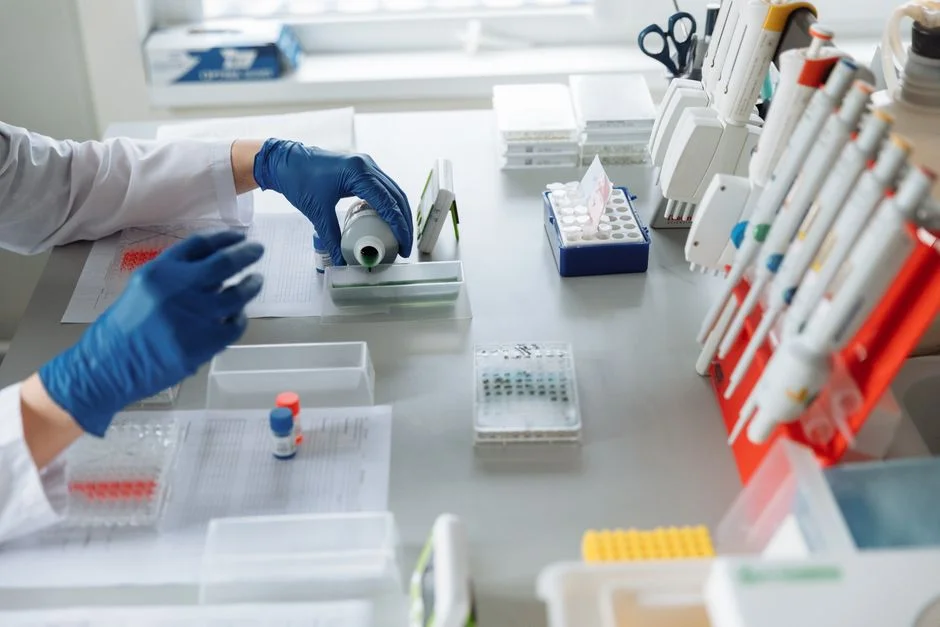
The process train decision should be driven by three questions: discharge mode (POTW vs. surface), flow range, and whether nutrient polishing to Bay TMDL levels is required. Below is a working sequence for a 200-bed hospital at 10,000–25,000 gpd, which is the most common Maryland sizing.
- Headworks: A rotary bar screen for hospital headworks with 3–6 mm aperture protects downstream MBR membranes and pumps; expect 60–80% TSS removal in the screenings.
- Equalization: A 24-hour HRT equalization basin sized 8–15 m³ for a 200-bed facility is non-negotiable; hospital diurnal peaks reach 2.5–3.0× average flow during morning shift change.
- Biological treatment: Pick the reactor configuration that matches discharge mode (see comparison table).
- Terminal disinfection: An on-site ClO2 generator for hospital disinfection sized 50–2,000 g/h delivers 99.9% microbial kill at residual CT of 5–15 mg·min/L.
- Sludge dewatering: A filter press for hospital sludge dewatering with 1–30 m² filtration area drops sludge volume 75–85% to a 22–28% dry cake for landfill disposal.
| Process option | Footprint (relative) | BOD5 effluent | TN effluent | TP effluent | Operator skill | Typical CAPEX (25,000 gpd) |
|---|---|---|---|---|---|---|
| MBR (submerged PVDF, 0.1 μm) | 0.4–0.6× | ≤5 mg/L | ≤10 mg/L | 1–2 mg/L | Moderate | USD 950K |
| A/O + SBR | 1.0× | ≤20 mg/L | ≤15 mg/L | 2–3 mg/L | Moderate–High | USD 820K |
| Conventional AS + sedimentation | 1.2–1.5× | ≤30 mg/L | ≤30 mg/L | 3–5 mg/L | High | USD 680K |
For a 200-bed facility discharging to a Bay tributary, an MBR system for hospital effluent is the default recommendation: the 0.1 μm PVDF membrane provides a physical barrier against antibiotic-resistant bacteria and most suspended ARGs, while the high MLSS (8,000–12,000 mg/L) allows simultaneous nitrification-denitrification to meet TN ≤10 mg/L without a separate polishing stage. Pair the MBR with chemical phosphorus precipitation using an automatic chemical dosing system for pH and nutrient trim to drive TP below 0.3 mg/L ahead of the ClO2 contactor. For POTW-only discharge where Bay nutrient caps do not apply, A/O + SBR remains a cost-effective alternative, but expect 20–30% more operator hours per week.
2026 Cost Benchmarks for Maryland Hospital Wastewater Systems
CAPEX below reflects packaged, skid-mounted systems delivered and installed in 2026 USD, excluding building shell, interconnecting piping, and site civil works (per HydropureWater 2026 field data). Costs in the Northeast corridor run 8–15% above these mid-Atlantic baselines.
| Flow (gpd) | CAPEX (USD) | Footprint (m²) | Typical application |
|---|---|---|---|
| 5,000 | 280,000 | 35 | Critical-access hospital, 50 beds |
| 10,000 | 480,000 | 60 | 100-bed community hospital |
| 25,000 | 950,000 | 110 | 200-bed regional hospital |
| 50,000 | 1,600,000 | 190 | 400-bed academic medical center |
OPEX for the same trains runs USD 0.012–0.028 per gallon treated, dominated by four line items: chemical dosing (NaOCl or ClO2 precursor plus polymer and pH trim, roughly 25% of OPEX), sludge hauling to a regulated landfill (20%), energy — membrane aeration leads at 0.8–1.4 kWh/m³ (35%), and labor (20%). A 25,000 gpd MBR system typically requires 0.5–1.0 FTE. ROI drivers in 2026 include avoided MDE non-compliance penalties (Maryland's 2024 penalty matrix lists USD 10,000–250,000 per violation per day, with a 2025-09 update expanding the pharmaceutical and PFAS schedule), avoided municipal sewer surcharges that now reach USD 0.015–0.04 per gallon above baseline BOD/TSS, and avoided third-party haul-off of untreated cytotoxic and pharmaceutical waste, which runs USD 1.50–3.50 per pound in the Mid-Atlantic.
Permit Filing Checklist and AMR Risk Documentation
A 60-day action plan for a Maryland hospital MDE submission should include six deliverables. First, the completed MDE Application for Discharge Permit (Form 1A) with the appropriate General or individual permit category selected. Second, a process schematic showing the MBR + ClO2 + plate-and-frame train, including all sample ports, flow meters, and bypasses. Third, an influent/effluent characterization table using at least 14 days of composite sampling for BOD5, COD, TSS, NH3-N, TN, TP, fecal coliform, total mercury, pH, and temperature. Fourth, a DMR template populated with the proposed monitoring schedule (typically weekly for conventional parameters, monthly for metals, quarterly for pharmaceuticals). Fifth, an O&M manual cross-referenced to the specific equipment vendor, including membrane cleaning CIP procedures and ClO2 generator safe-handling protocols. Sixth, an AMR risk documentation package covering baseline screening of vancomycin-resistant Enterococcus (VRE), carbapenem-resistant Enterobacteriaceae (CRE), and methicillin-resistant S. aureus (MRSA) in the treated effluent, with a quarterly PCR-based ARG panel aligned to CDC AR Isolate Bank protocols (per CDC 2019 AR Threats Report, with 2024 CDC AMR module updates).
For sites with co-managed storm water, reference EPA's 2024 Multi-Sector General Permit (MSGP) renewal for the loading-dock, ambulance-bay, and parking-lot runoff components, since these are often captured in the same treatment envelope to avoid a second permit. Plan a pre-application meeting with MDE's Water and Science Administration 90 days before permit expiration to lock in the monitoring schedule and avoid a lapse during renewal review.
Frequently Asked Questions
Q1. What permits does a Maryland hospital need for an on-site wastewater treatment system in 2026?
An MDE individual NPDES permit, or coverage under the Medical Wastewater General Permit (MDR-series), plus a Bay TMDL allocation letter if the discharge path reaches a Chesapeake Bay tributary. POTW-only discharge still requires the MDE permit but is exempt from the TMDL allocation.
Q2. What BOD5 and fecal coliform limits apply to Maryland hospital effluent?
BOD5 ≤30 mg/L and fecal coliform ≤200 CFU/100 mL under the MDE General Permit, with TN ≤3.0 mg/L and TP ≤0.3 mg/L for facilities discharging directly to a Bay tributary. Local POTW pretreatment limits may be stricter.
Q3. Is MBR or SBR better for a 200-bed Maryland hospital?
MBR delivers TN ≤10 mg/L in 60% less footprint, removes 99.9% of suspended bacteria including most AMR isolates, and runs 20–30% higher in CAPEX. SBR is 20–30% cheaper upfront but requires roughly 2× the operator hours and cannot reliably hit the Bay TMDL TN cap without tertiary polishing.
Q4. How is antibiotic-resistant bacteria controlled in hospital wastewater?
Terminal disinfection with ClO2 or ozone after biological treatment achieves 99.9% kill of multi-drug resistant isolates — the 2023 Frontiers study documented resistance breakpoints at 25 ppm for five antibiotics that are eliminated by a properly designed ClO2 contactor (CT ≥5 mg·min/L). For a broader engineering view across jurisdictions, see this hospital wastewater process design comparison.
Q5. Can hospital wastewater be reused for irrigation in Maryland?
Yes, under the 2024 Maryland Reclaimed Water Regulations, but only after tertiary filtration, UV or ClO2 disinfection, and a USEPA Class A reclaimed water quality profile that includes the 2024 MDE CEC monitoring list. Cold-climate design constraints for U.S. hospital systems are documented in this cold-climate hospital wastewater engineering reference, and stricter European benchmarks are summarized in this strict-regulatory hospital wastewater engineering guide.