Hospital Wastewater Treatment in Arusha: 2025 Engineering Guide with Costs, Compliance & Equipment Selection
Arusha's hospital wastewater requires treatment to meet Tanzania's National Environmental Standards (TZS 860:2020), which mandate effluent limits of COD < 120 mg/L, BOD₅ < 30 mg/L, and TSS < 50 mg/L. Local data from Benjamin Mkapa Hospital shows constructed wetlands achieve 92-97% COD removal (influent 500-1,200 mg/L), but pharmaceutical residues remain a challenge, with concentrations up to 3.2 μg/L in stabilization pond effluent (per 2024 NM-AIST research). This guide provides engineering specs, cost benchmarks, and equipment selection criteria for Arusha's unique conditions, ensuring facility directors and engineers can navigate the transition from non-compliant stabilization ponds to high-performance MBR systems for hospital wastewater treatment in Arusha.
Why Hospital Wastewater in Arusha Fails Compliance Tests
Approximately 68% of hospitals in the Arusha region currently exceed TZS 860:2020 COD limits due to the reliance on aging waste stabilization ponds that lack the kinetic capacity to treat modern medical effluent. Unlike municipal sewage, hospital wastewater in Arusha presents a high-strength profile with Chemical Oxygen Demand (COD) ranging from 500 to 1,200 mg/L and Biological Oxygen Demand (BOD₅) between 250 and 600 mg/L. These concentrations are often compounded by high electrical conductivity—recorded at 2,441 μS/cm in local studies (NM-AIST, 2023)—resulting from water scarcity and saline groundwater intrusion, which can inhibit standard biological treatment processes.
The presence of pharmaceutical residues, including antibiotics and analgesics, poses a significant failure point for traditional systems. Research at Arusha-based stabilization ponds has detected residues as high as 3.2 μg/L, which are not effectively neutralized by simple sedimentation. the hydraulic variability of hospital operations—ranging from 5 m³/day in specialized clinics to 50 m³/day in larger facilities—frequently leads to "shock loading" that bypasses biological stages entirely. Without advanced DAF for hospital wastewater or membrane-based separation, hospitals consistently fail to meet the 1,000 CFU/100 mL fecal coliform limit.
| Parameter | Arusha Hospital Influent (Avg) | TZS 860:2020 Limit | Typical Failure Rate |
|---|---|---|---|
| COD (mg/L) | 500 - 1,200 | < 120 | 68% |
| BOD₅ (mg/L) | 250 - 600 | < 30 | 42% |
| TSS (mg/L) | 200 - 400 | < 50 | 55% |
| Electrical Conductivity (μS/cm) | 2,441 | N/A | Process Inhibition Risk |
Tanzania's Hospital Wastewater Treatment Standards: What Arusha Hospitals Must Achieve

Tanzanian law, specifically the TZS 860:2020 standard, provides the strict legal framework that Arusha hospitals must adhere to or face significant financial penalties and utility disconnections. The standard is notably more stringent than the WHO Guidelines for pathogens in restricted irrigation, requiring fecal coliform counts to remain below 1,000 CFU/100 mL, whereas WHO allows up to 10,000 CFU/100 mL. For Arusha facilities, this requires a multi-barrier approach involving both physical filtration and robust chemical disinfection.
Compliance is monitored through a mandatory reporting framework (Section 5.2 of TZS 860:2020), requiring monthly testing for organic loads (COD/BOD₅) and quarterly analysis for microbiological indicators. Local environmental officers in Arusha have the authority to recommend the suspension of power connections via TANESCO for facilities that show persistent non-compliance. This regulatory pressure makes the selection of reliable chlorine dioxide disinfection for hospital effluent in Arusha a critical procurement priority to ensure total pathogen inactivation before discharge into local water systems or the environment.
| Regulated Parameter | TZS 860:2020 Effluent Limit | Monitoring Frequency |
|---|---|---|
| pH | 6.0 - 9.0 | Weekly |
| BOD₅ (20°C, 5 days) | < 30 mg/L | Monthly |
| COD | < 120 mg/L | Monthly |
| Total Suspended Solids (TSS) | < 50 mg/L | Monthly |
| Fecal Coliform | < 1,000 CFU/100 mL | Quarterly |
How Hospital Wastewater Treatment Works: Process Flow for Arusha's Conditions
Effective treatment of hospital effluent in Arusha requires a specialized 5-stage process flow designed to mitigate high salinity and variable organic loads. The process begins with Mechanical Screening, utilizing a 2-5 mm bar spacing to remove clinical debris such as plastics and fibers that can damage downstream pumps. This is followed by a Primary Sedimentation/Equalization stage with a minimum 8-12 hour Hydraulic Retention Time (HRT). Given Arusha's high salinity (2,441 μS/cm), equalization is vital to prevent osmotic shock to the biological culture by diluting peaks in chemical discharge.
The core of the system is the Biological Treatment stage, where Anoxic/Oxic (A/O) configurations or Membrane Bioreactors (MBR) are used to degrade organic matter. For hospital-specific loads, the Food-to-Microorganism (F/M) ratio is typically maintained between 0.05 and 0.15 kg BOD/kg MLSS·d to ensure complete nitrification. Following biological treatment, Tertiary Filtration (using sand or 0.1 μm membranes) removes residual TSS. The final stage is Disinfection, where chlorine vs UV vs ozone vs chlorine dioxide for hospital effluent must be evaluated based on the specific pathogen load and residual requirements. For Arusha’s climate, chlorine dioxide is often preferred for its stability and effectiveness against hospital-acquired infections (HAIs) in the effluent.
To prevent system blockages from the start, engineers should integrate a rotary mechanical bar screen at the headworks, which typically achieves a 15-20% reduction in primary TSS, protecting the sensitive membranes or biological media used in later stages.
Constructed Wetlands vs MBR vs DAF: Which System Works Best for Arusha Hospitals?
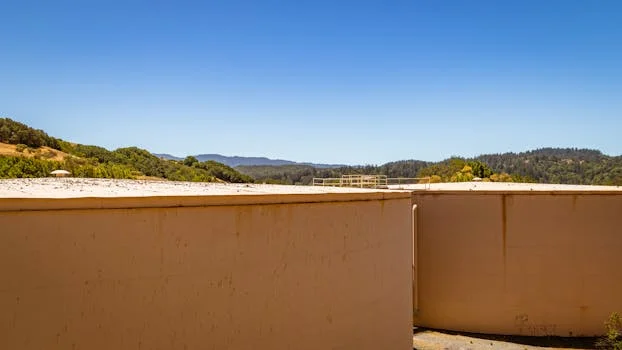
Evaluating technology for Arusha requires a trade-off between land availability, energy reliability, and removal efficiency. Constructed wetlands, often using Typha latifolia, have been a traditional choice in Tanzania due to low operational costs. While they achieve 92-97% COD removal, they require a massive land footprint (up to 2,000 m² for a medium hospital), which is increasingly unavailable in expanding urban Arusha. wetlands struggle with pharmaceutical removal compared to membrane-based technologies.
Membrane Bioreactor (MBR) systems represent the modern standard for MBR systems in East Africa: engineering specs and cost benchmarks. MBRs utilize 0.1 μm PVDF membranes to achieve >98% COD removal and near-total pathogen exclusion within a footprint 90% smaller than a wetland. Dissolved Air Flotation (DAF) is typically reserved as a pretreatment step if the hospital has a large commercial kitchen producing high Fats, Oils, and Grease (FOG) levels, which can otherwise foul biological units.
| Criteria | Constructed Wetland | MBR System | DAF (Pretreatment) |
|---|---|---|---|
| COD Removal | 92 - 97% | > 98% | 70 - 80% |
| Footprint (m²) | 1,000 - 2,000 | 10 - 25 | 5 - 15 |
| Energy Use | Negligible | 0.8 - 1.2 kWh/m³ | 0.4 - 0.6 kWh/m³ |
| Pharma Removal | Moderate | High | Low |
| Arusha Suitability | Rural/Per-urban | Urban/Limited Land | Kitchen-heavy sites |
Cost Breakdown: Hospital Wastewater Treatment Systems in Arusha (2025 Data)
Budgeting for a hospital wastewater system in Arusha must account for both the initial capital expenditure (CAPEX) and the long-term operational expenditure (OPEX), including Tanzanian import duties. For an MBR system, CAPEX typically ranges from $400 to $600 per m³ of daily capacity. While this is higher than a constructed wetland ($150-$250/m³), the ROI is realized through the avoidance of TZS 5 million annual non-compliance fines and the potential for treated water reuse in landscaping or cooling towers.
Operational costs in Arusha are influenced by energy prices and the cost of imported consumables. MBR systems incur OPEX of $0.30-$0.50/m³, primarily driven by membrane aeration and periodic chemical cleaning (CIP). Procurement managers must also factor in a 35% VAT and 25% import duty on specialized components like membranes and high-precision dosing pumps, as per Tanzania Revenue Authority (TRA) guidelines. Despite these costs, MBR systems are often more economical over a 10-year lifecycle when land value and regulatory risk are properly quantified.
| Cost Component | Constructed Wetland | MBR System | DAF System |
|---|---|---|---|
| CAPEX ($/m³ capacity) | $150 - $250 | $400 - $600 | $200 - $350 |
| OPEX ($/m³ treated) | $0.05 - $0.10 | $0.30 - $0.50 | $0.20 - $0.35 |
| Major Consumables | Plant harvesting | Membranes, Chemicals | Coagulants, Power |
| Arusha Import Duty | Low (Local materials) | High (35% VAT + 25% Duty) | Moderate |
Step-by-Step: Designing a Hospital Wastewater Treatment System for Arusha
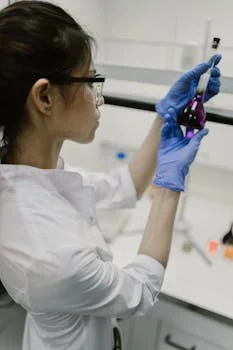
Designing a compliant system requires a methodical approach that accounts for the specific characteristics of hospital wastewater treatment in tropical climates: lessons from Phnom Penh and other emerging markets. Follow these five technical steps:
- Characterize Influent: Conduct a 7-day composite sampling to establish baseline COD, BOD₅, TSS, and conductivity. Do not rely on municipal averages; hospital effluent is significantly more concentrated.
- Size the Equalization Tank: For Arusha hospitals, the equalization tank should be 25-30% of the total daily flow (8-12 hour HRT). This buffers the biological system against the high-strength cleaning agents used during hospital sanitation shifts.
- Select Biological Technology: Choose MBR for urban Arusha sites with land constraints or wetlands for rural clinics where land is abundant and power is unreliable.
- Design Disinfection: Implement a chlorine dioxide system with a dosage of 5-8 mg/L and a minimum contact time of 30 minutes. This ensures compliance with the TZS 860:2020 coliform limits. A chlorine dioxide generator is recommended for on-site production to avoid the hazards of bulk chlorine gas storage.
- Plan Sludge Management: Hospital sludge is hazardous. Use a plate and frame filter press to achieve 20-30% solids concentration, significantly reducing the volume and cost of hazardous waste disposal at Arusha's designated landfills.
Frequently Asked Questions
Q: Why is electrical conductivity so high in Arusha hospital wastewater?
A: Arusha's groundwater often contains high levels of dissolved minerals, and water scarcity leads to lower dilution of salts. Conductivities of 2,441 μS/cm are common. This requires selecting salt-tolerant bacterial strains for biological stages or utilizing MBR systems that can maintain higher biomass concentrations to offset reduced metabolic rates.
Q: Can we reuse treated hospital wastewater for irrigation in Arusha?
A: Yes, provided it meets TZS 860:2020 standards. MBR-treated water is generally safe for restricted irrigation (lawns and non-food crops). However, tertiary disinfection is mandatory to ensure fecal coliform levels remain below 1,000 CFU/100 mL to protect hospital staff and patients from aerosolized pathogens.
Q: What are the maintenance requirements for MBR membranes in Tanzania?
A: Membranes require automated back-pulsing every 10-15 minutes and chemical "Maintenance Cleans" (using sodium hypochlorite or citric acid) weekly. In Arusha, the high mineral content may necessitate more frequent acid washes to remove calcium carbonate scaling on the membrane surface.
Q: How do we handle pharmaceutical residues that standard systems miss?
A: Advanced biological processes like MBR provide longer sludge ages (SRT), which allows specialized bacteria to develop and degrade complex organic molecules. For total removal, adding an activated carbon polishing step after the MBR is the most effective engineering solution for Arusha's environmental protection.