Kenya's Lead Discharge Limit at a Glance
Kenya's lead discharge limit for industrial effluent is 0.01 mg/L (10 µg/L), set under the Environmental Management and Coordination Act (EMCA) Cap 387 and enforced through the Water Quality and Pollution Control Regulations, 2006 (Legal Notice 120), Schedule 6. The same 0.01 mg/L value is retained in the NEMA 6th Edition Effluent Discharge Quality Guidelines (2022), aligning Kenya with the WHO drinking-water benchmark of 0.01 mg/L and the strictest African Union effluent tier. The limit applies to both sewer discharge and direct discharge to a watercourse — there is no relaxed "sewer-only" threshold for lead under Schedule 6, and a facility discharging 0.05 mg/L Pb to municipal sewer is in violation regardless of downstream dilution (per WQPCR 2006, Schedule 6).
For a compliance officer, the practical implication is that any continuous discharge above 0.01 mg/L measured at the licensed monitoring point is a non-conformance event that must be reported to NEMA within 24 hours under the EMCA (amended 2015) reporting duty, and can trigger licence suspension under Section 148 of the Act. The number is also defensible against WHO Guidelines for Drinking-water Quality (4th ed., 2017, lead provisional value 0.01 mg/L) and against the AU Framework for African Regional Standards on Effluent Discharge (2018), both of which Kenya referenced when it did not relax the 2006 limit in the 2022 NEMA update.
| Parameter | Value | Source |
|---|---|---|
| Lead (Pb), effluent to sewer | 0.01 mg/L | WQPCR 2006, Schedule 6 |
| Lead (Pb), effluent to watercourse | 0.01 mg/L | WQPCR 2006, Schedule 6 |
| Lead (Pb), NEMA inspector reference | 0.01 mg/L | NEMA 6th Edition (2022) |
| Lead (Pb), WHO drinking-water benchmark | 0.01 mg/L | WHO GDWQ, 4th ed., 2017 |
| Analytical method | AAS or ICP-OES at 0.001 mg/L detection | APHA 3111B / 3120B |
| Reporting trigger | Any exceedance within 24 hours | EMCA Cap 387, s.148 |
The Regulatory Stack Behind the Number
The 0.01 mg/L figure sits at the bottom of a four-instrument stack that an EHS manager needs to read in the right order before arguing a compliance position. The parent statute is the Environmental Management and Coordination Act (EMCA), Cap 387, enacted in 1999 and substantively amended in 2015, which created the National Environment Management Authority (NEMA) and gave it the power to issue, suspend, and revoke effluent discharge licences (EMCA, Part VII, Sections 72–88). Without an EMCA-issued licence, any industrial discharge to sewer or watercourse is unlawful regardless of concentration.
Beneath EMCA, the operational rule is the Water Quality and Pollution Control Regulations, 2006 (Legal Notice 120), whose Schedule 6 is the legally binding numerical limit table every inspector works from. Schedule 6 lists 0.01 mg/L Pb as a single column applicable to all industrial categories — there is no industry-specific carve-out. NEMA's 6th Edition Effluent Discharge Quality Guidelines (2022) is the inspector's field reference and reproduces the same 0.01 mg/L value, adding interpretive notes and recommended analytical methods. NEMA does not treat the 6th Edition as a relaxation; it is a re-statement of the WQPCR 2006 cap with current analytical guidance (NEMA 6th Edition, 2022, p. 14).
Two adjacent instruments matter when lead reaches a drinking-water abstraction. The Water Act, 2016 governs raw-water abstraction and quality for Water Services Regulatory Board (WASREB)-licensed providers, and gives WASREB the right to require upstream industrial users to demonstrate compliance with Schedule 6 before a permit is renewed. The Public Health Act (Cap 242) provides the hook for municipal by-laws that some county governments (Nairobi, Mombasa, Kisumu) use to set their own sewer-use surcharges on top of WQPCR 2006, including lead mass-loading caps per cubic metre discharged.
Influent Lead Concentrations by Industry
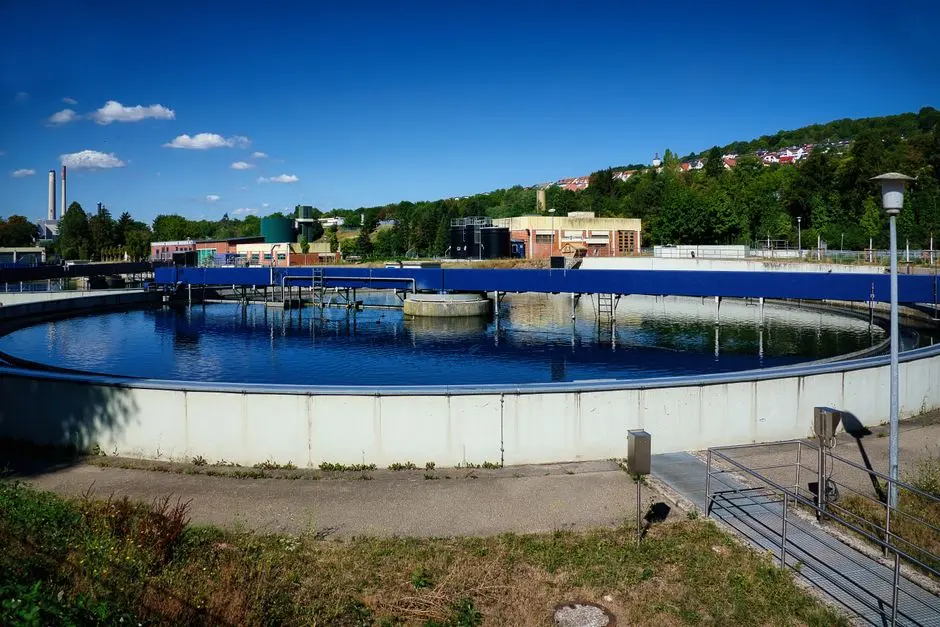
Treatment trains are sized against the influent number, not the effluent number, and the five industries that show up in NEMA inspection records in Kenya enter the plant at very different concentrations. Lead-acid battery breaking and recycling is the worst case in the country, with 5–50 mg/L Pb in the breaking effluent and pH routinely below 1 from sulfuric acid carryover — this stream on its own will exceed the 0.01 mg/L cap by 500–5,000× before any treatment (HydropureWater field data, 2026, East African battery recyclers). E-waste shredding and acid leaching of printed wiring boards produces 1–20 mg/L Pb alongside cadmium, nickel, and copper at 2–30 mg/L, and the co-contaminants consume hydroxide and sulfide reagents while creating mixed-metal sludge that complicates disposal routing.
Mining and ore-processing runoff is lower in lead concentration (0.5–10 mg/L Pb) but more difficult to treat because the pH sits at 2–4 and total suspended solids often exceed 1,500 mg/L, which consumes alkali and buries the clarifier under mineral floc. Paint, pigment, and ceramic manufacturing contributes 2–15 mg/L Pb from washwater, equipment cleaning, and rejected batches — the loading is intermittent, which is why equalization is non-negotiable on these sites. Metal finishing and electroplating rinses are the lightest case, with 0.2–5 mg/L Pb as a co-contaminant to zinc (5–40 mg/L) and copper (1–10 mg/L), and these facilities are typically the easiest to retrofit because the flow is already segregated at the rinse tank.
| Industry | Influent Pb (mg/L) | Typical pH | Co-contaminants | Loading character |
|---|---|---|---|---|
| Lead-acid battery breaking / recycling | 5–50 | <1–2 | H2SO4, Sb, Cd | Batch, high strength |
| E-waste shredding / acid leaching | 1–20 | 1–3 | Cd, Ni, Cu, Sn | Batch, mixed metals |
| Mining / ore-processing runoff | 0.5–10 | 2–4 | Fe, Mn, As, high TSS | Continuous, high TSS |
| 2–15 | 5–9 | Ti, Ba, organic colourants | Intermittent, batch dumps | |
| Metal finishing / electroplating rinses | 0.2–5 | 3–6 | Zn, Cu, Ni, CN | Continuous, low flow |
Treatment Train That Reaches 0.01 mg/L
No single unit operation will take a 10 mg/L lead stream to 0.01 mg/L. The defensible train for a 50 m³/day lead-bearing wastewater plant is equalization → dual precipitation (hydroxide then sulfide) → solid–liquid separation → polishing, with sludge dewatering at the back end. Each stage has a measurable performance range, and the train must hit its numbers at every stage because the polishing step is sized to polish, not to do the heavy lifting.
- Equalization and pH pre-conditioning. A 6–8 hour hydraulic retention time (HRT) equalization tank with mechanical mixing evens out the batch spikes from battery breaking and pigment dumps. Target pH is raised to 8.5–9.5 going into the first precipitation stage, which keeps lead as Pb(OH)2 with a solubility around 1–2 mg/L Pb at 25 °C (Pourbaix diagram, Pb–H2O, 25 °C).
- First-stage hydroxide precipitation with NaOH. Caustic dosing on a PLC-controlled NaOH and Na2S dosing skid at 1.2–1.8 kg NaOH per m³ for a 10 mg/L Pb influent drops the lead to 0.5–2 mg/L, an 80–95% removal. Hydroxide alone will not reach 0.01 mg/L because Pb(OH)2 has a finite Ksp that bottoms out around 0.5 mg/L at pH 9.5.
- Second-stage sulfide precipitation with Na2S or FeS. Sulfide drives lead to PbS, whose Ksp is roughly 10 orders of magnitude lower than Pb(OH)2. Realistic outlet from the second stage is 0.05–0.1 mg/L Pb at 0.15–0.30 kg Na2S per m³. Dosing control is critical: overdose releases H2S to the work area, and underdose lets lead slip past. Use an ORP probe or lead ion-selective electrode on the reactor outlet.
- Solid–liquid separation. A DAF unit for metal-sulfide floc separation at surface loading 5–15 m/h, or a lamella clarifier for lead-sulfide sludge at 20–40 m/h, lifts the metal-sulfide floc to a thickened underflow at 2–4% dry solids. DAF is preferred when the floc is light and buoyant (high sulfide dosing); lamella is preferred when TSS is high from upstream mining or pigment solids.
- Polishing. A strong-acid cation ion-exchange polisher brings Pb to <0.005 mg/L, comfortably below the 0.01 mg/L cap. An MBR with activated-carbon contactor is the alternative polishing step when simultaneous TSS and lead control is required to under 0.01 mg/L — useful for direct-discharge sites that must also meet the 30 mg/L TSS NEMA limit.
- Sludge dewatering. A filter press for hazardous metal sludge drops the metal-sulfide cake below 65% moisture for hazardous-waste disposal. Cake is routed to a NEMA-licensed hazardous-waste landfill; current Nairobi landfill surcharges materially drive OPEX (see next section).
| Unit operation | Typical outlet Pb (mg/L) | Removal efficiency | Key control parameter |
|---|---|---|---|
| Equalization / pH pre-conditioning | Same as influent | 0% (buffering only) | pH 8.5–9.5 entering Stage 1 |
| Stage 1: NaOH precipitation | 0.5–2 | 80–95% | pH 9.0–9.5, ORP > 100 mV |
| Stage 2: Na2S precipitation | 0.05–0.1 | 90–98% (of Stage 1 inlet) | ORP −100 to −200 mV |
| DAF or lamella clarifier | 0.04–0.08 | 20–40% (of TSS-bound Pb) | Surface loading, polymer dose |
| Ion-exchange / MBR + AC polishing | <0.005–0.01 | 80–95% | Differential pressure, resin exhaustion |
| Plate-and-frame filter press (cake) | <65% moisture | n/a (dewatering) | Pressure 7–15 bar, cycle 2–4 h |
CAPEX and OPEX for a 50 m³/day Lead-Bearing Plant
A 50 m³/day lead-bearing wastewater plant built in Kenya in 2026 typically lands in a CAPEX band of USD 180,000–420,000 (KES 23–54 million at current rates), including civil works, equalization tank, two-stage reactor, DAF, lamella, filter press, dosing skids, instrumentation, and one-year spares (HydropureWater field data, 2026). The lower end assumes a greenfield site with available floor space and an influent below 20 mg/L Pb; the upper end covers battery-recycler-grade influent (up to 50 mg/L Pb), containerized civil works, and a full SCADA package. OPEX falls in the band of USD 1.1–1.9 per m³ (KES 140–245 per m³), dominated by NaOH at 1.2–1.8 kg per m³, Na2S at 0.15–0.30 kg per m³, sludge disposal, and power at the DAF and filter-press duty cycles. A DAF unit for metal-sulfide floc separation on this duty typically draws 4–6 kW, and the filter press cycle adds another 3–5 kW during the 2–4 hour pressing window.
Sludge disposal is the line item most often underestimated at bid stage. NEMA-licensed hazardous-waste landfills around Nairobi currently charge KES 35,000–60,000 per tonne for metal-bearing cake, and a 50 m³/day plant running at 10 mg/L Pb will generate 0.8–1.2 tonnes of dry cake per day once dewatered — that is KES 0.9–2.2 million per month of disposal cost that should be carried as a separate OPEX line, not blended into reagent cost. The business case for higher reagent recovery or on-site stabilization improves sharply once that number is on the page.
Frequently Asked Questions
What is the legal lead discharge limit in Kenya? 0.01 mg/L (10 µg/L) for both sewer and watercourse discharge, set under the Water Quality and Pollution Control Regulations, 2006 (Legal Notice 120), Schedule 6, and reproduced in the NEMA 6th Edition Effluent Discharge Quality Guidelines (2022).
Which industries discharge the most lead in Kenya? Lead-acid battery breaking and recycling (5–50 mg/L Pb influent) is the highest-strength source, followed by e-waste acid leaching (1–20 mg/L) and mining/ore-processing runoff (0.5–10 mg/L). Paint and ceramic manufacturing contributes 2–15 mg/L from batch washwater, while metal finishing rinses are lowest at 0.2–5 mg/L as a co-contaminant to zinc and copper.
Can a single-stage DAF reach the 0.01 mg/L lead limit? No. DAF is a solid–liquid separation step, not a precipitation step; it removes the floc that precipitation has already formed. A single-stage hydroxide clarifier typically leaves 0.5–2 mg/L Pb in the overflow, which is 50–200× the cap. The minimum train is hydroxide precipitation + sulfide precipitation + DAF or lamella, with ion-exchange or MBR polishing to reach the 0.01 mg/L number reliably.
How much does lead wastewater treatment cost in Kenya? CAPEX of USD 180,000–420,000 for a 50 m³/day plant, with OPEX of USD 1.1–1.9 per m³ dominated by NaOH, Na2S, and hazardous-waste landfill disposal at KES 35,000–60,000 per tonne of dewatered cake.
Does NEMA enforce on-site testing for lead? Yes. An effluent discharge licence under EMCA Cap 387 typically requires quarterly self-monitoring by the operator using an AAS or ICP-OES method with detection limit ≤ 0.001 mg/L Pb, plus a biennial NEMA audit that includes split-sample verification. Records must be retained for at least five years and produced on demand under EMCA Section 148.