What Makes Aluminum Processing Wastewater Different
Aluminum processing wastewater is not a single stream but four distinct effluent signatures, each governed by different discharge rules. Anodizing lines discharge spent pickling baths at pH 1.5–4 with sulfate 500–5,000 mg/L and dissolved aluminum 200–2,000 mg/L, which forces aluminum hydroxide precipitation as the core removal step. Rolling mill effluent carries oil-in-water emulsion at 500–5,000 mg/L oil & grease plus suspended aluminum fines from the roll bite. Smelting and cast-house scrubber blowdown introduces fluoride 10–100 mg/L and high-temperature dissolved aluminum that crashes out when cooled. Cold rolling adds COD 1,000–8,000 mg/L from lubricating oils, demanding biological treatment after oil removal.
Three regulatory frameworks govern discharge in 2026: US EPA 40 CFR 467 (Nonferrous Metals Forming and Drawing subcategories), China GB 25466-2010 with limits of aluminum 3.0 mg/L, COD 200 mg/L, and pH 6–9 for the aluminum industry eluent standard, and EU Industrial Emissions Directive 2010/75/EU BAT-AEL ranges for surface treatment under BREF STS (2022 update). ISO 14001 environmental management systems also expect continuous monitoring of these parameters at the discharge outfall.
Municipal package plants fail on this effluent because the combined acid pickling, alkaline etching, and stabilized oil emulsion streams cannot be treated in a single biological basin. Aluminum precipitates as Al(OH)₃ in a narrow pH band of 6.0–8.0 and resolubilizes outside that window, while emulsified oil coats biomass and kills biological activity. A dedicated four-stage train is the only reliable way to hit permit limits without constant chemistry re-tuning.
The Four-Stage Process Flow Used in 2026
A 2026-compliant aluminum wastewater train runs equalization and pH correction, coagulation or DAF, biological treatment, and RO or ZLD polishing. Acidic and alkaline streams are kept in separate equalization tanks with 8–24 h retention to even out flow and concentration spikes, then merged under automatic chemical dosing for pH correction with NaOH or H₂SO₄ to a target pH of 7.0–8.5 where aluminum hydroxide precipitation is maximized and resolubilization is minimized.
Stage 2 splits based on stream type. Oily wastewater passes through a DAF system for oil and aluminum hydroxide removal, which achieves 85–95% oil and grease removal and lifts floating Al(OH)₃ floc. Precipitation-dominant streams go to a lamella clarifier for chemical precipitation running at surface loading 20–40 m/h, roughly 30% lower polymer consumption than conventional clarifiers per HydropureWater field data (2026). The underflow sludge feeds a plate-and-frame sludge dewatering press producing 18–25% dry solids cake ready for off-site disposal.
Stage 3 is the MBR biological treatment stage with submerged 0.1 µm PVDF DF series modules for COD and BOD polishing. COD removal sits at 90–97%, with effluent COD under 50 mg/L and TSS under 5 mg/L, in a footprint roughly 60% smaller than conventional activated sludge (HydropureWater product data, 2026). SBR or CASS is selected instead when the project is CAPEX-driven and discharge limits tolerate effluent COD up to 100 mg/L.
Stage 4 polishes the MBR permeate through a multi-media pre-RO filter and an online metal analyzer for compliance monitoring, then into an RO polishing for water reuse skid at 70–95% recovery (HydropureWater RO data, 2026). When site water balance requires zero liquid discharge, RO concentrate feeds a brine concentrator and forced-circulation crystallizer. Engineers choosing between flotation technologies should review the DAF vs IAF comparison for metal finishing wastewater before locking the P&ID.
| Stage | Unit Operation | Design Parameter | Typical Performance |
|---|---|---|---|
| 1 | Dual equalization + pH correction | HRT 8–24 h, target pH 7.0–8.5 | pH variation <0.5 at outlet |
| 2a | DAF (oily stream) | Surface loading 5–15 m/h | Oil & grease 85–95% removal |
| 2b | Lamella clarifier (precipitation stream) | Surface loading 20–40 m/h | Al 60–85% removal, TSS <30 mg/L |
| 3 | MBR (PVDF 0.1 µm) | MLSS 8,000–12,000 mg/L | COD 90–97% removal, effluent COD <50 mg/L |
| 4 | MMF + RO | RO flux 15–25 L/m²·h | Recovery 70–95%, reuse conductivity <50 µS/cm |
Aluminum Processing Wastewater Treatment Plant Cost in 2026
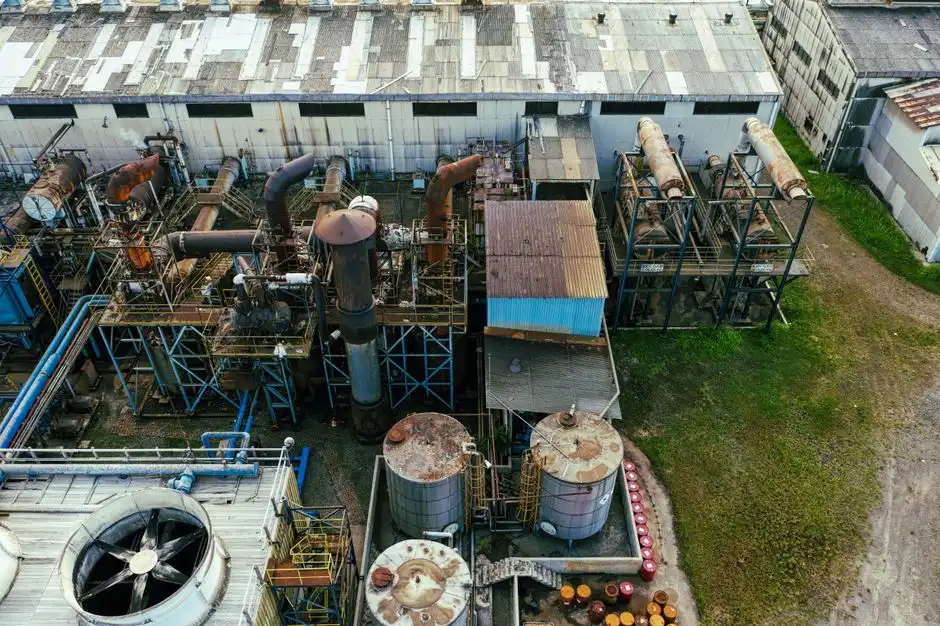
Turnkey CAPEX in 2026 ranges from USD 0.4M for a 50 m³/day containerized skid to USD 6.5M for a 1,000 m³/day plant with full ZLD. The cost gap reflects reactor volume, RO train sizing, and the cost of brine evaporation rather than biological stage pricing. OPEX typically runs USD 0.20–0.85 per m³ treated, anchored to the 2026 OPEX per m³ benchmark for industrial metal finishing lines.
OPEX splits into four cost buckets. Chemicals (NaOH, H₂SO₄, PAC, polyacrylamide) consume 35–45% of OPEX, dominated by pH correction reagent on acid pickling lines. Energy for blowers, transfer pumps, and the RO high-pressure pump accounts for 20–30%. Sludge hauling and disposal run 15–25% and swing sharply with dewatering performance. Labor and membrane replacement make up the remaining 10–20%, with hollow-fiber MBR modules typically replaced on a 5–7 year cycle. Engineers benchmarking their own cost model against this structure can compare line-by-line in the 2026 OPEX per m³ benchmark.
| Plant Size | Configuration | 2026 CAPEX (USD) | 2026 OPEX (USD/m³) |
|---|---|---|---|
| 50 m³/day | Containerized skid, equalization + DAF + SBR | 0.4–0.8M | 0.40–0.85 |
| 100 m³/day | Turnkey, equalization + DAF + MBR + RO | 0.8–1.4M | 0.30–0.65 |
| 500 m³/day | Turnkey + ZLD brine evaporator | 1.8–3.5M | 0.25–0.55 |
| 1,000 m³/day | Full ZLD with crystallizer | 3.2–6.5M | 0.20–0.50 |
Three levers reliably cut OPEX. Pushing RO recovery to 70–95% reduces raw water purchase, especially in water-stressed inland China and the Middle East. Dewatering sludge to 20–25% dry solids cuts hauling tonnage by 30–50% versus a belt press at 15–18%. Running DAF ahead of the biological basin reduces COD load on the bioreactor by 30–50%, shrinking aeration energy and MBR membrane fouling rate. For a deeper engineering look at lamella sizing, the lamella clarifier engineering spec deep-dive (2025) walks through hydraulic and polymer-dose selection.
How to Evaluate an Aluminum Processing Wastewater Treatment Plant Supplier
A defensible supplier shortlist for a 2026 aluminum project should score 100 points across seven categories rather than rely on quoted price alone. The most expensive lesson in this sector is a vendor who has done "metal finishing" but never treated aluminum specifically, then misses the pH 6.0–8.0 sweet spot and watches aluminum re-dissolve through the clarifier.
Engineering depth is the first filter. A qualified supplier delivers P&IDs, mass-balance sheets, and process simulation files, not just a sales catalog. Equipment quality shows up in skid-mounted pre-wired packages, FAT videos, bilingual PLC HMI, and IP55 enclosures rated for humid plant rooms. Compliance track record means documented references in aluminum specifically, plus the ability to share EPA 40 CFR 467, GB 25466, or EU IED BAT-AEL compliance test reports from prior projects. Buyers cross-referencing heavy metal removal logic can review heavy metal removal from wastewater methods, which translate directly to aluminum and chrome removal.
| Category | Weight | What "Good" Looks Like |
|---|---|---|
| Process design and engineering depth | 25 pts | In-house P&ID, mass balance, simulation files, willingness to sign a process performance guarantee |
| Compliance references in aluminum | 20 pts | At least 3 references in anodizing, rolling, or smelting; third-party effluent test reports available |
| Equipment build quality | 15 pts | Skid-mounted, pre-wired, FAT video, IP55 enclosures, CE/UL/CCC per destination |
| Price competitiveness | 15 pts | Itemized BOM, not a lump sum; 5-year spare parts list priced |
| After-sales support | 10 pts | Local service engineer, 24-month membrane warranty, remote monitoring option, on-site commissioning included |
| Schedule reliability | 10 pts | Gantt chart with liquidated damages for late delivery; engineering submittal within 3 weeks of PO |
| ZLD-ready, sustainability design | 5 pts | Train sized for future RO concentrate evaporator tie-in; documented water reuse rate |
After-sales support is where proposals diverge most. Ask each bidder for a maintenance cost disclosure covering consumables, membrane replacement intervals, and the recommended operator headcount, then cross-check those numbers against the OPEX section of their quote. A vendor who cannot produce a 5-year spare parts price list is signaling that OPEX will be uncontrolled once the plant is running.
2026 Compliance Checklist Before You Sign the PO
The supplier's design basis must be matched line-by-line to the buyer's discharge permit before a PO is signed. For China projects, GB 25466-2010 sets aluminum at 3.0 mg/L, COD at 200 mg/L, pH 6–9, and SS at 70 mg/L. For US projects, EPA 40 CFR 467 subcategory-specific limits apply, with daily maximum and monthly average values that vary between forming, rolling, and drawing operations. For EU plants, IED BAT-AEL ranges for the surface treatment BREF (2022) define discharge to water and require BAT-associated monitoring frequency.
Three documentation deliverables are non-negotiable. First, a 72-hour pilot test report on the buyer's actual effluent, with third-party certified influent and effluent testing against the permit. Second, P&IDs, electrical drawings, and an O&M manual in English plus the local operating language, plus ISO 9001 and ISO 14001 certificates. Third, CE, UL, or CCC certification depending on the destination country. Operational readiness is sealed by a 14-day commissioning report, 40 hours of classroom plus 80 hours of on-job operator training, and a 12-month performance warranty with liquidated damages for non-compliance at first inspection.
Frequently Asked Questions
What is the typical CAPEX for an aluminum processing wastewater treatment plant in 2026?
Turnkey CAPEX ranges from USD 0.4M for a 50 m³/day containerized skid to USD 6.5M for a 1,000 m³/day full ZLD system, with OPEX from USD 0.20 to USD 0.85 per m³ treated.
Which discharge standard applies to aluminum anodizing wastewater?
China GB 25466-2010 limits aluminum to 3.0 mg/L and COD to 200 mg/L; US projects fall under EPA 40 CFR 467 Nonferrous Metals subcategories; EU plants follow IED 2010/75/EU BAT-AEL ranges for surface treatment.
Why is a four-stage train required for aluminum effluent?
Acid pickling, alkaline etching, and oil emulsion streams cannot be treated in a single biological basin because aluminum precipitates only in a narrow pH 6.0–8.0 band, and oil coats biomass.
What removal efficiency should an MBR achieve on aluminum effluent?
A submerged 0.1 µm PVDF MBR typically delivers 90–97% COD removal, with effluent COD under 50 mg/L and TSS under 5 mg/L.
How much water can an RO system reuse from aluminum wastewater?
Modern RO trains achieve 70–95% recovery, with concentrate returned to a ZLD evaporator when site water balance requires zero liquid discharge.