Why UASB Is the Default Primary Stage for Brewery Wastewater in 2026
A UASB (upflow anaerobic sludge blanket) reactor is the dominant primary treatment for brewery wastewater in 2026 because brewery effluent is high-strength, warm (30-40°C), and carbohydrate-rich — ideal feed for anaerobic digestion. The reactor operates as a tall tank where wastewater flows upward through a blanket of self-granulating biomass; a three-phase separator at the top retains the sludge, clarifies the effluent, and collects biogas in a single vessel with no moving internal parts. Field-scale data and the Cronin & Lo (1998) Bioresource Technology Vol. 64 Issue 1 study show COD removal of 75-90% at organic loading rates of 10-15 kg COD/m³·d, while the biogas stream (60-65% CH₄) typically offsets 20-40% of plant electricity use through CHP recovery (HydropureWater field data, 2026).
Four characteristics make brewery streams a near-textbook UASB feed. First, raw COD of 2,000-6,000 mg/L is high enough to justify anaerobic economics but not so concentrated that toxicity becomes a concern. Second, mashing and fermentation heat keep effluent at 30-40°C, sitting inside the mesophilic window (30-37°C) without external heating. Third, post-equalization pH of 6.5-7.5 falls naturally inside the methanogen comfort zone. Fourth, the BOD/COD ratio of 0.55-0.65 reflects a high carbohydrate fraction that methanogens metabolize readily. The 2026 trend is unambiguous: most new craft and industrial breweries in the 50-500 m³/d flow band are specifying UASB followed by MBR polishing rather than conventional activated sludge, primarily because the energy footprint is roughly 60% lower and the biogas stream generates offsetting revenue. For effluent compliance targets, see the brewery wastewater discharge standard guide.
Brewery Wastewater Characteristics: Will UASB Work on Your Stream?
Brewery influent sits in a narrow, well-characterized envelope, and most of the "UASB didn't work" stories trace back to streams that fall outside it. Before sizing a reactor, run your own composite sample against the parameters below — if you have two or more red flags, the train needs pre-treatment upgrades before the UASB will hold granulation.
| Parameter | Typical brewery range | UASB-compatible? |
|---|---|---|
| COD | 2,000-6,000 mg/L | Yes — high-strength, ideal |
| BOD | 1,200-3,500 mg/L | Yes |
| BOD/COD ratio | 0.55-0.65 | Yes — highly biodegradable |
| TSS | 200-1,000 mg/L | Yes with bar screen + DAF |
| pH (raw) | 4-6 | No — equalize to 6.5-7.5 |
| pH (post-equalization) | 6.5-7.5 | Yes |
| Temperature | 25-40°C | Yes — mesophilic range |
| Total nitrogen | 20-80 mg/L | Yes (low, no ammonia inhibition) |
| Total phosphorus | 10-50 mg/L | Yes |
| Sulfate (SO₄²⁻) | 50-400 mg/L | Watch above 200-300 mg/L |
Flow is cyclic — CIP cleanings, bottle rinser dumps, and fermentation tank discharges all hit the drain in surges rather than at a steady rate — so an equalization basin sized to 8-24 hours of HRT is mandatory upstream of the UASB to dampen hydraulic and organic shocks. Two failure modes deserve specific attention. First, sulfate: brewing water plus sulfuric-acid-based CIP chemicals can push SO₄²⁻ above 200-300 mg/L, and the Journal of Southeast University H₂S removal study (2010) confirms that sulfate-reducing bacteria outcompete methanogens under those conditions, driving H₂S in the biogas above 50 ppm and corroding CHP engines; iron dosing (FeCl₃ or FeSO₄ at 10-20 mg Fe/L per 100 mg/L SO₄²⁻) or a biological sulfide scrubber upstream of the CHP is the standard fix. Second, pH shock: spent grain and hop leachate routinely drop pH below 4 during a discharge event and will kill granular sludge if routed directly; inline pH correction to ≥6.5 with NaOH or NaHCO₃ dosing is required.
UASB Process Flow and Internal Design: Sludge Blanket, Three-Phase Separator, Gas Collection
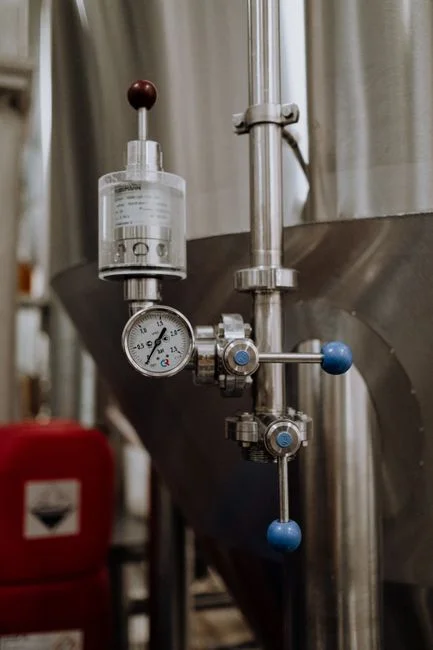
A working UASB is a concrete or epoxy-lined steel tank, typically 4-12 m in side-water depth and 50-2,000 m³ in active volume for brewery service, with four distinct hydraulic zones stacked from bottom to top. The sludge bed at the base holds the granular biomass at 40-60% VSS — dense, well-settling, 1-3 mm diameter granules formed by self-immobilization of methanogens. Above it, the sludge blanket contains suspended and flocculent biomass at 5-15% VSS that captures fine particulates and dissolved COD as flow passes through. The separator zone in the upper third houses a three-phase separator (TPS): deflector plates redirect rising gas bubbles into a hood, the captured biogas routes to a collection dome, and sludge sliding off the plates drops back to the bed by gravity. Above the TPS, clarified effluent overflows into an internal launder and exits the reactor.
Biogas composition from a healthy brewery UASB runs 60-65% CH₄ and 35-40% CO₂ with trace H₂S (typically <50 ppm if sulfate is controlled). Methane yield is the line item that drives the economic case: at standard brewery OLR, expect 0.30-0.42 m³ CH₄ per kg COD removed, which is the figure that turns into $/kWh in the ROI section below. Most brewery operators specify a concrete tank with epoxy or PVC liner for corrosion resistance, a glass-fused-to-steel TPS for longevity, and a double-membrane gas holder on the roof to buffer production swings before the biogas is piped to a boiler, CHP unit, or enclosed flare.
UASB Design Parameters and Sizing Worked Example
Design a brewery UASB around organic loading rate (OLR), not hydraulic residence time, because COD concentration varies while flow stays roughly constant. The table below lists the 2026 full-scale brewery design window.
| Parameter | Design range (brewery UASB, 2026) | Notes |
|---|---|---|
| OLR | 10-15 kg COD/m³·d | Cronin & Lo (1998) full-scale range |
| HRT at peak flow | 6-12 h | Equalized upstream |
| Upflow velocity | 0.5-1.0 m/h | Avoid granule washout above 1.0 |
| Temperature | 30-37°C | Mesophilic; brewery effluent often self-heating |
| Influent pH | 6.5-7.5 | Dosed upstream if raw pH is below 6 |
| VFA/alkalinity ratio | <0.3 (as acetic acid / CaCO₃) | First indicator of process stress |
| Recycle ratio | 1:1 to 3:1 | For alkalinity and temperature control |
| Reactor height | 4-12 m | Taller = better gas-liquid separation |
| Seeding rate | 10-20 kg VSS/m³ | From a working anaerobic digester |
| Granulation time | 2-4 months | On brewery feed, at 30-35°C |
Worked example for a 100 m³/d craft brewery at 4,000 mg/L COD influent. Daily COD load = 100 m³/d × 4 kg/m³ = 400 kg COD/d. At a target OLR of 12 kg COD/m³·d (middle of the 10-15 range), required active volume = 400 / 12 = 33.3 m³. Apply a 1.5× safety factor for peak hourly flow and granule bed expansion during surges, sizing to roughly 50 m³ active volume — typically a 4 m diameter × 4 m side-water depth concrete tank. The Cronin & Lo (1998) full-scale reactors, operated at the same 10-15 kg COD/m³·d range on brewery feed, achieved 75-90% COD removal — the same OLR window is in use today, so the technical risk is well-quantified rather than speculative. For the revenue side of that same mass balance, the biogas from wastewater market outlook puts current CHP and biomethane values in context.
Integrating UASB with Pre- and Post-Treatment: The 2026 Brewery Process Train
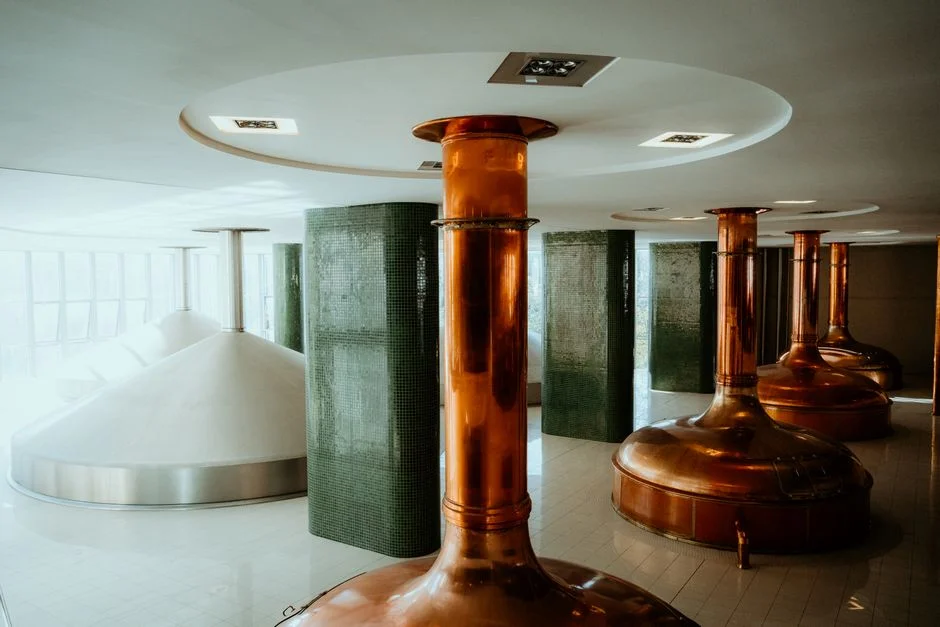
A UASB is the heart of a train, not a standalone unit. Pre-treatment protects the sludge blanket from fouling and toxicity; post-treatment polishes the effluent to the 30 mg/L COD range that most municipal接收 standards and reuse targets require in 2026.
| Stage | Function | Typical removal | Equipment |
|---|---|---|---|
| Pre-treatment | Remove screenings, grit, fats, foam | 10-30% TSS; protects UASB | Bar screen 2-3 mm, grit chamber, equalization basin, pH correction |
| DAF pre-treatment | Floats fats, oils, CIP foam, fine suspended solids | 50-80% TSS, 30-50% FOG | HydropureWater DAF pre-treatment system |
| UASB (primary) | Anaerobic COD removal + biogas production | 75-90% COD; 0.30-0.42 m³ CH₄/kg COD | Concrete tank + TPS + gas holder |
| Aerobic polishing | Remove residual BOD/COD/nitrogen to discharge limit | 80-95% residual COD; effluent <30 mg/L COD | SBR or MBR |
| MBR polishing (reuse path) | Reuse-quality water for CIP rinse, boiler feed, irrigation | <10 mg/L BOD, <30 mg/L COD, near-zero TSS | HydropureWater MBR polishing system |
| Sludge dewatering | Reduce sludge volume for off-site disposal | Cake dryness 20-25% DS | HydropureWater plate-and-frame filter press |
Upstream of the UASB, a rotary bar screen at 2-3 mm aperture catches grain husks and labels; an equalization basin at 8-24 h HRT dampens batch surges; pH correction brings the stream to 6.5-7.5; and a DAF unit floats out residual fats, oils, and CIP foam that would otherwise coat the granules and float the blanket. Downstream, UASB effluent still carries 200-600 mg/L COD and 50-200 mg/L BOD, so an aerobic polishing stage is mandatory to hit discharge limits. The 2026 standard pairing is either an SBR (sequencing batch reactor) for simplicity or an MBR (membrane bioreactor) where the brewery wants reuse-quality water for CIP rinse, boiler feed, or on-site irrigation. Biogas-side, route the gas through an iron-sponge or biological scrubber to drop H₂S below 50 ppm before firing in a CHP engine.
2026 CAPEX, OPEX, and Biogas ROI for a Brewery UASB
Translate the engineering into a budget figure you can put in front of procurement. The table below is denominated in USD for 2026 and excludes civil works, building enclosure, and grid interconnection — add 30-50% on top for a turnkey scope.
| Item | Craft brewery (50 m³ reactor) | Industrial brewery (200-500 m³ reactor) |
|---|---|---|
| Reactor + TPS + gas holder (skid) | $80,000-180,000 | $250,000-500,000 |
| Equalization basin + pH dosing | $20,000-40,000 | $60,000-120,000 |
| DAF pre-treatment unit | $30,000-60,000 | $80,000-150,000 |
| MBR polishing skid | $60,000-120,000 | $180,000-350,000 |
| Biogas H₂S removal + CHP/boiler tie-in | $25,000-50,000 | $90,000-200,000 |
| Sludge dewatering (filter press) | $20,000-40,000 | $60,000-120,000 |
| OPEX (per m³ treated) | $0.08-0.22 | $0.06-0.18 |
OPEX is dominated by sludge disposal ($0.04-0.08/m³), alkalinity and chemical dosing ($0.02-0.05/m³), and a labor allocation for daily monitoring. Biogas offsets swing the OPEX number heavily: the 100 m³/d, 4,000 mg/L COD case generates roughly 400 kg COD/d × 0.35 m³ CH₄/kg × 0.90 (removability) = 126 m³ CH₄/d. At 9.94 kWh/m³ methane thermal, that is 1,253 kWh/d thermal, or about 376 kWh/d electrical in a 30%-efficient CHP. At an avoided electricity cost of $0.10/kWh, the daily offset is $37.6, or roughly $13,700/year — payback 4-8 years on the UASB skid alone before counting sludge-hauling savings versus an aerobic-only plant. Against a conventional activated-sludge reference, the UASB+MBR train uses roughly 60% less electrical energy per cubic meter treated, which is the dominant 2026 driver for adoption in energy-stressed grids. Treat these as order-of-magnitude figures; your local electricity tariff, sludge disposal gate fee, and whether biogas is flared, fired in a boiler, or upgraded to grid-quality biomethane will move the OPEX line by 30-50%. For a deeper line-by-line OPEX build, see the food processing wastewater OPEX breakdown.
Frequently Asked Questions
What COD removal can a UASB achieve on brewery wastewater? Full-scale brewery UASB reactors deliver 75-90% COD removal at organic loading rates of 10-15 kg COD/m³·d, per Cronin & Lo (1998) Bioresource Technology Vol. 64 Issue 1 and the 2001 Resource and Environmental Biotechnology full-scale review.
Why is brewery effluent ideal for UASB treatment? Brewery wastewater has a BOD/COD ratio of 0.55-0.65 — among the highest in the food-and-beverage sector — and runs at 30-40°C naturally, so the stream lands inside the mesophilic window (30-37°C) without external heating (HydropureWater field data, 2026).
How do you size a UASB for a brewery? Volume = daily COD load (kg/d) ÷ target OLR (kg COD/m³·d). For 100 m³/d at 4,000 mg/L COD and a 12 kg COD/m³·d OLR, the calculation gives 33.3 m³; applying a 1.5× peak-flow safety factor sizes the reactor at roughly 50 m³ active volume.
How does UASB+MBR compare to activated sludge on energy? UASB+MBR uses about 60% less electrical energy per m³ treated than conventional activated sludge and produces 0.30-0.42 m³ CH₄ per kg COD removed, recoverable as boiler heat or CHP electricity.
What are the most common UASB failure modes in breweries? pH shock from spent-grain and CIP streams, low alkalinity driving VFA accumulation, and H₂S corrosion when sulfate exceeds 200-300 mg/L — all manageable through equalization, alkalinity dosing, and iron dosing respectively. For the full compliance picture behind the post-UASB polishing targets, see the brewery wastewater discharge standard guide; for the revenue side, the biogas from wastewater market outlook and the food processing wastewater OPEX breakdown round out the procurement case.