Why Meat Processing Wastewater Demands a Different Screw Press
Meat processing wastewater carries 3,000–12,000 mg/L BOD, 800–4,000 mg/L oil and grease, 2,000–6,000 mg/L TSS, and pH 6.5–8.5 — concentrations that overwhelm a dewatering unit sized for municipal biosolids (typically 200–500 mg/L BOD). DAF-thickened sludge from slaughterhouse operations exits the clarifier at 0.8–3.5% dry solids, and roughly 60–70% of that solid fraction is emulsified fat, blood protein, and paunch fiber (HydropureWater field data, 2026). A generic screw press specified for 1–2% feed solids at a municipal digester will blind within hours on this profile because blood albumin gelatinizes on the moving rings, and free fat coats the screen cage.
The mechanical case for screw presses over belt filter presses in meat plants is well documented. Belt presses need operator attendance for tracking adjustment, run open to atmosphere, and cannot hold a vacuum seal during the washdown cycles required by USDA-inspected facilities. An enclosed screw press runs continuously, tolerates feed solids swings from 1% to 4% as batch屠宰 (slaughter) cycles pulse through the plant, and confines aerosols that would otherwise carry protein mist into the work area. For most operators the working baseline is a DAF pre-thickening system feeding a multi-disk screw press — the DAF removes free FOG and brings sludge to a consistent 2–3% DS, which the screw press can then dewater to 20–25% cake without blinding. Industry listings confirm screw presses are deployed across food-processing lines, and food/sludge cross-industry use is well established.
Screw Press Types Compared for Slaughterhouse Applications
Three screw press geometries show up in meat-plant bids in 2026, and the right pick depends on whether the feed stream is dominated by emulsified fat, paunch manure, or rendering-cooker condensate. The multi-disk design uses a fixed stack of 304 or 316 stainless rings that resist fouling because the gaps are precisely machined and the screw flight wipes each ring face on every revolution. The volute (decanter-style) design uses a progressively tightening conical screen, costs less, but demands more polymer and struggles above 1,500 mg/L oil & grease in the feed. The shaftless design has no central shaft and is the workhorse for coarse paunch material and screen rejects, but it produces a wetter cake (18–20% DS) and is not a fit for finely divided DAF sludge.
| Parameter | Multi-disk screw press | Volute (decanter) screw press | Shaftless screw press |
|---|---|---|---|
| 2026 CAPEX range (carbon steel) | $35,000–$120,000 | $8,000–$40,000 | $12,000–$60,000 |
| Cake dryness achievable | 22–30% DS | 18–23% DS | 18–20% DS |
| Polymer (cationic PAM) demand | 8–14 kg/dry ton | 15–25 kg/dry ton | 10–18 kg/dry ton |
| FOG tolerance in feed | Up to 4,000 mg/L | Up to 1,500 mg/L | Up to 2,500 mg/L (coarse only) |
| Best-fit application | Slaughterhouse DAF sludge, poultry | Rendering cooker condensate, low-FOG | Paunch manure, screening rejects |
A 25–40% material upgrade applies for full 304SS or 316SS construction. USDA washdown in jurisdictions enforcing 9 CFR 416 (the Sanitation Performance Standards) effectively mandates stainless for any wetted part that sees the product zone or the cleaning-solution spray envelope. A carbon-steel multi-disk press at $40,000 becomes a $52,000–$56,000 unit in 304SS and $58,000–$68,000 in 316SS — a 30–50% delta that closes the gap faster than most buyers expect once washdown and corrosion are priced in.
2026 CAPEX Breakdown by Capacity and Material
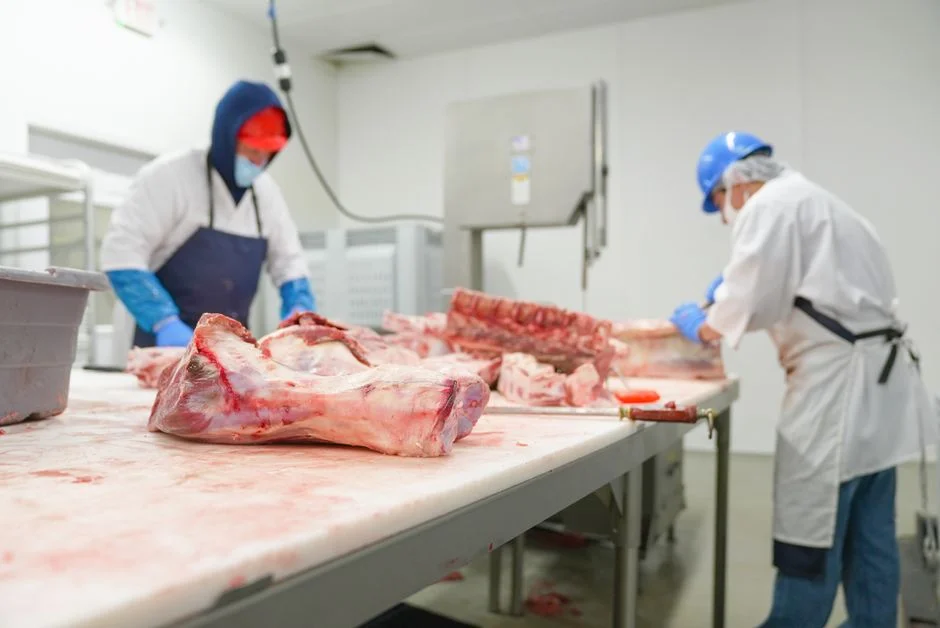
The 2026 pricing matrix for a meat-duty screw press tracks throughput bands more cleanly than it tracks vendor brand. A 1 m³/hr pilot unit for a small屠宰 (slaughter) floor or a custom-exempt red-meat shop runs $8,000–$15,000 FOB in carbon steel. The 5 m³/hr band — common in mid-size poultry processors running one evisceration line — sits at $18,000–$35,000. The 10–20 m³/hr band covers most regional beef and pork plants and ranges $40,000–$70,000. The 30–50 m³/hr band is for high-volume integrated operations (large poultry complexes, multi-shift beef facilities) at $80,000–$120,000. These figures reflect 304SS as the baseline; subtract roughly 15–20% for carbon steel and add 15–25% for 316SS over the 304SS number (per HydropureWater quoting logs, Q1 2026).
| Throughput | Carbon steel | 304SS | 316SS | Control package (add) |
|---|---|---|---|---|
| 1 m³/hr | $8,000–$11,000 | $10,000–$14,000 | $12,000–$15,000 | Basic relay included |
| 5 m³/hr | $18,000–$26,000 | $22,000–$32,000 | $28,000–$35,000 | PLC + HMI: $3,500–$5,500 |
| 10–20 m³/hr | $40,000–$55,000 | $48,000–$65,000 | $60,000–$70,000 | PLC + HMI: $5,000–$8,500 |
| 30–50 m³/hr | $80,000–$95,000 | $95,000–$110,000 | $105,000–$120,000 | Full IoT/SCADA: $9,000–$18,000 |
For comparison, the compact poultry-manure screw press listed on B2B platforms at $2,999–$3,999 FOB Shanghai is a carbon-steel, non-NSF, 1–2 m³/hr unit designed for animal-manure viscosity (typically 4–8% DS coarse solids), not the 0.8–3.5% emulsified sludge stream a meat plant generates. The hidden cost lines that derail most CAPEX estimates are the polymer make-up unit ($2,500–$9,000), the feed pump ($1,800–$6,000), and installation at 15–25% of the equipment cost. A buyer who budgets $60,000 for a 10 m³/hr 304SS multi-disk press and ignores ancillaries will land at $78,000–$92,000 all-in.
OPEX, Polymer Consumption, and 5-Year Cost of Ownership
Sticker price decides the purchase; OPEX decides the regret. Cationic polyacrylamide (cPAM) is the single largest operating line for a meat-duty screw press, running 8–14 kg per dry ton of cake on a multi-disk unit and 15–25 kg on a volute unit. At 2026 cPAM spot prices of $3.50–$7.20/kg (depending on charge density and emulsion vs. powder), polymer alone adds $30–$165 per dry ton of cake handled. Power draw scales with capacity: 0.55 kW for a 1 m³/hr benchtop unit, 4.5 kW for a 50 m³/hr production unit, at industrial tariffs of $0.08–$0.14/kWh (US EIA industrial average, 2026).
Maintenance runs 3–5% of CAPEX per year. The ring stack is the wear part — replacement at 18–30 month intervals costs $1,200–$4,800 depending on diameter and stainless grade. Bearing service is annual at $400–$900. A 2026 multi-disk design runs unattended 22–24 hr/day; allocate 0.25–0.5 FTE for monitoring, polymer adjustment, and cake handling. The big offset is hauling: dewatering from 5% DS feed to 22% DS cake reduces wet-ton volume hauled by 75%, and 2026 disposal costs run $80–$140 per wet ton at rendering receiving or landfill gate (HydropureWater customer survey, Q1 2026).
| Cost line (5-yr, 20 m³/day meat plant) | Multi-disk screw press | Belt filter press | Centrifuge (decanter) |
|---|---|---|---|
| Equipment CAPEX (installed) | $85,000 | $95,000 | $160,000 |
| 5-yr polymer cost | $48,000 | $36,000 | $72,000 |
| 5-yr power cost | $11,500 | $14,800 | $26,500 |
| 5-yr maintenance | $17,000 | $28,000 | $32,000 |
| 5-yr hauling (cake × 22% DS) | $132,000 | $148,000 (20% DS) | $120,000 (25% DS) |
| 5-year TCO | $293,500 | $321,800 | $410,500 |
The takeaway: a multi-disk screw press at this scale undercuts a belt press by roughly 9% on 5-year TCO and a decanter centrifuge by 28%, primarily because of the centrifuge's higher power draw and bearing-replacement cost. Pairing the press with an automatic polymer dosing skid typically trims polymer use 8–12% by holding charge-density match tighter than manual makeup.
Sizing Your Screw Press: Throughput, Feed Solids, and Cake Target
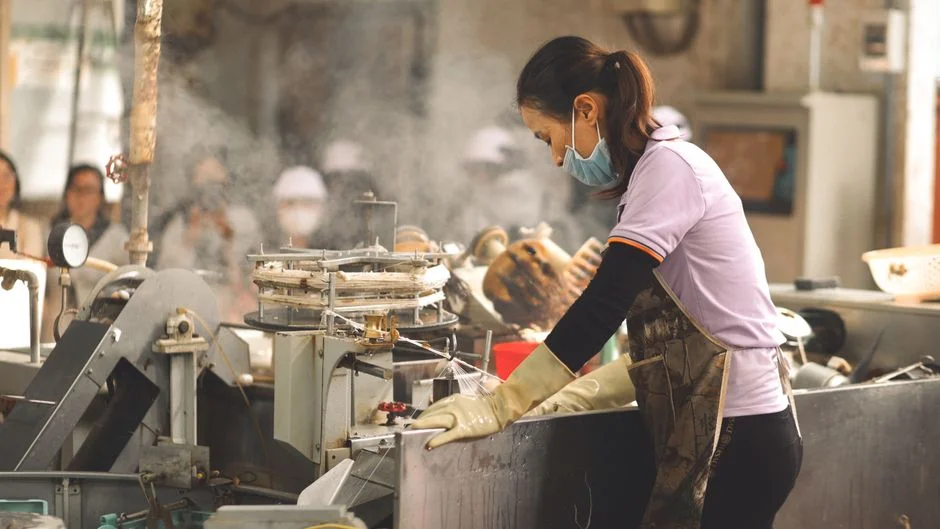
The sizing math is straightforward: required capacity (m³/hr) = daily sludge volume (m³) × safety factor 1.3 ÷ operating hours per day. Most meat plants run 16–20 operating hours; a 50 m³/day plant on a 16-hour schedule needs at least 4.1 m³/hr of nameplate capacity, which rounds up to a 5 m³/hr unit after the 1.3× safety factor. Cake dryness is set by ring spacing, not by brute force: a 0.3–0.5 mm ring gap targets 18–22% DS cake, while a tighter 0.2 mm gap can push 25–30% DS — at the cost of 20–25% higher polymer demand and higher torque on the drive.
For a 50 m³/day slaughterhouse running 2% feed solids through a DAF, a 10–15 m³/hr multi-disk screw press is the right fit to hit 22% DS cake continuously. Oversizing is not free: a 50% oversized unit costs 35% more CAPEX but yields less than 2% extra cake dryness because the limiting factor at that point is polymer conditioning, not mechanical pressure. The most common sizing error is using nameplate hydraulic capacity without derating for viscosity — DAF sludge at 2% DS behaves roughly 3–4× the viscosity of water, which most generic curves ignore.
ROI and Payback Period for a 2026 Meat Plant Installation
Payback for a meat-duty screw press is built from four lines: avoided hauling, polymer savings versus lagoon dredging, labor savings versus manual sludge handling, and compliance value (avoided fines or shutdown risk). At 2026 disposal rates of $80–$140 per wet ton, a 20 m³/hr multi-disk unit in a mid-size slaughterhouse producing 15 m³/day of 2% DS sludge reaches payback in 14–22 months. Plants producing more than 8 m³/day of 1.5%+ DS sludge are NPV-positive across every 2026 CAPEX scenario in the matrix above, with payback under 24 months.
Three risk factors extend payback and should be flagged in the project charter: (1) highly variable feed solids from batch屠宰 (slaughter) cycles without an equalization tank upstream, (2) insufficient polymer conditioning due to undersized make-up equipment or wrong charge density, and (3) lack of DAF pre-thickening, which forces the screw press to handle sub-1% feed and burns capacity on water rather than solids. None of these are deal-breakers — each is addressable in the front-end engineering — but each adds 4–8 months to payback if left unresolved. For a deeper look at how leachate and high-COD side streams complicate compliance math in adjacent industries, the 2026 landfill leachate COD and BOD removal process guide walks through comparable mass-balance logic.
Frequently Asked Questions
How much does a screw press cost for a small slaughterhouse?
A 1–5 m³/hr multi-disk unit in 304SS runs $10,000–$35,000 in 2026, with full installed cost (pump, polymer skid, electrical) at $22,000–$55,000. Small plants under 10 m³/day of sludge should also evaluate a plate and frame filter press alternative for batch operation.
Can a screw press handle high oil and grease?
Multi-disk units handle up to 4,000 mg/L oil & grease in the feed when paired with a DAF pre-thickener. Above 5,000 mg/L, a DAF or dissolved air flotation system upstream is mandatory to keep the rings from fouling.
What is the difference between a multi-disk and volute screw press?
Multi-disk uses a fixed ring stack that wipes clean on every revolution and tolerates high FOG; volute uses a conical screen, costs less, but needs 60–80% more polymer and struggles above 1,500 mg/L oil & grease.
How much polymer does a meat processing screw press use?
A multi-disk unit consumes 8–14 kg of cationic polyacrylamide per dry ton of cake, costing $30–$100 per dry ton at 2026 polymer prices. An automatic polymer dosing skid holds this near the lower bound.
Is stainless steel required for meat processing screw presses?
Full 304SS is the de facto baseline for 2026 meat-plant bids, and 316SS is mandatory for high-chloride washdown regimes (e.g., foam-cleaning protocols) or any wetted part in the USDA product zone. A carbon-steel upgrade typically fails a 9 CFR 416 audit within the first washdown cycle.