What "Sewage Treatment Plant Supplier in Chonburi" Actually Means in 2026
A sewage treatment plant supplier in Chonburi should be evaluated on four 2026 criteria: PCSB effluent compliance (BOD ≤20 mg/L, COD ≤120 mg/L, TSS ≤50 mg/L for industrial estates), proven process fit for the site's hydraulic load (typically 10–2,000 m³/day in the EEC), documented CAPEX/OPEX in THB, and after-sales service reach within 200 km of Sri Racha or Rayong. HydropureWater's WSZ series buried A/O package STP handles 1–80 m³/h and MBR systems 10–2,000 m³/day for coastal Thai applications.
Chonburi is not a generic industrial province. It hosts the operational core of Thailand's Eastern Economic Corridor — Amata City Chonburi, Hemaraj Eastern Seaboard, and WHA Chonburi — with more than 4,500 registered factories across automotive, electronics, petrochemical, and seafood processing. Each of these clusters discharges to either an estate-managed central STP or an on-site package plant, and all are bound by the same Pollution Control Department (PCSB) effluent standards under the 2024–2025 framework that remains in force in 2026.
What separates a Chonburi project from a generic inland install is the coastal influent. Dry-season chloride levels in Chonburi factory taps run 1,000–3,000 mg/L Cl⁻ between January and April due to seawater intrusion in the Bang Pakong and Eastern Seaboard aquifer systems. That salinity drives three non-negotiable design choices: salt-tolerant biomass acclimation, SS316 or FRP wetted parts on any steelwork, and PVDF membrane selection over PES for any MBR stage.
Three supplier tiers typically bid Chonburi RFPs: Thai system integrators with local crews and shorter response times, Japanese or Korean OEMs commanding premium pricing for documented reliability, and Chinese EPC+equipment manufacturers offering competitive landed cost with turnkey commissioning. Each tier wins in a different scenario — the buyer's job in 2026 is to map their hydraulic and risk profile to the right tier, not to chase the lowest sticker price.
The 4-Step Selection Framework for a Chonburi STP Supplier
Supplier selection for a Chonburi STP is a process-engineering decision first, a procurement decision second. The four-step framework below is what we use when shortlisting three to five bidders for a 10–2,000 m³/day project inside an EEC estate.
Step 1 — Regulatory mapping. Before technical evaluation, confirm the supplier has at least three reference projects with PCSB Form 3 or Form 4 discharge permits issued in Chonburi or Rayong within the last 36 months. A temperate-climate reference plant from Europe or northern China does not transfer to Thai permit conditions. The supplier must also hold a factory license under Section 69/70 of the Industrial Estate Authority Act if the plant will operate inside an IEAT boundary, and must be able to produce ISO 9001 and ISO 14001 certificates dated within 24 months.
Step 2 — Hydraulic and influent matching. Match the package to the flow regime: a WSZ series buried A/O package STP suits 1–80 m³/h with low-strength domestic-mixed waste; an MBR system with PVDF membrane modules suits 10–2,000 m³/day with stricter reuse targets; and SBR fits batch-process factories (food, seafood, seasonal beverage) where influent stops and starts on a production cycle. Ask the supplier for a hydraulic profile with peak factor — Chonburi factories routinely hit 2.5–3.0× peak on shift changes.
Step 3 — Effluent guarantee. The supplier must provide a written performance bond tied to BOD ≤20 / COD ≤120 / TSS ≤50 mg/L with a defined penalty clause for non-compliance. Verbal guarantees are unenforceable under Thai contract law for environmental permits, and the Pollution Control Department will hold the factory owner — not the supplier — responsible for the discharge. A performance bond is the difference between a defensible permit application and a rejected one.
Step 4 — After-sales and local reach. Confirm 24-hour response radius within 200 km of Sri Racha, Rayong, or Chachoengsao, Thai-speaking engineers on payroll (not subcontractors), and stocked spare parts including membrane modules, diffusers, and dosing pumps. The leading cause of 2024–2025 Chonburi plant failures was not bad design but 6–8 week waits for imported spares after a membrane pinhole or diffuser failure. Verify the spares list before signing.
Chonburi Sewage Treatment Technology Options: 2026 Comparison
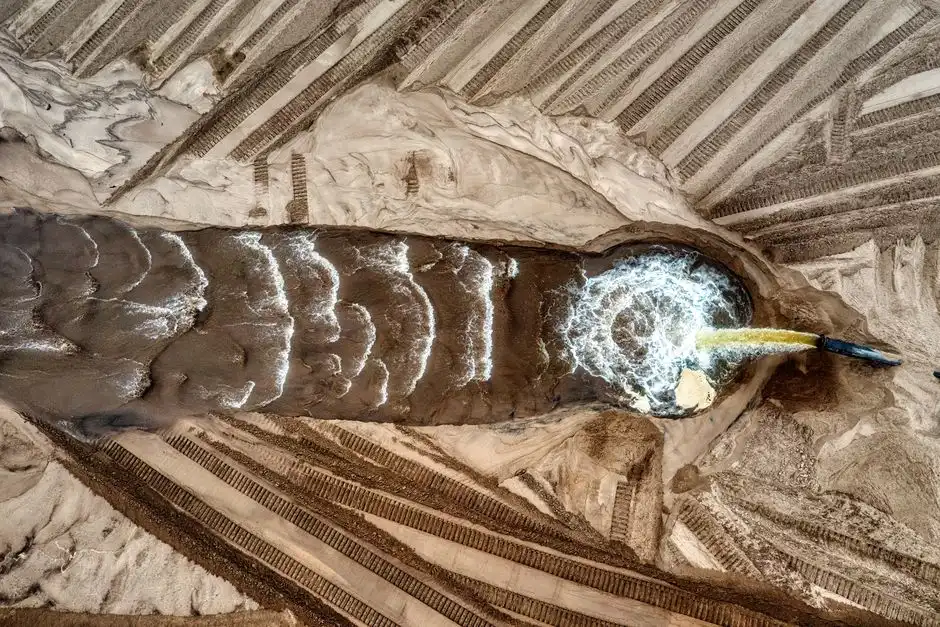
Chonburi's coastal-influent reality, plus the PCSB's tightening reuse expectations, narrows the viable technology families to four. The table below maps flow range, footprint, salinity tolerance, and typical OPEX band so you can eliminate non-fit options before the first sales call.
| Technology | Flow range | Footprint | Salinity tolerance | Typical BOD removal | Membrane/parts replacement |
|---|---|---|---|---|---|
| A/O package (WSZ series, buried) | 1–80 m³/h | Smallest (fully buried) | Moderate (≤2,000 mg/L Cl⁻ with acclimation) | 92–96% | Diffusers every 5–7 years |
| MBR membrane bioreactor | 10–2,000 m³/day | ~60% smaller than CAS | High with PVDF (DF series PVDF flat sheet membrane, 0.1 μm) | 98–99% | PVDF modules every 5–7 years |
| SBR (sequencing batch reactor) | 50–1,500 m³/day | Large (batch basins) | Moderate | 94–97% | Decanter service every 3–5 years |
| DAF pre-treatment (paired with above) | 5–500 m³/h | Compact skid | High (no biological stage) | 40–60% TSS, 50–70% FOG | Polymer pump every 2–3 years |
For coastal Chonburi sites, MBR with PVDF membranes outlasts PES alternatives by a factor of 2–3× in high-Cl⁻ service — a documented field outcome across electronics factories in the Hemaraj estate. Pair any biological stage with a DAF pre-treatment unit for FOG-laden food-processing wastewater; DAF protects downstream membranes and stabilises the biological stage when influent fat content exceeds 150 mg/L. Headworks screening with a rotary bar screen such as the GX series removes rags and grit that would otherwise foul the MBR.
The MBR segment is no longer a premium niche — it is mainstream. Global MBR market value reached approximately US$4.8B in 2026 with an 8.2% CAGR forecast through 2030 (per published 2026 sizing data), driven by reuse mandates in coastal industrial zones. For Chonburi, that means more competitive bidding, shorter lead times on standard modules, and a wider pool of Thai installation crews familiar with the technology.
2026 CAPEX and OPEX Benchmarks in Thai Baht for Chonburi STP Projects
Most Chonburi buyers we work with anchor their internal CAPEX conversations to global USD figures and then get blindsided by landed cost. The table below uses 2026 THB-per-m³/day installed figures drawn from active EEC projects.
| System | CAPEX 2026 (THB per m³/day installed) | OPEX 2026 (THB per m³ treated) | Cost driver |
|---|---|---|---|
| A/O package (WSZ, buried, soft soil) | 35,000–65,000 | 1.8–2.8 | Excavation, backfill, disinfection |
| A/O package (WSZ, skid + disinfection) | 65,000–95,000 | 2.5–3.5 | SS316 upgrade, automation |
| MBR system (standard) | 90,000–150,000 | 3.2–4.8 | Aeration energy, CIP chemicals |
| MBR system (SS316 coastal-grade) | 150,000–220,000 | 4.5–6.8 | Alloy upgrade, membrane cleaning |
For a floor reference, Made-in-China.com lists entry-level CE-certified integrated A/O plants from US$2,000 (~THB 65,000 at current FX) for the smallest domestic unit. Useful as a sanity check on the bottom band, but any quote at that level must be validated against PCSB compliance, membrane type, and vessel material — most sub-THB 50,000/m³ quotes we see in 2026 omit disinfection, automation, or proper SS316/FRP wetted parts.
Add 12–18% to equipment cost for Chonburi delivery, Thai installation crew, and commissioning certification. Factor in 7% VAT, any IEAT connection fees (typically THB 50,000–300,000 depending on estate), and a 10% contingency for civil works surprises in coastal soil. For a deeper line-item view of MBR economics, see the MBR cost breakdown for 2026.
Top Red Flags When Evaluating a Chonburi Sewage Treatment Plant Supplier

Five recurring failure patterns surfaced in 2024–2025 Chonburi commissioning projects. Treat any one of them as a shortlist-killer.
No project reference within 300 km of Chonburi. Commissioning tropical wastewater at 30–35°C with salinity intrusion is materially different from a temperate reference plant. Walk away — every time.
Verbal-only effluent guarantees. If the supplier cannot produce a written performance bond tied to BOD ≤20 / COD ≤120 / TSS ≤50 mg/L with a defined penalty clause, reject the bid. Verbal guarantees are unenforceable under Thai contract law for environmental permits, and the factory owner — not the supplier — faces PCSB penalties.
Quoted CAPEX more than 40% below the THB benchmark above. That gap almost always hides undersized aeration, omitted disinfection, or standard SS304 vessels instead of SS316. The failure surfaces in month 3–6 when corrosion pitting begins or when the first PCSB audit pulls non-compliant samples.
No SS316 or FRP option quoted for a coastal Chonburi site. The supplier is reselling a standard inland design. Expect SS304 pitting within 18 months in the salt-air zones around Sri Racha, Sattahip, and the WHA Chonburi 1–3 estates.
OEM-only supplier with no Thai installation crew. Chonburi port logistics and Thai electrical certification (TIS) add 3–6 months to any OEM-only project. Local installation capability is not optional.
Pre-RFQ Checklist: 6 Items to Confirm Before You Contact Any Supplier
Run through these six items before sending the first inquiry. Any supplier who cannot answer against this baseline is not ready for a Chonburi project.
- Influent characterisation. Daily flow (m³/day), peak factor, and BOD / COD / TSS / ammonia / pH / salinity from at least 7 grab samples over a production week.
- Required effluent limits. PCSB standard limits, or stricter if the project targets water reuse or ZLD pre-treatment.
- Plot drawing. Available footprint with any height or buried constraints, plus 1 m clearance for SS316 service access.
- Target commissioning date and fiscal deadline. Thai corporate budget cycles close September 30 — most estate projects anchor to that date.
- Local content and IEAT requirements. Section 69/70 conditions, Thai content thresholds, and any BOI incentives that affect equipment sourcing.
- Preferred contract form. Lump-sum turnkey, EPC, or equipment-only supply with a separate installation RFP — decide before pricing, not after.
Frequently Asked Questions
What PCSB effluent limits apply to a Chonburi industrial estate STP in 2026? The current framework (PCSB Notification, 2024–2025 still enforced in 2026) requires BOD ≤20 mg/L, COD ≤120 mg/L, TSS ≤50 mg/L for industrial zones discharging to a central treatment system. TKN limits vary by receiving water body — confirm with the local PCDO before finalising the design basis.
Which package STP suits a 50 m³/day food-processing plant in Sri Racha? For batch producers with FOG-laden influent, pair a DAF pre-treatment unit with an MBR skid using DF series PVDF flat sheet membrane modules. The 50 m³/day flow point is the crossover where MBR's footprint advantage (≈60% smaller than CAS) starts to outweigh the higher OPEX.
How much does a buried A/O package STP cost in Chonburi in 2026? A WSZ series buried A/O package STP for 1–80 m³/h typically lands at THB 35,000–95,000 per m³/day installed, with OPEX of THB 1.8–3.5 per m³ treated. Add 12–18% for Chonburi delivery and Thai commissioning, plus 7% VAT.
What is the realistic membrane replacement interval for an MBR in a coastal Chonburi site? With influent chloride at 1,000–3,000 mg/L, properly operated PVDF DF series modules last 5–7 years before CIP recovery drops below 80%. PES membranes under the same conditions typically fail in 2–3 years.
How long does PCSB permit approval take for a new STP in Chonburi? Plan for 90–150 days from Form 3 submission to PCSB approval, with an additional 30–60 days if the plant is inside an IEAT boundary and needs Section 69/70 coordination. Build that into your project schedule before locking the supplier delivery date.
Related Equipment
- GX series rotary bar screen headworks — specifications, capacity range, and technical data