Start With the Site, Not the Equipment Catalog
The best packaged sewage treatment plant for a New York housing development is usually a buried A/O system where soil, groundwater clearance, access, and the proposed discharge permit support its treatment performance; an MBR merits consideration where effluent solids, nutrient control, or reuse requirements justify membrane complexity. HydropureWater’s WSZ screening range is 1–80 m³/h, while its MBR screening range is 10–2,000 m³/day. Final selection depends on average and peak sewage flow, receiving-water limits, soil, winter operation, maintenance access, phased growth, and NYSDEC approval—not catalog capacity alone.
Begin by defining average and peak wastewater flow, the number and occupancy pattern of housing units, groundwater contribution, infiltration, and the development timetable. Identify the discharge point and receiving water before selecting a process. NYSDEC discharge limits may address BOD, TSS, ammonia, total nitrogen, phosphorus, and pH; sensitive watersheds such as Long Island Sound can impose particularly stringent nutrient considerations. The New York package-plant buyer guide identifies those parameters as relevant permit considerations.
Confirm soil conditions, excavation access, frost protection, utility routes, setbacks, landscaping, noise limits, sludge-removal access, and future expansion. Do not treat the 1–80 m³/h WSZ range or the 10–2,000 m³/day MBR range as proof that a development fits; both are screening bounds. Use the New York Department of Health’s official Residential Onsite Wastewater Treatment Systems Design Handbook as an authoritative design reference, while confirming with the project engineer whether a development-scale package plant requires project-specific engineering and NYSDEC permitting. Compare packaged sewage treatment options for housing developments for the broader screening context.
Translate Housing Demand Into a Capacity Basis
A defensible capacity basis starts with documented flow and loading conditions, not a qualifying household or unit count. Record average flow, peak daily flow, peak hourly flow, organic loading, infiltration and inflow assumptions, minimum operating conditions, and the housing-construction schedule. The domestic sewage treatment buyer guide describes population-equivalent metrics for residential projects, but the calculation method and assumptions remain subject to review by the project engineer and permitting authority.
The New York buyer guide uses 5,000 GPD for small residential clusters and 1 million GPD for modular arrays as a broad screening range. Neither value establishes unit capacity without site-specific wastewater-flow and loading data. Establishing this link ensures that the selected equipment aligns with the actual hydraulic and biological demands of the site.
| Design-basis input | What the project team must establish | Bidder deliverable |
|---|---|---|
| Average and peak flow | Occupancy pattern, average flow, peak daily flow and peak hourly flow | Stated design flow and applicable peak factor |
| Loading and dilution | Organic load, groundwater contribution, infiltration and wet-weather inflow | Hydraulic and biological-loading calculation |
| Operating envelope | Minimum flow, redundancy assumption and phased occupancy | Duty-and-standby arrangement and operating limitations |
| Development schedule | Current phase, ultimate phase and intended expansion sequence | Initial and future-capacity allocation |
Compare current-phase and ultimate flows so parallel tanks or later expansion can be reserved without installing the full ultimate capacity on day one. Require each bidder to show its design flow, peak factor, redundancy assumption, minimum operating flow, and allowance for groundwater and wet-weather inflow. That gives the engineer an auditable basis for checking whether the proposed package is neither undersized during initial occupancy nor stranded with unused early-life capacity.
Compare Buried A/O and MBR Package Plants
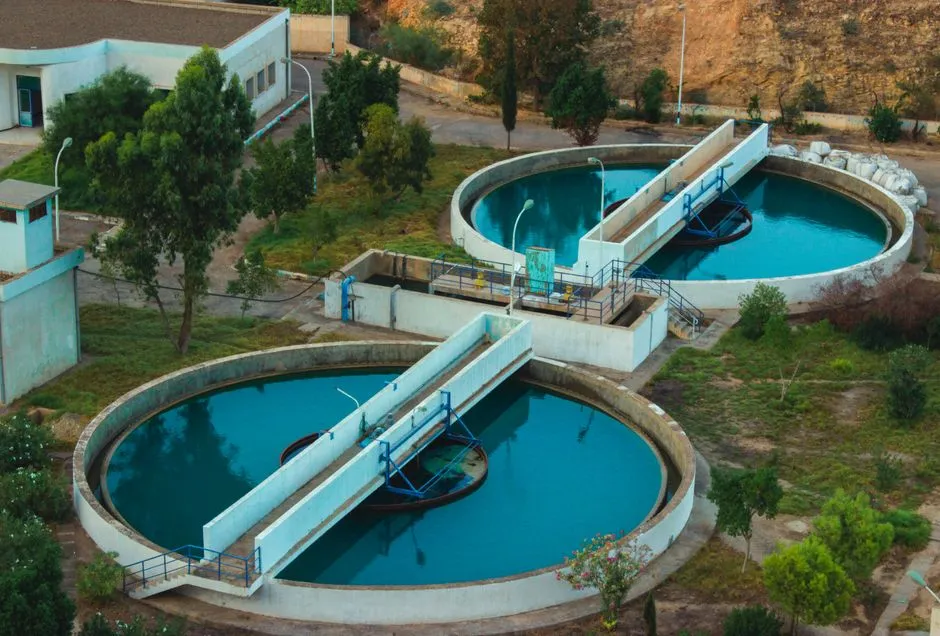
The buried WSZ A/O package combines anoxic and aerobic biological contact oxidation, sedimentation, and disinfection in one below-grade arrangement; the MBR configuration combines activated-sludge treatment with submerged PVDF membrane filtration. These are materially different process choices, and neither becomes compliant merely because it appears in a manufacturer’s catalog.
| Selection factor | Buried WSZ A/O package | Integrated MBR membrane bioreactor |
|---|---|---|
| Treatment configuration | Anoxic/aerobic contact oxidation, sedimentation and disinfection in one buried package | Activated sludge with submerged PVDF membrane filtration |
| Catalog screening range | 1–80 m³/h | 10–2,000 m³/day |
| Site character | Can remain below grade with landscaping above; the WSZ configuration can also be mounted on a trailer for mobile deployment | Positioned as a smaller-footprint option with near-reuse-quality effluent |
| Potential priority | Compact treatment train, landscape compatibility and nutrient-removal capability, subject to site and permit review | Very low suspended solids, greater process control or water-reuse considerations |
| Additional evaluation | Geotechnical conditions, groundwater clearance, excavation and winter performance | Membrane fouling, aeration energy, instrumentation and specialist maintenance |
For preliminary screening, compare the buried WSZ A/O package sewage treatment plant against the integrated MBR membrane bioreactor. A buried A/O configuration can be attractive where compactness, landscape integration, and nutrient-removal capability are priorities. An MBR can be favored where very low suspended solids, tighter process control, or reuse considerations matter. The final treatment train must nevertheless be matched to the actual NYSDEC permit, receiving water, disinfection method, and future loading.
Match the Process to Winter, Noise and Site Constraints
Winter operation must be evaluated as a complete operating condition rather than a single equipment-selection checkbox. HydropureWater’s New York buyer guide identifies cold weather as a significant concern and recommends underground installation, tank insulation, and suitable aeration arrangements as cold-weather protections. Review how the proposed arrangement maintains biological treatment and disinfection performance through the winter design conditions selected by the engineer.
For residential locations, request a blower and equipment-enclosure noise assessment against applicable local municipal ordinances. Require the bidder to identify the sound sources, enclosure or attenuation measures, proposed equipment locations, and the assumptions used in the assessment.
Preserve service access for sludge wasting, sensor calibration, membrane cleaning where applicable, electrical service, replacement parts, and mechanical maintenance. The access route should not require unnecessary removal of landscaping or the treatment train. Compare above-ground and buried installation when excavation, soil drainage, groundwater, or frost conditions make a prefabricated unit difficult to place. Defining the complete proposed system remains the most critical step in ensuring long-term operational success.
A treatment package should sit within a flow path that also addresses screening, flow control and equalization, disinfection, effluent monitoring, and sludge handling. The relevant mechanical bar-screen equipment should be evaluated only as part of that complete treatment train, not as an automatic substitute for the treatment unit.
Build the Permit and Engineering-Submittal Plan
The New York buyer guide describes three permitting phases: submission of an Engineering Report, Final Plans and Specifications, and post-installation inspection. Compliance continues after installation; the guide states that regular Discharge Monitoring Reports are required to demonstrate operation within permit limits.
Before issuing a purchase order, require the selected supplier to provide the proposed process, equipment list, process-control narrative, drawings, commissioning approach, and expected operating conditions so the project engineer can incorporate them into the permit package. The package is therefore one input to an engineering submittal, not a substitute for it.
Confirm the applicable NYSDEC permit path with the project engineer and permitting authority. The receiving water may add nitrogen, phosphorus, disinfection, or monitoring conditions to the process-selection criteria. The buyer guide identifies the SPDES permit as the primary New York State permit for package wastewater treatment plants, but the project-specific authorization pathway must still be established.
Use the New York Department of Health’s Residential Onsite Wastewater Treatment Systems Design Handbook as an official design reference while confirming the current authority and permit pathway for the proposed development. The 2026 MBR and conventional activated-sludge comparison provides technical context for process selection, but it does not establish compliance for this site.
Compare Lifecycle Cost Before Awarding the Equipment Order
The HydropureWater buyer guide estimates total project costs of $220,000–$650,000 for a typical 50,000 GPD package plant in New York. Treat this as an early screening benchmark, not a quotation, because the stated scope includes project-specific civil work, utilities, and site conditions that the buyer must define.
Require bidders to separate equipment supply from excavation, structural work, utility connections, electrical service, noise controls, access roads, commissioning, permits, training, spare parts, sludge disposal, and future expansion. This prevents a low equipment price from obscuring an incomplete installed scope. Analyzing these variables ensures that the project budget accounts for the total cost of ownership rather than just the initial capital expenditure.
| Cost or lifecycle element | Information required from the bidder | Evaluation basis |
|---|---|---|
| Installed project cost | Supply, civil work, utilities, controls, commissioning, permits, training and initial spares | Like-for-like scope and exclusions |
| Operating resources | Energy, chemicals, sludge handling, operator attention and membrane replacement where applicable | Life-cycle estimate with stated assumptions |
| Maintenance access | Monthly sludge wasting, sensor calibration and mechanical-component checks | Site-specific access plan and reserve requirement |
| Asset renewal | Structural-tank and mechanical-component maintenance assumptions | Buyer guide estimates of 20–30 years for structural tanks and 5–10 years for mechanical replacement or overhaul |
| Compliance exposure | Monitoring, reporting, operator support and response to permit deviations | Documented risk allocation and support plan |
The buyer guide states that structural tanks can last 20–30 years with proper maintenance, while mechanical components typically require replacement or overhaul every 5–10 years. To understand the process and commercial structure behind a bid, use the prefabricated wastewater plant process and cost guide. Compare bids on installed cost, lifecycle obligations, and compliance risk—not acquisition price alone.
Issue a Project-Specific Request for Proposal
Give each bidder one controlled design basis: average and peak flow, organic load, discharge requirements, receiving water, soil and groundwater information, available footprint, installation method, expansion plan, and required schedule. Require a process flow diagram, equipment schedule, duty-and-standby assumptions, materials of construction, controls narrative, drawings, utility requirements, commissioning plan, warranty, operator training, and local spare-parts support.
Also require bidders to identify assumptions, permit limitations, cold-weather provisions, noise controls, and exclusions. This prevents catalog substitutions: a bidder cannot quietly assume a different design flow, discharge point, expansion sequence, or site condition. Ask for the proposed treatment train to be evaluated against the same permit and receiving-water criteria as every competing bid.
Compare technical compliance and lifecycle cost, then have the project engineer and permitting authority confirm the final selection before the purchase order. A compliant equipment list is not a complete permit submittal, and an apparently suitable process does not establish site-specific compliance.
Frequently Asked Questions
What cost should a buyer budget for a 50,000 GPD package sewage treatment plant in New York?
The HydropureWater New York buyer guide estimates total project costs of $220,000–$650,000 for a typical 50,000 GPD package plant. This is a preliminary screening benchmark, not a site-specific price. Request an itemized quotation separating the treatment package from excavation, structures, utilities, controls, commissioning, permits, training, initial spares, and sludge disposal.
Does a 5,000 GPD system automatically fit a New York housing development?
No. The New York buyer guide identifies 5,000 GPD as a screening point for small residential clusters, while the WSZ catalog range is 1–80 m³/h. Those values do not complete the sizing calculation. Require the engineer to establish average and peak flow, organic loading, infiltration, minimum operating flow, redundancy, and phased development
Frequently Asked Questions
How much does a packaged sewage treatment plant cost for a New York housing development?
Capital costs for packaged sewage treatment plants in New York typically range from $15,000 to $25,000 per unit of housing, depending on the treatment technology and site-specific effluent requirements. Total project costs are heavily influenced by the required capacity, site topography, and the stringency of the receiving water body’s Total Maximum Daily Load (TMDL) limits.
Operational expenditures (OPEX) generally range between $2,000 and $5,000 per month, covering electricity for aeration, sludge hauling, chemical dosing, and mandatory certified operator oversight. Developers should budget for a 10-15% annual increase in maintenance costs to account for aging mechanical components and inflation in regional labor rates.
How do I size a package sewage treatment plant for a housing development?
Sizing is calculated based on the New York State Department of Environmental Conservation (DEC) Design Standards for Wastewater Treatment Works, typically using an average daily flow of 150 to 300 gallons per day (GPD) per bedroom. Engineers must account for peak flow factors, which often require the system to handle 2.5 to 4 times the average hourly flow to prevent hydraulic overloading during morning and evening peak usage.
Designers must also factor in the influent characteristics, specifically the Biological Oxygen Demand (BOD) loading, which is typically estimated at 0.17 to 0.20 pounds of BOD per capita per day. Accurate sizing requires a hydraulic profile analysis to ensure that gravity flow or pump stations can maintain the necessary head pressure throughout the treatment train.
Should a New York housing project choose a buried A/O plant or an MBR system?
A buried Anoxic/Oxic (A/O) plant is generally preferred for projects with lower effluent nutrient requirements and limited budgets, as it relies on conventional clarification and has lower mechanical complexity. These systems are effective for projects where land footprint is not the primary constraint and the receiving waters do not demand ultra-low nitrogen levels.
An MBR (Membrane Bioreactor) system is superior for New York projects facing strict nitrogen or phosphorus limits, as the membrane filtration produces high-quality effluent suitable for potential non-potable reuse. While MBR systems offer a significantly smaller physical footprint and better solids retention, they require higher energy input, specialized membrane cleaning protocols, and more frequent technician interventions compared to A/O systems.
What should I check when selecting a packaged wastewater treatment supplier in New York?
Verify that the supplier provides equipment certified to meet the specific effluent standards required by the regional DEC office, such as SPDES (State Pollutant Discharge Elimination System) permit limits. Ensure the manufacturer has a proven track record of installations within New York’s climate, specifically regarding cold-weather performance and the ability to maintain biological activity during sustained freezing temperatures.
Check for the availability of local, factory-authorized service technicians who can guarantee a response time of 24 hours or less for emergency mechanical failures. Furthermore, confirm that the supplier provides comprehensive O&M manuals and training for the New York-licensed Grade 2A or 3A operators required to run the facility.
What permits and monitoring are required for a package sewage treatment plant in New York?
All projects must obtain a SPDES permit from the NYS DEC, which establishes specific discharge limits for contaminants like BOD, Total Suspended Solids (TSS), and nutrients. Compliance requires regular effluent sampling and reporting, typically performed on a monthly or quarterly basis, with data submitted through the NetDMR electronic reporting system.
Beyond the discharge permit, developers must secure local building permits, State Environmental Quality Review Act (SEQRA) documentation, and potentially a Realty Subdivision approval if the project involves multiple lots. Ongoing monitoring must include daily log entries by a certified operator and annual inspections to ensure the integrity of the treatment process and the accuracy of flow meters.