Which Packaged Plant Fits a Los Angeles Housing Development?
A Los Angeles housing development generally fits a buried, automated A/O plant when domestic wastewater treatment, limited surface space and automated operation are the main requirements. An integrated MBR membrane bioreactor is the stronger candidate when footprint, membrane solids separation or reuse-oriented treatment drives the decision. Neither should be selected from the unit name alone: confirm the legal discharge route, variable flows, nutrient limits, soil conditions and future phases. Los Angeles County reviews conventional and non-conventional onsite systems before installation.
The practical baseline is the buried WSZ A/O sewage treatment plant for routine domestic-strength treatment where visual impact and surface-land use matter. An MBR package becomes more compelling when its smaller footprint or separation performance justifies added mechanical and operating complexity. Neither recommendation establishes approval; the selected treatment train must fit the project’s legal route and permit conditions.
Clearfox identifies variable residential flow as a central design issue, noting that peak flow typically occurs in the mornings, late afternoons and evenings as residents leave for or return from work and school. The same residential-development guidance describes fixed-bed biological treatment as capable of operating without chemical consumables, producing significantly less sludge than conventional biological processes and achieving pollutant-removal efficiencies up to 99 percent. It gives FBBR configurations from 10 to 3,000 m³/day through parallel or series modules. These are process-selection references from Clearfox, not Los Angeles approval claims.
Three questions control the selection: Where can the treated water legally go? How variable are residential flow and loading? How much usable land, excavation access and phased expansion can the site provide? If a public sewer is available and has capacity, Clearfox describes direct connection as the simplest approach.
Confirm the Approval and Discharge Route Before Selecting Equipment
Los Angeles County OWTS approval is a site-and-system regulatory review, not a product certification attached to a conventional package plant. The County states that its Environmental Health Division reviews proposed designs, work plans, required covenants and historical records, performs site and installation inspections, and issues final system-design approvals (Los Angeles County Department of Public Health, 2026).
The approval pathway depends on the treatment architecture and discharge method. A conventional OWTS is a septic tank and drainfield. A non-conventional OWTS adds treatment components that may include nitrogen reduction, disinfection or both before discharge to a drainfield or distribution system. The State OWTS Policy, required by Assembly Bill 885, establishes treatment and monitoring standards and authorizes local approval through the Local Agency Management Program, or LAMP (Los Angeles County Department of Public Health, 2026).
| Permit screen | What to establish | Decision consequence |
|---|---|---|
| Jurisdiction | Whether the property is in unincorporated Los Angeles County or in a city with a County LAMP MOU | Identify the reviewing agency before selecting the approval category |
| System classification | Conventional OWTS or non-conventional OWTS | Define the required treatment components and monitoring basis |
| Discharge route | Public sewer, surface discharge, groundwater discharge, reuse or another route proposed by the permit team | Set treatment objectives and identify potentially separate regulatory approvals |
| Plan status | Design review, required covenants, site inspection, installation inspection and final approval | Do not treat equipment purchase as regulatory approval |
County review responsibilities cover unincorporated areas and designated cities that have signed an LAMP MOU. The municipalities listed by the County are Agoura Hills, Bradbury, Duarte, Glendora, Hidden Hills, La Canada Flintridge, La Habra Heights, La Verne, Lomita, Lancaster, Palmdale, Palos Verdes Estates, Rancho Palos Verdes, Rolling Hills, Rolling Hills Estates and Santa Clarita. Confirm the project’s jurisdiction rather than assuming that every city follows the same route (Los Angeles County Department of Public Health, 2026).
Give the permit team the proposed discharge route and require confirmation of applicable treatment, monitoring and approval conditions. The supplied research does not establish universal effluent limits for a private Los Angeles development, so generic package-plant performance claims cannot substitute for that review.
Size for Peak Residential Flow and Variable Occupancy
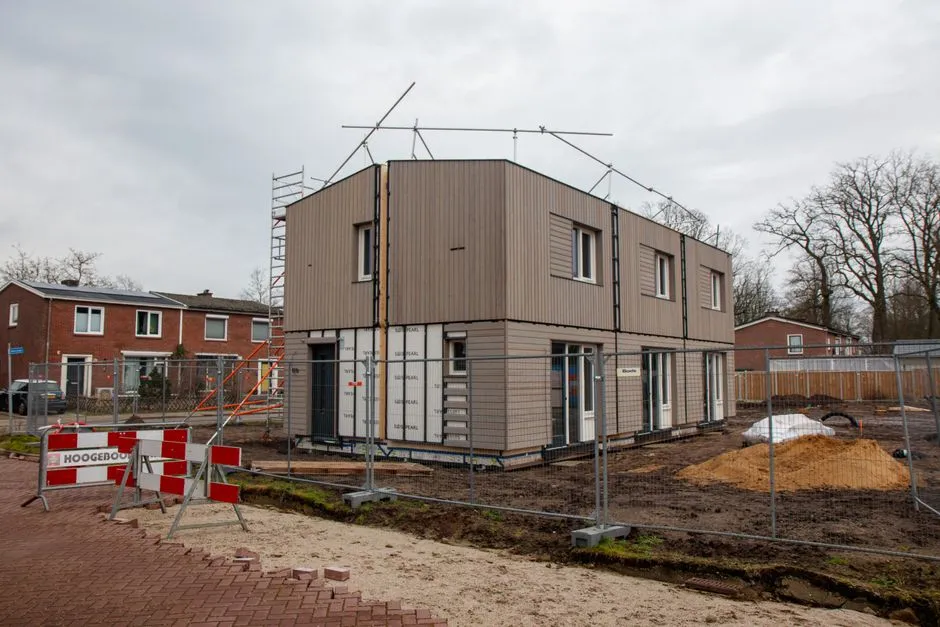
A defensible residential design must cover peak and minimum conditions, not just average daily flow. Clearfox gives US preliminary population-equivalent references of 100 gallons and 0.2 lbs BOD per person and also cites occupancy planning at 1.5 persons per bedroom. These are planning references only; the local approving authority determines the applicable design method (Clearfox, housing-development wastewater-treatment guidance).
| Design input | Information the supplier must receive | Why it matters |
|---|---|---|
| Occupancy basis | Unit mix, bedrooms, occupancy assumptions and any approved bedroom equivalents | Converts the development into a defensible population-equivalent basis |
| Hydraulic range | Average daily flow, peak hourly flow, peak daily flow and minimum flow | Tests equalization capacity and biological stability |
| Organic loading | BOD and COD loading, including kitchen or commercial contributions | Establishes biological capacity rather than tank volume alone |
| Solids and fats | Suspended-solids loading, fats and grease and expected kitchen flows | Addresses pretreatment, sludge generation and maintenance |
| Operation | Automated controls, alarm response, remote monitoring, backup power and maintenance access | Connects equipment performance to reliable long-term operation |
Equalization is central because a development can experience surges, weekend changes and seasonal occupancy shifts. Clearfox states that an SBR’s filling phase can provide equalization and allow the system to tolerate influent peak flows or peak loads. The same guidance cites SBR process guarantees of less than 10 mg/L BOD, 10 mg/L TSS, 5–8 mg/L total nitrogen and 1–2 mg/L total phosphorus. Those figures describe the cited Clearfox process; they are not established as the permit limits applicable to this development.
Require each bidder to explain how the proposed buried WSZ A/O sewage treatment plant maintains treatment during low-flow periods and changing occupancy. The calculation should show the selected process train at average, peak and minimum conditions, including how equalization is incorporated. Ask the reviewing engineer to confirm which flow and loading method governs the preliminary population-equivalent calculation.
Compare Buried A/O, MBR and Biofilm Package Plants
The main technology choice is between an integrated biological package, a membrane bioreactor and an attached-growth system; each handles variable residential loading differently. The decision should follow the discharge quality required, available footprint, operating resources and acceptable maintenance obligations—not a generic claim that one process is universally superior.
| Package architecture | Process and documented capacity | Development fit | Supplier questions to resolve |
|---|---|---|---|
| Buried WSZ A/O | Integrated anoxic/aerobic contact oxidation, sedimentation and disinfection; automated; 1–80 m³/h; buried installation and optional trailer mounting | Baseline for domestic-strength treatment, minimal surface footprint and low visual impact | Peak-flow treatment, equalization, minimum-flow stability, odor control, excavation access and future expansion |
| HydropureWater MBR | Activated sludge plus submerged PVDF membrane filtration; filtration below 1 μm; stated 60 percent smaller footprint than conventional systems; 10–2,000 m³/day | Preferred candidate when membrane separation, footprint or reuse-oriented quality is decisive | Fouling controls, cleaning, replacement, redundancy, filtrate handling, odor control and solids removal |
| Fixed-bed biofilm | Clearfox says FBBR tolerates overload and underload, uses no chemical consumables, produces significantly less sludge than conventional biological processes and offers 10–3,000 m³/day through parallel or series modules | Consider where loading resilience and a low-consumable operating model are priorities | Comparable layout, footprint, media maintenance, odor control and solids handling; it is not in HydropureWater’s current catalog |
Buried A/O is the engineering screening choice for routine treatment where a compact above-ground footprint and limited visual impact matter. It remains conditional on soil, groundwater, access, setbacks, discharge criteria and approval.
MBR is the stronger candidate where membrane solids separation or footprint reduction is central. Do not accept the membrane concept without a maintenance strategy. Require the proposal to state cleaning intervals, replacement provisions, redundancy, membrane-fouling controls and the fate of separated solids. If reuse is contemplated, identify the intended end use and obtain the receiving authority’s requirements before sizing the polishing train.
Fixed-film is appropriate for preliminary screening when variable loading and chemical consumption are major concerns. Clearfox describes it as the most robust option in its residential-development guidance, but that is a comparative process statement rather than a Los Angeles approval. Request a directly comparable equipment layout; more detailed housing comparisons of A/O, MBR and biofilm systems are available in the Birmingham housing package-plant comparison.
Match the Package Plant to Site and Operating Constraints
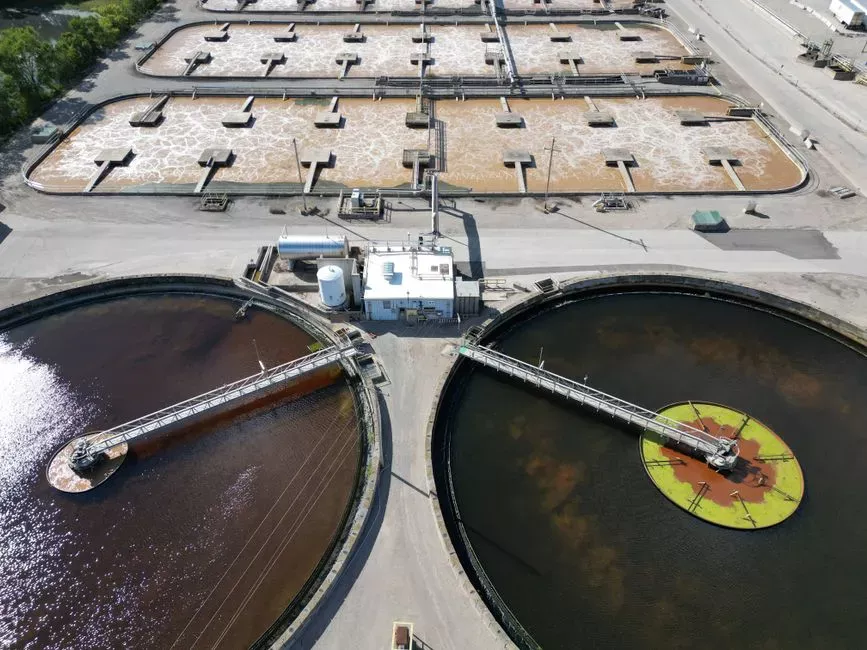
A technically suitable process can still be commercially impractical if it cannot be built or maintained on the site. Collect the available footprint, excavation access, groundwater level, soil conditions, setbacks, utility routes, landscaping plan and vehicle-access requirements before choosing buried or above-ground equipment.
Burial does not eliminate odor-control obligations. Require details on vent location, ventilation, septic-tank or equalization performance and maintenance access. The supplier should also document peak-flow equalization, minimum-flow performance, automated controls, remote monitoring, backup power, routine inspection access and the extent of operator attendance.
For an MBR, the proposal must also address membrane cleaning, replacement strategy, filtrate handling and redundancy. The supplied catalog establishes the membrane approach and capacity range, but it does not establish those commercial terms. Fixed-film proposals need comparable detail for media inspection, solids removal and odor control.
For phased developments, require an expansion sequence rather than assuming the first unit can be enlarged. Clearfox notes that modular and containerized systems can support phased capacity additions. Compare whole-life obligations, including equipment, installation, concrete or excavation, utilities, applicable chemicals, sludge handling, maintenance, membrane replacement and monitoring. Where disinfection is part of the proposed train, clarify the ozone-generator disinfection approach only if the approved process basis supports it; it is not a substitute for route-specific review.
Build a Supplier-Selection and Approval Workflow
A staged workflow prevents a supplier’s standard package from becoming the design basis before the permit route is known.
- Document the project basis. Record the legal discharge route, jurisdiction, unit count, occupancy assumptions, average and peak flows, minimum flow, nutrient goals, footprint, soil and groundwater constraints, odor requirements and phasing plan.
- Issue one common procurement package. Send it to A/O, MBR and biofilm suppliers so bids can be compared on process performance, capacity, footprint, automation, utilities and life-cycle obligations.
- Demand engineering documents. Require a process flow diagram, hydraulic calculation, biological-loading calculation, equalization assessment, control philosophy, utilities list, commissioning plan and maintenance schedule.
- Submit the selected basis early. Los Angeles County states that approved plans are provided after design review, while site and installation inspections occur before final approval (Los Angeles County Department of Public Health, 2026).
- Confirm the governing requirements. Check the County code, LAMP conditions, permit, sewer or discharge agreement and applicable California Regional Water Board requirements rather than relying on generic treatment claims.
- Compare installed scopes. Evaluate commissioning, operator training, monitoring, service response, spare parts, operator attendance and expansion provisions. The London housing package-plant comparison provides a useful cross-market framework, but Los Angeles approval remains local.
Before requesting quotations, obtain the unit mix and occupancy assumption, verified flow and loading data, discharge-route decision, preliminary treatment goals, available footprint, site constraints, utilities and phasing sequence. Without those inputs, bids may look comparable while representing different treatment and compliance assumptions.
Frequently Asked Questions
What preliminary information should be used to size a packaged sewage treatment plant for a Los Angeles housing development?
Use Clearfox’s US references of 100 gallons and 0.2 lbs BOD per person and 1.5 persons per bedroom only as preliminary planning inputs. The engineer should then prepare a project-specific hydraulic and biological-loading calculation based on the unit mix, occupancy, average and peak flows, minimum flow and the approving authority’s criteria.
How should a developer choose between
Frequently Asked Questions
What size packaged sewage treatment plant does a Los Angeles housing development need?
Sizing is determined by the California Plumbing Code and local municipal requirements, typically calculated based on an average daily flow of 70 to 100 gallons per capita per day (GPCD). A standard residential development should estimate approximately 250 to 300 gallons per day (GPD) per single-family unit to account for peak diurnal flow variations and potential future capacity needs.
Should a Los Angeles housing project choose buried A/O or MBR sewage treatment?
Membrane Bioreactor (MBR) technology is generally preferred in Los Angeles due to its superior effluent quality, which often meets California Title 22 recycled water standards for unrestricted irrigation. While Anoxic/Oxic (A/O) systems are simpler to maintain, MBR systems require a significantly smaller footprint—often 50% less space—and provide a higher level of nutrient removal, which is critical for meeting stringent Los Angeles Regional Water Quality Control Board discharge permits.
What should I ask a wastewater equipment supplier before requesting a price?
You should request a process flow diagram, a guaranteed effluent quality report, and a detailed list of utility requirements including peak kilowatt-hour (kWh) consumption. Additionally, ask for a list of local reference sites within Southern California, the expected mean time between failures (MTBF) for mechanical components like blowers and pumps, and the specific lead time for local regulatory submittal packages.
Can a packaged sewage treatment plant be approved in Los Angeles County?
Yes, but approval requires navigating a complex multi-agency process involving the Los Angeles County Department of Public Health and the Regional Water Quality Control Board. Projects must demonstrate compliance with California Code of Regulations (CCR) Title 22, and often require a Report of Waste Discharge (ROWD) to obtain Waste Discharge Requirements (WDRs) or a National Pollutant Discharge Elimination System (NPDES) permit.
What costs should be included when budgeting for a housing development sewage treatment plant?
Budgeting must account for capital expenditures (CAPEX) including equipment procurement, site excavation, concrete foundation pads, and electrical integration. Operational expenditures (OPEX) should factor in annual chemical costs for disinfection, routine sludge hauling by licensed contractors, monthly laboratory testing for compliance monitoring, and an annual budget of 3% to 5% of the total system cost for ongoing preventative maintenance and parts replacement.