Which package plant fits a Birmingham housing development?
A buried A/O package sewage treatment plant is typically the best fit for a Birmingham, United Kingdom housing development where wastewater is domestic-strength, gravity feed is feasible, and secondary-treatment quality meets sewer discharge agreements. A submerged-PVDF MBR is preferable where land is constrained or near-reuse-quality effluent is required. The buried A/O WSZ package sewage treatment plant covers 1–80 m³/h, while the submerged-PVDF MBR treatment system covers 10–2,000 m³/day. The correct unit depends on more than dwelling count: calculate average and peak flow, confirm the discharge route with the local water authority, and verify the required effluent specification before ordering.
Build the wastewater design basis
A housing package plant must be sized based on the actual wastewater received rather than generic residential classifications. Begin by inventorying toilets, showers, kitchen sinks, and laundry, then identify any communal plant, commercial kitchens, central laundry, pumping stations, or surface-water inflow. The supplier’s process guide identifies sanitary wastewater from residences as domestic-strength, while process wastewater, high-volume commercial laundry, and food-service grease can move the project onto a different approval route (HydropureWater verified product data, 2026).
Contact the relevant Birmingham water or sewer authority to confirm the discharge route, classification, and required consent. Do not assume that domestic housing wastewater can be discharged unconditioned to a public sewer, or that reuse water is permissible without approval. Request that the supplier state the proposed inlet flow range, peak factor, retained-sludge assumptions, effluent duty, and future-expansion allowance in the technical proposal.
The occupancy example in the cited Birmingham, Alabama article illustrates why usage data matters: a 200-bed hotel was associated with a flow range of 200–400 m³/day, which the source used to place the project within the WSZ 5–20 m³/h band or the lower end of the integrated MBR range (HydropureWater verified product data, 2026). This serves as an example of the conversion method, not a Birmingham, United Kingdom housing sizing rule. The Alabama article also refers to Alabama ordinances, NPDES provisions, and Birmingham Water & Sewer / Engineering Department procedures. These references do not apply to Birmingham, United Kingdom.
Calculate average and peak wastewater flow
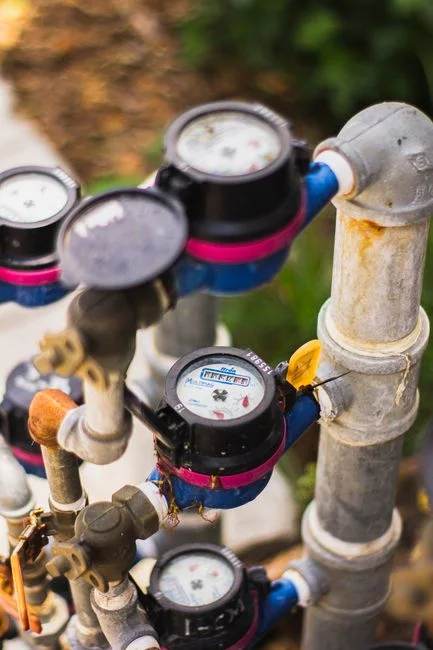
A defensible duty point follows from occupancy, fixture units, average flow, and a project-specific peak factor. Start with occupancy and fixture-unit counts, convert them into average daily flow in m³/day, and apply the agreed diurnal peak factor. Convert the resulting design flow into m³/h to compare against the WSZ catalogue. The supplied product data notes that 80 m³/h is approximately 1,920 m³/day (HydropureWater verified product data, 2026).
Because the catalogue envelopes for the WSZ (1–80 m³/h) and the integrated MBR (10–2,000 m³/day) overlap, maximum capacities are not decision criteria by themselves. The supplier must nominate a guaranteed duty point, hydraulic profile, and turndown assumption to ensure operational stability.
The source identifies 200–500 m³/day as a band where A/O and MBR decisions commonly arise, but this comparison relates to Birmingham, Alabama rather than Birmingham, United Kingdom (HydropureWater verified product data, 2026). Use this only as a technical comparison range, not as a UK regulatory threshold.
- Calculate average flow from the agreed occupancy and fixture-unit basis.
- Apply a project-specific peak factor for diurnal variation.
- Check future housing phases, lower-occupancy operation, pump peak rates, storm ingress, and any commercial contribution.
- Normalise the selected duty into m³/day and m³/h.
- Match the duty point to the selected process and submit the hydraulic basis for approval.
| Design check | Information required | Why it affects selection |
|---|---|---|
| Average flow | Occupancy and fixture-unit basis | Establishes the baseline treatment load |
| Peak flow | Project-specific diurnal peak factor | Sets the hydraulic duty and pumping requirement |
| Development phasing | Occupancy and flow at each phase | Tests initial sizing and future expansion |
| Non-residential contribution | Laundry, kitchen, plant and pump flows | Determines classification and whether pretreatment is needed |
| Turndown | Low-occupancy operating condition | Checks biological stability and control response |
Compare A/O, MBR and biofilm package plants
The buried A/O unit is the standard default when the objective is secondary-quality sewer discharge and surface space is limited. The WSZ combines anoxic and aerobic biological contact oxidation, sedimentation, and disinfection in one buried, automated unit; the product data states it requires no operator and produces secondary-treatment-quality output suitable for sewer discharge (HydropureWater verified product data, 2026).
The integrated MBR is the stronger option when land is tight or the project is pursuing a defined reuse endpoint. It uses submerged PVDF membrane filtration and requires routine membrane maintenance and aeration-box cleaning. The supplied product data claims an approximately 60% smaller footprint than a conventional activated-sludge plant of equal capacity, though this must not be applied as a universal reduction against every buried A/O installation (HydropureWater verified product data, 2026).
MBR systems do not remove the need for an agreed water-quality specification. The permitted endpoint, required disinfection, and reuse conditions still need to be defined. A biofilm package plant may also be practical where hydraulic loading, footprint, operator capability, and council environmental requirements support it, though the research provides no validated UK housing-specific capacity or cost for that option.
Constructed wetlands and vermifiltration may suit small decentralised flows, but land availability, climate, and permitting act as constraints. These remain site-specific options rather than default package plants for a Birmingham housing scheme.
| Decision | Buried A/O | MBR | Biofilm package plant |
|---|---|---|---|
| Primary fit | Conventional domestic-strength sewer discharge | Constrained land or defined near-reuse objective | Where site loading, footprint and permit conditions support it |
| Treatment arrangement | Anoxic/aerobic contact oxidation, sedimentation and disinfection | Activated sludge with submerged PVDF membranes | Process depends on the selected biofilm configuration |
| Published capacity | 1–80 m³/h | 10–2,000 m³/day | No validated UK housing-specific capacity supplied |
| Surface-space position | Buried; landscaping can remain above | Claimed approximately 60% smaller than conventional activated sludge at equal capacity | Depends on the selected system |
| Operations | Fully automated; no operator required according to product data | Automated with membrane maintenance and aeration-box cleaning | Operator capability must be checked |
| Main risk | Does not automatically satisfy a reuse specification | Added maintenance and no automatic permission to reuse | Missing UK housing-specific validation and cost evidence |
Fit the plant into the development site
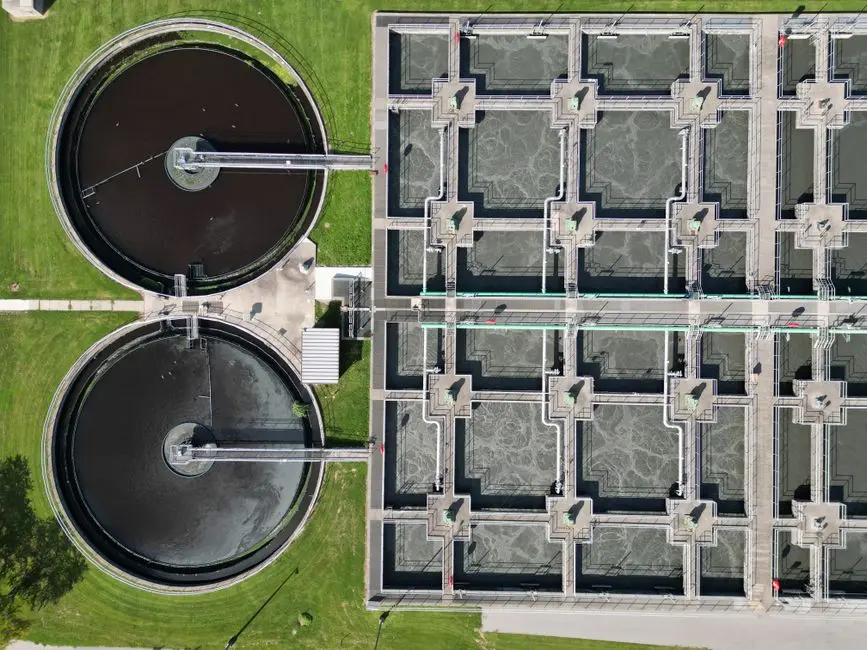
The main layout benefit of the WSZ is below-grade installation, allowing landscaping to continue above the unit beneath parking or open development areas. The final arrangement depends on the civil design, cover requirements, groundwater conditions, and access for maintenance and sludge removal.
Ancillary equipment must be included in the spatial and reliability assessment. A GX Series rotary mechanical bar screen provides continuous-duty fine screening where needed to protect downstream pumps, valves, and biological processes. A pipeline UV sterilizer provides a chemical-free disinfection option where required by the agreed discharge or reuse design. A plate-and-frame filter press can dewater waste activated sludge; the product catalogue covers filtration areas from 1 m² to 500 m² and manual, hydraulic, or fully automatic PLC-controlled operation (HydropureWater verified product data, 2026).
Require the supplier’s layout to show tanker or sludge-removal access, maintenance clearances, odour control, power, control cabling, drainage, future module replacement, and safe access to each process component. Do not infer cover depth, structural requirements, groundwater strategy, or civil quantities from catalogue data: these belong in the site-specific design coordinated with the civil engineer, architect, and relevant authorities.
Agree the approval and commissioning route
The discharge and planning decision should be settled before a package is ordered. Confirm with the relevant Birmingham local planning authority and water or sewer authority whether the development will connect to the public sewer or require a packaged treatment plant. The approval discussion must address the proposed flow, effluent quality, attenuation, off-site works, and any upgraded downstream capacity.
Planning, environmental, building-control, and drainage requirements are project-specific. Where reuse is proposed, establish the relevant water-abstraction or reuse approvals. The supplied research provides no Birmingham, United Kingdom statutory deadlines or numerical effluent limits, so these must be confirmed directly rather than imported from the Alabama source.
Define commissioning before contract award: pre-start inspection, hydraulic testing, process commissioning, disinfection verification, operator training, and performance sampling. Agree monitoring, recordkeeping, sludge handling, maintenance, spares, and responsible operators in writing.
The source provides a five-step procurement model: pre-design, classification, design, commissioning, and operation (HydropureWater verified product data, 2026). Apply this sequence to the relevant UK authorities rather than the Birmingham, Alabama references. The broader packaged sewage treatment plant comparison for housing can support the same logic, provided the discharge route is checked for the specific Birmingham site.
Prepare a supplier brief that prevents design gaps

Provide bidders with the calculated average and peak flow, development phasing, occupancy assumptions, wastewater sources, land constraints, discharge route, and required endpoint. If reuse is intended, define the intended use and proposed water-quality specification rather than requesting an unspecified “reuse plant”.
Request comparable technical proposals covering the guaranteed duty point, process description, hydraulic drawing, civil footprint, utilities demand, automation, maintenance schedule, and sludge-disposal method. Also request evidence of comparable UK housing installations, local commissioning support, warranty terms, spare-parts availability, and response times.
Require itemised pricing that separates the treatment package from inlet works, screening, pumping, disinfection, sludge handling, installation, commissioning, civil works, monitoring, and training. This allows for a comparison of system scope rather than headline prices.
Do not reuse the US installation and operating-cost benchmarks in the Alabama source, as the research provides no Birmingham, United Kingdom capital-cost or lead-time figures. Budgets require a compliant, site-specific quotation after the design duty, civil works, and approval route have been established. Make performance criteria, approval conditions, testing, remedies for non-performance, and approved-operator responsibilities contractual.
For wider regional context, Midlands housing wastewater capacity concerns reinforce the need to test the downstream network before committing to decentralised treatment.
Frequently Asked Questions
What is the best packaged sewage treatment plant for a Birmingham housing development?
A buried A/O package plant is typically the best fit for domestic-strength housing wastewater discharging to sewer at secondary-treatment quality, subject to confirmed flow and approval. Select an MBR when land is constrained or a defined near-reuse-quality endpoint requires membrane filtration. The published WSZ range is 1–80 m³/h; the integrated MBR range is 10–2,000 m³/day (HydropureWater verified product data, 2026).
How should the plant be sized for a housing estate?
Convert occupancy and fixture units into average flow, apply a project-specific peak factor, and test future phases, low occupancy, pump peaks, storm ingress, and commercial contributions. Include the resulting duty point, hydraulic profile, and turndown assumptions in the supplier’s proposal. A public-sewer connection remains a separate option that should be verified before sizing an onsite package plant.
How much does a packaged sewage treatment plant cost for a Birmingham development?
No reliable Birmingham, United Kingdom package-plant cost range is supplied in the research, so a site-specific