Start with the Phoenix design and approval basis
The best packaged sewage treatment plant for a Phoenix housing development is a buried, fully automated unit selected against the City’s 2026 design standards, verified peak wastewater flow, required effluent quality, available footprint, and discharge or sewer-connection route. A buried A/O package such as HydropureWater’s WSZ series integrated sewage treatment plant integrates biological contact oxidation, sedimentation, and disinfection and covers 1–80 m³/h. An MBR package may suit sites needing compact equipment or stringent solids separation, but the evidence supports project-specific verification rather than a universal model choice.
The City of Phoenix’s Design Standards Manual for Water and Wastewater Systems is the governing local reference. The Water Services Department completed its revision in May 2026, and the official manual PDF was published on May 14, 2026 (City of Phoenix, 2026). The project engineer should use that manual to determine which requirements apply to collection, treatment, pumping, disinfection, controls, and the selected discharge or reuse route.
A package plant is one component of the development’s water and wastewater design, not an approval in itself. Catalog capacity does not establish Phoenix acceptance. The manufacturer should provide process information, drawings, controls information, and proposed performance information so the engineer of record can complete the applicable review. Request project-specific confirmation through that engineer rather than treating a generic supplier declaration as a local permit.
Place the City’s Water Services Department contacts in the procurement file: 602-495-5601 by phone and 602-495-5461 by fax. The City’s implementation guidance also lists [email protected] for public-counter inquiries. The related packaged sewage treatment comparison for housing developments is useful for organizing the comparison, but Phoenix requirements must remain controlling for this project.
Collect the inputs that determine plant fit
Equipment selection begins with verified wastewater flow rather than a supplier’s largest catalog capacity. Establish the number and type of housing units, average and peak contributions, and anticipated future expansion. The equipment range is a selection boundary; it is not the development’s design-flow value.
Document characteristics that may affect biological treatment, solids separation, disinfection, or pretreatment. These include wastewater strength and contaminants relevant to the selected process. Obtain the required effluent criteria and discharge route from the approving authority or receiving utility. The supplied research does not establish a universal Phoenix effluent limit, so the project must use its applicable permit or City requirements.
Survey the site for available footprint, excavation access, groundwater and soil conditions, burial depth, setbacks, utility routes, vehicle access, and whether landscaping may cover the installation. Confirm the intended operating model. The WSZ Series is described as fully automated and requiring no operator, but long-term performance still depends on appropriate commissioning, maintenance, and monitoring.
Require bidders to state their design basis, pretreatment assumptions, duty configuration, controls scope, utility requirements, commissioning tasks, and O&M responsibilities. A domestic sewage treatment buyer guide can support this data request, but the development-specific design inputs must control the comparison.
| Selection input | Evidence required from the project or bidder |
|---|---|
| Wastewater flow | Verified average and peak flows based on the development, plus stated future-expansion assumptions |
| Wastewater characteristics | Strength, relevant contaminants, and pretreatment assumptions |
| Effluent and destination | Applicable City or receiving-utility criteria and the discharge, reuse, or sewer-connection route |
| Site and installation | Footprint, access, excavation, groundwater, soil, burial, setbacks, utilities, and landscaping constraints |
| Operations | Automation, controls, monitoring, commissioning, maintenance, training, and monitoring responsibilities |
Compare buried A/O and MBR treatment packages
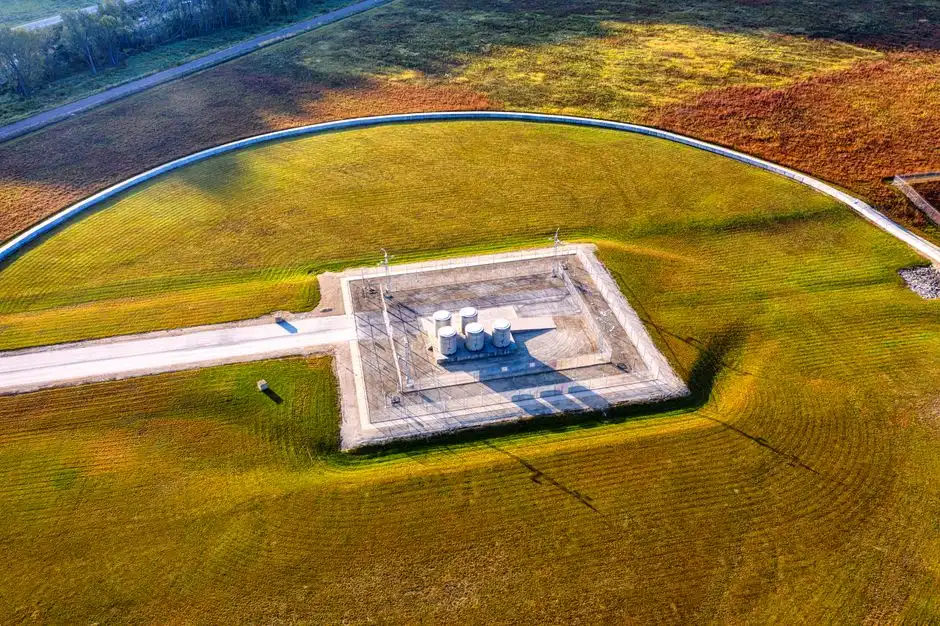
The WSZ treatment train combines anoxic/aerobic biological contact oxidation, sedimentation, and disinfection in one buried package marketed for residential communities. Its stated capacity is 1–80 m³/h. The selected model must map the development’s verified design flow to the supplier’s rated hydraulic and process basis; the range alone does not select a unit.
The integrated MBR membrane bioreactor uses activated-sludge treatment with submerged PVDF membrane filtration. The manufacturer rates it at 10–2,000 m³/day and states that filtration occurs below 1 μm. It also claims a 60% smaller footprint than conventional systems. Treat that percentage as a screening claim rather than a site-specific guarantee; final dimensions must come from the selected configuration.
| Decision parameter | Buried WSZ A/O package | Integrated MBR |
|---|---|---|
| Process train | Anoxic/aerobic biological contact oxidation, sedimentation, and disinfection | Activated sludge followed by submerged PVDF membrane filtration |
| Stated capacity | 1–80 m³/h | 10–2,000 m³/day |
| Configuration emphasis | Integrated buried package for residential applications | Compact equipment with membrane-based solids separation |
| Screening consideration | Burial and landscaping can preserve surface area | Manufacturer claims a 60% smaller footprint than conventional systems; confirm actual dimensions |
| Must be checked | Verified flow, process loading, maintenance access, controls, and discharge route | Verified flow, membrane arrangement, maintenance requirements, utilities, controls, and discharge route |
Engineers should compare biological treatment, solids separation, disinfection, footprint, maintainability, and project constraints against the verified application requirements. Do not infer comparative effluent limits, life-cycle costs, sludge outputs, noise levels, or Phoenix approvals from the available evidence, as those matters require project-specific design information and review.
Map the treatment process from influent to final disposal
A packaged system must integrate into a complete hydraulic and regulatory route. The sequence begins with incoming domestic sewage, followed by applicable pretreatment or screening where required, biological treatment, solids separation, disinfection, monitoring and controls, and finally the verified discharge, reuse, or sewer-connection route.
A buried package can preserve the site’s surface area because the manufacturer states that the WSZ can be installed below grade with landscaping above. The MBR alternative begins with activated-sludge treatment and submerged PVDF membrane filtration; project-specific disinfection and effluent-management steps must then be defined in the approved process design.
- Establish the incoming domestic sewage flow and characteristics.
- Define required screening or other pretreatment.
- Apply the selected biological and solids-separation process.
- Provide the required disinfection and monitoring functions.
- Route the final effluent through the verified discharge, reuse, or sewer-connection path.
The drawings must define inlet piping and access, process controls, effluent piping, bypass provisions where applicable, electrical supply, remote monitoring, maintenance access, and the residual or sludge-handling route. These interfaces often determine whether an otherwise suitable package can be installed and operated at the site.
Academic biological-treatment research provides context for treatment methods. IntechOpen’s review of microalgae-based sewage treatment reports that the process can reduce BOD, inhibit coliforms, and remove nutrients (IntechOpen). No microalgae unit is proposed here, and those qualitative claims should not be transferred to either packaged technology without project evidence.
Match site conditions and future growth to the selected package
Engineers should use a conditional go/no-go test rather than choosing by technology label. Select a buried A/O package when the verified design flow falls within the WSZ 1–80 m³/h envelope and the priority is an integrated buried residential configuration. Assess an MBR when its process arrangement or compact footprint better addresses the site, subject to the stated 10–2,000 m³/day capacity range and the selected project design basis.
Check that the selected modules can be delivered and installed within the site’s logistics constraints. The supplied research provides no universal delivery or lead time, so require a written project schedule from each supplier. The schedule should cover drawing production, submittal, City coordination, manufacturing, delivery, installation, commissioning, and training.
| Project condition | Decision implication |
|---|---|
| Verified flow is within 1–80 m³/h | Screen the buried WSZ A/O package against process loading, discharge criteria, and site constraints |
| Site priority is compact equipment or membrane-based solids separation | Screen the integrated MBR against its 10–2,000 m³/day range and actual configuration dimensions |
| Delivery route, excavation access, or burial conditions are constrained | Require supplier confirmation and a project-specific installation plan before selection |
| Future expansion is possible | Confirm expansion provisions, interfaces, and cost implications before ordering |
| Flow capacity appears suitable | Do not treat capacity as proof of Phoenix compliance or City acceptance |
Confirm future expansion before ordering because a packaged plant is engineered around a selected capacity and configuration. For Phoenix, soil, groundwater, burial, access, and landscaping information belongs in early engineering, not in post-order assumptions. The warranty and performance guarantee checklist helps define what contractual commitments to request once the preferred configuration is known.
Issue a procurement package that exposes hidden assumptions
Comparable bids must state the same engineering basis. Require each bidder to identify its design flow, process flow diagram, treatment train, duty arrangement, effluent basis, utility consumption, controls scope, installation drawings, and exclusions. Also require documented assumptions for pretreatment, operation, maintenance, residual handling, and the final effluent route.
Require documentation of the proposed treatment process and performance basis rather than accepting headline capacity. A 2024 University of Eastern Finland dissertation examining wastewater treatment plants as potential antimicrobial-resistance hotspots reinforces the need for a defined treatment and monitoring strategy (UEF eRepo, 2024). This is a design-documentation requirement, not evidence of a site-specific failure or a Phoenix effluent requirement.
Request written terms for commissioning, training, maintenance, spare parts, remote support, warranty, and performance guarantees. The supplied research does not support a universal price, delivery period, installation duration, guarantee period, or permit-processing time. Require each bidder to price and schedule the defined scope, then identify exclusions and assumptions.
Evaluate sludge or residual management as part of the whole system even when the technical comparison centers on packaged treatment capacity. The engineer of record should reconcile all bidder documents against the City’s current 2026 Design Standards Manual for Water and Wastewater Systems before equipment selection. Any filter-press or dewatering equipment proposed for residuals should be assessed separately.
Frequently Asked Questions
What capacity should I select for a Phoenix housing development?
Size from verified development flow, not catalog capacity. Document unit counts, wastewater contributions, peak conditions, and future expansion, then map that basis to the selected package. The WSZ is rated at 1–80 m³/h and the MBR at 10–2,000 m³/day, but neither range establishes the correct size by itself.
Should the development use a buried A/O package or an MBR?
Select buried A/O when the verified flow fits the WSZ 1–80 m³/h envelope and an integrated below-grade residential package meets the site and operating requirements. Consider an MBR when its membrane separation or compact configuration better fits the constraints, subject to the 10–2,000 m³/day range. Confirm final dimensions, utilities, and maintainability.
What evidence should I request before selecting a supplier?
Request the design-flow basis, process drawings, performance basis, duty configuration, controls scope, utility demands, installation drawings, commissioning scope, O&M responsibilities, warranty terms, and exclusions from every bidder. The 2024 UEF eRepo dissertation supports documenting treatment and monitoring strategies; it does not replace project performance data or acceptance testing.
Does compliance with the Phoenix design manual guarantee approval?
No. The City of Phoenix completed its Design Standards Manual revision in May 2026, and the manual PDF was published on May 14, 202