An Ultrafiltration System for Fruit Juice Wastewater: 2026 Reference for Process Engineers
An ultrafiltration system for fruit juice wastewater typically uses 10–100 kDa MWCO membranes operating at 0.1–0.5 MPa transmembrane pressure (TMP), achieving 85–99% turbidity, TSS, and macromolecular sugar removal while letting water and monovalent ions pass. In 2026, the standard process train pairs UF with a dissolved air flotation (DAF) system for fruit wastewater pretreatment upstream and an industrial RO system for downstream water reuse downstream, delivering >90% water recovery. UF-stage OPEX in this configuration runs $0.04–$0.18 per cubic meter treated, dominated by energy and CIP chemicals. This guide reframes UF as a dedicated wastewater-treatment stage — not a juice-clarification accessory — and gives a process engineer the parameter table, material decision matrix, and 2026 cost band needed to specify it.
Why Fruit Juice Wastewater Is Hard to Treat
Fruit juice effluent is one of the most variable food-industry wastewaters because its composition tracks the production calendar rather than a steady-state recipe. Typical raw effluent runs COD 3,000–15,000 mg/L, BOD 1,500–8,000 mg/L, TSS 500–4,000 mg/L, and pH 3.5–6.5; concentrate plants swing further, with citrus campaign peaks pushing BOD past 8,000 mg/L while clean-in-place (CIP) weeks drop the load by 80% (HydropureWater field data, 2026). Three fractions defeat conventional biological treatment alone: pectin and hemicellulose (MW 50–500 kDa, slow to biodegrade, gel-forming on membranes), residual sugars (mono- and disaccharides that drive rapid biofouling and oxygen demand), and color/phenolic compounds that pass through activated sludge largely intact. The 6–9 month production window concentrates load on the WWTP — a 5× flow swing is normal between citrus campaign and clean-in-place months — so equalization alone cannot rescue biological kinetics. Temperature and viscosity directly modulate UF flux (Springer, 2020), which is why the process train has to handle both viscous 35°C concentrate waste and cold 15°C dilute rinse streams through the same membrane. A dissolved air flotation (DAF) system for fruit wastewater pretreatment addresses the FOG and floe fraction upstream, but the macromolecular and colloidal load that follows is exactly what UF is sized to remove.
How Ultrafiltration Works in a Juice Wastewater Train
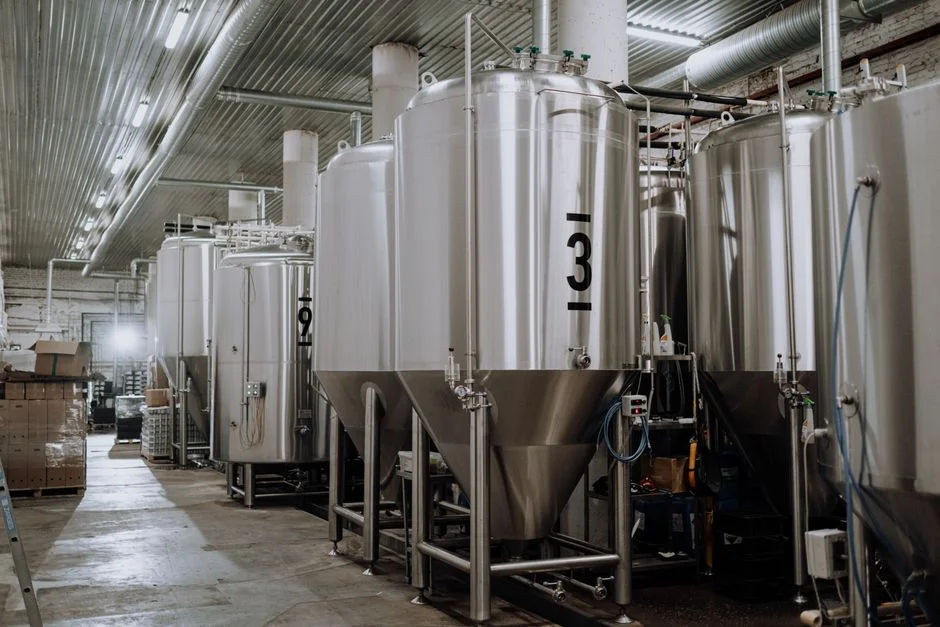
UF is defined by pore size (0.01–0.1 μm) and molecular weight cut-off, where MWCO is the 90% rejection threshold — a 10 kDa membrane holds back 90% of dissolved molecules above 10,000 Daltons (Springer, 2020). Placed on the membrane spectrum, UF sits between microfiltration (MF, 0.1–10 μm, no pressure resistance) and nanofiltration (NF, 200–1,000 Da, removes divalent ions and partial salts); reverse osmosis (RO) sits below 200 Da and removes monovalent salts, which is why RO requires 1.0–3.0 MPa while UF runs at 0.1–0.5 MPa. That pressure delta is the single largest contributor to the OPEX gap between a UF stage and an RO stage. Cross-flow operation is mandatory above roughly 3% TSS because dead-end mode accumulates a cake layer within minutes; cross-flow keeps the boundary layer swept and stable flux in the 50–200 LMH range. Typical juice-wastewater UF removals are TSS 92–99%, turbidity to <1 NTU, and macromolecular COD 60–85% (juice-clarification literature, baseline). What UF will not do: remove dissolved sugars below its MWCO cutoff, remove monovalent salts, or break down phenolics — those loadings pass to downstream biology or RO.
Key UF Design Parameters for Fruit Juice Effluent
The working design window for juice wastewater UF is narrow enough to be specified as a single table. Below 10 kDa MWCO the flux penalty becomes NF-class on pectin streams; above 100 kDa color bodies and high-MW phenolics pass into the permeate and defeat downstream RO. Cross-flow velocity is split by geometry: tubular and ceramic modules tolerate 1–3 m/s, while hollow fiber must stay in the 0.1–0.5 m/s band because fiber breakage at higher shear collapses the pathogen LRV (Springer, Food and Environmental Virology). Temperature ceiling separates the material classes cleanly — 45°C for polymeric PES/PVDF, 95°C for ceramic — and pH tolerance drives the CIP chemical choice. Here is the parameter set an engineer can hand to a vendor as a spec sheet:
| Parameter | Working range (juice wastewater UF) | Engineering rationale |
|---|---|---|
| MWCO | 10–100 kDa | Below 10 kDa = NF-class flux decline on pectin; above 100 kDa = color body breakthrough |
| Pore size | 0.01–0.1 μm | Standard UF band; bridges MF colloids and NF true solutions |
| Flux (clean, 25–35°C) | 50–200 LMH | Higher at low viscosity; drops 40–60% as fouling builds between CIP cycles |
| Flux (fouled, end-of-cycle) | 30–80 LMH | Triggers CIP when flux drops below threshold or TMP rises >10%/24 h |
| TMP | 0.1–0.5 MPa (polymeric); up to 0.8 MPa (ceramic) | Polymeric fibers deform irreversibly above 0.3 MPa differential |
| Cross-flow velocity | 1–3 m/s (tubular/ceramic); 0.1–0.5 m/s (hollow fiber) | Fiber breakage at high shear causes LRV collapse in pathogen removal (Springer, 2025) |
| Recovery per stage | 85–95% (spiral-wound); 90–97% (hollow fiber) | Hollow fiber handles higher solids; spiral-wound needs lower TSS feed |
| Temperature ceiling | 45°C (PES/PVDF); 95°C (ceramic) | Drives CIP temperature, hot-CIP feasibility, and material selection |
| pH tolerance | 2–11 (polymeric); 0–14 (ceramic) | Ceramic tolerates aggressive acid CIP; polymeric needs pH 2–11 envelope |
| Influent TSS limit | <100–200 mg/L (polymeric); 500–2,000 mg/L (ceramic) | Sets the DAF pretreatment burden and backwash frequency |
Polymeric vs Ceramic UF Membranes: Which Fits a Juice Plant?
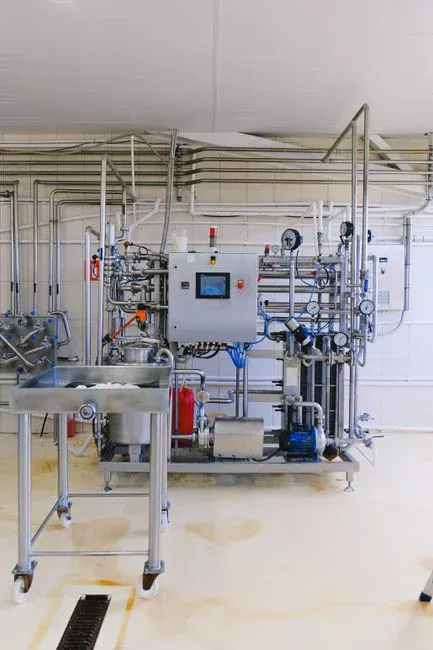
Material choice is the largest single decision after MWCO, and it is governed by TSS tolerance, CIP aggressiveness, and budget horizon. Polymeric membranes — PES, PVDF, and polysulfone in hollow-fiber or spiral-wound formats — cost $80–$220/m² and last 5–7 years, dominating 2026 food-plant retrofits where capital is constrained. Ceramic membranes — Al₂O₃, TiO₂, ZrO₂ in tubular monoliths — cost $400–$900/m² but last 10–15 years, run at up to 95°C, and tolerate pH 0–14, which suits juice concentrate plants that run hot caustic and hot acid CIP. Energy use scales with cross-flow demand: polymeric UF draws 0.3–0.8 kWh/m³, ceramic 0.8–2.0 kWh/m³. Suspended solids tolerance is the practical separator: ceramic handles 500–2,000 mg/L TSS influent directly, while polymeric needs DAF ahead to keep TSS under 100–200 mg/L. The decision logic: high TSS, hot CIP, long horizon, and concentrate-plant chemistry → ceramic; standard bottling line, tight budget, and modest CIP → polymeric hollow fiber. The head-to-head:
| Criterion | Polymeric (PES/PVDF/PS) | Ceramic (Al₂O₃/TiO₂/ZrO₂) |
|---|---|---|
| Membrane cost | $80–$220/m² | $400–$900/m² |
| Service life | 5–7 years | 10–15 years |
| Influent TSS tolerance | <100–200 mg/L (needs DAF ahead) | 500–2,000 mg/L |
| Temperature ceiling | 45°C | 95°C |
| pH tolerance | 2–11 | 0–14 |
| Energy use | 0.3–0.8 kWh/m³ | 0.8–2.0 kWh/m³ |
| Format | Hollow fiber, spiral-wound | Tubular monolith, multichannel |
| Best fit | Bottling line, tight CapEx, standard CIP | Concentrate plant, hot CIP, long horizon, high TSS |
2026 Process Flow: UF Inside a Fruit Juice Wastewater Treatment Train
UF is never a standalone box in a working juice plant; it sits between mechanical pretreatment and either an MBR for discharge or an RO train for reuse. The realistic 2026 train runs five stages. Stage 1 is a dissolved air flotation (DAF) system for fruit wastewater pretreatment, removing FOG, settleable solids, and floated pectin floe. Stage 2 is equalization with pH correction to 6.5–7.5 to protect the UF membrane and any downstream biology from pH excursions during CIP dumps. Stage 3 is UF as the macromolecular barrier — it strips residual TSS, colloids, color, and 60–85% of macromolecular COD, and delivers permeate at <1 NTU turbidity. Stage 4 is optional: an MBR system for residual organic polishing after UF handles the dissolved sugar and low-MW COD that UF passes, for sites with tight discharge limits. Stage 5 is an industrial RO system for downstream water reuse, polishing UF permeate to process-grade reuse at 90–95% overall recovery. The soy-protein UF pilot referenced in Northeast Agricultural University (cross-flow hollow-fiber polysulfone, viscous high-MW food wastewater) is the closest published precedent for the UF-stage sizing logic on a juice stream, and it confirms that cross-flow UF handles the 50–500 kDa fraction cleanly when DAF and equalization are sized correctly upstream.
Operating Cost and Membrane Life in 2026
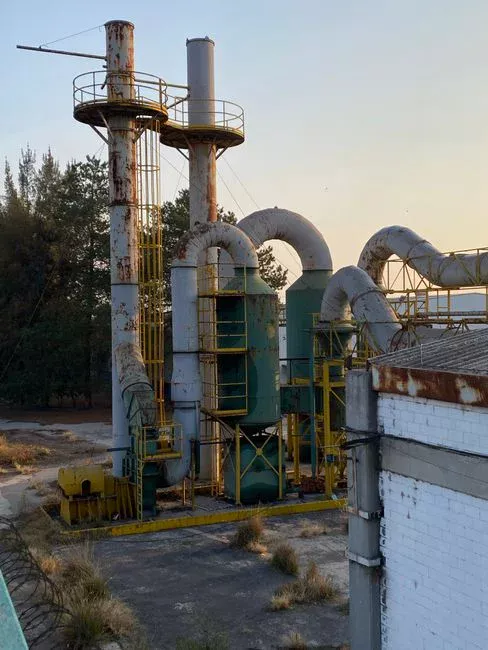
Converting the technical story into a defensible budget number is what gets a UF skid approved. For a 500 m³/day polymeric UF skid, skid-mounted with PLC, turnkey CAPEX in 2026 sits at $90,000–$220,000 (HydropureWater field data, 2026); ceramic equivalents run 2–3× higher because of the membrane cost. OPEX breaks down as energy $0.02–$0.06/m³, CIP chemicals $0.01–$0.05/m³, membrane replacement amortized $0.01–$0.07/m³, and labor effectively negligible at 500 m³/day. The total UF-stage OPEX band is therefore $0.04–$0.18/m³ treated — state it as a range, not a point estimate, because influent TSS and CIP frequency swing it by 3×. Membrane life is conditional on CIP discipline: 5–7 years for polymeric, 10–15 years for ceramic, but aged and fouled UF modules lose pathogen LRV and TSS rejection steadily, so the life number assumes weekly alkaline + acid CIP (Springer, Food and Environmental Virology, 2025). The reuse credit changes the math: at $1.50–$4.00/m³ avoided fresh-water cost typical in fruit processing, a 90% reuse UF + RO train at 1,000 m³/day pays back in 2–4 years. An automatic chemical dosing system for UF CIP and pH correction is the cheapest single reliability upgrade — it holds CIP concentration inside the 0.5–1.0% NaOH band and prevents the under-dosing that shortens membrane life. For broader context on OEM selection and consumables budgeting, the 2026 membrane technology OEM buyer's guide and the 2026 RO system spare parts and consumables cost breakdown extend the cost story across the full train, and the 2026 industrial water reuse trends and market outlook frames the regulatory and market drivers behind the reuse credit.
Fouling Control and CIP Best Practice
Fouling is the single most common real-world failure mode for juice-plant UF, and it is fully preventable with a documented rhythm. Daily: monitor TMP trend at constant flux — a >10% rise in 24 hours signals imminent CIP and should trigger it the same shift rather than at the next scheduled interval. Every 7–14 days: alkaline wash at pH 11–12 with 0.5–1.0% NaOH at 35–40°C, 60–90 minutes of recirculation, to hydrolyze the pectin and protein gel layer that builds on the membrane surface. Follow with an acid wash at pH 2 with citric or nitric acid to remove scale and any metal hydroxides the alkaline step left behind. Weekly sanitation: 200–500 ppm sodium hypochlorite soak for microbiological control — this step is non-optional because fiber integrity loss directly collapses the LRV against human enteric viruses, and the documented failure mode in aged modules is precisely the pathogen leakage that would otherwise rule out reuse (Springer, 2025). Never exceed the manufacturer TMP ceiling: polymeric PES/PVDF fibers deform irreversibly above 0.3 MPa differential, and the deformation is permanent even if the flux looks recovered after CIP.
Frequently Asked Questions
What MWCO should be used for fruit juice wastewater UF? The working band is 10–100 kDa. Below 10 kDa, flux decline becomes NF-class on pectin streams; above 100 kDa, color bodies and high-MW phenolics pass into the permeate and foul downstream RO. 20–50 kDa is the most common selection for juice concentrate and bottling wastewater.
Can ultrafiltration replace biological treatment for juice wastewater? No. UF removes macromolecular COD, TSS, colloids, and color, but it does not remove dissolved sugars or low-MW organics. UF dramatically reduces biological loading and enables water reuse, but a downstream biological step (MBR or conventional activated sludge) is still required unless the permeate goes directly to RO for closed-loop reuse.
How often should UF membranes be cleaned in a juice plant? Every 7–14 days under normal operation, with daily TMP monitoring. A >10% rise in TMP over 24 hours at constant flux is the trigger to clean immediately rather than wait for the next scheduled CIP.
Is ceramic UF worth the higher cost for fruit juice effluent? Ceramic costs 3–5× more per m² but lasts 2–3× longer, tolerates 500–2,000 mg/L TSS directly, and runs hot CIP at 95°C. It pays back in concentrate plants with hot caustic/acid CIP and high TSS; it does not pay back in standard bottling lines with modest chemistry and tight capital budgets.
What discharge or reuse standard does UF permeate typically meet? UF permeate from a juice plant typically meets <1 NTU turbidity and <5 mg/L TSS — suitable as RO feed for reuse under EU IPPC BREF food-and-drink effluent guidelines and EPA food-processing reuse frameworks. UF permeate alone is not discharge-ready for most jurisdictions; it still needs biological polishing or RO to meet BOD/COD limits.