Membrane Technology Market Key Players: 2026 Buyer Context
Membrane technology market key players in 2026 cover UF, NF, RO, and MF across water, industrial, and food applications per the Grand View Research 2026-2033 forecast. The supplier shortlist matters because membrane replacement locks a plant into a 5-10 year OPEX path. A wrong OEM choice creates liability that contract clauses rarely cover in full.
The membrane separation segment sits inside a much larger 2026 industrial wastewater treatment market projected at $390B with a 6.8% CAGR. Membrane separation remains the highest-growth sub-segment because discharge rules tighten faster than biological or chemical trains can be re-engineered. Membrane replacement costs rose 8-12% across 2024-2025 (HydropureWater field data, 2026). A single 50,000 m³/day MBR plant now carries $2-4M in 5-year membrane replacement exposure.
Specialty RO element lead times stretched to 16-24 weeks through 2024-2025. Several Tier 2 suppliers consolidated or exited regional markets in the same window. Paid Grand View and Mordor reports run $4,011-$9,600 per license and still omit a usable procurement workflow. This article therefore ranks suppliers by industrial installed base and pairs the list with a five-step shortlist method.
The Top 10 Membrane Technology Companies in 2026: Ranked by Industrial Installed Base
The Top 10 membrane technology companies in 2026 group into three tiers by water-treatment revenue, installed-base footprint, and geographic coverage. Figures are 2026 estimates drawn from public filings, EPC project disclosures, and HydropureWater field data cross-checks. Most plants we size for industrial duty run toward the lower end of each OEM's published flux band once fouling and temperature are real.
Tier 1 — Global Incumbents (>$1B 2026 water-treatment membrane revenue band)
- Veolia (France) — ZeeWeed 700S submerged PVDF hollow-fiber MBR refreshed in 2025; ~$2.1B water-membrane segment; dominant in EU IED-compliant industrial and municipal projects.
- SUEZ (now consolidated under Veolia, legacy SUEZ Water Technologies) — LEAPmbr and ZeeWeed legacy lines still specified independently through 2026 in Asia-Pacific contracts; strong in industrial process water and oil & gas.
- DuPont Water Solutions (USA) — FilmTec Li-PRO high-rejection RO launched 2024; 2026 estimated membrane revenue ~$1.6B; strong in desalination, pharmaceutical, and F&B.
- Toray Industries (Japan) — Torayfil UF capacity expansion in China completed Q4 2025; ROMEMBRA RO holds ~12% global RO market share; ~$1.3B 2026 membrane revenue.
- MANN+HUMMEL (Germany) — Acquired Microdyn-Nadir and TriSep; 2026 water-membrane revenue ~$900M-$1.1B; strong in EU industrial UF and MBR.
- Koch Separation Solutions (USA) — PURON MBR and Fluid Systems RO; ~$700M-$850M 2026 segment; strong in dairy, F&B, and oil & gas produced water.
Tier 2 — Industrial Specialists ($200M-$700M 2026 water-membrane revenue band)
- Pentair X-Flow (Netherlands/USA) — Xiga and Aquaflex UF/MF hollow fiber; strong in municipal drinking water and pre-RO; ~$450M 2026 segment.
- Pall Corporation (USA, Danaher) — Microza PVDF UF; strong in pharmaceutical and semiconductor ultra-pure water.
- GEA (Germany) — Membrane filtration skids for dairy and F&B; ~$280M 2026 membrane-related revenue.
Tier 3 — High-Growth Asian OEMs ($150M-$500M 2026 water-membrane revenue band)
- Beijing OriginWater (China) — Operates the 100,000 m³/day Sichuan MBR reference plant commissioned 2024; dominant in Chinese municipal MBR and now exporting to MENA.
- CITIC Envirotech (China, now CITIC Limited) — Strong in SE Asia industrial EPC + MBR packages; ~$400M 2026 water segment.
- Hyflux (Singapore) — Recovered from 2021 restructuring; 2026 focus on UF and membrane-based packaged plants for SE Asia and Africa.
- Toyobo (Japan) — Hollow-fiber UF for MBR and pre-treatment; long-life modules favored in Japanese-spec industrial plants.
Paid market reports do not deliver this shortlist in procurement-ready form. Use the list as the starting set, then cut by influent envelope and service footprint.
What Drives Membrane Technology Development in 2026?
Membrane technology development in 2026 is driven mainly by tighter discharge limits, higher reuse targets, and rising replacement OPEX rather than by novelty for its own sake. Plants chasing reuse grade effluent lean on tighter RO and UF trains, while MBR duty keeps rising where footprint is scarce. Buyers comparing membrane technology solutions should separate product-line refresh cycles from real installed-base depth.
Veolia refreshed ZeeWeed 700S in 2025 for submerged MBR duty. DuPont launched FilmTec Li-PRO high-rejection RO in 2024 for desalination and high-purity service. Toray completed a Torayfil UF capacity expansion in China in Q4 2025. Those moves matter more to a 2026 PO than generic trend slides, because they change lead time, spare parts, and warranty language on live bids.
Where the duty is reuse rather than simple discharge, specify water reuse membrane technology against the actual recovery and salinity targets, not against brand advertising. For municipal and industrial wastewater packages, an MBR Membrane Bioreactor Wastewater Treatment System remains the common footprint-efficient path when MLSS must stay high and land is limited.
Membrane Type vs Supplier Match: RO, UF, NF, MBR, Ceramic
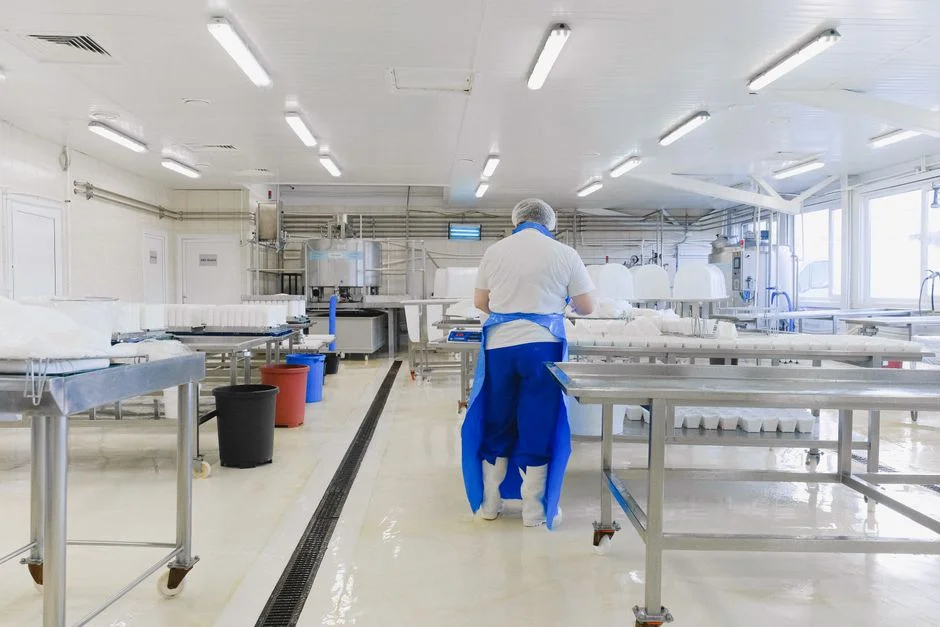
Shortlisting by brand alone is the most common buyer error in membrane procurement. The first question is which pore size and operating envelope the influent actually requires.
| Membrane Type | Pore Size / Rejection | Typical Industrial Use | 2026 Lead Suppliers | HydropureWater Equivalent |
|---|---|---|---|---|
| RO / dense NF | 0.0001-0.001 μm; salt rejection 99.0-99.8% | Desalination, boiler feed, pharma, semiconductor | DuPont, Toray, LG Chem, Veolia/SUEZ, Koch | Industrial reverse osmosis system |
| UF / MF | 0.01-0.1 μm; TSS to <1 mg/L | Pre-RO, drinking water, F&B clarification, oil & gas produced water | Pentair X-Flow, MANN+HUMMEL, Veolia, Hyflux, Toyobo | Integrated with MBR/RO skids |
| MBR (submerged) | 0.01-0.4 μm PVDF hollow fiber or flat sheet; MLSS 8,000-12,000 mg/L | Municipal + industrial wastewater, landfill leachate, textile | Veolia, OriginWater, Kubota, Toray, Koch | Integrated MBR membrane bioreactor system; DF series PVDF flat sheet MBR module |
| Ceramic / specialty | 0.01-1 μm; tolerates pH 0-14, temp >90°C, oils/solvents | Oily wastewater, chemical, high-T process streams | Metawater, Cerafil, LiqTech | Not supplied — engineered case-by-case |
Ceramic carries 3-5x the CAPEX of polymeric membrane but delivers 10-15 year membrane life, which flips lifecycle economics on harsh streams. Most polymeric MBRs hit replacement at 7-10 years under typical industrial duty.
Who Are the Key Desalination Membrane Players?
Key desalination membrane players in 2026 remain DuPont, Toray, LG Chem, Veolia/SUEZ legacy lines, and Koch for RO elements and high-rejection NF. DuPont FilmTec Li-PRO (launched 2024) targets high-rejection RO service. Toray ROMEMBRA holds about 12% global RO market share on 2026 estimates. EPC-led Middle East and Africa projects often import those elements into locally built skids rather than buying a full OEM plant package.
Global desalination capacity and unit-cost trends that set RO element demand are mapped in the 2026 desalination market capacity and cost outlook. Specialty RO lead times of 16-24 weeks through 2024-2025 still shape 2026 PO timing. Lock membrane allocation at contract signing if the train is desalination or high-salinity reuse.
What Membrane Technology News Matters for 2026 Buyers?
Water treatment membrane technology news that changes 2026 buying decisions clusters around consolidation, capacity, and lead time—not press-release volume. Veolia's post-SUEZ consolidation kept LEAPmbr and ZeeWeed lines specified independently in Asia-Pacific contracts through 2026. Toray's Q4 2025 Torayfil UF expansion in China altered regional UF availability. Membrane replacement prices rose 8-12% across 2024-2025 (HydropureWater field data, 2026).
Buyers who tracked only mid-year headlines still missed the service risk: verbal lead-time commitments slipped by 4-6 months in our 2025 project portfolio (HydropureWater field data, 2026). Treat OEM product refreshes as warranty and spare-parts events. Ask which SKU ships in your region within 12 months, and which legacy line stays supported for five years.
Market Share and Regional Concentration: Where the 2026 Capacity Actually Sits
Global Top 10 rankings hide large regional differences in membrane supply. A Chinese steel mill and a German chemical plant will see different shortlists even inside the same industrial wastewater segment.
China holds an estimated 35-40% of 2026 MBR installed capacity, dominated by Beijing OriginWater and CITIC Envirotech, with Toray and Veolia serving premium industrial niches. Europe remains the stronghold of Veolia, SUEZ legacy contracts, and MANN+HUMMEL—especially for IED 2010/75-compliant industrial discharge. North America tilts toward DuPont, Pentair, and Koch, with the strongest RO presence in oil & gas, F&B, and pharmaceutical.
The Middle East and Africa market is EPC-led—typically Veolia or Toray membrane elements imported into locally built skids—and it is where regional MBR supplier shortlists matter most for sub-$5M projects. India and Southeast Asia are the fastest-growing regions at 9-11% CAGR (HydropureWater field data, 2026). Locally assembled systems dominate the sub-$1M tier there, and membrane quality varies widely across fabricators.
How Industrial Buyers Should Shortlist Membrane Suppliers in 2026
Paid market reports omit the procurement workflow. Use the five steps below to cut the ranked list to a 3-5 vendor shortlist within two weeks.
| Step | Action | What It Eliminates |
|---|---|---|
| 1. Define influent envelope | Lock COD, TSS, oil & grease, salinity, temperature, pH swings | ~60% of suppliers instantly — they cannot handle the envelope |
| 2. Request reference plants | Demand 2024-2026 references within ±20% of your capacity; contact the operator directly | Vendors without comparable operating data |
| 3. Compare $/m² replacement cost | PVDF $40-$90/m²; ceramic $250-$400/m² (HydropureWater field data, 2026); model 5-year lifecycle, not CAPEX | Low-bid vendors with inflated 5-year OPEX |
| 4. Verify lead time and service | Confirm 12-month membrane allocation in writing; check local service engineers | Vendors with 16-24 week delivery and no in-region support |
| 5. Pilot before signing >$2M | Run 90-day pilot measuring flux, TMP, cleanability, recovery | Risk of scale-up failure post-signing |
Steps 1 and 3 are where most projects fail. Buyers fixate on CAPEX per m³/day and overlook that a $20/m² saving on membrane element price compounds into $400K-$800K over a 5-year cycle on a 50,000 m³/day plant. Dosing chemistry and pre-treatment also belong in the shortlist conversation. An automatic chemical dosing system and a high-efficiency sedimentation tank can extend membrane life by 20-40% when sized against the real fouling load.
2026 Buyer Risk Checklist: Lead Times, IP, Membrane Replacement, Compliance
Four contract items need written lock-in before the PO on any membrane train above pilot scale.
- Lead time risk: 2024-2025 saw 16-24 week delays for specialty RO elements. Lock membrane allocation at contract signing, not at commissioning. Verbal commitments in 2025 slipped by 4-6 months in our project portfolio (HydropureWater field data, 2026).
- IP and warranty: Demand a 5-year prorated membrane warranty and 2-year system warranty in writing. Some Asian OEM contracts cap membrane warranty at 12 months—that is a red flag for a 10-year asset.
- Replacement cost indexation: Index membrane replacement pricing to PPI (Producer Price Index), not a fixed number. The 8-12% price rise in 2024-2025 would have wiped out fixed-price protection.
- Compliance documentation: EU IED 2010/75, US EPA NSPS for industrial wastewater, and China GB 18918-2002 are the three standards your supplier must demonstrate—not just claim. 2026 self-monitoring and reporting requirements now require digital effluent logs, which most 2018-vintage plants cannot generate.
Selection checklist before RFP release: lock the influent envelope and membrane type. Require 2024-2026 references within ±20% capacity. Confirm written 12-month allocation, 5-year $/m² replacement modeling, named local service, and a pilot plan for awards above $2M.
Who This Is For / Next Step
Plant engineers, EPC contractors, and procurement managers shortlisting membrane OEMs for industrial or municipal duty in 2026 are the primary audience for this guide. Look elsewhere if you need a ceramic-only high-temperature solvent train or a laboratory-scale research membrane. When the envelope, capacity, and region are known, request a membrane system quote with COD, TSS, salinity, temperature, and target reuse or discharge limits so the shortlist can be cut to three vendors.
Frequently Asked Questions
Who is the largest membrane manufacturer in 2026?
Veolia holds the largest 2026 water-membrane installed base after the SUEZ consolidation, at roughly $2.1B in segment revenue (HydropureWater field data, 2026). DuPont leads in RO elements specifically. Toray leads in Asian UF capacity. Beijing OriginWater leads Chinese municipal MBR. Match the leader to your membrane type and region before treating global revenue as the selection rule.
How fast is the MBR market growing in 2026?
The MBR sub-segment is growing at 9.5-11% CAGR globally, faster than the overall membrane market at 7-8%, driven by stricter discharge standards in China, the EU, and the Gulf (Grand View Research 2026-2033 forecast). India and Southeast Asia also show 9-11% regional growth on HydropureWater field data for 2026. Growth rate alone does not fix OEM choice; reference plants within ±20% of your capacity still matter more.
What is the average membrane replacement cost in 2026?
PVDF hollow fiber runs $40-$90/m²; ceramic membranes run $250-$400/m²; specialty RO elements run $25-$60/m² depending on rejection grade (HydropureWater field data, 2026). For a 50,000 m³/day MBR, 5-year replacement exposure is $2-4M. Model replacement with PPI indexation rather than a fixed unit price locked at award.
Which membrane suppliers serve oil and gas produced water?
Veolia (SUEZ legacy), Koch Separation Solutions, and Toray are the dominant 2026 suppliers for upstream and downstream oil and gas membrane duty. Pentair X-Flow serves produced-water UF pre-treatment in North America. Confirm oil and grease tolerance and cleaning chemistry on a 90-day pilot before awards above $2M.
Are Chinese membrane manufacturers reliable in 2026?
Tier 1 Chinese OEMs such as Beijing OriginWater and CITIC Envirotech operate reference plants at or above EU and North American OEM performance on municipal and light-industrial streams. For high-temperature, high-pH, or strictly regulated pharmaceutical service, European and Japanese OEMs remain the safer 2026 shortlist. Always verify 2024-2026 references within ±20% of your design capacity.