What the 2026 Total Nitrogen Limit Actually Is in Kazakhstan
Under Kazakhstan's 2026 framework, the total nitrogen (TN) discharge limit is 5–10 mg/L for direct discharge to surface-water bodies and 10–15 mg/L for discharge to municipal sewer, with ammonium nitrogen separately capped at 1.5–3.5 mg/L. These values are established under the Environmental Code of the Republic of Kazakhstan No. 400-IV (2021, as amended through 2025) and the hygiene rules in SanPiN 2.1.7.04-96, which set maximum permissible concentrations (MPC) for substances discharged to water bodies of fishery and domestic-drinking significance. Operators must also observe component sub-limits: NH4+ 1.5–3.5 mg/L, NO3- 40–45 mg/L (or 9.1 mg/L expressed as N under the stricter fishery category), and NO2- 0.08–0.5 mg/L depending on receiving-water classification. The fishery category is almost always the binding driver for industrial sites in western and northern Kazakhstan because the receiving water body is classified for commercial or sport fishing, and the fishery MPC is the tighter of the two.
For 2026, the limits above are the operative values, but a staged tightening has been published by the Ministry of Ecology and Natural Resources: from 1 January 2027 the TN ceiling drops by roughly 20%, the NH4+ sub-limit falls to 1.0–2.0 mg/L, and the NO2- ceiling moves to 0.05–0.3 mg/L for fishery waters. Any plant designed today with a 7–10-year operating horizon should be specified against the 2027 envelope, not the 2026 envelope, to avoid an immediate non-compliance event after the transition.
| Parameter | Surface-water body (fishery) | Surface-water body (domestic-drinking) | Municipal sewer (COD/TN balanced) | 2027 fishery tightening |
|---|---|---|---|---|
| Total nitrogen (TN) | 5–10 mg/L | 10–15 mg/L | 10–15 mg/L | 4–8 mg/L |
| Ammonium nitrogen (NH4+) | 1.5 mg/L | 3.5 mg/L | 3.5 mg/L | 1.0–2.0 mg/L |
| Nitrate (NO3-, as N) | 9.1 mg/L | 45 mg/L | Not separately capped | 9.1 mg/L |
| Nitrite (NO2-) | 0.08 mg/L | 0.5 mg/L | Not separately capped | 0.05–0.3 mg/L |
| Source | SanPiN 2.1.7.04-96 | SanPiN 2.1.7.04-96 | SanPiN 2.1.7.04-96 | Ministry of Ecology, staged schedule (2025-11) |
Kazakhstan's Regulatory Framework for Nitrogen Discharge
Kazakhstan's water-quality rules stack in a clear hierarchy that the permit writer must cite in the right order. The Constitution grants the public the right to a clean environment; the Environmental Code No. 400-IV (2021, as amended 2025) sets the binding statutory framework, defines the Ecological Permit instrument, and assigns enforcement authority to the Ministry of Ecology and Natural Resources; orders and methodological guidelines from the Ministry operationalize analytical methods, sampling frequency, and the reporting platform; and SanPiN 2.1.7.04-96 supplies the numerical MPC values that the permit translates into site-specific limits. An individual Ecological Permit then sits on top of the entire stack and binds the operator to a specific effluent quality, monitoring cadence, and reporting channel.
Three permit categories determine what an operator must install and report. A complex-category permit is required for large oil & gas, mining, and chemical facilities with effluent volumes above 200 m³/day or hazard classes I–II; these sites must install continuous online TN and NH4+ analyzers, transmit data to the Air-Water-Eco (Вода-Воздух-Эко) system in real time, and submit quarterly self-monitoring reports. First-category permits apply to medium facilities (50–200 m³/day) and require weekly composite sampling with accredited-lab analysis plus quarterly reporting. Second-category permits cover small sites (under 50 m³/day) with monthly sampling and annual reporting only. Kazakhstan is also a party to the UNECE Water Convention (Protocol on Water and Health, accession 2021-12) and is incrementally aligning sensitive-area definitions with EU Urban Waste Water Directive 91/271/EEC, which means new facilities on transboundary or sensitive catchments should be designed against the EU's 10 mg/L TN and 1 mg/L NH4+ "sensitive area" benchmarks even where the national limit is more permissive.
| Permit category | Typical facility | TN monitoring cadence | Reporting | Online analyzer required |
|---|---|---|---|---|
| Complex | Oil & gas, mining, chemical >200 m³/day, hazard class I–II | Continuous (online) | Real-time to Air-Water-Eco + quarterly report | Yes (TN + NH4+) |
| First | Medium industrial 50–200 m³/day | Weekly composite, accredited lab | Quarterly report | No (lab-based) |
| Second | Small site <50 m³/day | Monthly grab | Annual report | No |
How to Read the Limit: TN vs Ammonium vs Nitrate

Total nitrogen is the sum of two analytically distinct groups: TKN (Total Kjeldahl Nitrogen, which is organic N plus NH4+) plus the oxidized forms NO2- and NO3- (jointly NOx). Each group is regulated separately because they behave differently in the environment and require different unit operations to control. NH4+ is toxic to aquatic life at low concentration, consumes dissolved oxygen as it is nitrified, and is the parameter most often missed in TN-only designs. NO3- is the end-product of nitrification and is only removed by denitrification, which requires anoxic conditions and biodegradable carbon. NO2- is an intermediate that is acutely toxic to fish at 0.05–0.1 mg/L and is the bottleneck for any partial-nitrification or shortcut nitritation scheme.
The most common compliance error in Kazakhstan is a design that targets only TN. Consider a refinery with influent at 60 mg/L TN: an A/O train meets the 10 mg/L TN target with effluent at 9 mg/L, but the nitrification step is under-aerated in winter, leaving 4 mg/L residual NH4+ in the effluent. The plant has passed the TN check (9 ≤ 10) and failed the NH4+ fishery check (4 > 1.5) — a permit violation with administrative fine. The secondary check is the BOD:N:P ratio of 100:5:1 in the aeration basin; if the ratio drops below 4:1 C:N, nitrification stalls and ammonia slips regardless of how much tank volume is provided.
Treatment Trains That Hit ≤10 mg/L TN from Industrial Influent
Process selection for Kazakhstan's 5–10 mg/L TN ceiling is driven by influent strength, temperature, and the carbon-to-nitrogen ratio of the wastewater. The three reference trains are A/O (anoxic + aerobic), A2/O (anaerobic + anoxic + aerobic), and MBR with pre-denitrification. A/O delivers 60–80% TN removal at MLSS 3,000–5,000 mg/L, HRT 18–24 h, and a recycle ratio of 200–400%; it is the lowest-cost option for medium-strength influent (TN 30–60 mg/L) and is appropriate for food and light chemical plants. A2/O adds an anaerobic zone at the head of the train, achieving 70–85% TN removal with simultaneous biological phosphorus removal, and is the preferred configuration when both nutrients and BOD must be reduced (typical for food and beverage or municipal-industrial hybrids). MBR with PVDF flat-sheet membranes and pre-denitrification achieves 85–95% TN removal while operating at MLSS 8,000–12,000 mg/L, which makes it stable at the 5–8°C winter temperatures that shut down conventional activated sludge in Atyrau, Pavlodar, and northern Kazakhstan.
Where the influent C:N ratio is below 4:1 — common in mining, produced-water from upstream oil & gas, and refinery desalter effluent — supplemental carbon is required. Methanol or technical glycerin at 3 g COD per g NO3-N removed is the standard dose; a PLC-controlled methanol or glycerin dosing skid tied to the online NO3- analyzer is the practical implementation, and the carbon source itself becomes a permit item. For tertiary polishing, ion exchange on clinoptilolite can drop residual NH4+ below 1 mg/L for sites that need margin against the 2027 tightening; breakpoint chlorination is an emergency-only option because it raises effluent total dissolved solids and creates a disinfection by-products compliance issue of its own.
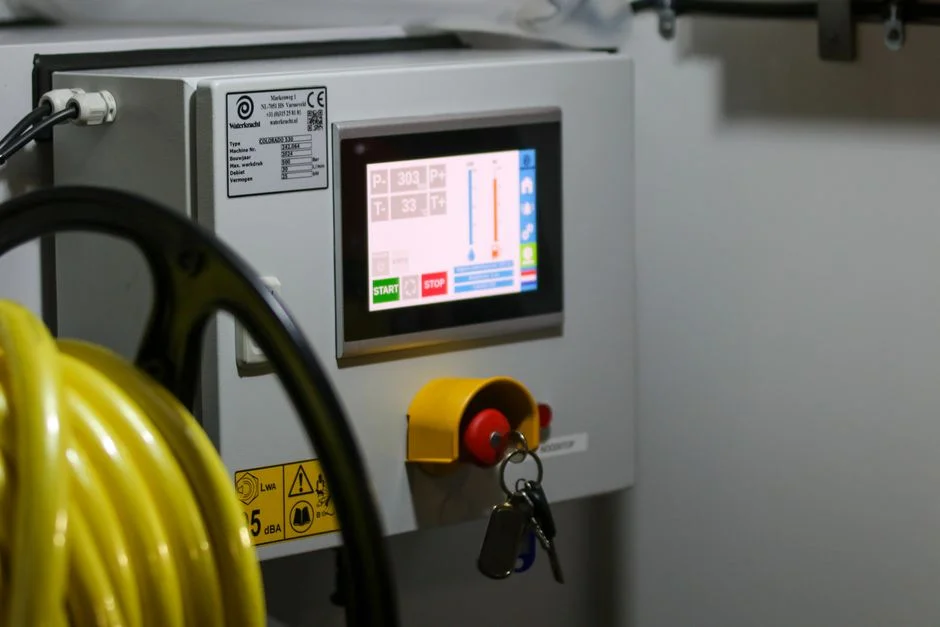
The reference flow path for a Kazakhstan industrial plant is: equalization → screening / DAF for oil and grit removal → A2/O or A/O with MBR → clarifier or membrane tank → UV or ClO2 disinfection → effluent monitoring. The choice of an integrated MBR system with pre-denitrification versus a conventional A2/O plus clarifier is the single largest capital decision and is justified where winter temperature, footprint, or the 2027 tightening is binding. Expected effluent quality for the three options:
| Train | Influent TN | Effluent TN | Effluent NH4+ | Winter feasibility (5–8°C) | Capital intensity |
|---|---|---|---|---|---|
| A/O (anoxic + aerobic) | 30–60 mg/L | 12–18 mg/L | 2–5 mg/L | Marginal, needs heating | Low |
| A2/O (anaerobic + anoxic + aerobic) | 40–80 mg/L | 8–12 mg/L | 1–3 mg/L | Marginal, needs heating | Medium |
| MBR + pre-denitrification | 40–100 mg/L | 5–9 mg/L | 0.5–1.5 mg/L | Yes, stable at 8°C | High |
Permit Tiers, Self-Monitoring, and Reporting Burden
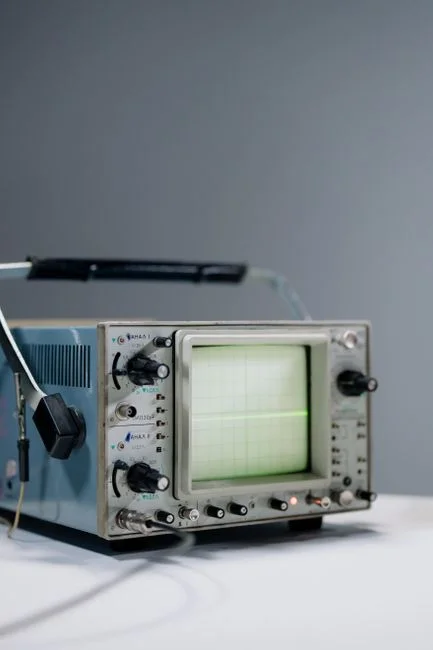
Designing a plant to meet the limit is half the cost; the other half is the operator's permanent obligation to demonstrate compliance. Complex-category facilities must run continuous online TN and NH4+ analyzers on the final effluent, transmit readings to the Air-Water-Eco system (Вода-Воздух-Эко), and submit a quarterly self-monitoring report signed by an accredited laboratory. First-category sites operate on weekly 24-hour composite samples with quarterly reports, and second-category sites submit monthly grabs and an annual report. Calibration logs for online analyzers and chain-of-custody records for all lab samples must be retained on site for 5 years.
Non-compliance penalties in 2026 run up to 1,000 MCI (monthly calculation index) per violation, which converts to roughly 3,692,000 KZT (≈$8,000 at the 2026 Q1 exchange rate of ~460 KZT/USD) per exceedance event, plus suspension of the permit on repeat exceedances. Continuous dosing of methanol or glycerin is the single most common operational failure mode because operators under-dose to save cost, so the permit review should specify a PLC-controlled methanol or glycerin dosing skid tied to the effluent NO3- signal rather than a manually set pump. Online analyzer downtime exceeding 48 hours triggers a default to "non-compliant" status in the Air-Water-Eco system regardless of grab-sample results.
Practical Design Checklist for a Kazakhstan Industrial Project
Before kickoff, the design team should run through six steps. Step 1: confirm the receiving water-body category — fishery, domestic-drinking, or irrigation — because that classification sets the TN ceiling and the NH4+ sub-limit. Step 2: characterize the influent across a full seasonal cycle for TKN, NH4+, NO3-, NO2-, BOD, COD, and temperature, with the winter design temperature pinned at 5–8°C. Step 3: select the process train against the target effluent — A/O, A2/O, MBR, or hybrid — using the 60–80% / 70–85% / 85–95% TN removal envelopes and the winter-temperature feasibility filter. Step 4: specify online TN and NH4+ analyzers at the outlet if the site is complex-category. Step 5: plan sludge handling — wasted activated sludge at 6–8% nitrogen of dry solids must be dewatered with a plate and frame filter press for wasted activated sludge sized for the recycle load. Step 6: engage the territorial Department of Ecology 90–180 days ahead of the required start-up date to clear the Ecological Permit.
Frequently Asked Questions
What is the 2026 total nitrogen discharge limit in Kazakhstan?
5–10 mg/L for direct discharge to a fishery or domestic-drinking water body, and 10–15 mg/L for discharge to a municipal sewer, set under the Environmental Code No. 400-IV (2021) and SanPiN 2.1.7.04-96. The limit tightens by approximately 20% on 1 January 2027, so treatment design should target 4–8 mg/L to avoid retrofit.
What is the ammonium nitrogen (NH4+) limit in Kazakhstan in 2026?
1.5 mg/L for fishery waters and 3.5 mg/L for domestic-drinking waters and municipal sewer, per SanPiN 2.1.7.04-96. This sub-limit is the most common cause of failed compliance on otherwise well-designed TN systems, so specify online NH4+ monitoring and nitrification performance review.
Which treatment process reliably hits ≤10 mg/L TN for industrial wastewater in Kazakhstan?
MBR with pre-denitrification achieves 85–95% TN removal and stays stable at 5–8°C winter temperatures, with expected effluent TN of 5–9 mg/L. A2/O is a lower-cost option at 8–12 mg/L effluent TN but needs heated tanks in winter.
How often must a Kazakhstan industrial site self-monitor for total nitrogen?
Complex-category permits require continuous online TN analyzers with real-time transmission to the Air-Water-Eco system and quarterly reports. First-category sites submit weekly composites quarterly; second-category sites submit monthly grabs annually. See the broader NPDES/EU IED self-monitoring cadence principles that Kazakhstan is converging toward.
Is the Kazakhstan TN limit comparable to the Gulf Cooperation Council ammonia limit?
Kazakhstan's 5–10 mg/L TN fishery limit is broadly tighter than many GCC ammonia-N limits when expressed as total nitrogen, but the regulatory logic is similar. For a side-by-side look at the Gulf side, the ammonia nitrogen limit comparison for the GCC covers the parallel benchmark.