What Lusaka Buyers Actually Need from a Wastewater Treatment Plant Manufacturer
Generic Alibaba and Made-in-China listings are not a sourcing strategy. They quote FOB Shandong prices, ship on 40-foot high-cube frames, and disappear once the container clears Durban customs. For a procurement engineer in Lusaka — responsible for a mining camp on the Copperbelt, a hospitality development along Kafue Road, or a hospital expansion in the Lusaka South Multi-Facility Economic Zone — that supplier profile is a liability, not a solution. The Zambia industrial corridor generates effluent that must meet Zambia Environmental Management Agency (ZEMA) third-schedule limits, must keep running through ZESCO load-shedding, and must arrive on site without a four-month logistics drama.
The shortlist criteria are therefore unusually specific. The right wastewater treatment plant manufacturer in Lusaka should offer containerized or skid-mounted units in the 1-500 m³/day range, factory acceptance testing (FAT) recorded on video, ISO 9001 documentation, and a verifiable track record of Africa-bound commissioning. ZESCO's 2025 industrial tariff of roughly ZMW 2.10-2.85/kWh (US$0.08-0.11/kWh at 2026 exchange rates) means aeration intensity directly drives OPEX, so low-energy diffuser design and variable-frequency drives (VFDs) on blowers are not optional. A "manufacturer" in this context also means an engineering team that can sign off on P&IDs, membrane-cleaning CIP protocols, and ZEMA-aligned performance guarantees — not a trading company that relabels another factory's skid.
ZEMA Discharge Limits and the Compliance Envelope for 2026
ZEMA enforces industrial and municipal effluent quality under the Environmental Management Act (No. 12 of 2011), with the binding numerical limits set out in the third schedule. These are the numbers a buyer's RFQ must reference verbatim; any manufacturer that cannot commit to meeting them in writing should be excluded at the technical-compliance stage.
| Parameter | ZEMA third-schedule limit (industrial/municipal discharge) | Typical source sector in Zambia |
|---|---|---|
| BOD₅ | ≤ 30 mg/L | Municipal sewage, food processing, hospitality |
| COD | ≤ 60 mg/L (some sectors 50 mg/L post-mixing zone) | Beverage, pharma, tannery, edible-oil |
| TSS | ≤ 30 mg/L | All sectors; critical for MBR flux |
| NH₃-N (ammonia) | ≤ 10 mg/L | Landfill leachate, slaughterhouse, healthcare |
| Total phosphorus | ≤ 5 mg/L | Fertilizer, food processing |
| Oil & grease | ≤ 10 mg/L | Edible-oil refining, automotive, mining workshops |
| pH | 6.0 - 9.0 | All sectors; mining often requires rebalancing |
| Temperature | ≤ 40 °C at discharge | Power-plant cooling, beverage CIP |
| Faecal coliforms | ≤ 400 CFU/100 mL (irrigation reuse) / ≤ 10 MPN/100 mL (direct reuse) | Hospitals, lodges, residential |
ZEMA's industrial licence is also a site-specific consent — Lusaka City Council (LCC) and the relevant district council issue a separate effluent discharge consent that ties into the national licence. Mining and mineral-processing sites must additionally satisfy the ZEMA guidelines for the mining sector (2018), which impose stricter limits on total dissolved solids, heavy metals, and cyanide. A supplier quoting only "tertiary polishing" with no BOD/COD performance guarantee signed against the third-schedule values above will not survive a ZEMA inspection or an LCC pre-commissioning audit. A defensible RFQ should therefore require a 30-day performance test with measured values and liquidated damages for non-compliance.
Wastewater Treatment Plant Technologies That Work in Lusaka
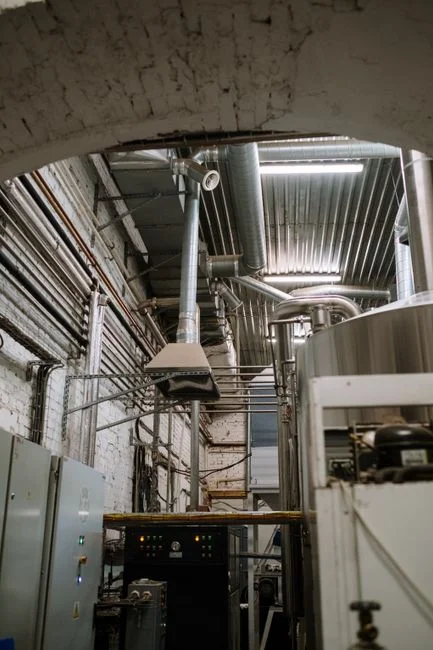
Matching technology to influent is the single biggest cost driver in Lusaka, because the wrong choice either overspends on CAPEX or underperforms on ZEMA's 30 mg/L BOD ceiling. Four technology families dominate the 2026 shortlist for Zambian industrial and commercial sites.
| Technology | Typical capacity range | Best-fit Lusaka applications | Effluent quality vs ZEMA third schedule |
|---|---|---|---|
| WSZ buried package plant (A/O + clarifier) | 1 - 80 m³/h | Residential compounds, lodges, hospitals, small commercial | BOD 20-30 mg/L, TSS 20-30 mg/L — meets limits with UV disinfection |
| MBR membrane bioreactor (PVDF hollow fibre or flat sheet) | 10 - 2,000 m³/day | Hotels, beverage, pharma, healthcare, water-reuse projects | BOD < 5 mg/L, TSS < 1 mg/L — comfortably below limits, reuse-ready |
| DAF (dissolved air flotation) pre-treatment | 4 - 300 m³/h | Food processing, slaughterhouse, edible oil, tannery | Removes 60-90% oils/suspended solids upstream of biological stage |
| SBR / MBBR sequencing batch or moving-bed biofilm | 20 - 5,000 m³/day | Variable-load industrial sites, tanneries, dairy | BOD 15-25 mg/L, but requires trained operators and equalisation tanks |
A WSZ underground package sewage treatment plant suits municipal-strength sewage in sites with stable soil and a low water table. Lusaka's high water table in the Lusaka South and Chilanga zones, however, frequently floods buried tanks during the rainy season; above-grade skid mounting on a concrete pad is the more reliable installation in those sub-districts. A MBR membrane bioreactor system is the right answer wherever the buyer wants water reuse for irrigation or cooling, since the <1 μm membrane stage produces effluent that comfortably meets the 30 mg/L BOD and 30 mg/L TSS limits. For food and slaughterhouse sites, a dissolved air flotation system as a front-end pre-treatment removes fats, oils, and proteins before they overload the biological stage, and protects downstream MBR membranes from fouling. SBR and MBBR remain valid for highly variable loads but demand more operator attention than a packaged MBR, which is a serious constraint on remote Copperbelt sites where skilled labour is scarce.
Comparing Lusaka-Relevant Manufacturers: A 2026 Scorecard
A defensible shortlist needs a side-by-side comparison, not a quote-by-quote spreadsheet. The six-criterion scorecard below is built around the technical and commercial realities of shipping to and commissioning in Zambia. Score each candidate supplier 0-2 on every line; a passing total is 9/12 or above.
| Criterion | What to verify | Weight in score (0-2) | Common failure mode |
|---|---|---|---|
| 1. ISO 9001 + CE / EN 12255 certification | Third-party certificates with certificate number and issuing body | 0-2 | Self-declared CE without notified body |
| 2. ZEMA-aligned reference plants or pilot data | Africa reference list, BOD/COD/TSS test reports from comparable influent | 0-2 | Only Chinese domestic project photos |
| 3. Containerization and 40-ft HQ shipping experience | Photos of completed skids inside 40-ft containers, packing list template | 0-2 | Open-frame skids requiring re-crating at port |
| 4. On-site commissioning in Africa | CVs of commissioning engineers, recent SAT reports, Africa-agent contact | 0-2 | "Remote video commissioning only" |
| 5. Critical-spares kit included in shipment | BOM listing 24 months of membrane cassettes, dosing-pump diaphragms, UV lamps, probes | 0-2 | Spares quoted as optional extras |
| 6. Warranty beyond 12 months | Written 24-month mechanical / 12-month electrical minimum, membrane pro-rata | 0-2 | 12-month "limited" warranty excluding consumables |
2026 export price points from Shandong cluster around the same band: Qingdao Yimei's slaughterhouse WWTP lists at US$5,800-13,000 FOB per set, and Qingdao Dongmao's packaged sewage plant at US$4,100-9,300 FOB (per Made-in-China 2026 listings). Industrial wastewater treatment buyer's guide references note that buyers should weight shipping, duty, and commissioning as 30-45% of the FOB price when comparing like-for-like. Shandong-based manufacturers with broader process coverage — including MBR, WSZ, DAF, RO, and sludge dewatering on one engineering platform — typically score higher on criterion 2 (ZEMA-aligned reference data) and criterion 4 (commissioning) because their process library has been proven across multiple waste streams. Red flags: no factory audit video, no third-party CE or ISO certificate, no Africa reference list, and a warranty that excludes membrane modules.
2026 CAPEX and OPEX Benchmarks for Lusaka-Installed Package WWTPs
The numbers below are DAP Lusaka for compliant package systems in 2026, inclusive of membrane modules, dosing skids, control panel, container or skid, and installation supervision. They exclude site civils, import duty (currently 0% for most WWTP equipment under the Zambia–China trade framework but verify with the latest ZRA ruling), and ZESCO grid connection fees.
| System size and type | CAPEX (DAP Lusaka, 2026) | Annualised OPEX (per m³ treated) | Main OPEX drivers |
|---|---|---|---|
| Package MBR, 100 m³/day (hotel / beverage / healthcare) | US$800,000 - 2,500,000 | US$0.18 - 0.42/m³ | Aeration 35-45%, membrane replacement 5-7 yr, ClO₂/HCl dosing |
| WSZ package plant, 100 m³/day (residential / lodge / hospital) | US$150,000 - 450,000 | US$0.10 - 0.22/m³ | Aeration 50-60%, sludge hauling, UV lamp replacement |
| DAF pre-treatment, 50 m³/h (food / slaughterhouse) | US$90,000 - 220,000 | US$0.05 - 0.12/m³ | Polymer dosing, sludge dewatering with a plate and frame filter press |
| High-COD industrial site (mining, tannery, edible oil) | + 40-80% above baseline | + 40-80% above baseline | Chemical conditioning, sludge hauling to licensed facility |
Aeration energy at the ZESCO industrial tariff (US$0.08-0.11/kWh) is the dominant variable cost for any biological plant. Sites experiencing more than 4 hours/day of load-shedding must budget for a 200-500 kVA diesel standby and 20-30% fuel surcharge on OPEX, or accept that aerobic treatment efficiency will drop during outage events. Imported consumables — membrane cassettes, UV lamps, dosing-pump diaphragms, ClO₂ precursor chemicals — carry 4-8 week lead times via Durban and should be sized for at least 24 months of operation in the initial spares kit. Mining and high-COD sites push OPEX upward by 40-80% because of polymer demand, pH rebalancing chemicals, and the cost of hauling dewatered cake to a ZEMA-licensed disposal site.
Procurement Checklist: From RFQ to Commissioning in Lusaka
The following checklist is the minimum a Lusaka-based procurement engineer should require from every shortlisted manufacturer before issuing a purchase order.
- RFQ scope: influent characterization (BOD, COD, TSS, NH₃-N, pH, temperature, peak factor), treated-effluent targets tied to ZEMA third-schedule limits, diurnal flow profile, footprint and headroom, shipping terms (CIF Durban vs DAP Lusaka), commissioning scope, operator training language (English), and warranty terms in writing.
- Shipping route: China → Durban (sea, ~18-22 days) → road to Lusaka (3-5 days border clearing) = 3-4 weeks total. China → Beira → road to Lusaka (4-5 days) = 4-5 weeks. Dar es Salaam is viable but adds 1-2 weeks of overland transit through Tanzania.
- Commissioning deliverables: factory acceptance test (FAT) video recorded on the assembled skid, site acceptance test (SAT) protocol, on-site engineer for 7-14 days including process start-up and operator handover, English-language O&M manual with P&ID and electrical drawings.
- Critical-spares kit: sized for 24 months of operation — membrane cassettes (or one full set for MBR), dosing-pump diaphragms, UV lamps, pH/DO probes, blower service kit, seal kit for valves, and a recommended-consumables list with part numbers.
- Acceptance criteria: 30-day performance test against ZEMA third-schedule limits, with a 5-10% performance bond or liquidated-damages clause for non-compliance. Reference comparable engineering practice from the municipal sewage treatment plant engineering guide and the hospital wastewater treatment compliance guide for SAT protocol templates.
Frequently Asked Questions
What ZEMA effluent limits should a Lusaka manufacturer guarantee in writing?
BOD ≤ 30 mg/L, COD ≤ 60 mg/L, TSS ≤ 30 mg/L, NH₃-N ≤ 10 mg/L, total phosphorus ≤ 5 mg/L, oil & grease ≤ 10 mg/L, and pH 6.0-9.0, per the Environmental Management Act (2011) third schedule. A 30-day performance test with measured values and a liquidated-damages clause is the only defensible acceptance path. (See hospital wastewater treatment compliance guide for a comparable SAT template.)
How much does a package WWTP cost in Lusaka in 2026?
A 100 m³/day compliant MBR runs US$800,000-2,500,000 DAP Lusaka, while a simpler 100 m³/day WSZ package plant sits at US$150,000-450,000. Annualised OPEX is US$0.18-0.42/m³ for the MBR and US$0.10-0.22/m³ for the WSZ, dominated by ZESCO aeration energy at US$0.08-0.11/kWh.
Which plant type fits a Lusaka lodge or hospital with reuse intent?
An MBR membrane bioreactor system sized 10-200 m³/day delivers <5 mg/L BOD and <1 mg/L TSS, comfortably meeting ZEMA third-schedule limits and supporting irrigation or cooling-tower reuse.
What is the typical shipping time from a Chinese manufacturer to Lusaka?
China to Durban by sea is 18-22 days, plus 3-5 days road transit to Lusaka — roughly 3-4 weeks end-to-end. The Beira corridor runs 4-5 weeks, and Dar es Salaam plus overland adds 1-2 weeks on top.
What after-sales support should a Lusaka buyer require?
A 24-month mechanical and 12-month electrical warranty, a 24-month critical-spares kit shipped with the plant, an on-site commissioning engineer for 7-14 days, and an English-language O&M manual with P&ID and electrical drawings. Remote video commissioning alone is a red flag for African sites. (See industrial wastewater treatment buyer's guide for further commissioning-scope benchmarks.)