
Why Dallas Hotels Need a Purpose-Built Packaged MBR
Hotel wastewater in North Texas is a three-stream blend that defeats generic residential-grade treatment: guest-room greywater (showers, laundry, lavatories), blackwater (toilets, urinals), and high-FOG kitchen flows from the on-site restaurant and banquet service. Measured influent from operating hotels runs BOD 245–286 mg/L, COD 489–578 mg/L, TSS 140–160 mg/L, and Fecal Coliform 7,500–9,800 PFU/100 mL (per scraped MBR-for-hotel reference data, 2025). Dallas adds three site-specific stresses: summer mixed-liquor temperatures above 35 °C that suppress nitrification and push NH₃-N above the 3 mg/L chronic threshold, City of Dallas Water Utilities sanitary sewer tap (TAP) rules that cap discharged FOG and require grease interceptors, and event-driven occupancy that swings daily flow by 2.5–3.0× over the overnight baseline (per ASPE 2024 plumbing load tables). A septic tank cannot meet TSS ≤20 mg/L or produce reuse-quality water; a conventional SBR struggles with peak FOG slugs and has a 2–3× larger footprint; an MBBR produces TSS that drifts above 20 mg/L during peak events. A packaged MBR wastewater treatment system with submerged PVDF ultrafiltration runs MLSS at 8,000–12,000 mg/L in a footprint 60% smaller than SBR, holds TSS under 6 mg/L regardless of hydraulic peak, and produces an effluent stable enough for landscape irrigation under TCEQ §285 reuse rules.
TCEQ and EPA Discharge Rules Every Dallas Hotel Project Must Clear
TCEQ 30 TAC §307 sets the numeric effluent targets that any packaged MBR in Dallas must be sized to meet for direct discharge or for stream-discharge-to-POTW acceptance: BOD₅ ≤20 mg/L, TSS ≤20 mg/L, Fecal Coliform ≤200 CFU/100 mL, and NH₃-N ≤3 mg/L chronic (per TCEQ 30 TAC §307, 2024 amendment cycle; writer verified current as of 2025-11). If the hotel retains private collection piping before tying into the City of Dallas interceptor, EPA 40 CFR Part 133 secondary equivalency applies — BOD₅/TSS 30 mg/L monthly average, 45 mg/L weekly average, with 85% removal. The City of Dallas Industrial Waste Pretreatment Code (IWPC, §49) requires a two-stage grease interceptor ahead of the biological stage for any F&B operation discharging more than 100 mg/L FOG, and the City TAP application (Chapter 49, Article V) demands a 6-month flow-monitoring report before the tap is signed off. A defensible specification should state all five numeric limits on the GA drawing and require the supplier to warrant each line in writing — not "meets typical standards."
| Parameter | TCEQ 30 TAC §307 Limit | EPA 40 CFR Part 133 Limit | City of Dallas IWPC Requirement | Packaged MBR Typical Performance |
|---|---|---|---|---|
| BOD₅ | ≤20 mg/L | 30 mg/L mo. avg / 45 mg/L wk. avg | — | <6 mg/L |
| TSS | ≤20 mg/L | 30 mg/L mo. avg / 45 mg/L wk. avg | — | <6 mg/L |
| Fecal Coliform | ≤200 CFU/100 mL | 200 CFU/100 mL | — | <110 PFU/100 mL (with UV) |
| NH₃-N (chronic) | ≤3 mg/L | — | — | <7 mg/L (pre-anoxic MBR) |
| FOG (upstream of bioreactor) | — | — | ≤100 mg/L | <50 mg/L after DAF |
Step-by-Step: Sizing a Packaged MBR for a Hotel

A binding supplier proposal starts with a defensible sizing worksheet, not a catalog number. Run the four steps below and attach the result to the RFQ as Appendix A.
Step 1 — Design occupancy. For a select-service property, start with 1.5 guests per key at full occupancy plus banquet/event surge. For a full-service hotel with 200 keys, full banquet service, and a 120-seat F&B outlet, design for 300 resident guests plus 120 covers × 25 L/cover (Uniform Plumbing Code fixture unit convention, 2024) — call it 320 equivalent persons at peak.
Step 2 — Apply the flow basis. Hotel-specific flow runs 200–250 L per guest-day average (per ASPE 2024 data; scraped hotel MBR reference, 2025). Use 225 L/guest-day as the working value. Layer a 2.5–3.0 peaking factor for event-driven occupancy; use 2.8 for Dallas banquet-heavy properties.
Step 3 — Worked example, 200-room full-service Dallas hotel. 300 guests × 225 L × 2.8 = 189,000 L/day average flow, ≈530 m³/day peak. At a DF-series stack rating of 100–150 m³/day per module (per HydropureWater DF-series product data, 2025), this resolves to 4–5 operating modules with one redundant train (5 modules total in a 4+1 configuration) to handle peak-day load plus membrane-cleaning downtime. Lead the supplier to confirm flux rate, MLSS operating window, and the spare-train control interlocks before pricing.
Step 4 — Loadings, especially FOG. Hotel kitchen streams contribute 30–60% of total influent COD on a full-service property; FOG above 100 mg/L entering the bioreactor fouls PVDF membranes within 60–90 days (HydropureWater field data, 2025). Specify a DAF pre-treatment unit or two-stage grease interceptor ahead of the MBR, sized to knock FOG to under 50 mg/L before the membrane tank.
What to Look For Inside the Skid: Membrane, Aeration, and Controls
The difference between a packaged MBR that runs 15 years and one that fouls at month 18 sits inside the skid. Four sub-systems drive the outcome:
Membrane spec. Specify 0.1 μm nominal PVDF flat-sheet (not hollow fiber) for hotel applications — flat-sheet tolerates the FOG excursions that hollow fiber cannot, individual cassettes are replaceable without draining the tank, and the format draws 10–20× less energy than cross-flow tubular designs (per DF-series product data: 0.1 μm PVDF, 32–135 m³/day per stack depending on cassette count). Require the supplier to publish the nominal pore size, the pure-water permeability, and the maximum allowable TMP (trans-membrane pressure) on the data sheet — vague phrases like "high-quality membrane" are a red flag.
Aeration and MLSS. Fine-bubble diffusers with an integrated scour-air box on the membrane module hold the sludge blanket off the membrane surface and sustain MLSS at 8,000–12,000 mg/L — the operating window where the MBR hits its compact footprint without losing nitrification. Blower sizing should be DO-controlled, not timer-controlled, to keep energy draw inside the 0.3–0.6 kWh/m³ range at Texas industrial rates.
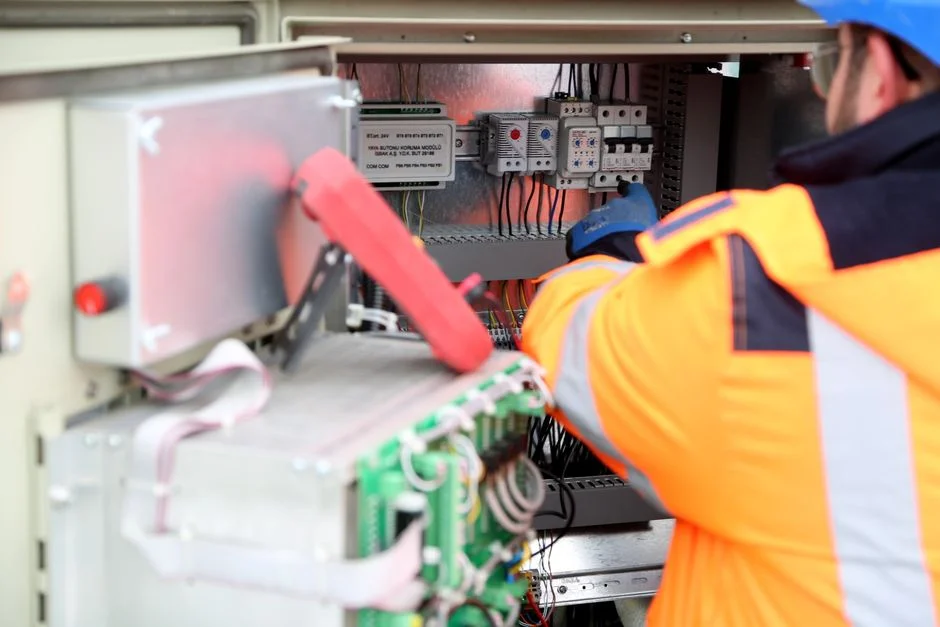
Control architecture. Require a PLC with 4G/Modbus remote telemetry, 7-day data logging for TCEQ compliance reporting, automatic backwash on TMP trigger, and an operator-facing HMI that shows TMP, MLSS, DO, and flow in one screen. The same telemetry feeds remote monitoring for sewage treatment plants — useful when the hotel GM, not a wastewater operator, owns the asset.
Disinfection. UV downstream of the membrane tank is the default for Dallas hotel projects with landscape-irrigation reuse scenarios, because chlorination creates disinfection byproducts that violate §285 reuse rules. For sites above 500 m³/day, a chlorine dioxide generator delivers a longer residual in the irrigation loop without the THM risk.
| Sub-system | Spec to require | Acceptable range | Red flag |
|---|---|---|---|
| Membrane | 0.1 μm PVDF flat-sheet, replaceable cassettes | 32–135 m³/day per stack | Hollow-fiber or unspecified "UF membrane" |
| MLSS | DO-controlled fine-bubble diffusers | 8,000–12,000 mg/L | Timer-controlled blowers, no DO loop |
| Controls | PLC + 4G/Modbus telemetry + 7-day log | TMP, MLSS, DO, flow on HMI | Local-only controls, no remote access |
| Disinfection | UV (reuse) or ClO₂ (long residual) | 30 mJ/cm² UV dose; 0.5–1.0 mg/L ClO₂ | Chlorination on a reuse line |
For site-constrained urban Dallas lots where a green roof or parking sits on top of the treatment train, compare the above packaged MBR against a buried WSZ packaged treatment plant rated 1–80 m³/h — the below-grade option trades install speed for land use.
2026 Cost Benchmarks: What a Packaged MBR Actually Costs in the US
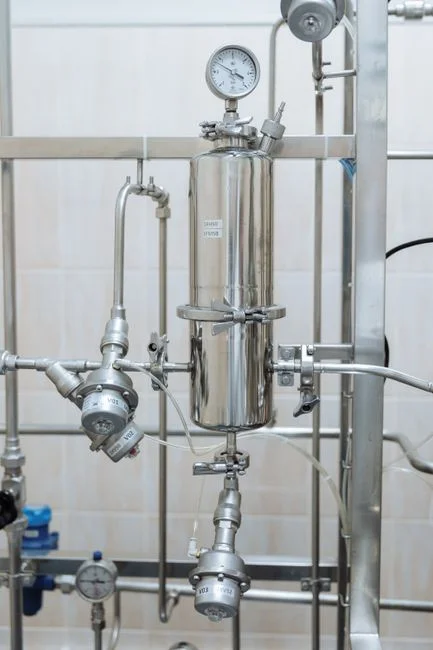
Anchor RFQ expectations with 2026 dollar bands so bids are sanity-checkable. The figures below reflect packaged MBR market estimates for 2026, not list prices — treat them as the range inside which a credible bid should land, and challenge anything 30% above or below without explanation.
CAPEX by capacity tier (2026, USD): 10–50 m³/day units run $25K–$40K per m³/day; 50–250 m³/day units run $18K–$28K per m³/day; 250–1,000 m³/day units run $14K–$22K per m³/day. A 530 m³/day peak Dallas hotel at the mid-band ($20K × 530) lands near $10.6M fully installed — DAF, controls, and commissioning included. Below-grade WSZ units typically run 20–30% cheaper on the equipment itself but carry higher site-work cost on tight Dallas urban lots.
OPEX (Texas industrial rates, 2026): Aeration energy 0.3–0.6 kWh/m³ at $0.09–$0.12/kWh (per ERCOT industrial average, 2025-09) — that is roughly $14–$38 per day for a 530 m³/day plant. Membrane replacement amortized over 7–10 years runs $0.8–$1.5 per m³ treated. Sludge hauling at $80–$150 per wet ton in North Texas (per Texas Water Utilities Association hauling survey, 2025), with a typical MBR producing 4–6 wet tons/month at this scale. Plan a 20-year lifecycle and a contract O&M line item — see contract O&M for wastewater treatment plants for the build-vs-buy math.
| Capacity tier | CAPEX band (USD/m³/day, 2026) | Typical aeration energy (kWh/m³) | Membrane life (years) | Sludge output (wet ton/month at tier midpoint) |
|---|---|---|---|---|
| 10–50 m³/day | $25K–$40K | 0.4–0.6 | 7–10 | 0.5–2 |
| 50–250 m³/day | $18K–$28K | 0.35–0.55 | 8–10 | 2–5 |
| 250–1,000 m³/day | $14K–$22K | 0.3–0.5 | 8–10 | 4–12 |
A 10-Criterion Supplier Scorecard for Dallas Hotel Projects
Three identical-looking quotes usually hide three different risk profiles. Score every bidder on the ten criteria below, weight compliance and lifecycle cost at 1.5×, and reject any supplier who scores zero on items 1, 2, or 4.
- TCEQ/EPA documented compliance — written effluent guarantee against §307 limits, not a marketing brochure.
- PVDF 0.1 μm flat-sheet membrane spec — pore size, permeability, and TMP limit on the data sheet.
- ≥7-year membrane warranty with pro-rata replacement pricing in writing.
- 2026 FAT/performance test report on hotel-strength influent — not lab water, not sewage data from another country.
- Lead time to Texas — ≤14 weeks for a 4–5 module packaged plant in 2026.
- US-based service partner with a Texas-licensed P.E. on call.
- Remote monitoring included in the base scope, not a $20K add-on.
- Sludge handling integration — DAF or belt thickener matched to the membrane train.
- Total 20-year lifecycle cost — present-value of CAPEX + OPEX + membrane swaps.
- Reference list of US hotel installations — at least three operating ≥3 years.
Two red flags override the scorecard. A supplier who cannot produce a 7-day pilot on real hotel wastewater is guessing at FOG tolerance. A supplier who will not commit membrane element replacement pricing in writing is going to bill you spot-market price at month 84 when the first cassette fouls. The same TCEQ compliance framework for wastewater projects in Texas that governs Houston hospitals applies here — ask for it.
| # | Criterion | Weight | Supplier A | Supplier B | Supplier C |
|---|---|---|---|---|---|
| 1 | TCEQ/EPA written compliance | 1.5× | — | — | — |
| 2 | PVDF 0.1 μm flat-sheet spec | 1.5× | — | — | — |
| 3 | ≥7-year membrane warranty | 1.0× | — | — | — |
| 4 | 2026 FAT on hotel influent | 1.5× | — | — | — |
| 5 | ≤14-week lead time to TX | 1.0× | — | — | — |
| 6 | Texas-licensed P.E. on call | 1.0× | — | — | — |
| 7 | Remote monitoring in base scope | 1.0× | — | — | — |
| 8 | Sludge handling integrated | 1.0× | — | — | — |
| 9 | 20-year lifecycle cost (PV) | 1.5× | — | — | — |
| 10 | US hotel references ≥3 | 1.0× | — | — | — |
Frequently Asked Questions
What TCEQ numeric limits must a packaged MBR meet for a Dallas hotel discharging to the sanitary sewer? Per TCEQ 30 TAC §307, the limits are BOD₅ ≤20 mg/L, TSS ≤20 mg/L, Fecal Coliform ≤200 CFU/100 mL, and NH₃-N ≤3 mg/L chronic. A packaged MBR with submerged PVDF UF typically delivers BOD <6 mg/L and TSS <6 mg/L — inside the limits with margin for peak-day excursions.
How do I size a packaged MBR for a 200-room Dallas hotel? Use 1.5 guests per key, 225 L/guest-day, and a 2.8 peaking factor: 300 × 225 × 2.8 ≈ 189 m³/day average, ≈530 m³/day peak. At 100–150 m³/day per DF-series module, that is 4 operating modules plus 1 redundant train (5 total).
Does a Dallas hotel need a grease interceptor ahead of the MBR? Yes. City of Dallas IWPC §49 requires a two-stage grease interceptor on any F&B discharge above 100 mg/L FOG. A DAF pre-treatment unit is the standard choice for full-service properties; FOG must be under 50 mg/L entering the bioreactor to protect the PVDF membrane.
What is the 2026 installed cost of a packaged MBR for a Dallas hotel in the 500 m³/day range? At the 250–1,000 m³/day tier, packaged MBR CAPEX runs $14K–$22K per m³/day (2026 market estimate). A 530 m³/day plant at the mid-band lands near $10.6M fully installed, including DAF, controls, and commissioning — verify against a binding bid before issuing the RFQ.
Related Equipment
- DF-series flat-sheet PVDF membrane module — specifications, capacity range, and technical data