Why Düsseldorf Industrial Plants Face a New Compliance Pressure in 2026
Industrial wastewater treatment in Düsseldorf in 2026 must satisfy the EU Industrial Emissions Directive 2010/75/EU, the German Abwasserverordnung, and NRW § 58 WHG indirect discharge permits administered by the Bezirksregierung Düsseldorf. For Rhine-Ruhr chemical, metalworking, and food plants, the standard train is DAF pre-treatment (4-300 m³/h), MBR biological polishing (<1 μm effluent), and RO for water reuse at up to 95% recovery; ZLD is required only when salt or heavy-metal limits cannot be met by indirect discharge.
The revised IED BAT conclusions (Commission Implementing Decision 2022/2427) entered full force for existing installations on 2026-02-07, tightening COD, total nitrogen, and AOX emission thresholds for chemical and metal-finishing plants. Concretely, BAT-AEL 2026 sets indirect-discharge COD at 120-250 mg/L for most chemical Annex 22 streams, total nitrogen at 10-25 mg/L for biological effluents, and AOX at 0.5-1.0 mg/L depending on chloride background. Düsseldorf's Bezirksregierung now requires every indirect-discharger above 10 m³/day to resubmit a permit dossier showing BAT-compliant treatment by 2026-12-31; non-compliance penalties under § 103 WHG reach €50,000 per violation, with operational closure (Stilllegung) as the worst-case outcome.
The Rhine-Ruhr chemical corridor (Düsseldorf, Krefeld, Leverkusen) accounts for 3 of NRW's 5 largest indirect-discharge sites, all of which must demonstrate compliance with the 2026 BAT-AEL update. Local enforcement is no longer theoretical: in 2025, Bezirksregierung Düsseldorf issued 14 enforcement notices (§ 100 WHG Anordnungen) for AOX exceedances in metal-finishing effluents. Plants still running pre-2016 DAF + conventional activated sludge will struggle to hit the new AOX and TN ceilings without a membrane retrofit. HydropureWater FGD and baghouse equipment datasheets list EU IED 2010/75/EU, the U.S. EPA NSPS, and World Bank EHS Guidelines as the recognised compliance benchmarks for 2026 tenders — the same instruments a German procurement lead will see cited in any Bezirksregierung permit review.
Düsseldorf's Dominant Wastewater Profiles and What Each Process Must Hit
Four influent archetypes cover roughly 90% of the indirect-discharge load in Bezirksregierung Düsseldorf's permit register, and each maps to a different process train. The table below pairs the influent signature with the binding AbwV annex and the unit operations that can actually hit the limit.
| Industry cluster | Typical influent signature | Binding AbwV annex | Required unit operations |
|---|---|---|---|
| Chemicals / coatings (Henkel, Covestro-adjacent sites) | COD 2,000-25,000 mg/L; TDS 5,000-30,000 mg/L; AOX 5-50 mg/L; Cu/Ni/Zn/Cr traces | Annex 22 (chemical industry) | Equalisation → DAF or lamella → biological (MBR) → RO or selective ion exchange for AOX |
| Food & beverage (Düsseldorf-Reisholz, Mettmann corridor) | BOD/COD 1,500-12,000 mg/L; FOG 200-3,000 mg/L; TSS 500-5,000 mg/L | Annex 10-15 (food sector) | DAF (4-300 m³/h) for FOG → MBR polishing → optional RO for boiler-feed reuse |
| Metalworking / electroplating (Solingen, Remscheid feeder plants) | CN⁻ up to 50 mg/L; Cr(VI) up to 100 mg/L; F⁻ up to 200 mg/L; Ni/Cu/Zn 5-500 mg/L | Annex 40 (metals processing) | Toxic-species pre-treatment (alkaline chlorination for CN⁻, reduction for Cr(VI)) → DAF → MBR |
| Industrial process / rinse water (semiconductor-adjacent, specialty chemicals) | TDS 100-1,000 mg/L; silica 5-50 mg/L; resistivity > 10 MΩ·cm target | Annex 22 + reuse-driven spec | DAF pre-filter → MBR → industrial RO at 95% recovery → EDI if ultra-pure needed |
The decision point is the FOG/TSS/CN⁻ vector: if cyanide or hexavalent chromium is present, those species must be destroyed upstream of any biological step, or the biomass will be killed and the MBR will fail its permit test. If FOG dominates (food, metalworking with emulsified coolants), DAF belongs in front of the biological step regardless of the downstream choice. For pure rinse water with low organics, the train collapses to filtration + RO and the MBR may be omitted.
The Standard 2026 Process Train: DAF → MBR → RO (and When ZLD Replaces RO)
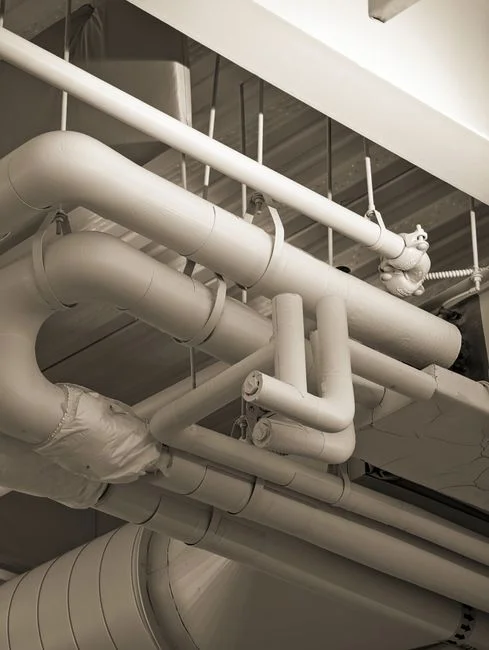
For 70-80% of indirect-discharge permit holders in NRW, the 2026 reference train is three steps: a DAF system for primary solids and FOG, an integrated MBR system for biological polishing, and an industrial RO system for water reuse at 95% recovery. ZLD only enters the picture when indirect discharge to Klärwerk Düsseldorf-Süd is blocked by salt load or specific heavy metals.
Step 1 — DAF pre-treatment: 4-300 m³/h capacity range, 13 standard models covering the flow band from a single food line to a multi-stream chemical site, micro-bubble flotation (typically 20-50 μm bubble size), automatic skimming, SS304 or SS316 construction depending on chloride exposure. DAF is sized to drop TSS below 100 mg/L and FOG below 20 mg/L before the biological step.
Step 2 — MBR biological polishing: submerged PVDF hollow-fibre or flat-sheet membranes, pore size <1 μm (the DF flat-sheet module hits 0.1 μm), 60% smaller footprint than conventional activated sludge with a separate clarifier, and a flow range of 10-2,000 m³/day per skid. Effluent TSS is typically <5 mg/L; COD reductions of 90-97% are realistic on chemical and food streams. A separate DF series flat-sheet MBR module offers 80-225 m² configurations, 32-135 m³/day per unit, and 10-20× lower specific energy demand than cross-flow UF/MF alternatives.
Step 3 — Industrial RO polishing: 95% recovery, ultra-pure permeate suitable for process rinse reuse or low-pressure boiler feed; antiscalant dosing (typically a 2-5 mg/L phosphonate blend) and energy-recovery devices are standard. ZLD is triggered only when the salt concentration or a specific heavy metal (per AbwV Annex 40, e.g. Ni > 0.5 mg/L or Cr(VI) > 0.1 mg/L) exceeds the acceptance envelope of Klärwerk Düsseldorf-Süd, which is the typical situation for landfill leachate, some pharmaceutical mother-liquor streams, and reverse-osmosis concentrate that cannot be sewered.
| Step | Unit operation | Key spec | Typical performance |
|---|---|---|---|
| 1 | DAF | 4-300 m³/h, 13 models, micro-bubble flotation | TSS < 100 mg/L, FOG < 20 mg/L in effluent |
| 2a | Integrated MBR | 10-2,000 m³/day, PVDF submerged | COD 90-97% removal, effluent <1 μm |
| 2b | DF flat-sheet module | 0.1 μm, 80-225 m², 32-135 m³/day per unit | 10-20× lower energy vs. cross-flow |
| 3 | Industrial RO | 95% recovery, antiscalant + ERD | Permeate TDS < 50 mg/L, suitable for reuse |
| Alt. | ZLD (evap + crystalliser) | Triggered by salt / heavy-metal limit | Zero liquid discharge; required for landfill leachate |
DAF vs. Lamella Clarifier vs. MBR: How to Choose the Primary-Solids Step
The single most common engineering mistake in 2025-2026 retrofits is putting the wrong primary-solids unit in front of the biological step. The decision is driven by TSS, FOG, footprint, and chemical budget, not by flow alone.
The DAF system is the right starting point when FOG, oil, or colloidal load dominates — typical in food, petrochemical, and pulp & paper sites. It handles 4-300 m³/h with automatic skimming and removes 80-95% of FOG and 70-90% of TSS in a single stage. A lamella clarifier is the better choice for high-flow, mostly inorganic TSS streams (e.g. quarry process water, mineral processing wash water) where surface loading rates of 20-40 m/h deliver 30% lower chemical consumption than a comparable DAF on the same load. Going directly to an MBR — with a DF series flat-sheet MBR module — makes sense when the influent is already low-FOG, the site is space-constrained, and the operator wants to skip a dedicated primary clarifier entirely; the 60% footprint reduction is real, but you pay for it in tighter membrane-fouling control upstream.
| Primary-solids option | Best influent signature | Footprint | Chemical demand | Decision trigger |
|---|---|---|---|---|
| DAF | FOG > 100 mg/L, oil, colloids | Medium | Polymer + coagulant typical | Food, metalworking emulsions, refinery |
| Lamella clarifier | High inorganic TSS, low FOG | Small (20-40 m/h loading) | ~30% lower than DAF | Quarry, mineral processing, glass |
| MBR (DF module) as primary | Moderate TSS (<300 mg/L), low FOG | 60% smaller than CAS + clarifier | Membrane CIP only | Space-constrained, no heavy FOG |
Decision rule: if TSS > 500 mg/L and FOG > 100 mg/L, start with DAF; if TSS is high but mostly inorganic and FOG is low, start with lamella; if the plant is space-constrained and FOG is moderate, go directly to MBR. The 2026 BAT-AEL update has not changed this logic, but it has tightened the downstream biological targets enough that an undersized primary step will now push the MBR past its sustainable flux.
2026 Capex and Compliance Budget: What Düsseldorf Plants Should Plan For
A realistic 2026 capex envelope for a 50-200 m³/h indirect-discharge upgrade in the Rhine-Ruhr region runs from roughly €300,000 (food plant, DAF + MBR only) to €2.5 million (chemical site with full DAF + MBR + RO + sludge line). The cost levers that drive the spread are flow, material of construction, and whether the RO step is sized for reuse or just for permit compliance.
The DAF system covers 4-300 m³/h across 13 standard models; typical installed cost is €18,000-€140,000 depending on flow, material (SS304 vs. SS316 for chloride exposure), and whether automatic polymer make-down is included. The integrated MBR system scales with flow in the 10-2,000 m³/day range with PVDF submerged modules; typical turnkey installed cost is €80-€220 per m³/day. An industrial RO system sized at 95% recovery, with CIP skids and high-pressure pumps, runs €600-€1,200 per m³/day installed. The sludge dewatering line — typically a plate and frame filter press in the 1-500 m² filtration-area range — adds €35,000-€180,000, and is non-negotiable in 2026: Düsseldorf municipal sludge-disposal tariffs rose 8-12% in 2025-2026, and a plant that skips dewatering pays the difference to the Stadtwerke.
Don't omit the automatic chemical dosing skid from the capex stack; BAT-AEL compliance on phosphorus and AOX depends on consistent coagulant/precipitant feed, and a manual dosing loop is the single most common audit finding in Bezirksregierung inspections.
| Process unit | Reference price band (2026, installed) | Key cost driver |
|---|---|---|
| DAF (4-300 m³/h) | €18,000 - €140,000 | Flow, SS304 vs. SS316, polymer skid |
| Integrated MBR (10-2,000 m³/day) | €80 - €220 per m³/day | Membrane area, automation level |
| Industrial RO (95% recovery) | €600 - €1,200 per m³/day | CIP skid, ERD, permeate quality target |
| Plate and frame filter press (1-500 m²) | €35,000 - €180,000 | Filtration area, automation |
| Automatic chemical dosing skid | €8,000 - €45,000 | Number of reagent streams, batching |
Supplier Evaluation Checklist for a 2026 Düsseldorf Project
A 10-point scoring sheet that a German-speaking procurement lead can hand to Einkauf without translation. Each item maps to a document a supplier must produce before contract award.
- EU IED 2010/75/EU and AbwV compliance statement in the technical datasheet — confirm the supplier lists BAT-AEL 2026 thresholds, not pre-2016 values.
- EN 12255 (European wastewater treatment plant standard) conformity documentation for every process unit quoted.
- CE marking for the complete skid; ATEX marking for any equipment installed in Ex-zones (common in Düsseldorf chemical sites — Zone 1/Zone 2 for solvent-bearing streams).
- EN ISO 9001 and EN ISO 14001 certification of the manufacturer, ideally with audit report dates within the last 12 months.
- German-language datasheet, Betriebsanleitung, and CE-Konformitätserklärung — non-negotiable for the Bezirksregierung permit file.
- Written performance guarantee against agreed COD/TSS/heavy-metal targets, with liquidated-damages clause tied to acceptance-test results.
- Reference installations in NRW or comparable Rhine-region chemical/metalworking sites, with operator contact details and a 6-12 month operating-data record.
- Spares list with German-EU stock origin and confirmed ≤48 h delivery for critical wear items (membranes, pumps, dosing heads).
- Service base within 200 km of the Düsseldorf site, with a named Field Service Engineer and a documented mean-time-to-respond SLA.
- Documentation package compliant with WHG § 58 / § 63 and AwSV (Verordnung über Anlagen zum Umgang mit wassergefährdenden Stoffen) for any chemical-storage or dosing subsystem.
| Checklist item | Document to request | Pass criterion |
|---|---|---|
| EU IED + AbwV compliance | Technical datasheet, BAT-AEL 2026 mapping | All quoted units listed with 2026 thresholds |
| EN 12255 conformity | Declaration of conformity | Per-unit reference, current revision |
| CE-Konformitätserklärung, ATEX-Zertifikat | Zone classification matches site Ex-zones | |
| ISO 9001 / 14001 | Certificates, recent audit report | Valid, audit <12 months |
| German-language docs | Betriebsanleitung, Datenblatt | Available at quotation stage |
| Performance guarantee | Contractual performance schedule | Liquidated damages for failure |
| NRW references | Reference list + operator contacts | ≥2 comparable sites, with operating data |
| Spares & service | Spares list, SLA document | Service base <200 km, named engineer |
| WHG/AwSV compliance | § 63 WHG documentation, AwSV check | Complete for dosing / storage skids |
Frequently Asked Questions
Q1 — Do I need a Bezirksregierung permit for a DAF unit?
Yes. Any discharge to the Düsseldorf public sewer (indirect discharge) requires a § 58 WHG permit from Bezirksregierung Düsseldorf, even if the DAF is a packaged unit. A water-board notification is also triggered if the DAF skid stores polymer or coagulant above the AwSV threshold volumes (typically 1,000 L for WGK 1 substances).
Q2 — What is the 2026 COD limit for indirect discharge from a chemical plant in NRW?
Typically 120-250 mg/L per AbwV Annex 22, with the exact site-specific value set by Bezirksregierung Düsseldorf in the permit. For total nitrogen, expect 10-25 mg/L; for AOX, 0.5-1.0 mg/L. Plants that cannot meet these need an MBR or ZLD upgrade before 2026-12-31.
Q3 — Is MBR or conventional activated sludge better for a space-constrained Düsseldorf site?
MBR. A submerged PVDF MBR delivers <1 μm effluent, cuts the total footprint by roughly 60% versus CAS plus a separate clarifier, and removes the need for a tertiary clarifier. The trade-off is tighter aeration control and membrane CIP discipline.
Q4 — When is ZLD required in Germany?
When indirect discharge is not possible (e.g. no municipal sewer, or Klärwerk Düsseldorf-Süd refuses the stream) and the salt or heavy-metal load exceeds the local acceptance limits. Typical triggers: landfill leachate, certain pharmaceutical mother-liquors, RO concentrate with TDS > 50,000 mg/L, or streams where Cr(VI) / Ni exceeds the indirect-discharge cap of AbwV Annex 40.
Q5 — Can industrial RO hit 95% recovery on Rhine water?
Yes, with antiscalant dosing (2-5 mg/L phosphonate blend), energy-recovery devices on the concentrate stream, and a two-pass configuration if silica exceeds 30 mg/L in the RO feed. The relevant engineering reference is the 2026 circular water economy trends guide, which sets the operating envelope for 95% recovery at typical Rhine-feed TDS of 500-800 mg/L.
Q6 — Where can I find a comparable compliance blueprint for another German-speaking market?
The comparable regional compliance blueprint for an Asian market applies the same DAF → MBR → RO logic, though the discharge limits are set by DOE rather than AbwV. For process-side parameters, the BOD removal engineering guide and the 2026 total nitrogen discharge limit guide walk through the biological-step sizing that an MBR retrofit in Düsseldorf will need.