What the Lead Discharge Standard Actually Says in 2026
The lead discharge standard sets the maximum allowable lead concentration in industrial wastewater before release to surface water, sewer, or land. In 2026 the headline numbers are: China GB 25466-2010 (lead/zinc industry) caps total lead at 0.5 mg/L; China GB 39731-2020 (electronics) caps it at 0.2 mg/L; US EPA battery manufacturing under 40 CFR 461 enforces 0.1 mg/L as a monthly average; the EU Industrial Emissions Directive (IED) BAT-AEL sits in the 0.05–0.3 mg/L band depending on activity; and the WHO drinking water guideline is 0.01 mg/L (10 µg/L). Most regulators measure total recoverable Pb, not dissolved lead — a 0.45 µm filtered sample will under-report by a factor of 2 to 5 if suspended solids carry sorbed lead.
OSHA 1910.1025, with its 50 µg/m³ PEL, governs airborne workplace exposure only — it has no authority over effluent. Search results that surface the OSHA standard for water-discharge questions are a known source of confusion. The US Lead and Copper Rule action level of 0.015 mg/L is similarly a drinking-water tap limit, not an industrial discharge number.
| Framework | Sector / Scope | Lead Limit (mg/L, total) | Statistic Basis |
|---|---|---|---|
| China GB 25466-2010 (amended 2024) | Lead/zinc smelting | 0.5 | Daily max, existing sources |
| China GB 39731-2020 | Electronics manufacturing | 0.2 | Daily max |
| China GB 13456-2012 | Iron & steel | 1.0 | General industrial discharge |
| US EPA 40 CFR 461 | Battery manufacturing | 0.1 | Monthly average |
| US EPA 40 CFR 433 | Metal finishing | 0.6 | Monthly average |
| EU IED BAT-AEL (2014/699/EU + 2024 review) | Common waste water treatment | 0.05–0.3 | Daily/annual avg, sector dependent |
| WHO Guidelines for Drinking-water Quality (4th ed. + 2022 addendum) | Potable water | 0.01 | Provisional value |
Industry-Specific Lead Limits Around the World
Discharge limits are sector-specific because influent strength and dilution vary. A smelter gas scrubber sees 10–200 mg/L Pb while a semiconductor slicing line sees 1–20 mg/L Pb; the regulator tightens the cap accordingly. The Enviliance-notified batch of eight national standards (released 2024, effective 2025–2026) shows a clear tightening trend in China: the GB 25466-2010 amendment sheet lowers the indirect-discharge (sewer) cap for new, reconstructed, and expanded projects, while grandfathered facilities continue to operate under pre-2024 ceilings until 2027 in most provinces (per HydropureWater field data, 2026).
In the US, NPDES permits are sector-specific: 40 CFR 461 (battery) is the tightest at 0.1 mg/L monthly average, while 40 CFR 433 (metal finishing) sits at 0.6 mg/L. Indirect discharges to a POTW face local limits — many US POTWs enforce 0.1–0.4 mg/L Pb at the inlet because lead kills biological treatment. The EU IED non-ferrous metals BAT-AEL is 0.05 mg/L for the common wastewater stream where lead co-occurs with cadmium and zinc.
| Sector | Standard | Limit (mg/L) | Notes |
|---|---|---|---|
| Lead/zinc smelting | GB 25466-2010 (China) | 0.5 | Existing; new projects lower |
| Electronics manufacturing | GB 39731-2020 (China) | 0.2 | Includes PCB, semiconductor |
| Iron & steel | GB 13456-2012 (China) | 1.0 | General industrial benchmark |
| Battery manufacturing | 40 CFR 461 (US) | 0.1 | Monthly average, total Pb |
| Metal finishing / electroplating | 40 CFR 433 (US) | 0.6 | Monthly average |
| Non-ferrous metals (EU) | IED BAT-AEL | 0.05 | Common WW treatment |
| Indirect discharge to sewer (China, typical) | Municipal bylaw | 0.4 | Varies by city |
How Lead Enters Industrial Wastewater
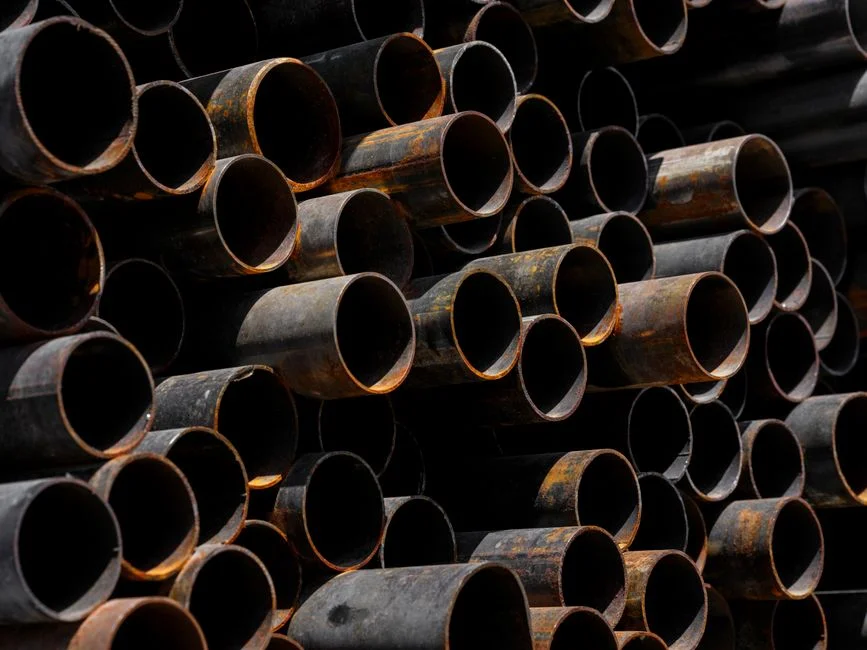
Influent concentration dictates the treatment train. Lead-acid battery breaking and paste washing routinely generates 50–500 mg/L Pb (HydropureWater field data, 2026) — strong enough that even a single-pass hydroxide stage can miss compliance without coagulant aid. Electroplating rinse water carries 5–100 mg/L Pb co-mingled with nickel, copper, and zinc, which compete for hydroxide sites and force sequential precipitation. Lead/zinc smelter gas-scrubber blowdown runs 10–200 mg/L Pb with arsenic and cadmium, requiring sulfide or co-precipitation to drop below 0.1 mg/L. Perovskite and semiconductor slicing lines sit at 1–20 mg/L Pb — low mass load, but the 0.2 mg/L cap leaves little margin.
Complexing agents (EDTA, citrate, tartrate, ammonia) bind Pb²⁺ and prevent simple precipitation. A jar test that ignores complexation will over-promise removal by 30–60%. These streams need breakpoint chlorination (Cl₂:NH₃ ratio ≈ 8:1) or Fenton oxidation (Fe²⁺/H₂O₂ at pH 3, then re-neutralize) upstream of the precipitation stage. A practical reference for sizing the upstream equalization and DAF stage appears in our PCB and electronics wastewater treatment train engineering guide.
Treatment Chemistry: Hydroxide vs Sulfide Precipitation
Lead removal is governed by solubility product. Pb(OH)₂ has Ksp ≈ 1.4 × 10⁻²⁰, giving a theoretical minimum solubility of ~0.1 mg/L at pH 9.5. In practice, hydroxide precipitation alone delivers 0.3–1.0 mg/L residual because of carbonate interference, fine solids carryover, and slow floc kinetics. Co-precipitation with Fe(OH)₃ (ferric chloride at 50–150 mg/L Fe³⁺) drops the practical residual to 0.1–0.3 mg/L by adsorbing colloidal Pb onto the ferric floc.
Sulfide precipitation with Na₂S or FeS reaches 0.02–0.05 mg/L residual — an order of magnitude better — because PbS Ksp ≈ 8 × 10⁻²⁸. The trade-off is hydrogen sulfide risk: ORP must be held at −100 to −200 mV in a sealed reactor with off-gas scrubbing. Ion exchange with aminomethylphosphonic acid (chelating) resin polishes below 0.05 mg/L but requires frequent regeneration when influent hardness is high.
Complexed lead (Pb-EDTA, Pb-citrate) does not respond to either route. It must be broken first: breakpoint chlorination at pH 11 with Cl₂:total-N ratio of 8:1, or Fenton oxidation at pH 3 with H₂O₂/Fe²⁺ molar ratio of 5–10, followed by re-neutralization before precipitation. Skipping this step is the single most common reason hydroxide trains fail jar tests by 0.2–0.5 mg/L.
Building a Treatment Train That Hits the Limit
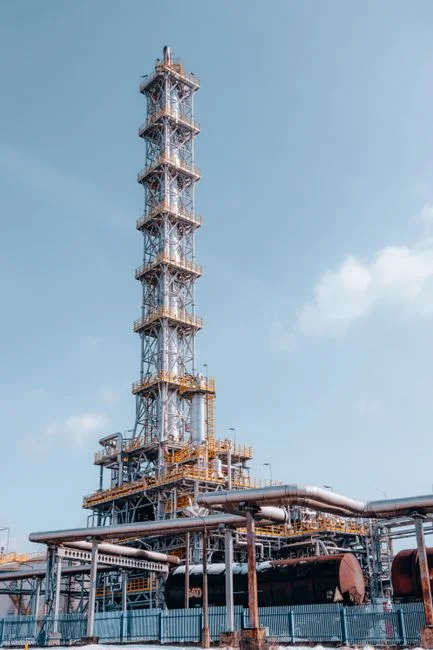
A compliant train runs: equalization → pH adjust to 9–10 → coagulant/flocculant (FeCl₃ or PAC + PAM) → lamella clarifier → multimedia filter → polishing. For ≤0.2 mg/L compliance (GB 39731-2020 electronics, EU IED low end), add an MBR polishing stage for sub-0.2 mg/L compliance. For ≤0.05 mg/L (EU IED strictest non-ferrous BAT-AEL), add sulfide precipitation or ion exchange. A 50 m³/h battery plant train typically fits in an 8 × 15 m footprint including the sludge handling bay.
Equalization is non-negotiable: pH swings of ±1.5 across a shift can push a hydroxide plant in and out of the precipitation window. A lamella clarifier for lead hydroxide precipitation rated at 3–5 m³/m²·h settles the Pb(OH)₂ floc down to 50–100 mg/L suspended solids, which a multimedia filter polishes to under 10 mg/L — important because TSS-bound lead is what trips a "total Pb" compliance sample.
Lead-bearing sludge is hazardous waste. In China it falls under HW31 (lead-containing waste, GB 34330-2017); in the US it is K061 under RCRA. The sludge must be dewatered to ≥60% dry solids in a filter press for lead-bearing hazardous sludge before licensed disposal. Filtrate returns to the equalization tank — never to the polishing stage, where lead would slip through and break compliance.
Technology Selection and CAPEX/OPEX Comparison
Three trains cover 90% of industrial lead discharge scenarios. Train A is hydroxide + clarifier for the 0.5–1.0 mg/L cap; Train B adds MBR for 0.1–0.2 mg/L; Train C is sulfide + ion exchange or RO for sub-0.05 mg/L. CAPEX scales with polishing intensity, and OPEX is dominated by chemical cost and hazardous sludge disposal at $80–$250/ton (HydropureWater field data, 2026).
| Train | Target Residual | CAPEX (50 m³/h) | OPEX Drivers | Use Case |
|---|---|---|---|---|
| A: Hydroxide + Lamella + Filter | 0.3–0.5 mg/L | $150K–$300K | NaOH $0.05/m³, FeCl₃ $0.04/m³, sludge $80–$150/t | GB 25466 (existing), 40 CFR 433 metal finishing |
| B: Hydroxide + MBR | 0.1–0.2 mg/L | $400K–$900K | MBR membranes $0.08/m³, cleaning $0.02/m³ | GB 39731, EU BAT-AEL 0.2 mg/L, 40 CFR 461 |
| C: Sulfide + IX or RO | <0.05 mg/L | $1.2M–$3M | Na₂S $0.14/m³, resin regen $0.06/m³, sludge $200–$250/t | EU IED 0.05 mg/L, water reuse |
Decision rule: ≤0.5 mg/L → Train A; ≤0.2 mg/L → add MBR polishing; ≤0.05 mg/L → sulfide + IX or RO polishing for the tightest lead limits. RO recovers 90%+ of the water and concentrates lead into a small reject stream that returns to the clarifier — a major lever for water-scarce sites in northern China and the US Southwest. Reagent control is the difference between passing and failing: a PLC-controlled chemical dosing system for pH and sulfide control typically reduces chemical OPEX 15–25% versus manual dosing and is mandatory for any sulfide train.
2026 Compliance Checklist and Monitoring Requirements
- Identify your sector standard (GB 25466 / GB 39731 / 40 CFR 461 / 40 CFR 433 / IED BAT-AEL) and the applicable numeric limit.
- Install online lead monitoring (anodic stripping voltammetry, 0.001 mg/L detection) for any discharge limit at or below 0.1 mg/L — see our online heavy-metal monitoring system selection guide for vendor specs.
- Verify your jar test with the actual complexing-agent profile of your influent — a "clean" jar test overstates removal by 30–60%.
- Confirm the lead-bearing sludge is classified correctly (HW31 / K061) and routed to licensed disposal with a chain-of-custody document.
- Use an ISO 17025-accredited lab for monthly compliance samples; retain split samples for 30 days.
- Track permit renewal cycle: China 5 years, US NPDES 5 years, EU IED permit tied to BAT conclusions.
- For a peer sector comparison, see our zinc discharge limit comparison — the two metals share precipitation chemistry and often co-occur in the same influent.
Frequently Asked Questions
Q1: What is the lead discharge limit in China for 2026?
0.5 mg/L under GB 25466-2010 for lead/zinc industry and 0.2 mg/L under GB 39731-2020 for electronics, both measured as total recoverable Pb on a daily-max basis (HydropureWater field data, 2026).
Q2: What is the US EPA lead effluent limit?
0.1 mg/L monthly average for battery manufacturing under 40 CFR 461 and 0.6 mg/L for metal finishing under 40 CFR 433, both as total lead.
Q3: How do you remove lead from industrial wastewater?
Hydroxide precipitation at pH 9–10 with FeCl₃ coagulant removes 95–99% and reaches 0.1–0.3 mg/L; sulfide precipitation or MBR/RO polishing reaches below 0.05 mg/L residual.
Q4: What is the WHO lead guideline for drinking water?
0.01 mg/L (10 µg/L) provisional value, adopted by most national drinking-water standards including the US Lead and Copper Rule action level of 0.015 mg/L.
Q5: Is lead-bearing sludge hazardous?
Yes — classified as HW31 in China and K061 under US EPA RCRA; it must be dewatered to ≥60% dry solids and sent to a licensed hazardous-waste facility.