Why Textile Sludge Is Harder to Treat Than Municipal Sludge
Textile sludge behaves nothing like municipal biosolids, and conditioning chemistry that works on a BNR plant will underperform badly on a dyehouse clarifier. The starting point is yield: textile plants removing 82–94% COD in a hybrid biological train (per Sandhya et al., 2026 working data on microaerophilic–aerobic reactors) produce 0.3–0.8 kg of dry solids per kg COD removed, and that range is wide precisely because reactive azo dyes, disperse dye carriers, and surfactant residues carry through to the sludge with most of their original structure intact. The bound-water fraction rises, floc compressibility falls, and the capillary suction time (CST) of raw textile biosolids typically lands in the 60–120 second band — roughly 3–6× the municipal baseline. The exception worth flagging is iron-based electrocoagulation (EC) floc generated at 20 mA/cm², which is dense, fast-settling, and largely inorganic. When EC precedes biology, the downstream thickening stage sees a very different solids profile, and conditioning chemistry has to track that mix. Get it wrong and filter press throughput can drop by 50% while polymer OPEX climbs sharply — a real cost when 3–10 kg of cationic polyacrylamide per ton of DS is already the operating norm.
The Four-Stage Sludge Treatment Train: Thickening, Conditioning, Dewatering, Disposal
The post-treatment train is four unit operations in series, and the upstream wastewater train sets every mass-balance number downstream. Thickening lifts the feed stream from roughly 0.5–1% DS to 2–4% DS; chemical conditioning restructures the floc so water releases under shear; mechanical dewatering drives the cake to a handleable 25–45% DS; and disposal routes the cake to landfill, incineration, or cement co-processing. The primary/secondary/tertiary classification used for the upstream textile train is what feeds this train, and the mass load it sends is the single design number that anchors all equipment sizing. Where MBR replaces conventional activated sludge, the waste-activated-sludge yield drops 20–40% (per Springer 2023 biofilm reactor data), which shrinks the thickening duty but does not eliminate it — the membrane itself concentrates solids that still need processing. The table below gives typical operating anchors for each stage.
| Stage | Function | Typical Output | Typical Residence / Loading |
|---|---|---|---|
| Thickening (gravity) | Concentrate dilute sludge | 2–4% DS | 24–48 h retention |
| Thickening (DAF) | Float light floc, especially EC floc | 3–5% DS | 3–8 g/m²·s hydraulic loading |
| Chemical conditioning | Destabilize bound water, build floc | CST ≤20–30 s | G = 300–500 s⁻¹ rapid, 50–80 s⁻¹ slow for 30–60 s |
| Mechanical dewatering | Produce handleable cake | 22–45% DS | 0.5–4 h cycle / pass |
| Disposal | Final sink for cake | Stabilized or destroyed | Defined by jurisdiction and cake DS |
Thickening Options for Textile Sludge
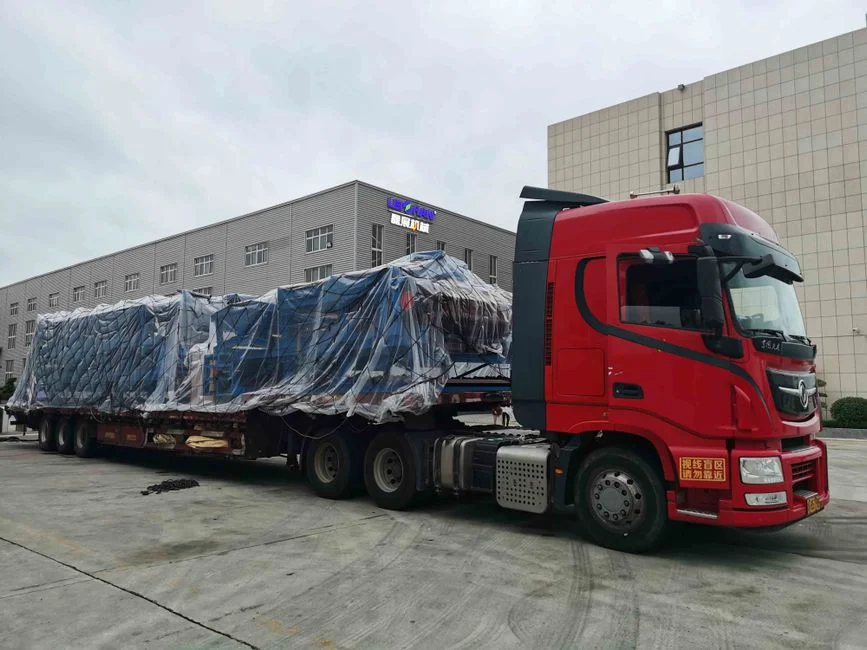
Thickener selection is driven by what the upstream train hands you. Gravity thickening is the lowest-CAPEX option and suits biological-dominant sludge from conventional activated sludge or hybrid reactors, but textile biological sludge typically needs 36–48 h of retention and the supernatant carries residual color that has to be recycled to the head of the plant. Dissolved air flotation thickening is the right pick when the upstream train includes EC at 20 mA/cm², because the iron-rich floc is light and settles poorly; a dissolved air flotation thickening unit reaches 3–5% DS in 0.5–2 h with a 3–8 g/m²·s hydraulic loading band. Rotary drum and gravity belt thickeners sit in the middle — they give 4–8% DS and double as a pre-dewatering stage for hybrid biological-physicochemical sludge, but they are polymer-hungry, so budget 4–8 kg CPAM per ton DS at this step alone. A workable 2026 selection rule: biological-dominant → gravity or DAF; EC-floc-dominant → DAF; mixed chemistry → gravity belt.
Chemical Conditioning: Polymers, Inorganics, and CST Targets
Cationic polyacrylamide (CPAM) is the workhorse polymer for textile sludge and the dose band tracks the upstream chemistry: 3–10 kg/t DS for biological-dominant sludge, dropping to 1–4 kg/t DS for EC-floc-dominant sludge where the iron hydroxide already does part of the conditioning work. The control parameter that ties this dose to a verifiable performance number is the capillary suction time: target ≤20 s for filter press feed and ≤30 s for screw press feed, against a raw baseline that often exceeds 60–120 s on textile biosolids. Inorganic conditioners (lime, ferric chloride, polyaluminum chloride) still have a place on high-dye or high-metal cake, but they add 15–30% to dry cake mass and that hits disposal economics hard when disposal is priced per ton. The two operating rules worth pinning down before any jar test: dose polymer last, after pH adjustment to 6.5–7.5, and mix at G = 300–500 s⁻¹ for rapid dispersion followed by G = 50–80 s⁻¹ for 30–60 s to grow floc without breaking it. The matrix below summarizes the dose–target combinations a 2026 conditioning skid should be specified against.
| Sludge Type | Conditioner | Dose Range (kg/t DS) | CST Target (s) | Notes |
|---|---|---|---|---|
| Biological-dominant textile biosolids | CPAM (high charge, medium MW) | 3–10 | ≤20 | Highest polymer demand; baseline CST 60–120 s |
| EC-floc-dominant (20 mA/cm² iron) | CPAM (low–medium charge) | 1–4 | ≤20 | Inorganic content aids flocculation |
| High-dye / high-metal | CPAM + FeCl₃ or PAC | 2–6 polymer + 20–40 inorganic | ≤25 | Adds 15–30% cake mass |
| Mixed biological + EC | CPAM (medium charge) | 3–6 | ≤20 | Validate with jar test + CST |
An automatic polymer dosing skid sized for the upper end of these bands is the standard 2026 delivery for a dyeing/finishing plant above 50 m³/d of wet sludge.
Mechanical Dewatering: Filter Press vs Screw Press vs Centrifuge
Device selection is driven by three numbers: target cake solids, daily wet-sludge volume, and the disposal tariff per ton of cake. Plate-and-frame filter presses run at 30–45% DS on conditioned textile sludge, batch, and are available from 1 m² laboratory units to 500 m² production machines; they are the right call when disposal cost per ton dominates the OPEX picture, and 2026 CAPEX lands in the higher band. Screw presses deliver 22–28% DS continuously with lower polymer demand and a smaller footprint, but they struggle on high-dye or high-fines feeds and the polymer OPEX is the trade. Decanter centrifuges sit at 18–25% DS, handle abrasive or fibrous sludge well, but cost in power, noise, and wear. A workable 2026 selection rule: high-disposal-cost jurisdictions and routes that demand ≥30% DS (cement kilns) → filter press; moderate disposal cost and steady biological sludge → screw press; fibrous or abrasive feeds → centrifuge. CAPEX/OPEX framing for procurement: filter press is high CAPEX and low OPEX per ton, screw press is the inverse, centrifuge is high OPEX across the board due to power and consumables.
| Device | Cake Solids (% DS) | Operation | Polymer Demand | Best Fit |
|---|---|---|---|---|
| Plate-and-frame filter press | 30–45 | Batch | Medium | High disposal cost, cement kiln route |
| Screw press | 22–28 | Continuous | Low–medium | Steady biological sludge, moderate disposal |
| Decanter centrifuge | 18–25 | Continuous | Medium–high | Fibrous, abrasive, or oily feeds |
When a lamella clarifier for sludge thickening sits ahead of the press, expect the upstream DS to arrive at 3–5%, which shortens press cycle time by 20–30% versus a feed at 2% DS.
End Disposal and 2026 Compliance Routing
Disposal routing is the decision that locks in everything upstream, because the cake-solids target you specified into the dewatering device is set by the disposal gate. Landfill remains permitted in many jurisdictions for low-metal, stabilized cake, but the EU Waste Framework Directive restricts textile cake containing certain azo and disperse dye classes, and China's GB textile sludge classification now requires stabilization before landfill in most provinces. Cement kiln co-processing is the preferred route for high-calorific, high-dye cake and needs ≥30% DS, which a filter press can hit but a screw press usually cannot without thermal predrying. Incineration with energy recovery is viable when cake exceeds 35% DS and chloride plus metal loads stay inside clinker chemistry limits. Two 2026 regulatory pressures worth designing for: EU UWWTD 2024/3019 micro-pollutant rules are pushing plants toward destruction over disposal, and several provincial Chinese regulators now require textile sludge to meet TCLP-style leachate limits before any off-site route. The disposal decision is downstream of the dewatering decision — never the other way around.
Process Selection: A 2026 Decision Framework
The following sequence yields a defensible thickening → conditioning → dewatering → disposal configuration and is the order in which a P&ID should be developed. Run it before procurement, not after commissioning.
- Determine dry-solids load. Use 0.3–0.8 kg DS per kg COD removed as the 2026 working range, anchored to the 82–94% COD removals reported in hybrid textile reactors and the 97–98% removals in the EC-EF route.
- Pick thickening mode from upstream mix. Biological-dominant → gravity or DAF; EC-floc-dominant → DAF; hybrid → gravity belt or DAF with polymer make-up.
- Set CST target and polymer dose band. ≤20 s and 3–10 kg CPAM/t DS for filter-press feed; ≤30 s and 2–6 kg CPAM/t DS for screw-press feed.
- Choose dewatering device to meet disposal threshold. ≥30% DS for cement co-processing → plate and frame filter press; ≥22% DS for landfill or stabilization → screw press; fibrous feeds → centrifuge.
- Validate with jar test + CST + leaf test. Run a six-beaker jar test on a fresh sample, measure CST, then run a leaf test on the optimum dose before any equipment order.
| Upstream Profile | Thickener | Polymer (kg/t DS) | CST Target (s) | Dewatering Device | Disposal Route |
|---|---|---|---|---|---|
| Biological-dominant (hybrid reactor) | Gravity or DAF | 3–10 CPAM | ≤20 | Filter press | Cement kiln or incineration |
| EC-floc-dominant (20 mA/cm²) | DAF | 1–4 CPAM | ≤20 | Filter press or screw press | Landfill (stabilized) or co-processing |
| Membrane bioreactor waste sludge | Gravity or rotary drum | 3–6 CPAM | ≤25 | Screw press or filter press | Landfill or co-processing |
| High-dye / high-metal cake | Gravity + DAF polish | 2–6 CPAM + 20–40 FeCl₃ | ≤25 | Filter press | Incineration with energy recovery |
Frequently Asked Questions
What is a typical polymer dose for textile sludge? Cationic polyacrylamide at 3–10 kg per ton of dry solids for biological-dominant textile biosolids, dropping to 1–4 kg/t DS when iron-based electrocoagulation floc dominates the feed (HydropureWater field data, 2026).
What cake solids can each dewatering device actually reach on textile sludge? Plate-and-frame filter press 30–45% DS, screw press 22–28% DS, decanter centrifuge 18–25% DS, on conditioned feed meeting the CST targets in the table above.
Why does EC sludge dewater differently from biological textile sludge? Iron-based EC floc is dense, inorganic-rich, and largely free of bound water, so it dewaters faster and at lower polymer demand (1–4 kg CPAM/t DS) than biological sludge, which carries 60–120 s CST baseline and bound water from dye and surfactant residues.
Does an MBR upstream eliminate the need for sludge treatment? No. MBR reduces waste-activated-sludge yield by 20–40% versus conventional activated sludge, but the membrane concentrates solids that still require thickening, conditioning, and dewatering before any disposal route is viable.
Which disposal route should a 2026 plant in a tightening jurisdiction plan for? Cement kiln co-processing or incineration with energy recovery at ≥30–35% cake solids, designed around a plate-and-frame filter press; landfill remains a fallback where local rules still allow stabilized textile cake.