What an Anodizing Wastewater Treatment Plant Supplier Actually Delivers
An anodizing wastewater treatment plant supplier delivers a turnkey package whose scope falls into two buckets: a single skid that bundles mechanical, electrical, instrumentation, and PLC into one frame, or a multi-skid EPC that includes civil works, interconnecting piping, and on-site commissioning. State explicitly in your RFQ which scope you expect — the line between "skid" and "plant" is where most scope-creep disputes start. The typical aluminum anodizing influent envelope runs 50–500 mg/L TSS, 200–2,000 mg/L COD, pH 1–4 from acid etch and seal tanks, 10–200 mg/L free aluminum, and 30–60 °C from hot seal tanks (per published VSEP anodizing case data).
Four core process stages recur across every credible proposal:
- Cr(VI) reduction with FeSO₄ or NaHSO₃ at pH 2–3,
- pH adjustment and coagulation/flocculation to 7.5–8.5,
- Dissolved air flotation (DAF) with lamella clarification for solids and metals removal,
- Sand/carbon filtration and reverse osmosis (RO) polishing for rinse water reuse.
Every supplier you shortlist must hit one of three regulatory ceilings: China GB 8978-1996 Class I (total Cr ≤ 1.5 mg/L, Cr(VI) ≤ 0.5 mg/L, Al ≤ 2 mg/L), US EPA 40 CFR 433 Metal Finishing (Cr(VI) ≤ 0.31 mg/L daily max, Cr(VI) ≤ 0.16 mg/L monthly avg), or EU IED 2010/75/EU BREF STM (Cr(VI) ≤ 0.1 mg/L BAT-AEL). If a quote does not name the standard it is designed to meet, treat it as a red flag rather than a price negotiation.
Process Flow: From Chrome Reduction to Closed-Loop Rinse Reuse
Chrome reduction is the chemistry that determines whether the rest of the plant works. NaHSO₃ dosed at 2.5–3.5× the stoichiometric Cr(VI) demand at pH 2–3 with 30–60 min HRT pushes reduction above 99.9% and residual Cr(VI) below 0.05 mg/L in solution; a redundant ORP probe in the loop is non-negotiable because under-dosing fails the discharge limit and over-dosing wastes US$180–320/t of FeSO₄ or NaHSO₃. The reduced Cr(III) is then precipitated as Cr(OH)₃ in the neutralization stage, where NaOH or lime lifts pH to 7.5–8.5 and 2–8 mg/L polyacrylamide bridges the floc over a 15–25 min flocculation HRT. A properly sized high-rate lamella clarifier handles the bulk of the hydroxide sludge before the stream reaches flotation.
DAF sizing drives solids capture more than chemistry does. Target 4–6 bar saturation pressure, 40–60 μm micro-bubbles, 20–40 min hydraulic retention, and 4–6 m/h surface loading. Hot influent from seal tanks (30–60 °C) lowers gas solubility and forces either a cooling loop or higher saturation pressure; an anodizing-line DAF system rated for that envelope should quote hot-influent tolerance explicitly. Where a full Cr(VI) reduction and pH-adjust chemical dosing skid is paired with the DAF, the ORP-driven NaHSO₃ trim keeps reagent spend inside the budget even when bath drag-out spikes.
Polishing uses two-pass RO. The first pass targets 70–85% permeate recovery; the second pass polishes the first-pass permeate to <5 μS/cm for Type II/III seal tank reuse, with CIP every 4–8 weeks using sequential alkaline and acid wash. An industrial rinse-water RO system sized for 75–85% overall recovery typically pays back in 18–30 months where fresh water exceeds US$2/m³. Sites with brine disposal constraints should price an MVR crystallizer for zero-liquid-discharge: 50–80 kWh/m³ of brine is typical energy demand, and the crystallizer adds US$120K–250K to a 30 m³/d line. The 2026 industrial water reuse trends data shows closed-loop RO cutting fresh-water draw on a 20 m³/d anodizing line from ~120 m³/d to ~25 m³/d.
| Stage | Key Parameter | Design Range | Notes |
|---|---|---|---|
| Cr(VI) reduction | NaHSO₃ dose / pH / HRT | 2.5–3.5× stoich / pH 2–3 / 30–60 min | ORP feedback required |
| pH adjust + coagulation | pH / flocculant | 7.5–8.5 / 2–8 mg/L PAM | Al(OH)₃ + Cr(OH)₃ precipitation |
| DAF | Saturation / bubble / HRT / loading | 4–6 bar / 40–60 μm / 20–40 min / 4–6 m/h | Cool hot seal-tank influent first |
| RO polishing | Recovery / permeate quality / CIP | 70–85% / <5 μS/cm / every 4–8 wk | Two-pass for seal tank reuse |
| MVR (optional ZLD) | Energy / brine capacity | 50–80 kWh/m³ | Add when brine disposal blocked |
2026 Supplier Comparison: Six Archetypes on the Market
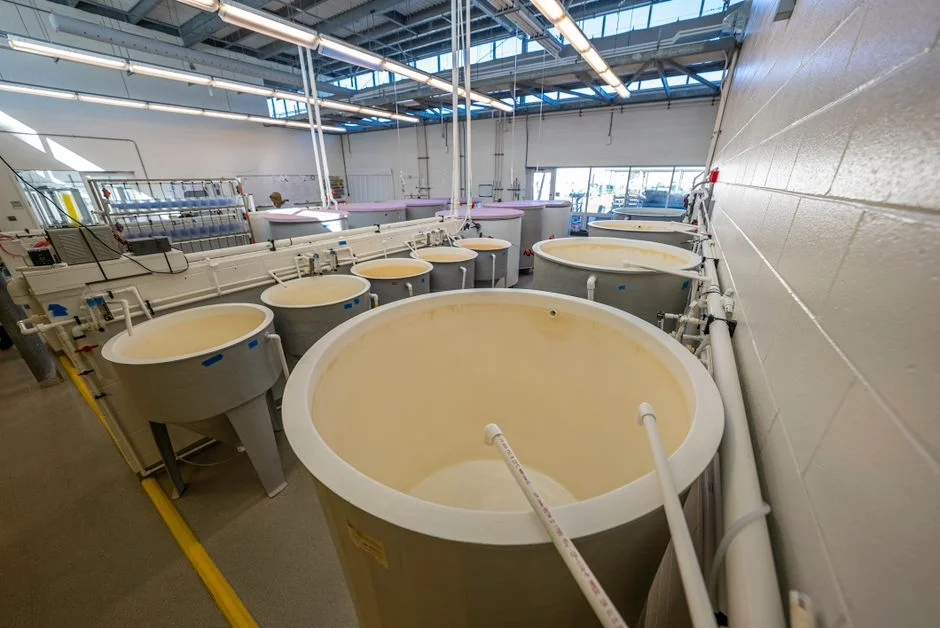
The market splits into six archetypes, and price alone will mislead you. (1) US full-line integrators (e.g. Met-Chem, US Filter heritage shops) carry the deepest in-house process engineering and bonded discharge guarantees, but lead times run 24–40 weeks and CAPEX sits at the top of the band. (2) German specialty EPCs (H2O, EnviroChemie-class firms) deliver the most rigorous P&ID documentation and energy-optimized RO trains, again with 20–36 week lead times and premium pricing. (3) Chinese turnkey EPCs price 25–45% below Western integrators on like-for-like scope with 8–14 week skid fabrication, and most now offer FAT video acceptance plus on-site SAT commissioning. (4) Membrane-only vendors (VSEP/Pall, Suez-class) quote the lowest headline price but exclude chrome reduction and pH adjust — meaning you contract a second supplier and inherit the integration risk. (5) Regional skid fabricators are cheapest but rarely warrant discharge compliance; they are viable only for ≤10 m³/d lines running sulfuric-only (no chrome) anodizing. (6) Single-unit OEMs resold through a local rep leave you as the system integrator of last resort.
| Archetype | Typical Project Size | In-House Process Eng. | Lead Time | CAPEX Position | Bonded Discharge Guarantee |
|---|---|---|---|---|---|
| US full-line integrator | 20–200 m³/d | Yes | 24–40 wk | Top tier | Yes (typical) |
| German specialty EPC | 10–100 m³/d | Yes | 20–36 wk | Top tier | Yes (typical) |
| Chinese turnkey EPC | 5–200 m³/d | Yes (varies) | 8–14 wk | 25–45% below Western | Optional / negotiable |
| Membrane-only vendor | 20–200 m³/d | Membrane only | 12–20 wk | Low (excl. pretreatment) | No |
| Regional skid fabricator | ≤10 m³/d | Mechanical only | 6–10 wk | Lowest | No |
| Single-unit OEM via rep | Site-specific | No | 4–8 wk per unit | Variable | No |
Membrane-only quotes are the most common source of integration failure: VSEP-class packages do not address Cr(VI) reduction or hydroxide precipitation, and the supplier will not accept liability when their membranes foul because the upstream chemistry was underspecified. Force every shortlist vendor to identify, in writing, the upstream chemistry they are designing against and the discharge parameters they are willing to bond. The metal finishing dosing design guide walks through the chemistry inputs you should be giving every bidder.
CAPEX and OPEX Benchmarks for 10, 30, and 50 m³/d Anodizing Lines
Per-m³-treated economics is the only number finance will defend at the capex committee. A 10 m³/d skid covering DAF + sand filter + single-pass RO, with no chrome reduction (sulfuric-only lines), runs US$120K–220K turnkey and fits in roughly 25 m². A 30 m³/d full line including chrome reduction, neutralization, DAF, RO, and a sludge dewatering filter press lands at US$380K–650K; add US$120K–250K for an MVR crystallizer where ZLD is the destination. A 50 m³/d containerized or civil-built plant with on-site PLC and remote monitoring runs US$750K–1.4M, with OPEX of US$0.8–2.2/m³ driven by FeSO₄ (US$180–320/t per 2026 procurement data), NaOH, and RO antiscalant. The hybrid ZLD design framework applies to anodizing lines that share rinse-water chemistry with electronics-adjacent operations.
| System Size | Scope | CAPEX (US$, turnkey 2026) | Footprint | OPEX Driver |
|---|---|---|---|---|
| 10 m³/d skid | DAF + sand filter + single-pass RO (no chrome) | 120K–220K | ~25 m² | RO antiscalant, power |
| 30 m³/d full line | Chrome reduction + neutralization + DAF + RO + filter press | 380K–650K | ~80–120 m² | FeSO₄, NaOH, CIP chemicals |
| 30 m³/d + MVR | Above plus MVR crystallizer | 500K–900K | ~150 m² | Steam/electricity 50–80 kWh/m³ brine |
| 50 m³/d civil-built | Full line + on-site PLC + remote monitoring | 750K–1.4M | ~200+ m² | US$0.8–2.2/m³ total |
Closed-loop RO cuts fresh water from ~120 m³/d to ~25 m³/d on a 20 m³/d line, with payback 18–30 months wherever water exceeds US$2/m³. The aluminum hydroxide sludge dewatering data shows the filter press typically adds 5–10% to CAPEX but recovers 60–80% of the water in the pressate, which loops back to the head of the plant and reduces both fresh-water draw and sludge-haul tonnage.
10-Point Vendor Scorecard: How to Score Your Inbox of Quotes
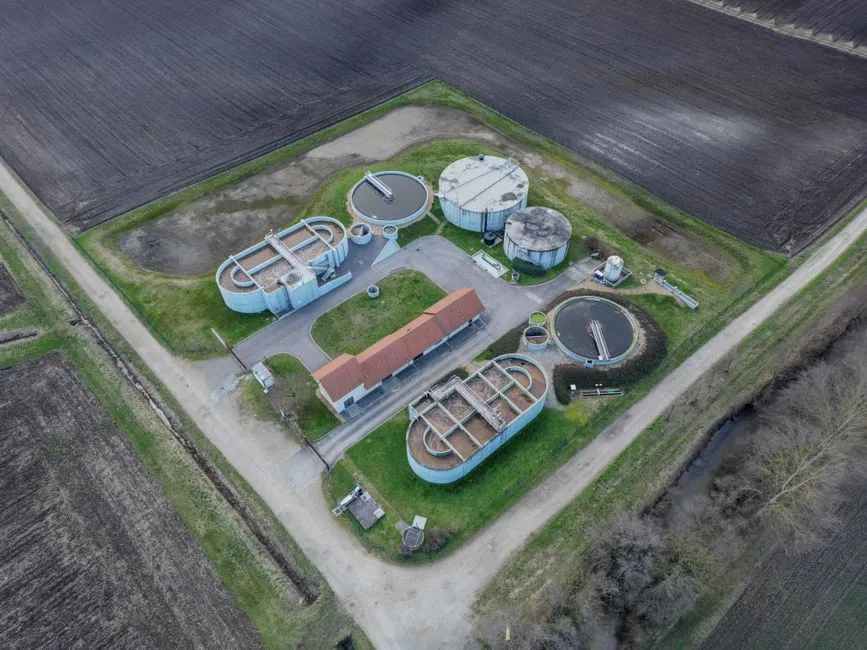
Print this, score every quote you have received, and weight compliance + chemistry highest (40% combined) and price lowest (≤15%) — the cheapest quote almost always omits chrome reduction or omits the discharge bonding that protects you. The two red flags that should auto-disqualify a bid are: (a) "we will design to your limits" with no proposed chemistry, ORP control, or stoichiometric reagent targets; (b) a price 30%+ below the second-lowest with no clear scope delta to explain the gap.
| # | Criterion | Weight | What to Look For |
|---|---|---|---|
| 1 | Flow + influent envelope match | 10% | Quote states your 5–200 m³/d and Cr/Al/pH range |
| 2 | Cr(VI) reduction chemistry | 15% | Reagent, dose, ORP loop, residual target |
| 3 | DAF sizing logic | 5% | Saturation pressure, HRT, hot-influent handling |
| 4 | Membrane selection + recovery | 10% | Two-pass RO, 70–85% recovery, CIP protocol |
| 5 | Discharge guarantee (bonded) | 15% | Performance bond naming GB 8978, 40 CFR 433, or BREF STM |
| 6 | PLC/SCADA platform | 5% | Open protocol, remote monitoring, data logging |
| 7 | Sludge handling scope | 5% | Filter press sized for hydroxide volume |
| 8 | Lead time | 10% | 8–14 wk (China) / 20–40 wk (Western) |
| 9 | FAT/SAT protocol | 5% | Video FAT, on-site SAT, training included |
| 10 | After-sales response ≤ 48 h | 5% | Local service partner or guaranteed ticket SLA |
| — | Price | ≤15% | Total turnkey including commissioning |
Frequently Asked Questions
What does an anodizing wastewater treatment plant supplier actually deliver in 2026?
A turnkey package combining chrome reduction (FeSO₄ or NaHSO₃ at pH 2–3), pH neutralization to 7.5–8.5, DAF + lamella clarification, and two-pass RO polishing for rinse water reuse — designed to meet one of GB 8978-1996, US EPA 40 CFR 433, or EU IED BREF STM. A 10 m³/d skid runs US$120K–220K; a 30 m³/d full line reaches US$380K–650K.
How much does a 30 m³/d anodizing wastewater plant cost in 2026?
US$380K–650K turnkey for the full line (chrome reduction + DAF + RO + filter press); add US$120K–250K for an MVR crystallizer if zero-liquid-discharge is required, per the CAPEX benchmarks above. OPEX runs US$0.8–2.2/m³ dominated by FeSO₄ and NaOH.
Which discharge standard applies to an aluminum anodizing line?
Either China GB 8978-1996 Class I (Cr(VI) ≤ 0.5 mg/L, Al ≤ 2 mg/L), US EPA 40 CFR 433 (Cr(VI) ≤ 0.31 mg/L daily max, 0.16 mg/L monthly avg), or EU IED 2010/75/EU BREF STM (Cr(VI) ≤ 0.1 mg/L BAT-AEL), depending on jurisdiction — each quote must name the standard it bonds against.
Can RO really close-loop the rinse water on an anodizing line?
Yes — two-pass RO with 70–85% first-pass recovery and second-pass polishing to <5 μS/cm reliably meets Type II/III seal tank reuse specifications, and the closed loop cuts fresh water from ~120 m³/d to ~25 m³/d on a 20 m³/d line per the 2026 industrial water reuse data.
What is the most common cause of Cr(VI) permit exceedance on anodizing lines?
Under-dosed NaHSO₃ during peak bath drag-out without ORP feedback; that is why every credible proposal in the process flow section above specifies 2.5–3.5× stoichiometric dose and a redundant ORP probe in the reduction loop.