Why Aluminum Processing Wastewater Sludge Needs Its Own Treatment Chain
A 10,000 m³/day anodizing and etching line typically generates 8–14 ton/day of dry solids, of which 70–85% is amorphous aluminum hydroxide produced when acidic or alkaline process streams are neutralized (per Kutz, Georgia Tech, characterization of neutralized aluminum-finishing wastewater). The same Kutz study showed that gelatinous Al(OH)₃ retains 85–92% water by weight after conventional gravity thickening, which is the single biggest reason municipal-sludge designs fail when they are applied to aluminum lines. The solids are compressible, low-density, and shear-sensitive, so a clarifier sized for primary sewage sludge underloads by 40–60% on an aluminum hydroxide feed of equal dry tonnage.
Five contamination vectors compound the dewatering problem and disqualify generic specifications:
- Free caustic and acid — anodizing baths run at pH <1 (sulfuric) or >13 (caustic etch); both extremes carry through to the neutralization stage and shift polymer demand by 30–50%.
- Fluoride at 20–200 mg/L from bright-dip and etching operations, which forms complexes with Al³⁺ and depresses the precipitation pH window.
- Phosphate from conversion-coating rinses, which co-precipitates as AlPO₄ and adds 5–10% to dry-solids mass.
- Dissolved heavy metals — Cr, Ni, Zn from alloying and decorative plating lines, typically 1–25 mg/L combined, that ride the Al(OH)₃ floc into the cake.
- Oils and greases from upstream rolling-mill coolant overflow, which blind filter cloths and push polymer demand above 10 kg/ton DS if not removed upstream.
The 2026 regulatory baseline is non-negotiable. In the United States, EPA 40 CFR 433 sets a daily maximum total aluminum limit of 2.13 mg/L and a monthly average of 1.48 mg/L for metal-finishing point sources, with the catch-all prohibition on F019-listed sludge if the underlying wastewater contains spent solvents (40 CFR 261.31). In the European Union, BAT-AELs under IED 2010/75/EU Annex X for the surface treatment of metals and plastics cap total Al at 1–3 mg/L depending on receiving water. In China, GB 39728-2025, which took effect for new aluminum-industry lines in March 2026, sets total Al ≤ 2.0 mg/L, total Cr ≤ 1.0 mg/L, and fluoride ≤ 8 mg/L, and explicitly classifies the resulting hydroxide sludge as a hazardous industrial waste when heavy-metal content exceeds the GB 34330 leaching thresholds.
The 2026 Process Flow: Neutralization → Conditioning → Dewatering → Recovery
The engineered sequence for treating sludge generated across aluminum anodizing, etching, and finishing lines breaks into four stages, each with a measurable output specification.
Step 1 — pH adjustment and precipitation. Incoming spent acid or caustic is dosed with NaOH (typical 20–30% w/w) or Ca(OH)₂ slurry to raise pH from 2–3 into the 6.5–7.5 window where Al³⁺ precipitates as Al(OH)₃. High-temperature neutralization above 60 °C produces a denser, faster-settling floc but consumes 15–20% more alkali (Kutz, Georgia Tech). Two-stage neutralization — first to pH 5.0–5.5 to drop bulk metals, then to 6.8–7.2 for polishing — improves thickener overflow quality and cuts clarifier polymer demand by 20–30% in 2026 retrofits.
Step 2 — flocculation and thickening. Cationic polyacrylamide (CPAM) at 2–8 kg/ton DS handles the bulk of aluminum-finishing sludge; high-temperature streams (>55 °C) shift to anionic polyacrylamide (APAM) because cationic charge neutralizes too quickly in hot liquor. A DAF unit for Al(OH)₃ thickening outperforms gravity clarifiers on colloidal, low-density floc, typically delivering 3–5% underflow solids versus 1–2% for a settling tank, which cuts downstream dewatering load by 30–40%.
Step 3 — mechanical dewatering. A plate-and-frame filter press for aluminum sludge dewatering operated at 6–15 bar delivers 28–35% dry-solids cake with 90–180 minute cycle times, which is the benchmark 2026 plants target. Decanter centrifuges reach 22–28% DS at higher throughput but with 30–40% higher polymer consumption. Filtrate TSS should be held below 200 mg/L to allow recycle back to the neutralization tank as dilution water.
Step 4 — disposal or recovery. The cake goes to one of three destinations: secure landfill (F019 hazardous-waste status is triggered if co-occurring solvents or leachable heavy metals push the TCLP above limits, per 40 CFR 261.24); solidification and stabilization with cement or fly ash at a 1:3 to 1:5 binder-to-cake ratio; or on-site acid regeneration, in which the cake is re-dissolved in H₂SO₄ to produce Al₂(SO₄)₃ for reuse as a wastewater coagulant. The regeneration loop is the option that converts the sludge line from a compliance cost into a revenue-positive asset, and it is the option that 2026 ESG reporting frameworks under CSRD and SEC climate-disclosure rules explicitly credit as a circular-economy intervention.
Engineering Parameters That Drive Aluminum Sludge Line Design
The numbers below are the ones a process engineer needs to size tanks, pumps, and presses before contacting a vendor. They are drawn from Kutz (Georgia Tech) field characterizations, Bagastyo et al. (2020) membrane-electrolysis data, and typical 2026 industrial-sludge operating envelopes.
| Parameter | Design value | Notes |
|---|---|---|
| pH window | 6.5–7.5 | Two-stage neutralization improves overflow quality (Kutz) |
| CPAM dose | 2–8 kg/ton DS | Switch to APAM above 55 °C |
| Thickener solids loading | 25–40 kg/m²·day | DAF outperforms gravity on colloidal Al(OH)₃ |
| Filter-press cycle time | 90–180 min | 6–15 bar operating pressure |
| Cake dryness | 28–35% DS | Plate-and-frame; centrifuge 22–28% DS |
| Filtrate TSS | <200 mg/L | Recycle to neutralization as dilution water |
| Catholyte pH for membrane electrolysis | 11.67 | Al recovery as Al(OH)₄⁻ >70% yield (Bagastyo et al., 2020) |
| Design margin | +20% hydraulic, +30% solids | Al(OH)₃ solids vary with production mix |
Two recovery options are worth sizing into the front-end design. First, membrane electrolysis at a catholyte pH of 11.67 has been shown to recover more than 70% of aluminum as Al(OH)₄⁻ (Bagastyo et al., 2020), which is a relevant data point when a plant is sizing a recovery skid alongside its dewatering line. Second, the cross-industry principle is well established: liquid alum sludge from municipal water treatment works as a coagulant for animal-farm wastewater at 40–60% replacement of fresh Al₂(SO₄)₃ (Kang et al., 2022, ScienceDirect). The same mechanism applies to industrial aluminum sludge, which can be acid-regenerated and reused as the in-plant coagulant for the very wastewater stream that produced it. The associated metal finishing chemical dosing guide covers dosing skid design in more detail for engineers who need to specify the reagent side of this loop.
Choosing Dewatering Equipment: Filter Press vs. Centrifuge vs. Screw Press
The dewatering selection is the single most expensive decision on the sludge line, and it locks in polymer demand, footprint, and downstream disposal cost for the next 15–20 years. The table below compares the three equipment classes against the polyelectrolyte-conditioning requirement established by Kutz.
| Criterion | Plate-and-frame filter press | Decanter centrifuge | Screw press |
|---|---|---|---|
| Cake dryness | 28–35% DS | 22–28% DS | 18–24% DS |
| Polymer demand | Low (2–5 kg/ton DS) | High (5–10 kg/ton DS) | Medium |
| CAPEX (50–200 m² area) | USD 80K–250K | USD 120K–400K | USD 40K–120K |
| Footprint | Large | Compact | Compact |
| Best feed condition | Well-conditioned, ≤4% feed DS | Variable, oily, abrasive | Pre-dewatered >5% DS |
| Operator skill | Moderate | High (vibration, balance) | Low |
For amorphous Al(OH)₃ sludge, the plate-and-frame press is the 2026 default above 5 ton DS/day because the higher cake dryness directly reduces landfill tonnage and, for F019-classified waste, can cut hazardous-disposal cost by USD 300–500/ton DS. A decanter centrifuge is the right pick only when feed is variable, oily, or below 1.5% DS — situations where a filter press cloth would blind inside a single cycle. Screw presses are not typically used as the primary dewatering step for gelatinous Al(OH)₃ because the press cannot build enough differential pressure to overcome the bound-water fraction; they belong on pre-dewatered streams such as DAF underflow above 5% DS. Engineers new to this segment should also read the electroplating effluent design guide, which carries the same dewatering logic into the chrome and nickel lines that often share the same sludge-building.
2026 CAPEX, OPEX and Disposal Economics
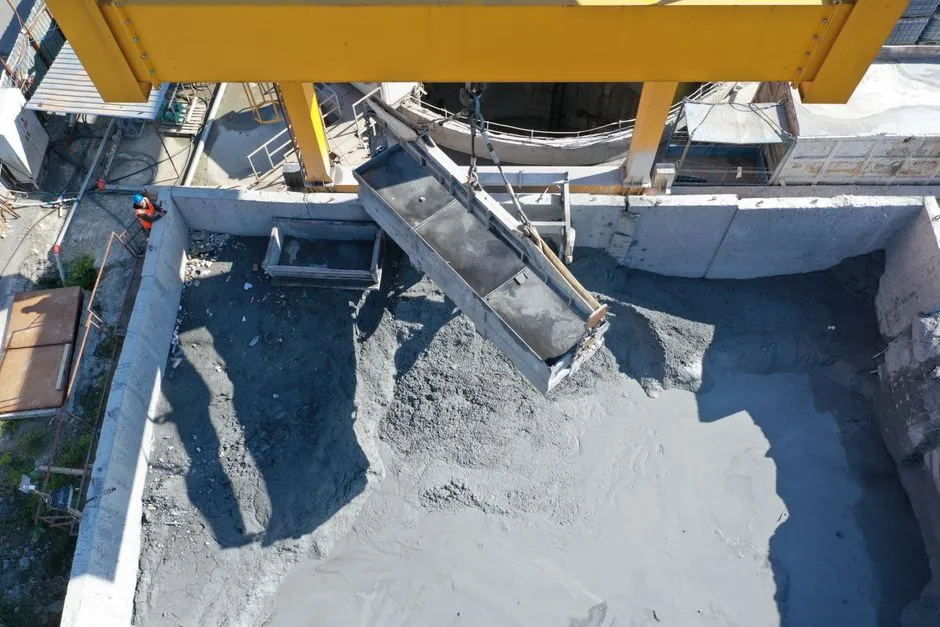
A complete 8–14 ton DS/day aluminum sludge line — neutralization tank, lamella clarifier for pre-thickening, sludge holding tank, filter press, automatic polyelectrolyte and pH dosing skid, and conveyors — runs USD 380K–720K in 2026 depending on automation level and instrumentation (HydropureWater field data, 2026). The 50% spread is driven mostly by PLC scope (basic relay logic versus full SCADA with cake-weight trending) and by enclosure rating for plants in corrosive coastal sites.
OPEX is dominated by polymer cost at 25–35% of the annual budget, followed by energy at 20–25% (filter-press feed pumps and DAF are the largest consumers), labor at 15–20%, maintenance at 10–15%, and disposal at 10–20%. The disposal line item is the one that swings the most: non-hazardous landfill in 2026 runs USD 80–220 per ton of wet cake, which translates to roughly USD 280–700 per ton of dry solids at 30% DS. If the cake is classified F019 hazardous because of co-occurring solvents or leachable metals, US disposal can exceed USD 1,200/ton DS, and that single reclassification can flip the project NPV from positive to negative.
Recovery economics are what rescue the project in that scenario. On-site acid regeneration to recover aluminum sulfate and reuse it as the in-plant coagulant cuts fresh Al₂(SO₄)₃ purchases by 40–60%, and at facilities above 5 ton DS/day the recovery skid typically pays back the incremental CAPEX in 18–30 months (HydropureWater field data, 2026). The broader case is laid out in our resource recovery ROI analysis, which compares eight industrial recovery technologies on the same payback basis.
Frequently Asked Questions
Is aluminum hydroxide sludge hazardous? In the US, it is non-hazardous by default but becomes F019-listed hazardous waste under 40 CFR 261.31 whenever the underlying wastewater contains spent solvents or when the cake fails TCLP for heavy metals. In the EU, hazardous status is set by the EU Waste Framework Directive 2008/98/EC and member-state transposition; in China, GB 34330-2017 governs leaching thresholds and was tightened for the aluminum sector under GB 39728-2025. Sludge with pH below 2 or above 12.5 is hazardous by characteristic under 40 CFR 261.22 regardless of composition.
What is the best pH for aluminum precipitation? The minimum-solubility window for Al(OH)₃ is pH 6.5–7.5, with a two-stage neutralization (first to pH 5.0–5.5 for bulk-metal drop, then to 6.8–7.2 for polishing) delivering the cleanest thickener overflow and the densest cake (Kutz, Georgia Tech).
How much dry solids can a filter press reach on aluminum sludge? A plate-and-frame press at 6–15 bar with proper CPAM conditioning reaches 28–35% DS. Centrifuges top out at 22–28% DS on the same feed, and that gap translates directly into higher landfill tonnage.
Can aluminum sludge be reused as a coagulant? Yes. Acid-regenerated Al(OH)₃ cake dissolved in H₂SO₄ returns as Al₂(SO₄)₃ and replaces 40–60% of fresh coagulant purchases in 2026 plant trials, with payback under 30 months above 5 ton DS/day (HydropureWater field data, 2026).
Which 2026 discharge standard applies to my aluminum wastewater? In the US it is 40 CFR 433 (Al daily max 2.13 mg/L, monthly average 1.48 mg/L). In the EU it is the BAT-AEL under IED 2010/75/EU Annex X (Al 1–3 mg/L). In China it is GB 39728-2025 (Al ≤ 2.0 mg/L for new lines), which also revises hazardous-waste classification for the resulting sludge.