Puebla's Municipal Wastewater Profile and Why It Matters
A municipal sewage treatment plant in Puebla, Mexico, typically treats 5,000–250,000 m³/day with MBR, SBR, or A/O processes to meet NOM-001-SEMARNAT-2021 limits (BOD ≤75 mg/L for surface water discharge, ≤150 mg/L for irrigation reuse; TSS ≤40/75 mg/L). Modern Puebla plants favor an MBR membrane bioreactor system (10–2,000 m³/day packaged) for compact footprint, or A/O / oxidación biológica contact for flows above 50,000 m³/day.
Three quick takeaways for a procurement engineer sizing a Puebla facility:
- Puebla's metropolitan area is ~3.4 million inhabitants (CONAPO 2024 projections), generating roughly 340,000–420,000 m³/day of municipal sewage at a per-capita rate of 100–125 L/capita-day.
- Only about 40–55% of collected sewage currently receives biological treatment before discharge to the Atoyac River basin; the rest is primary-only or raw overflow, especially in the historic Puebla-San Manuel trunk system during wet weather.
- Process choice in 2026 is driven less by influent variability than by NOM-001-SEMARNAT-2021 effluent targets and the type of discharge (cuerpo receptor vs reúso en riego).
The Atoyac River corridor, running from the Puebla-Tlaxcala highlands to the Balsas, carries most of the basin's dry-season BOD load. Published dry-season measurements in the Puebla-Tlaxcala corridor routinely exceed 75 mg/L BOD and 40 mg/L TSS — the very Type B thresholds that NOM-001 enforces. That makes every new planta de tratamiento de aguas residuales Puebla project a regulatory inflection point, not just a capacity exercise. For scale context, Atotonilco WWTP handles 3.6 Mm³/day and serves roughly 60% of the Mexico City metropolitan load, while the Tijuana San Antonio de los Buenos plant at ~68,000 m³/day is a useful mid-sized benchmark for a Mexican border-city facility. A typical Puebla project sits well below the Atotonilco ceiling and often above the small-pkg floor — a 5,000–50,000 m³/day range is where most RFPs land.
NOM-001-SEMARNAT-2021: The Compliance Numbers That Drive Process Selection
NOM-001-SEMARNAT-2021 sets two effluent regimes that every Puebla engineer must map to a process train before buying equipment. Type B (cuerpo receptor — rivers, streams, reservoirs) is the stricter set; Type C (reúso en riego for agricultural districts around Puebla) is looser on organics but still requires disinfection.
| Parameter | Type B (surface water) | Type C (irrigation reuse) | Monitoring |
|---|---|---|---|
| BOD₅ | 75 mg/L | 150 mg/L | Monthly composite |
| TSS | 40 mg/L | 75 mg/L | Monthly composite |
| Total Nitrogen | 28 mg/L | 40 mg/L | Monthly composite |
| Total Phosphorus | 20 mg/L | — | Monthly composite |
| FOG | 15 mg/L | 15 mg/L | Grab |
| Fecal coliforms | ≤1,000 NMP/100 mL | ≤1,000 NMP/100 mL | 24-h composite |
| pH | 5–10 | 5–10 | Continuous |
Three rules that should be written into the design basis, not negotiated later: (1) any plant discharging more than 5 L/s (~432 m³/day) must hold a CONAGUA título de concesión under the Ley de Aguas Nacionales; (2) SEMARNAT environmental impact authorization (Manifestación de Impacto Ambiental) is mandatory above thresholds in Article 5 of the LGEEPA reglamento; (3) the design effluent should be set 20–30% below the regulatory ceiling — design to BOD 50 mg/L, not 75, to absorb hydraulic peaks, toxic slug events from Puebla's industrial discharges, and seasonal cold-water effects on nitrification below 15 °C. Verifiable standard: NOM-001-SEMARNAT-2021 published in DOF 2021, in force 2026, with monthly composite sampling per NMX-AA-003 and fecal coliforms per NMX-AA-042.
Process Options for a Puebla Municipal Plant: MBR, SBR, A/O, and Integrated Package

The four credible process families for a Puebla municipal plant in 2026 are MBR, SBR, A/O (with the WSZ-style integrated package as a small-flow sub-family), and conventional activated sludge (CAS) for the largest flows. The right pick is set by capacity tier, footprint, and reuse intent — not by brand preference.
| Process | Capacity range | MLSS (mg/L) | HRT | Effluent BOD | Effluent TSS | Footprint vs CAS |
|---|---|---|---|---|---|---|
| MBR (0.1 µm PVDF) | 10–2,000 m³/d (packaged), scalable to 50,000+ m³/d | 8,000–12,000 | 4–6 h | <5 mg/L | <1 mg/L | ~40% of CAS |
| SBR | 50–50,000 m³/d | 3,000–5,000 | 12–18 h | 10–20 mg/L | 10–20 mg/L | ~70% of CAS |
| A/O (anoxic + aerobic contact) | 1–1,920 m³/d (packaged); 50,000+ m³/d (concrete) | 2,500–4,000 | 6–10 h | 15–30 mg/L | 15–30 mg/L | ~80% of CAS |
| CAS (Atotonilco-scale) | >50,000 m³/d | 2,000–4,000 | 6–8 h | 20–30 mg/L | 20–30 mg/L | 100% (baseline) |
An MBR membrane bioreactor system running at MLSS 8,000–12,000 mg/L and HRT 4–6 h is the only process that comfortably hits BOD <5 mg/L and TSS <1 mg/L — the level most reuse contracts and Type B reúso agreements in Puebla are starting to require. SBR (50–50,000 m³/d, 4–6 cycles/day) is the workhorse for mid-tier plants where equalization footprint is available and budgets are tight. The WSZ integrated package plant — essentially a factory-built A/O contact oxidation unit sized 1–1,920 m³/day — delivers the lowest CAPEX per m³ for sub-2,000 m³/day rural and peri-urban clusters around the Puebla metro. For flows above 50,000 m³/day, conventional A/O or CAS with secondary clarification is the only economically defensible choice; expect BOD 20–30 mg/L out and a large civil footprint. Sludge handling applies to every option: budget 1.5–2.5% mass yield per kg BOD removed, and plan for thickening plus mechanical dewatering downstream of the biological stage.
Pre-Treatment and Headworks for a Puebla-Site Plant
Headworks failures cause roughly 30–40% of unplanned downtime in Mexican municipal plants, and Puebla's combined sewer zones make the issue worse. Four unit operations are non-negotiable. A GX series rotary bar screen at 3–6 mm aperture protects downstream pumps and membranes from rags, plastics, and the post-festival debris loads that peak in central Puebla. A vortex degritter or aerated grit chamber for 0.2 mm sand runs at 60–90 m³/m²·h surface loading and is mandatory before any MBR or packaged plant. A DAF pre-treatment system at 4–300 m³/h removes 90–95% of FOG — essential given that food and automotive suppliers discharge significant FOG loads to Puebla's municipal sewer. Finally, an equalization basin sized for 4–8 h HRT smooths combined-storm-sewer overflow peaks; without it, the downstream biological unit pays the penalty. EPA Municipal Wastewater Treatment manual data shows that fine screening alone removes 20–35% of suspended solids before biological treatment, which translates directly into smaller aeration tanks and lower sludge yield downstream.
Disinfection, Sludge Handling, and Effluent Reuse Pathways
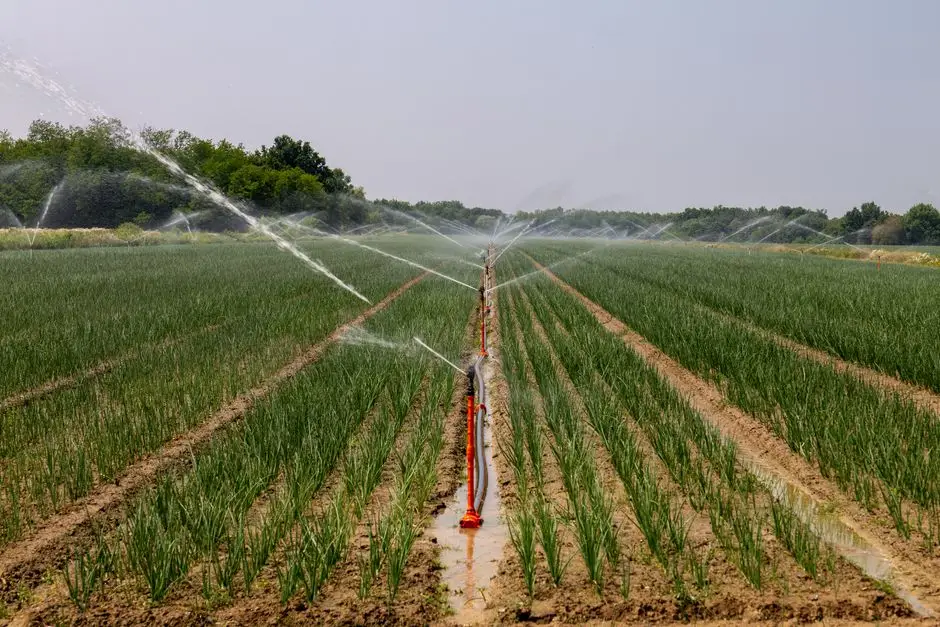
Closing the treatment train to a fully compliant, reuse-ready end product is the part most Puebla procurement documents under-spec. For fecal coliform compliance (NOM-001 ≤1,000 NMP/100 mL), a ClO₂ disinfection generator at a dose of 1.5–3 mg/L with 15-min contact time is the most reliable option in Mexico — chlorine dioxide tolerates high pH and ammonia-N, which are both common in Puebla's combined-sewer catchments. UV at 30–40 mJ/cm² is the chlorine-free alternative favored in reúso contracts where irrigation districts require zero residual oxidant. Sludge dewatering with a plate and frame filter press (1–500 m² filtration area) reaches 22–28% dry solids and cuts transport/disposal cost by 60–75% versus liquid sludge. For effluent reuse, Type C water on alfalfa and corn fodder within Puebla's irrigation districts generates a water-rights revenue offset of USD 0.08–0.15/m³. Above 100,000 m³/day, anaerobic digestion with biogas recovery becomes viable at 0.3–0.4 Nm³ CH₄ per kg BOD removed, enough to offset 20–30% of plant electricity.
Capital and Operating Cost Benchmarks for a Puebla Municipal Plant
Mexico-typical 2026 cost ranges differ materially from North American benchmarks, so do not import U.S. EPC figures directly. The numbers below are the bands a Puebla engineer should validate against, not the final number to put in a board memo.
| Capacity tier | Process | CAPEX (USD/m³/day) | OPEX (USD/m³) | Dominant OPEX line |
|---|---|---|---|---|
| <500 m³/d | WSZ packaged A/O | 1,200–1,800 | 0.18–0.32 | Labor + sludge hauling |
| 500–5,000 m³/d | MBR packaged | 700–1,200 | 0.22–0.40 | Energy + membrane lifecycle |
| 5,000–50,000 m³/d | MBR or SBR | 450–900 | 0.15–0.28 | Energy |
| >50,000 m³/d | Conventional A/O / CAS | 250–450 | 0.10–0.20 | Energy (CFE tariff) |
Energy is 40–55% of OPEX, labor 15–25%, chemicals 10–20%, and sludge handling 10–20% — typical 2026 breakdown for Mexican municipal plants. Specific consumption sits at 0.35–0.55 kWh/m³ against the CFE industrial tariff of ~MXN 1.6/kWh (2026). MBR membrane replacement is the single largest lifecycle cost outside energy: USD 8–14 per m² of PVDF membrane every 7–10 years, so a 10,000 m³/d MBR plant should budget USD 80,000–140,000 in year 7–10 for a membrane swap. For mega-scale context, the Atotonilco project at 3.6 Mm³/day was reported at roughly USD 1.0+ billion total installed cost — the anchor for the largest end of any Mexican municipal plant budget conversation. For more detailed module-level pricing, see the modular sewage treatment cost breakdown.
7-Step Selection Framework for Your Puebla Project
A reproducible decision sequence is more useful than a feature list. Run the seven steps below before issuing an RFP.
- Confirm design flow and influent. Use 100–125 L/capita-day in Puebla; assume domestic BOD 200–350 mg/L, COD 400–600 mg/L, TSS 200–300 mg/L, TN 35–45 mg/L unless you have site-specific sewer monitoring.
- Determine the discharge mode. Type B (cuerpo receptor) or Type C (reúso en riego) — that single decision sets the effluent target and the biological process floor.
- Plot available footprint against technology footprint. MBR delivers ~60% footprint reduction versus CAS; if the site is <0.3 m² per m³/day, MBR is usually the only fit.
- Match capacity tier to technology tier. <2,000 m³/d → WSZ package; 2,000–50,000 m³/d → MBR or SBR; >50,000 m³/d → conventional A/O.
- Verify regulatory pathway. CONAGUA título de concesión above 5 L/s; SEMARNAT Manifestación de Impacto Ambiental; local Puebla state water commission (SOAPAP) coordination for trunk-sewer connections.
- Spec headworks and sludge train before the biological unit. Screen, grit, DAF (if FOG >50 mg/L influent), and filter press sizing drives biological-stage performance more than vendor brochures suggest.
- Validate supplier credentials. NOM/ISO 9001/14001 certifications, FAT records, in-country commissioning, and Spanish-language O&M documentation are minimum filters; for benchmark specs see the municipal sewage treatment plant engineering specs guide and the Latin American wastewater plant supplier guide.
Frequently Asked Questions
What effluent limits apply to a municipal sewage treatment plant in Puebla discharging to the Atoyac River? NOM-001-SEMARNAT-2021 Type B limits apply: BOD ≤75 mg/L, TSS ≤40 mg/L, TN ≤28 mg/L, TP ≤20 mg/L, fecal coliforms ≤1,000 NMP/100 mL; see the NOM-001-SEMARNAT-2021: The Compliance Numbers section for the full table and design margin guidance.
Which is more cost-effective for a 10,000 m³/d Puebla plant — MBR or SBR? MBR runs USD 700–1,200/m³/d CAPEX versus SBR at USD 450–700/m³/d, but MBR delivers TSS <1 mg/L and cuts sludge yield; OPEX crossover depends on membrane replacement scheduling — see the cost benchmarks in the Capital and Operating Cost Benchmarks section.
What is the minimum flow that triggers a CONAGUA title de concesión for a Mexican municipal plant? Any discharge above 5 L/s (~432 m³/day) requires a CONAGUA título de concesión under the Ley de Aguas Nacionales; this applies regardless of whether the plant uses MBR, SBR, or A/O (regulatory pathway covered in Step 5 of the 7-Step Selection Framework).
Can a small community under 500 m³/day use a packaged WSZ plant and still meet NOM-001? Yes — a factory-built WSZ A/O contact oxidation unit at 1–1,920 m³/day typically achieves BOD 15–30 mg/L and TSS 15–30 mg/L, which meets Type C reúso limits but requires supplemental polishing to hit Type B 40 mg/L TSS (process comparison in the Process Options section).
What is the 2026 electricity cost for a Puebla municipal WWTP? Typical specific consumption is 0.35–0.55 kWh/m³ against the CFE industrial tariff of ~MXN 1.6/kWh; energy is 40–55% of OPEX, so a 10,000 m³/d plant should budget USD 35,000–70,000 per year in power — see the Capital and Operating Cost Benchmarks section for the OPEX breakdown.