Finland operates roughly 350 municipal sewage treatment plants (WWTPs) that must meet EU Urban Waste Water Directive 91/271/EEC plus national standards. Directive 91/271/EEC Annex I sets BOD₅ at 25 mg/L or 70–90% reduction, and for sensitive areas total P at 2 mg/L (10,000–100,000 PE) or 1 mg/L (>100,000 PE), or 80% reduction; Finnish permits often push total P below 0.5 mg/L. The EUR 35M Nokia WWTP (2024–2027) combines mechanical screening, biological A/O processes, and chemical precipitation across 12,000 m² of process area. MBR systems achieve effluent COD below 50 mg/L, versus 70–120 mg/L for conventional activated sludge, but carry 20–30% higher CAPEX per 1,000 m³/day.
How Finland's Cold Climate and Regulations Shape Municipal WWTP Design
Finland's winter wastewater temperatures fall between -5°C and -30°C, raising biological-treatment energy demand by 20–40% versus temperate climates, according to the Finnish Environment Institute 2023. Designers respond with insulated tanks, deeper reactors, or hydraulic retention times extended to keep microbial activity viable. EU Urban Waste Water Directive 91/271/EEC Annex I requires BOD₅ ≤25 mg/L or 70–90% reduction for secondary treatment. For sensitive areas it sets total P at 2 mg/L (10,000–100,000 PE) or 1 mg/L (>100,000 PE), or 80% reduction; earlier vendor briefs often quoted 95% BOD₅ and 90% phosphorus removal, which exceed those EU minima. Finland designated its whole territory as a sensitive area, so plants above 10,000 PE must apply phosphorus removal, and national permits commonly set total P as low as <0.5 mg/L where Baltic Sea eutrophication is a concern.
Demographics drive the technology mix. About 350 municipal WWTPs serve populations over 100, and roughly 80% sit in rural areas with a national density near 18 inhabitants/km² (Syke 2024). That dispersion favours compact, highly automated systems that run with minimal on-site staff, which is one reason MBR units and small prefabricated plants are common in remote municipalities. Sludge logistics also matter: transport distances are long, so efficient dewatering is non-negotiable.
Influent and Effluent Benchmarks for Finnish Municipal WWTPs in 2025
Typical Finnish municipal influent in 2025 runs BOD₅ 200–400 mg/L, COD 400–800 mg/L, TSS 200–500 mg/L, total P 6–12 mg/L, and total N 30–60 mg/L (Syke 2024). Effluent targets for plants above 10,000 PE are BOD₅ <25 mg/L, COD <125 mg/L, TSS <35 mg/L, and total P <0.5–1.0 mg/L depending on receiving-water sensitivity, with total N <15 mg/L in sensitive zones. MBR systems routinely deliver COD below 50 mg/L and TSS below 5 mg/L, beating conventional activated sludge's typical 70–120 mg/L COD and 20–30 mg/L TSS (EPA 2024 benchmarks).
Cold weather bites biology hard: below 10°C, treatment efficiency drops 10–15%. Finnish plants compensate with solids retention times of 20–40 days, insulated reactor walls, and partial basin heating during the coldest weeks. Most plants we size for northern sites run at the lower end of that SRT window only when influent temperature stays above 12°C.
| Parameter | Typical Finnish Influent (Syke 2024) | Finnish Effluent Requirement (EU 91/271/EEC + National) | Typical MBR Effluent (HydropureWater field data, 2025) | Typical Conventional Activated Sludge Effluent (EPA 2024) |
|---|---|---|---|---|
| BOD | 200–400 mg/L | <25 mg/L | <5 mg/L | 10–25 mg/L |
| COD | 400–800 mg/L | <125 mg/L | <50 mg/L | 70–120 mg/L |
| TSS | 200–500 mg/L | <35 mg/L | <5 mg/L | 20–30 mg/L |
| Total P | 6–12 mg/L | <0.5–1.0 mg/L | <0.1 mg/L (with chemical dosing) | <0.5–1.0 mg/L (with chemical dosing) |
| Total N | 30–60 mg/L | <15 mg/L (sensitive areas) | <10 mg/L | 10–15 mg/L |
MBR vs. Conventional Activated Sludge vs. DAF for Finnish Conditions
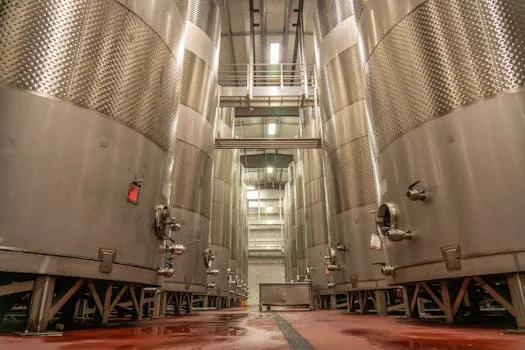
MBR systems for Finnish municipal WWTPs deliver about 60% smaller footprint and effluent COD below 50 mg/L, but cost 20–30% more in CAPEX than conventional activated sludge at EUR 1.2–1.8M per 1,000 m³/day. They integrate biological treatment with membrane filtration, so secondary clarifiers and tertiary sand filters drop out of the layout. OPEX runs 15–25% higher because membranes need replacement every 5–8 years and aeration plus membrane scouring draw more power. HydropureWater supplies MBR systems for Finnish municipal WWTPs built for cold-climate operation, including submerged membranes that resist freezing when paired with insulated tanks.
Conventional activated sludge is the lower-CAPEX option at EUR 0.8–1.2M per 1,000 m³/day, but it needs 2–3× the footprint and produces more sludge, around 0.4–0.6 kg TSS per kg BOD removed. Cold-climate sites push SRT to 30–40 days, which inflates tank volumes and heating load. Dissolved Air Flotation (DAF) sits at EUR 0.5–0.9M per 1,000 m³/day and pulls over 95% TSS in pre-treatment or small plants under 5,000 PE, but it does not remove dissolved nutrients on its own. HydropureWater's DAF pre-treatment for Finnish WWTPs handles solids and FOG efficiently; a detailed DAF engineering guide explains the hydraulics and air-to-solids ratio behind that performance.
The Nokia WWTP (EUR 35M, 2024–2027) chose conventional activated sludge plus chemical precipitation because land was available and the lower upfront spend beat MBR's higher CAPEX, even with the larger sludge-handling burden that follows. For tight urban sites or plants chasing <0.5 mg/L total P without polishing, MBR is usually the shorter path.
| Feature | MBR (Membrane Bioreactor) | Conventional Activated Sludge | DAF (Dissolved Air Flotation) |
|---|---|---|---|
| Footprint | 60% smaller | 2–3× MBR footprint | Compact, for pre-treatment or small flows |
| Effluent COD | <50 mg/L | 70–120 mg/L | Not primary COD removal |
| CAPEX (per 1,000 m³/day) | EUR 1.2–1.8M | EUR 0.8–1.2M | EUR 0.5–0.9M (pre-treatment) |
| OPEX (relative) | 15–25% higher (membrane replacement, energy) | Lower, but higher sludge costs | Moderate (energy for air, polymer) |
| Sludge Production | Lower (0.2–0.4 kg TSS/kg BOD) | Higher (0.4–0.6 kg TSS/kg BOD) | High (concentrated solids) |
| Cold-Climate Adaptation | Submerged membranes resist freezing, insulated tanks | Heated tanks, extended SRT (30–40 days) | Insulated tanks for optimal performance |
| Primary Use | Full treatment, high effluent quality, compact sites | Full treatment, lower CAPEX, larger sites | Pre-treatment (TSS, FOG removal), small plants |
Chemical Dosing for Phosphorus Removal and pH Control in Finnish WWTPs
Phosphorus removal in Finnish municipal sewage treatment plants relies on chemical precipitation, with ferric chloride (FeCl₃) at 10–20 mg Fe/L or aluminum sulfate (Al₂(SO₄)) at 5–10 mg Al/L, depending on influent P and target effluent. These coagulants convert soluble phosphorus into insoluble flocs that report with the waste sludge. HydropureWater's automatic chemical dosing systems for Finnish WWTPs hold the dose within the tight band that <0.5 mg/L total P demands.
FeCl₃ runs EUR 0.05–0.10 per m³ treated (2025 prices), or 15–25% of total OPEX in conventional plants. Real-time monitoring tied to automatic dosing cuts chemical use 10–20% in our Nordic retrofits. Lime or sodium hydroxide holds biology in its pH 6.5–8.5 sweet spot; cold water shifts gas solubility and can push demand upward by a few percent in deep winter.
Precipitation is not free: sludge volume climbs 20–40%, so sludge dewatering for Finnish WWTPs becomes a major line item. Plate-and-frame presses reach 25–40% dry solids; screw presses trade peak dryness for continuous operation and lower kWh. Benchmarks in our sludge dewatering efficiency guide show a 25–35% reduction in disposal tonnage once presses replace belt thickeners.
2025 CAPEX and OPEX Breakdown for Finnish Municipal WWTPs
CAPEX for a 1,000 m³/day Finnish municipal WWTP in 2025 spans EUR 1.2–1.8M for MBR, EUR 0.8–1.2M for conventional activated sludge, and EUR 0.5–0.9M for DAF pre-treatment. OPEX per m³ treated breaks down as energy 0.10–0.25 EUR (cold-climate premium included), chemicals 0.05–0.15 EUR, labor 0.03–0.08 EUR, and maintenance 0.02–0.05 EUR. Sludge disposal adds EUR 50–150/ton to landfill or EUR 20–50/ton for agricultural reuse under EU 2019/1009 contaminant limits. Broader global WWTP cost benchmarks show Finnish OPEX running roughly 15–25% above Mediterranean peers, almost entirely on energy and heating.
Heat recovery changes that math. The Turku WWTP runs 1.5 MW heat pumps that offset 30–50% of plant energy use, with a 3–5 year payback based on 2024 case data. PLC-controlled dosing and process automation trim labor 20–30% and shave another 5–10% off chemical spend.
| Cost Category | MBR System (per 1,000 m³/day) | Conventional Activated Sludge (per 1,000 m³/day) | DAF Pre-treatment (per 1,000 m³/day) |
|---|---|---|---|
| CAPEX Range | EUR 1.2–1.8M | EUR 0.8–1.2M | EUR 0.5–0.9M |
| OPEX Breakdown (per m³ treated) | |||
| Energy | 0.15–0.25 EUR | 0.10–0.20 EUR | 0.05–0.10 EUR |
| Chemicals | 0.05–0.10 EUR | 0.05–0.15 EUR | 0.02–0.05 EUR |
| Labor | 0.03–0.06 EUR | 0.05–0.08 EUR | 0.02–0.04 EUR |
| Maintenance | 0.03–0.05 EUR | 0.02–0.04 EUR | 0.01–0.03 EUR |
| Sludge Disposal | 0.02–0.04 EUR (lower volume) | 0.04–0.08 EUR (higher volume) | 0.01–0.03 EUR (pre-treatment) |
| Total OPEX (approx.) | 0.28–0.50 EUR/m³ | 0.26–0.55 EUR/m³ | 0.11–0.25 EUR/m³ |
Equipment Selection Framework for Finnish Municipal WWTPs
Procurement for a Finnish municipal WWTP starts with influent characterization and the EU Urban Waste Water Directive 91/271/EEC effluent line, then narrows by site, climate, and life-cycle cost. The framework below keeps the decision auditable for plant engineers and tender reviewers.
- Step 1: Pin down influent and effluent numbers. Measure BOD₅, COD, TSS, total P, and total N across at least one seasonal cycle. Confirm the EU 91/271/EEC baseline plus any stricter Finnish national limits for the specific discharge catchment. This is the performance baseline every vendor quote has to beat.
- Step 2: Map the footprint. Compact urban or brownfield sites push the choice toward MBR (60% smaller than conventional). Sites with spare land can absorb a conventional activated sludge layout at lower CAPEX.
- Step 3: Quantify the cold-climate penalty. At -5°C to -30°C, biological activity and aeration efficiency both fall. Specify insulated tanks, SRT of 20–40 days, and partial reactor heating where effluent total P must stay below 0.5 mg/L year-round.
- Step 4: Run the life-cycle cost. MBR's higher CAPEX is often offset by lower sludge tonnage and tighter effluent; conventional activated sludge's lower CAPEX is offset by sludge handling and energy. Compare 20-year net present value, not just year-one spend.
- Step 5: Vet the vendor's cold-climate track record. Ask for references on Nordic or Russian-fed WWTP installs, membrane warranty terms under local SRT and temperature, and guaranteed kWh/m³ at 5°C. For small decentralized clusters, packaged units such as the Underground Package Sewage Treatment Plant (WSZ Series) provide a factory-built alternative with buried-tank cold buffering.
Send these questions to every bidder before you score the tender:
- What is the guaranteed membrane lifespan and warranty for MBR systems at 5–10°C and SRT 20–40 days?
- Can the chemical dosing system hold total P below 0.5 mg/L, and what is its dosing precision and automation level?
- What are the energy consumption benchmarks (kWh/m³) for the proposed solution during January operation?
- Provide case studies of similar installations in cold climates, with long-term performance and maintenance logs.
- What is the expected sludge volume and dry solids content after dewatering, and what are the disposal pathways under EU 2019/1009?
Who This Guide Is For and Next Steps
This brief fits municipal process engineers, EPC contractors, and procurement officers sizing greenfield or upgrade WWTPs in Finland or comparable Nordic climates. If your site is in a Mediterranean climate, the cold-weather design margin and energy figures here will overstate your OPEX, and you should switch to a temperate baseline. Send your influent profile, effluent targets, and footprint constraints to our engineering desk to scope an MBR, conventional activated sludge, or DAF pre-treatment package, or to compare against the Underground Package Sewage Treatment Plant (WSZ Series) for small rural clusters. Request a sized quotation and P&ID set for your Finnish municipal WWTP project.
Frequently Asked Questions
What are the Finnish effluent standards for municipal WWTPs?
Finnish wastewater treatment standards build on EU Urban Waste Water Directive 91/271/EEC Annex I, which sets BOD₅ at 25 mg/L or 70–90% reduction and, for sensitive areas, total P at 2 mg/L (10,000–100,000 PE) or 1 mg/L (>100,000 PE), or 80% reduction. Earlier briefs often cited 95% BOD₅ and 90% phosphorus removal; those figures exceed the EU minima. Finnish national permits in Baltic catchments often set total P below 0.5 mg/L. Practical effluent targets remain BOD₅ below 25 mg/L, COD below 125 mg/L, TSS below 35 mg/L, and total N below 15 mg/L in sensitive areas.
How does Finland's cold climate affect WWTP design?
Winter wastewater at -5°C to -30°C raises biological-treatment energy demand 20–40% above temperate plants and slows reaction rates, so designers extend SRT to 20–40 days, increase reactor volume, and insulate or partially heat basins. Cold-climate plants also oversize aeration blowers to maintain dissolved oxygen when water viscosity rises.
What is the payback period for heat recovery at a Finnish WWTP?
Heat recovery at Finnish WWTPs such as the Turku 1.5 MW heat-pump installation pays back in 3–5 years based on 2024 case data, and offsets 30–50% of total plant energy cost. The economics improve further when the recovered heat feeds on-site district heating rather than just internal building loads.
MBR or conventional activated sludge for a small Finnish municipality?
For small Finnish municipalities, MBR wins on footprint and effluent quality, producing COD below 50 mg/L and TSS below 5 mg/L in a 60% smaller layout, while conventional activated sludge wins on CAPEX at EUR 0.8–1.2M per 1,000 m³/day versus EUR 1.2–1.8M for MBR. Choose MBR where land is tight or total P must stay below 0.5 mg/L; choose conventional where land is available and CAPEX is the binding constraint.
What are the most common compliance failures in Finnish WWTPs?
Phosphorus exceedances are the most common compliance failures in Finnish WWTPs, driven by under-dosed or poorly controlled chemical precipitation, followed by BOD₅ spikes during cold snaps or peak flow events when biological capacity is short. Both are mitigated by online P analyzers tied to automatic dosing and by SRT buffers sized for the coldest week on record.