Florida municipal sewage treatment plants total 371 Publicly Owned Treatment Works (POTWs) and serve about 17.4 million residents. EPA National Sewersheds data (v1.2, updated January 2026) confirms 371 Florida plants serving 17,360,216 people (2022 residential count). Roughly 12% of these facilities were in significant non-compliance in EPA ECHO Q2 2024 reporting (about 44 plants). Permit limits depend on disposal path: secondary technology-based limits under Fla. Admin. Code R. 62-600.420, or advanced waste treatment under Fla. Stat. 403.086 where listed waters apply.
Florida municipal sewage treatment plants: 2026 compliance snapshot
Florida municipal sewage treatment plants follow two limit frameworks. Secondary Class III coastal TBELs set CBOD5 and TSS at 20.0 mg/L annual average (Fla. Admin. Code R. 62-600.420). Advanced waste treatment under Fla. Stat. 403.086(4) requires 5/5/3/1 mg/L CBOD5/solids/TN/TP on listed waters. Earlier guidance treated 5/5/3/1 as the default Class III package; that package is AWT, not the secondary TBEL.
Florida's hydrogeology, high groundwater tables, and nutrient-sensitive basins such as the Everglades and Tampa Bay drive many water-quality-based limits beyond secondary treatment. According to EPA ECHO data for Q2 2024, about 44 facilities were classified as significant non-compliance (SNC). Common SNC drivers in the original engineering review were effluent exceedances (41%), reporting failures (28%), and operational deficiencies (19%). Coastal plants also face saltwater intrusion that raises chloride and stresses biological treatment; inland plants face Everglades Forever Act phosphorus pressure that secondary treatment alone cannot meet.
| Parameter | Small POTWs (<1 MGD) | Mid-Size POTWs (1–10 MGD) | Large POTWs (>10 MGD) |
|---|---|---|---|
| Facility Count | 230 (62%) | 104 (28%) | 37 (10%) |
| Primary Compliance Risk | Operational Staffing | Nutrient Removal Limits | Peak Storm Flow/SSO |
| Avg. Effluent TN (mg/L) | 6.0 - 12.0 | 3.0 - 8.0 | 2.5 - 5.0 |
| SNC Rate (EPA 2024) | 15% | 9% | 5% |
Fla. Stat. 403.086 already requires AWT for Tampa Bay system waters and Biscayne Bay tributaries. Indian River Lagoon discharges require AWT beginning July 1, 2025. By January 1, 2033, AWT extends to waterbodies not attaining nutrient standards or covered by nutrient BMAPs. Engineers should read the NPDES permit and receiving-water classification before sizing nutrient removal, not assume every Class III outfall is 5/5/3/1.
Treatment Process Selection for Florida POTWs: Engineering Parameters and Effluent Quality
Florida POTW process selection starts from the permitted annual-average limits and the wet-season hydraulic peak. Conventional Activated Sludge (CAS) remains the baseline on many older plants and typically delivers 85–92% BOD removal at design MLSS and HRT conditions. CAS often needs chemical dosing plus large clarifiers to approach AWT nitrogen and phosphorus targets. Where land is scarce or reuse quality is required, MBR systems for Florida POTWs achieving reuse-quality effluent commonly reach 95–98% BOD/TSS removal with a smaller footprint.
Biological Nutrient Removal (BNR) is the workhorse for nutrient-restricted basins. Four-stage Bardenpho trains are widely used in Florida to target 3 mg/L TN and 1 mg/L TP with limited chemical use when tankage and recycle rates are adequate. Wet-season flows can rise 30–50% above dry-season averages, so equalization volume and turndown-capable aeration matter as much as steady-state kinetics. Tourist centers such as Orlando and Miami also need strong FOG and grit removal ahead of biological reactors.
| Process Type | BOD Removal (%) | TN Removal (%) | Avg. O&M Cost ($/m³) | Footprint Requirement |
|---|---|---|---|---|
| CAS | 85 - 92% | 80 - 88% | $0.20 - $0.40 | High |
| MBR | 95 - 98% | 85 - 92% | $0.45 - $0.75 | Low |
| BNR (4-Stage) | 90 - 95% | 90 - 94% | $0.30 - $0.55 | Medium |
| SBR | 88 - 94% | 82 - 90% | $0.25 - $0.45 | Medium |
For smaller districts or phased annexation areas, an Underground Package Sewage Treatment Plant (WSZ Series) can defer a full plant expansion while meeting Florida DEP domestic wastewater standards. High-efficiency blowers and automated membrane or clarifier controls help hold compliance when temperature and organic load swing with Florida seasons.
What chemical dosing equipment works for Florida POTWs?
Chemical dosing equipment for Florida POTWs is selected against nutrient credit, alkalinity demand, and disinfection residual stability at summer wastewater temperatures. Common duty points include metal-salt phosphorus precipitation, carbon supplemental dosing for denitrification, and oxidant feed for fecal coliform control. For disinfection targeting about 200 CFU/100 mL fecal coliform under basic disinfection rules, EPA-compliant chlorine dioxide disinfection for Florida POTWs often holds a more stable residual than chlorine gas in high-temperature plants. Dose skids need redundant pumps, calibration columns, and corrosion-resistant wetted parts for coastal humidity and salinity.
2025 Cost Benchmarks for Florida Municipal Sewage Treatment Upgrades
Florida POTW capital costs in 2025 engineering benchmarks ranged from $8.2M to $12M per MGD for CAS-based new builds and $12M to $18M per MGD for MBR-based facilities. Those ranges include hurricane-resistant structural detailing that typically adds 12–18% versus inland non-coastal construction. Land cost and flood elevation requirements remain major schedule and budget drivers for coastal municipalities.
BNR retrofits on existing CAS tankage typically ran $1.5M–$4.5M in the same 2025 benchmark set, depending on available anoxic volume and recycle piping. Membrane conversions for high-level disinfection and reuse quality ranged $2.8M–$7.2M. Tertiary filtration packages were $0.8M–$2.2M. Reclaimed-water sales and nutrient credit programs in cities such as St. Petersburg and Orlando often offset part of the O&M uplift after startup.
| Upgrade Category | Estimated Capital Cost | Annual O&M Impact | Typical ROI (Years) |
|---|---|---|---|
| BNR Retrofit | $1.5M - $4.5M | +10% to +15% | 5 - 8 |
| MBR Conversion | $2.8M - $7.2M | +25% to +40% | 7 - 10 |
| Tertiary Filtration | $0.8M - $2.2M | +5% to +8% | 4 - 6 |
| Sludge Dewatering | $0.5M - $1.8M | -15% (Disposal Savings) | 3 - 5 |
Florida State Revolving Fund (SRF) loans commonly finance these projects at low interest rates near 2% for eligible water-pollution-control work. Coastal Public-Private Partnership models described in the Gulf Coast wastewater treatment engineering guide also appear in Florida, shifting design-build-operate risk for a long-term service fee.
Equipment Selection Checklist for Florida POTWs: Matching Technologies to Compliance Needs
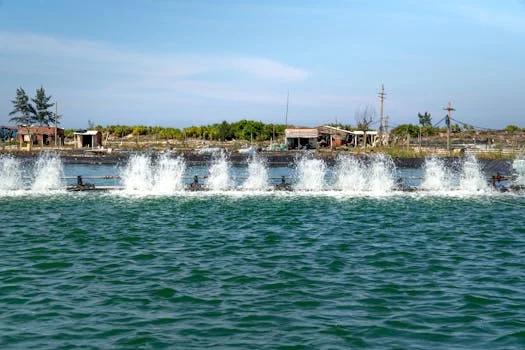
Florida municipal plant equipment must tolerate high salinity, humidity, fine sand grit, and storm surge. Use the checklist below to match unit processes to permit risk before freezing the bid package.
- Preliminary Treatment: Use Florida-optimized rotary bar screens for rag removal to protect pumps from fibrous municipal loads. Size grit chambers for fine Florida sand that enters sewers during heavy rain.
- Primary Clarification: For urban sites with limited acreage, high-efficiency lamella clarifiers provide 10–40 m/h surface loading rates and cut clarifier footprint versus conventional circular tanks.
- Secondary/Tertiary Systems: Compare MBR effluent quality benchmarks for Florida POTWs when reuse or AWT solids limits drive membrane selection. Specify modules tolerant of fouling from high-alkalinity groundwater.
- Disinfection Compliance: Confirm whether the permit requires basic or high-level disinfection, then size oxidant generation and contact time for peak summer temperature.
- Sludge Dewatering: Implement high-efficiency sludge dewatering for Florida's high-FOG loads. Plate-and-frame presses are often used when 20%+ cake solids are needed for landfill or composting economics.
- Corrosion Resistance: Specify 316 stainless steel or specialized epoxy for exposed metal. Prefer non-metallic railings and gratings at coastal plants.
- Storm Resilience: Require submersible motors rated for flooded operation and NEMA 4X panels elevated above the 100-year flood elevation.
Ask vendors for a Lifecycle Cost Analysis that uses Florida utility rates and local service coverage. For solids-train detail, see the Florida-specific sludge dewatering equipment guide.
How should municipalities choose wastewater equipment suppliers?
Municipal wastewater equipment suppliers should be scored on installed Florida references, flood and corrosion detailing, and documented O&M support within the service territory. Procurement teams should require energy data at Florida average power rates, spare-parts lead times under hurricane logistics, and performance guarantees tied to the actual permit limits. Prefer suppliers who can show startup data at comparable MGD capacity and salinity, not only catalog curves.
Who this is for: municipal engineers, EPC firms, and procurement managers sizing Florida POTW upgrades under NPDES or reuse permits. Who should look elsewhere: semiconductor UPW piping buyers and pure industrial pretreatment projects without a municipal discharge. Next step: match your receiving-water rule (secondary TBEL vs. AWT) to process and equipment options, then request a scoped quote for the governing train.
Frequently Asked Questions
What are the current Florida DEP nitrogen limits for municipal discharge?
Florida has no single statewide TN number for every Class III outfall. Advanced waste treatment under Fla. Stat. 403.086(4) sets 3 mg/L TN on a permitted annual average where AWT applies, along with 5 mg/L CBOD5, 5 mg/L suspended solids, and 1 mg/L TP. Secondary TBELs in Fla. Admin. Code R. 62-600.420 focus on CBOD5 and TSS and do not themselves set that 3 mg/L TN package. Always read the facility NPDES permit and any BMAP-driven WQBELs.
How many municipal sewage treatment plants does Florida operate?
Florida operates 371 municipal POTWs serving roughly 17.4 million residents. EPA National Sewersheds data (v1.2, January 2026 update) lists the same 371-plant count and 17,360,216 residential population served (2022). About 62% of those plants are under 1 MGD, so staffing and small-plant operations dominate statewide compliance risk as much as large regional AWT facilities.
When does a Florida plant need 5/5/3/1 advanced waste treatment?
AWT at 5 mg/L CBOD5, 5 mg/L solids, 3 mg/L TN, and 1 mg/L TP applies when Fla. Stat. 403.086 lists the receiving water or when DEP orders AWT for nutrient attainment. Tampa Bay system waters and Biscayne Bay already trigger AWT. Indian River Lagoon requirements began July 1, 2025, with further expansion to nutrient-impaired waters by 2033. Secondary Class III coastal TBELs remain 20 mg/L CBOD5 and 20 mg/L TSS annual average when AWT does not apply.
What does a mid-size Florida MBR upgrade typically cost?
2025 Florida benchmarks placed MBR conversions roughly between $2.8M and $7.2M for mid-size plant scopes, with annual O&M often rising 25–40% after conversion. New MBR plants were estimated at $12M–$18M per MGD, versus $8.2M–$12M per MGD for CAS. Hurricane-resistant detailing typically added 12–18% compared with non-coastal construction. Actual bids still depend on flood elevation, membrane type, and existing tank reuse.
Which equipment failures most often push Florida POTWs into non-compliance?
Echo-linked engineering reviews in this guide associate SNC mainly with effluent exceedances, late or incomplete reporting, and operational gaps such as understaffed shifts. Wet-season hydraulic peaks of 30–50% above dry-season flow amplify screen blinding, clarifier washout, and aeration turndown failures. Coastal chloride intrusion and high FOG loads further destabilize biology if preliminary treatment and chemical dosing are undersized.