Why the Colombian WWTP market is changing in 2026
Industrial water demand in Colombia reached approximately 9.7 billion m³ per year as of 2024 (per IDEAM and MinAmbiente sectoral water-use reporting), with textile, food & beverage, pulp & paper, and hydrocarbons accounting for the largest share of wastewater generation. In 2026, every industrial discharge must demonstrate compliance with Resolución 0631 de 2015, which sets sector-specific ceilings for BOD₅ (typically 50–150 mg/L), COD (150–400 mg/L), TSS (50–100 mg/L), and FOG (≤15–20 mg/L). Regional autonomous corporations (CARs) — including CAR Cundinamarca, CVS, and CVC — have tightened monitoring frequency in 2025–2026 through quarterly self-reporting and unscheduled sampling, so non-compliance penalties now reach up to 5,000 SMLMV and plant shutdown orders. This shifts the supplier decision from a pure capex question to a compliance + water-reuse problem: the right train protects the operating permit and may also produce reuse-quality effluent for boiler feed, cooling, or irrigation, recovering 30–60% of the influent volume in food & beverage and textile plants.
Four process trains you will see in 2026 Colombian tenders
Most supplier proposals in Colombia will reference one of four process trains. Understanding their operating envelopes lets the buyer read spec sheets critically.
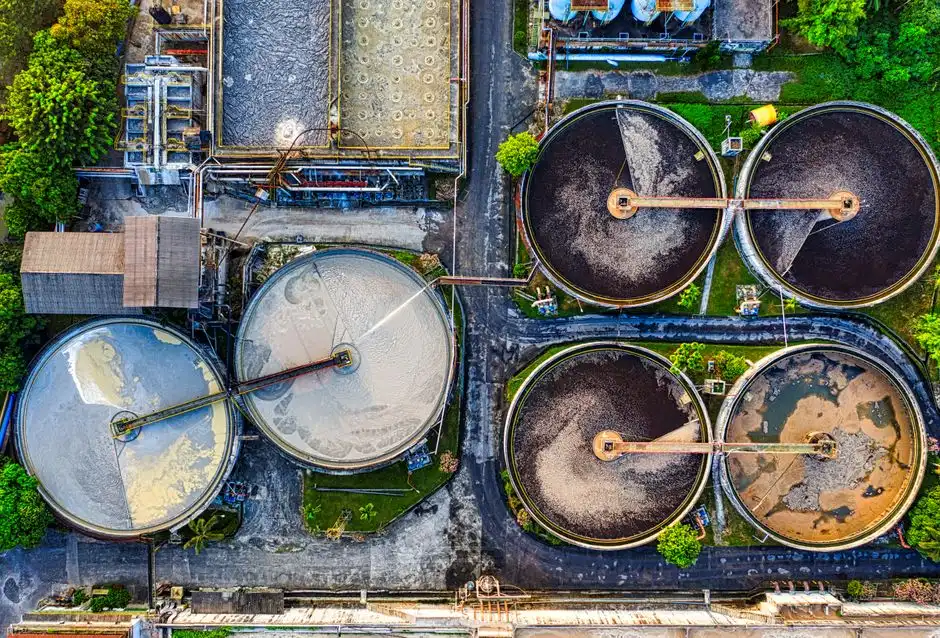
Conventional activated sludge (CAS): The workhorse. BOD removal runs 85–95% at MLSS of 2,000–4,000 mg/L and hydraulic retention time (HRT) of 4–8 hours. It has the lowest CAPEX per m³/day but the largest footprint — typically 0.5–1.0 m² per m³/day of capacity — which is a constraint on urban industrial sites in Bogotá, Medellín, and Cali.
Sequencing batch reactor (SBR): A time-controlled batch system running fill–react–settle–decant cycles in a single tank. BOD removal is 85–92%, footprint is roughly half that of CAS, and it suits flows up to about 500 m³/day. Cycle times of 4–8 hours and decanter capacity define the upper flow limit.
Membrane bioreactor (MBR): Activated sludge coupled with submerged PVDF ultrafiltration membranes (pore size 0.1–0.4 μm). COD removal exceeds 95%, effluent turbidity is consistently below 1 NTU, and total suspended solids are typically <5 mg/L — well inside Res. 0631/2015 ceilings. Footprint is roughly 40% of an equivalent CAS plant, making the MBR membrane bioreactor system the default for tight sites and reuse applications.
DAF pretreatment + biological polishing: Dissolved air flotation strips 90–95% of TSS and FOG upfront, then a downstream aerobic or MBR stage polishes BOD/COD. A DAF pretreatment unit in the 4–300 m³/h range is standard for dairy, meat, edible-oil, and refinery influents where raw TSS can exceed 2,000 mg/L.
| Process train | BOD/COD removal | Footprint (vs CAS) | HRT / cycle | Best fit in 2026 Colombia |
|---|---|---|---|---|
| CAS | BOD 85–95% | 1.0× (baseline) | HRT 4–8 h | Flows >1,000 m³/day, available land |
| SBR | BOD 85–92% | ≈0.5× | 4–8 h batch cycle | 50–500 m³/day, variable influent |
| MBR | COD >95%, TSS <5 mg/L | ≈0.4× | HRT 6–10 h | Reuse, tight footprint, strict limits |
| DAF + bio polish | TSS/FOG 90–95% upfront | Combined 0.6–0.8× | DAF 20–40 min; bio 6–10 h | High-FOG, high-TSS industrial influent |
Resolución 0631/2015 effluent limits by sector at a glance

Resolución 0631 de 2015 (MinAmbiente) sets discharge ceilings that vary by sector and receiving water body. The values below are the typical published sector ceilings a vendor should be designing to in 2026; always confirm with the relevant CAR for the specific activity code and receiving water classification.
| Sector | BOD₅ (mg/L) | COD (mg/L) | TSS (mg/L) | FOG (mg/L) | Typical train |
|---|---|---|---|---|---|
| Food & beverage / dairy / meat | ≤50–80 | ≤150–250 | ≤50–80 | ≤15–20 | DAF + SBR or DAF + MBR |
| Pulp & paper | ≤150 | ≤400 | ≤100 | Monitored | High-rate DAF + MBR |
| Hydrocarbons / refineries | ≤60–100 | ≤150–300 | ≤50 | ≤15 | DAF + bio + tertiary filtration |
| Textile | ≤50–80 | ≤150–250 | ≤50 | ≤15 | DAF + MBR (color monitored case-by-case) |
For hydrocarbons, total hydrocarbons ≤10 mg/L and phenols monitoring apply, often requiring a tertiary polishing stage (activated carbon or sand filter) downstream of the biological step. For pulp & paper, color removal is not always a numeric limit under 0631 but is increasingly a CAR requirement for surface-water discharges, which pushes buyers toward MBR or ozone-assisted polishing.
Indicative CAPEX and OPEX ranges by capacity in 2026
The 2026 indicative bands below are equipment-and-instrumentation scope, civil works excluded unless stated. Final pricing depends on influent variability, seismic design class per NSR-10, and the instrumentation scope (basic vs SCADA-integrated).
| Technology | CAPEX (USD per m³/day installed) | OPEX (USD per m³ treated) | Optimal flow band |
|---|---|---|---|
| CAS | 800–1,400 | 0.25–0.45 | >1,000 m³/day |
| SBR package | 1,000–1,600 | 0.22–0.40 | 50–500 m³/day |
| MBR | 1,500–2,500 | 0.30–0.55 | 20–2,000 m³/day (premium for reuse) |
| DAF unit (4–300 m³/h) | 50,000–300,000 per unit | Included in downstream train | Front-end for high-FOG / high-TSS |
For a 200 m³/day dairy plant, an indicative turnkey CAPEX for a DAF + SBR train lands around USD 280,000–420,000, while a DAF + MBR of the same capacity runs USD 420,000–600,000. OPEX is dominated by energy (typically 0.6–1.2 kWh/m³ for MBR, 0.3–0.5 kWh/m³ for CAS), chemical consumption (coagulant, polymer, CIP), and membrane replacement every 5–8 years at roughly 15–20% of MBR CAPEX. The WSZ underground package plant is a useful benchmark for flows under 100 m³/day where civil footprint is the binding constraint.
How to compare wastewater treatment plant suppliers in Colombia
Use four tests to convert a vendor's brochure into a defensible shortlist.
- Engineering depth test. The supplier must deliver a P&ID, mass balance, hydraulic profile, and a written Res. 0631/2015 compliance demonstration mapping each effluent parameter to the proposed treatment stage. No P&ID, no shortlist.
- In-country service test. Confirm a Colombian distributor, Spanish-speaking commissioning engineers, and a stocked spare-parts warehouse in Bogotá, Medellín, or Cali with a 48–72 hour spare-parts SLA.
- Commercial risk test. Verify a reference list of at least three installed plants in Latin America, a performance guarantee tied to effluent BOD/COD/TSS with liquidated damages, and a 12–24 month warranty on membranes and rotating equipment.
- Documentation test. Spanish-language O&M manuals, control philosophy, and CAR permit-support documentation must be part of the contractual deliverable list.
For a side-by-side of how the Andean market compares, see this Andean-region supplier comparison; for cross-border reference on COD ceilings, the Mexican COD discharge limits guide is useful when benchmarking regional norms. Sludge handling should also be evaluated up front using the sludge dewatering supplier guide.
| Test | Pass criterion | Red flag |
|---|---|---|
| Engineering depth | P&ID + mass balance + Res. 0631 mapping | Generic proposal, no process diagram |
| In-country service | Distributor + 48–72 h spare-parts SLA | Sales agent only, parts shipped from overseas |
| Commercial risk | 3+ LATAM references + LD-backed guarantee | No regional references, "best-effort" performance wording |
| Documentation | Spanish O&M, control philosophy, CAR support | English-only manuals, no permit assistance |
2026 supplier shortlist criteria tailored to Colombian projects
Score each bid on four weighted criteria. A practical 2026 weighting is process performance 35%, local content 25%, automation 15%, lifecycle economics 25%.
- Process performance guarantee. Guaranteed effluent BOD₅, COD, TSS, and FOG values backed by liquidated damages, not a soft "typical" curve. Ask for 90-day performance test with third-party sampling.
- Local content and service. Engineering office in Colombia, response time SLA of 24–48 hours, membrane and rotating-equipment spare-parts lead time under 72 hours. Confirm stocked inventory of critical spares in country.
- Automation. PLC-based with Spanish-language HMI, remote telemetry (4G/satellite) for unattended or remote plants, and data logging aligned to CAR quarterly reporting templates.
- Lifecycle economics. OPEX guarantees including membrane replacement interval (target 5–8 years), chemical consumption targets (kg per m³ treated), and energy consumption in kWh/m³. A PLC-controlled chemical dosing skid with closed-loop control typically cuts polymer consumption 15–25% versus manual dosing.
Frequently Asked Questions
What is the typical CAPEX for a 200 m³/day industrial WWTP in Colombia in 2026? Indicative turnkey CAPEX is USD 280,000–420,000 for a DAF + SBR train and USD 420,000–600,000 for a DAF + MBR train, including equipment, instrumentation, and commissioning, civil works excluded.
Which Res. 0631/2015 parameters most often drive technology selection? FOG ≤15–20 mg/L and BOD₅ ≤50–80 mg/L in food & beverage plants push buyers toward DAF + MBR or DAF + SBR rather than CAS alone, because CAS alone rarely hits FOG limits consistently.
How long does an MBR membrane last in a Colombian industrial plant? Service life is typically 5–8 years with proper CIP (clean-in-place) protocols, dropping to 3–4 years in influents with free oil or abrasive TSS above 500 mg/L without adequate pretreatment.
Do Colombian CARs require Spanish-language documentation for permit approval? Yes. Manuals, P&IDs, control philosophy, and the operating permit application must be in Spanish, and most CARs require an in-country legal representative to sign the permit file.
Can wastewater be reused for boiler feed or cooling in Colombian plants? Yes, with MBR followed by reverse osmosis or ultrafiltration, reuse rates of 50–70% are achievable, with payback typically inside 3–5 years for plants discharging >500 m³/day.