Quito’s Sewage Treatment Equipment Market: 2025 Compliance and Cost Landscape
Quito’s sewage treatment equipment market in 2025 demands solutions compliant with Ecuador’s Decreto Ejecutivo 332 (2021) and Quito’s Municipal Ordinance 039. These regulations mandate stringent effluent standards, including limits of ≤30 mg/L BOD₅ and ≤50 mg/L TSS for industrial discharges, alongside pH control between 6–9 and a strict ≤1 mg/L for heavy metals. For industrial facilities, mandatory pretreatment is also a key requirement. Locally, suppliers offer a range of systems, with package plants for smaller capacities (around 10 m³/h) starting from approximately $80,000, scaling up to advanced Membrane Bioreactor (MBR) systems for larger flows (up to 500 m³/h) which can exceed $2.5 million. The return on investment (ROI) for these systems typically falls between 3 to 7 years, heavily influenced by the scale of the operation and the energy efficiency of the chosen technology.
Energy consumption is a critical factor in operational costs, especially given Quito’s electricity rates of $0.08–$0.12 USD/kWh. MBR systems, while offering superior effluent quality, can consume between 0.6–1.2 kWh/m³, whereas conventional activated sludge systems typically operate within 0.3–0.5 kWh/m³. Quito’s wastewater composition presents unique challenges. The food processing sector, for instance, often generates high organic loads with Chemical Oxygen Demand (COD) ranging from 1,200–2,500 mg/L. Seasonal rainfall patterns can also lead to significant flow variations, with wet seasons potentially increasing influent volumes by 20–30%, necessitating robust and adaptable treatment solutions.
| Parameter | National Standard (Decreto Ejecutivo 332) | Quito Municipal Ordinance 039 | Typical Quito Industrial Discharge (Food Processing) |
|---|---|---|---|
| BOD₅ | ≤ 30 mg/L | N/A | 1,200–2,500 mg/L (COD) |
| TSS | ≤ 50 mg/L | N/A | High, variable |
| FOG (Fats, Oils, Grease) | ≤ 10 mg/L | N/A | High, variable |
| pH | 6.0–9.0 | 6.0–9.0 | Variable, often acidic or alkaline |
| Heavy Metals (e.g., Cr, Pb) | N/A | ≤ 1 mg/L | Variable, depending on specific industrial processes |
| Pretreatment | N/A | Mandatory for industrial discharges | Required for high organic loads and FOG |
Top 5 Sewage Treatment Equipment Suppliers in Quito: Engineering Specs Compared
Selecting the right sewage treatment equipment in Quito requires a detailed understanding of supplier capabilities. This comparison focuses on key engineering specifications and operational characteristics relevant to the local market:
- Supplier 1: ASTEC (Ecuador) primarily serves municipal projects with conventional activated sludge and Sequencing Batch Reactor (SBR) systems, handling flow rates from 500 to 5,000 m³/h. Their systems achieve 85–90% TSS removal and 88–92% BOD₅ removal. ASTEC does not currently offer MBR or DAF technologies. Their after-sales support includes standard warranties and local spare parts availability.
- Supplier 2: Aquagroup (Ecuador) specializes in customized package plants for small to medium-sized projects (10–200 m³/h), available in Aerobic/Anoxic (A/O) and MBR configurations. They report TSS removal rates of 95–98% and BOD₅ removal of 92–96%. Support typically includes installation guidance and a 1–2 year warranty.
- Supplier 3: ser.eco (Italy/Quito) offers advanced Dissolved Air Flotation (DAF) and MBR systems for industrial clients (food processing, textiles, petrochemicals) with capacities ranging from 4 to 300 m³/h. ser.eco systems boast high performance, with TSS removal at 97–99% and FOG removal at 95–98%. They provide comprehensive technical support and a 2–3 year warranty on key components.
- Supplier 4: BIOROCK (Global/Quito) focuses on decentralized, low-maintenance systems (1–50 m³/h) suitable for residential and small commercial applications. Their technology achieves 90–95% BOD₅ removal without requiring chemical dosing. These systems are not designed for high-flow industrial wastewater. Support is generally through local distributors with limited warranty periods.
- Supplier 5: HydropureWater (China/Quito) provides integrated underground package plants (WSZ series, 1–80 m³/h) and MBR systems (10–2,000 m³/day). Their WSZ series offers a compact footprint, 60% smaller than conventional systems, and achieves 96–99% TSS removal and 95–98% BOD₅ removal. HydropureWater offers competitive pricing, 2–3 year warranties, and readily available spare parts through their Quito presence.
| Supplier | Typical Flow Rate (m³/h) | Technology Offered | TSS Removal (%) | BOD₅ Removal (%) | Primary Focus | Footprint Advantage | After-Sales Support |
|---|---|---|---|---|---|---|---|
| ASTEC | 500–5,000 | Conventional Activated Sludge, SBR | 85–90 | 88–92 | Municipal | Standard | Local, Standard Warranty |
| Aquagroup | 10–200 | A/O, MBR | 95–98 | 92–96 | Small/Medium Industrial & Commercial | Moderate | Local, 1-2 Year Warranty |
| ser.eco | 4–300 | DAF, MBR | 97–99 | 95–98 (MBR) | Industrial (Food, Textile, Petrochemical) | Compact (MBR) | Comprehensive, 2-3 Year Warranty |
| BIOROCK | 1–50 | Decentralized (e.g., septic tank with biofilter) | N/A (focus on BOD₅) | 90–95 | Residential, Small Commercial | Minimal | Distributor Network, Limited Warranty |
| HydropureWater | 1–80 (WSZ), 10–2,000 (MBR, m³/day) | Integrated Package Plant (WSZ), MBR | 96–99 | 95–98 | Industrial, Commercial, Municipal | 60% smaller (WSZ) | Local, 2-3 Year Warranty, Spare Parts |
How to Choose the Right Sewage Treatment System for Your Quito Project
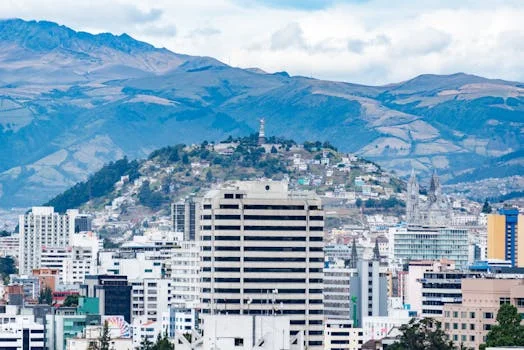
Selecting the optimal sewage treatment system involves a systematic approach, aligning technical requirements with regulatory compliance and budget constraints specific to Quito. This decision framework guides you through the critical steps:
- Define Your Effluent Requirements: National standards (Decreto Ejecutivo 332) set a baseline of ≤30 mg/L BOD₅ and ≤50 mg/L TSS. However, specific industries or potential water reuse applications may demand higher standards, such as <1 mg/L TSS for treated water reuse. Municipal projects typically aim for compliance with the national standards.
- Calculate Your Flow Rate: Accurately determine your average daily flow rate in m³/h. Crucially, also consider peak flow conditions, which can be 1.5 times the average for industrial facilities and up to 2 times the average for municipal systems, especially during rainfall events common in Quito.
- Assess Your Footprint: Land availability and cost in Quito are significant factors. MBR systems, for instance, are known for their compact design, requiring up to 60% less space compared to conventional activated sludge processes, making them ideal for sites with limited area.
- Evaluate Energy Efficiency: With energy costs in Quito between $0.08–$0.12 USD/kWh, operational expenditure (OPEX) related to energy consumption is substantial. MBR systems typically consume 0.6–1.2 kWh/m³, while DAF systems might operate between 0.4–0.8 kWh/m³, and conventional systems are often lower.
- Compare CAPEX vs. OPEX: Initial capital expenditure (CAPEX) varies significantly. Package plants might range from $80–$150/m³ of daily capacity, offering lower upfront investment but potentially higher OPEX due to chemical usage and maintenance. MBR systems, with CAPEX between $200–$400/m³, generally offer lower OPEX over their lifespan.
Common pitfalls to avoid include underestimating peak flow demands, neglecting the availability and cost of local spare parts, and overlooking the need for comprehensive operator training, which is essential for sustained performance and compliance. For projects requiring advanced treatment or compact solutions, HydropureWater's Quito-compliant WSZ series for residential and industrial projects or their MBR offerings provide robust options. For industries like food processing that require high FOG removal, ser.eco's DAF systems for Quito’s food processing and textile industries are a strong consideration.
| Decision Factor | Key Considerations for Quito | Technology Example | Potential Trade-offs |
|---|---|---|---|
| Effluent Standards | Decreto Ejecutivo 332 (≤30 BOD₅, ≤50 TSS) vs. Reuse (<1 TSS) | MBR (high quality), Conventional (standard) | Higher CAPEX for advanced treatment |
| Flow Rate & Peak Loads | Average daily vs. 1.5-2x peak flow (seasonal variations) | Modular systems (e.g., WSZ series) for scalability | Oversizing increases CAPEX/OPEX |
| Footprint | Land availability and cost in urban/peri-urban Quito | MBR (60% smaller), Integrated Package Plants | Compact systems may have higher CAPEX per m³ |
| Energy Consumption | Quito electricity rates ($0.08–$0.12/kWh) | Conventional Activated Sludge (lower), MBR (higher) | Lower energy use might mean lower treatment efficiency |
| CAPEX vs. OPEX | Upfront cost vs. long-term operational expenses (energy, chemicals, maintenance) | Package Plants (lower CAPEX, higher OPEX), MBR (higher CAPEX, lower OPEX) | Balancing initial investment with lifecycle costs |
| Operational Complexity & Training | Availability of skilled local operators | Automated systems (e.g., WSZ) vs. complex biological processes | Simpler systems may lack flexibility |
Cost Breakdown and ROI for Sewage Treatment Plants in Quito 2025
Understanding the financial implications of sewage treatment plant procurement in Quito is paramount for securing investment and ensuring long-term viability. Capital expenditure (CAPEX) for a 100 m³/h system can range significantly: MBR systems might cost between $200,000–$400,000, conventional activated sludge systems from $120,000–$250,000, and package plants between $80,000–$150,000. These figures do not include site preparation, installation, and permitting, which can add 10–20% to the total project cost.
Annual operational expenditure (OPEX) also varies. For a 100 m³/h system, MBR OPEX might be $15,000–$30,000, covering energy, maintenance, and occasional membrane replacement. Conventional systems could range from $20,000–$40,000, while package plants might fall between $25,000–$50,000 due to chemical consumption and more frequent maintenance. The ROI calculation for a 100 m³/h MBR system, with an estimated CAPEX of $300,000 and OPEX of $25,000/year, could yield savings of $50,000/year from avoided fines and potential water reuse, resulting in a payback period of 3–5 years. This aligns with the general ROI calculator for wastewater treatment plants in emerging markets, emphasizing the financial benefits of compliance and resource recovery.
Financing options in Quito include potential government grants from Ecuador's Fondo Ambiental, traditional bank loans with interest rates typically between 8–12%, and supplier financing often offered at 0–5% interest over 3–5 years. A case study involving a Quito-based food processing plant that installed a HydropureWater WSZ-50 system (50 m³/h) demonstrated significant financial benefits: a 70% reduction in fines and a 40% decrease in water costs, highlighting the tangible return on investment from upgrading wastewater treatment capabilities.
| Cost Component (100 m³/h System) | Package Plant | Conventional Activated Sludge | MBR System |
|---|---|---|---|
| CAPEX (USD) | $80,000 - $150,000 | $120,000 - $250,000 | $200,000 - $400,000 |
| Annual OPEX (USD) | $25,000 - $50,000 | $20,000 - $40,000 | $15,000 - $30,000 |
| Key OPEX Drivers | Chemicals, Maintenance, Energy | Energy, Sludge Disposal, Maintenance | Energy, Membrane Replacement (infrequent), Maintenance |
| Typical ROI Payback (Years) | 2-5 (if fines avoided) | 3-6 (if fines avoided) | 3-5 (if fines avoided, water reuse) |
Quito’s Regulatory Compliance Checklist for Sewage Treatment Projects
Navigating Quito’s regulatory landscape is crucial for any sewage treatment project to avoid costly delays and penalties. Compliance begins with understanding the permitting process and ongoing monitoring requirements:
- Pre-Approval Requirements: For projects exceeding 50 m³/h, an Environmental Impact Assessment (EIA) is mandatory and must be submitted to Quito’s Secretaría de Ambiente. This assessment details the project's potential environmental impacts and mitigation strategies.
- Permitting Process: Expect a timeline of 3–6 months for municipal approval and potentially 6–12 months for national-level clearances from the Ministerio del Ambiente. Early engagement with regulatory bodies is advised.
- Effluent Monitoring: Continuous monitoring of pH, TSS, and BOD₅ is mandated for industrial discharges under Decreto Ejecutivo 332. This requires reliable instrumentation and regular reporting.
- Sludge Disposal: Treated sludge must meet Class A or B standards (≤1,000 MPN/g fecal coliforms) before disposal at approved landfills, such as Quito’s El Inga facility. Proper dewatering and stabilization are essential.
- Operator Certification: For all systems treating more than 10 m³/h, at least one certified operator, approved by SENAGUA (now part of the Ministry of Environment, Water and Ecological Transition), is required on staff.
Common compliance failures include inadequate pretreatment systems for industrial wastewater, insufficient operator training leading to operational errors, and improper sludge disposal practices. Ensuring all these aspects are addressed from the project's inception will streamline the approval process and guarantee ongoing operational compliance.
Frequently Asked Questions
Which country has the best sewage treatment plant?
While countries like Sweden and Singapore are recognized for leading in efficiency (often achieving 99%+ TSS removal) and water reuse rates (50–60% of effluent recycled), Quito’s suppliers focus on cost-effective compliance with Ecuador’s Decreto Ejecutivo 332. For local projects, prioritize suppliers with proven TSS removal ≥95% and BOD₅ removal ≥90%, such as HydropureWater or ser.eco.
How much does it cost to set up a sewage treatment plant in Quito?
Costs vary significantly by capacity and technology. Expect $80,000–$150,000 for a 10 m³/h package plant, $200,000–$400,000 for a 100 m³/h MBR system, and $1M–$2.5M for a 500 m³/h municipal plant. Remember to include an additional 10–20% for permitting, site preparation, and installation.
What are the best residential wastewater treatment systems for Quito?
For individual homes (1–5 m³/h), BIOROCK’s decentralized systems offer low maintenance and no chemical dosing. HydropureWater’s Quito-compliant WSZ-5 for residential and industrial projects is an excellent underground, automated option. For apartment buildings or smaller communities (5–20 m³/h), Aquagroup’s customizable package plants or ser.eco’s DAF systems are suitable.
How do I choose between MBR and conventional activated sludge for my Quito project?
Opt for MBR systems when space is limited (they offer a 60% smaller footprint), when reuse-quality effluent (<1 mg/L TSS) is required, or when treating high organic loads (COD >1,000 mg/L). Conventional activated sludge offers lower CAPEX ($120–$250/m³) and simpler operation, making it suitable for municipal projects with larger flow rates (>500 m³/h) where space is not a constraint. Refer to this MBR vs. conventional activated sludge: 2025 engineering comparison for a detailed breakdown.
What are the penalties for non-compliance with Quito’s sewage treatment regulations?
Penalties for non-compliance can be severe. Fines typically range from $5,000–$50,000 for first offenses, as stipulated by Quito’s Municipal Ordinance 039. Repeat violations can result in fines of $50,000–$200,000, alongside mandatory system upgrades and potential temporary shutdowns of industrial facilities. Early investment in compliant treatment is far more cost-effective than facing these penalties.
Related Equipment
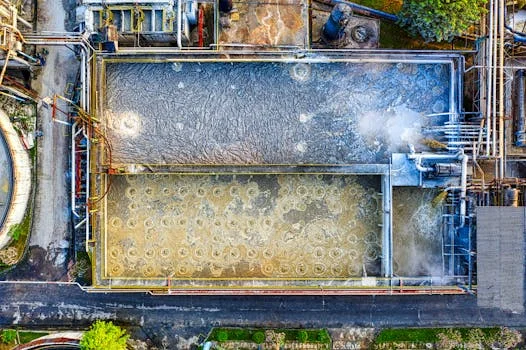
The following HydropureWater products are engineered for the wastewater challenges discussed above:
- MBR systems for Quito’s high-efficiency effluent requirements — view specifications, capacity range, and technical data
Need a customized solution? Request a free quote with your specific flow rate and pollutant parameters.