Why NOM-001-SEMARNAT-2021 Replaced the 1996 Standard
NOM-001-SEMARNAT-2021 was published in the Diario Oficial de la Federación on 11 March 2022 and entered into force on 11 March 2023, after a 25-year interval during which the 1996 standard's pollutant limits had not been revised even though the Quality Infrastructure Law (Ley de Infraestructura de la Calidad) mandates review of every Norma Oficial Mexicana on a 5-year cycle (source: Galicia, March 2022). The 1996 limits were set against a 2000–2010 phase-in schedule keyed to municipal population and BOD5 load, and by 2022 SEMARNAT and CONAGUA judged those values insufficient to control contamination in receiving bodies. The 2021 standard restructures the receiving-body classification, replaces the soil-discharge rules for agricultural use and natural wetlands with three new categories (irrigation of green areas, infiltration, and permeable karst soils such as those in Yucatán), and tightens the parameter set (source: Global Compliance News, 2022-03-28). Individual discharge permits issued by CONAGUA may impose additional or stricter limits than the NOM itself, so the published table is a floor, not a ceiling (source: Galicia, March 2022).
COD and BOD5 Limits Under NOM-001-SEMARNAT-2021 — Full Parameter Table
The headline COD limit under NOM-001-SEMARNAT-2021 is 150 mg/L as a monthly average for discharges into rivers, streams, canals, and drains, and 200 mg/L as a monthly average for discharges into Mexican marine zones (per NOM-001-SEMARNAT-2021 published parameter table, as summarized in Global Compliance News 2022-03-28 and Galicia March 2022). The BOD5 monthly averages are 50 mg/L (rivers/streams/canals/drains) and 75 mg/L (marine zones). For reservoirs, lakes, and lagoons, the standard applies limits set by CONAGUA in the site-specific discharge permit; the NOM itself does not publish a single default value for that category. The table below consolidates the limits a process engineer needs to size equipment against. True color and acute toxicity parameters only enter into force on the fourth anniversary of entry into force — 11 March 2027 (source: Global Compliance News, 2022-03-28).
| Parameter | Rivers / Streams / Canals / Drains (monthly avg.) | Reservoirs / Lakes / Lagoons | Mexican Marine Zones (monthly avg.) | Instantaneous limit* |
|---|---|---|---|---|
| COD (mg/L) | 150 | per CONAGUA permit | 200 | ~1.5× monthly avg. |
| BOD5 (mg/L) | 50 | per CONAGUA permit | 75 | ~1.5× monthly avg. |
| TSS (mg/L) | 75 | per CONAGUA permit | 100 | — |
| Settleable solids (mL/L) | 1.0 | per CONAGUA permit | 1.5 | — |
| Total nitrogen (mg/L) | 25 | per CONAGUA permit | 30 | — |
| Total phosphorus (mg/L) | 10 | per CONAGUA permit | 15 | — |
| Fats and oils (mg/L) | 25 | per CONAGUA permit | 35 | — |
| True color (Pt-Co) | enforceable from 11 March 2027 | — | ||
| Acute toxicity | enforceable from 11 March 2027 | — | ||
*Instantaneous limits in Mexican standards practice are typically set at roughly 1.5× the monthly average for COD and BOD5; for a 150 mg/L monthly average, the instantaneous ceiling is approximately 225 mg/L. The exact multiplier in the 2021 standard should be confirmed against the published numerical table in the DOF text before final design.
Which Receiving-Body Category Applies to Your Discharge
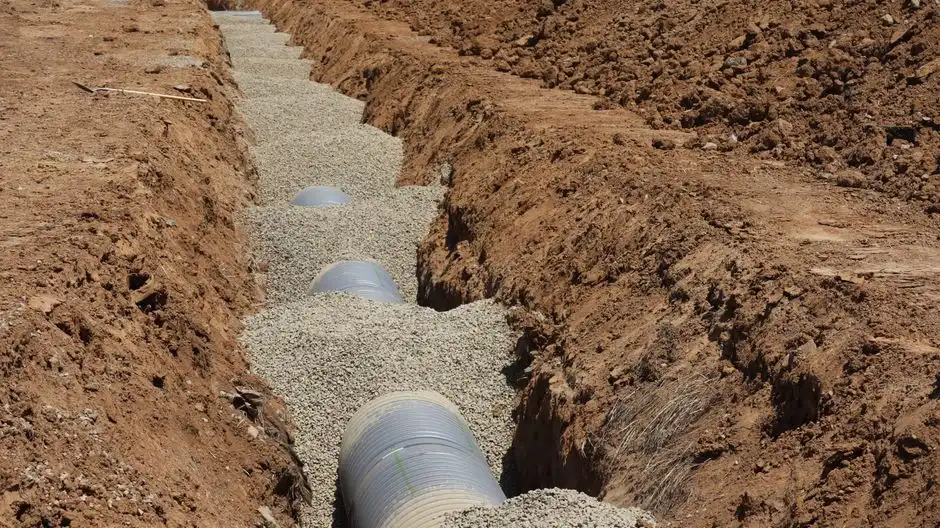
Before applying a limit, the plant must classify its outfall. NOM-001-SEMARNAT-2021 collapses the old "rivers, reservoirs, coastal waters" structure into three receiving-body categories (source: Global Compliance News, 2022-03-28): (i) rivers, streams, canals, and drains; (ii) reservoirs, lakes, and lagoons; and (iii) Mexican marine zones. A maquiladora in Monterrey discharging to the Río Santa Catarina falls under category (i) and is bound by the 150 mg/L monthly-average COD limit. A coastal food-and-beverage plant in Veracruz discharging through an outfall into the Gulf of Mexico falls under category (iii) with a 200 mg/L monthly-average limit. A facility in Mérida or anywhere on the Yucatán Peninsula discharging to permeable karst soil is governed by the new karst-soil provisions, which carry their own stricter infiltration limits (source: Global Compliance News, 2022-03-28). Where CONAGUA has published a classification of a specific national water body (Cuerpo Receptor) in the DOF, those basin-specific limits override the NOM defaults and must be read from the individual discharge permit (source: Galicia, March 2022). Discharges to municipal sewer or rainwater systems are explicitly excluded from NOM-001-SEMARNAT-2021 and remain regulated under NOM-002-SEMARNAT-1996 (source: Global Compliance News, 2022-03-28).
| Cuerpo Receptor category | Definition | Representative site | Monthly-avg. COD limit |
|---|---|---|---|
| Rivers, streams, canals, drains | Surface flow to a defined watercourse | Río Santa Catarina, Monterrey | 150 mg/L |
| Reservoirs, lakes, lagoons | Impounded or standing national waters | Lago de Chapala, Jalisco | per CONAGUA permit |
| Mexican marine zones | Territorial seas and coastal waters | Gulf of Mexico outfall, Veracruz | 200 mg/L |
| Permeable karst soils (Yucatán) | Subsurface discharge to karst aquifer | Mérida industrial park | stricter infiltration rules |
| Municipal sewer / stormwater | Drain to municipal system | Any plant with city sewer tie-in | NOT under NOM-001/21 — see NOM-002-SEMARNAT-1996 |
Engineers dealing with metals-bearing streams alongside COD should also reference the heavy metals discharge standard 2026 comparison, since NOM-001-SEMARNAT-2021 sets total metals limits in the same discharge permit.
How Compliance Is Measured: Instantaneous vs. Daily vs. Monthly Averages
The 150 and 200 mg/L numbers are promedios mensuales — 30-day rolling averages constructed from daily composite samples, not single grab results. NOM-001-SEMARNAT-2021 recognizes three measurement windows: promedio instantáneo (a single grab sample, typically used during CONAGUA inspections), promedio diario (a 24-hour flow-weighted composite), and promedio mensual (the arithmetic or flow-weighted mean of daily composites over a 30-day period). A "compliant-looking" instantaneous reading of 140 mg/L can still trigger a formal finding if the inspector applies the instantaneous multiplier (≈1.5× the monthly average, i.e. ~225 mg/L for the rivers category), and a single 24-hour composite of 300 mg/L will pull the monthly mean up far faster than most plant managers expect (NOM-001 enforcement practice, as described in Galicia March 2022). Where the BOD5/COD ratio of the discharge falls below approximately 0.3, CONAGUA may apply additional scrutiny because low biodegradability implies refractory COD that the standard's biological assumptions do not address; characterization data should be on file before the inspection cycle begins. Sampling and analysis must follow the Mexican Official Standards referenced in NOM-001's Section 2, including NMX-AA-030 for sampling and the applicable NMX-AA methods for each parameter (source: Basham, 2021-2022 update).
Treatment Technology Decision: How to Hit 150 mg/L COD from Typical Industrial Influents

The numerical bridge from regulation to equipment is short. For a manufacturing stream with a typical industrial COD of 1,200 mg/L, hitting the 150 mg/L monthly average for river discharge requires a removal efficiency of 87.5% ((1,200 − 150) / 1,200). For a 2,000 mg/L stream, the required removal is 92.5%. Those numbers rule out primary clarification alone and force a biological step followed by polishing. The selection then hinges on the BOD5/COD ratio of the influent.
| Influent character | Typical influent COD | Required removal to hit 150 mg/L | Recommended train | Typical effluent COD range |
|---|---|---|---|---|
| Biodegradable, low FOG (food & beverage, pulp & paper secondary streams) | 800–2,000 mg/L | 81–92% | Equalization → MBR membrane bioreactor systems for industrial COD reduction | 20–80 mg/L |
| High TSS / FOG / colloidal COD (dairy, edible oil, meat processing) | 1,500–5,000 mg/L | 90–97% | DAF pre-treatment for suspended-solids and FOG-bound COD → MBR | 30–100 mg/L |
| Refractory / non-biodegradable COD (chemical, petrochemical, pharmaceutical) | 500–3,000 mg/L | 85–95% | MBR → chemical oxidation (ClO₂ or Fenton) → activated carbon → disinfection | 40–120 mg/L |
| Low-volume high-strength (batch pharmaceutical, landfill leachate) | 3,000–15,000 mg/L | 95–99% | Equalization → DAF → MBR → RO/evaporation | <50 mg/L |
For biodegradable streams, an MBR replaces the conventional activated-sludge tank plus secondary clarifier with a single tank, reducing footprint by roughly 60% versus a clarifier-based train and producing a consistent effluent in the 20–80 mg/L COD range under steady loading (HydropureWater MBR product data, 2026). For streams carrying emulsified fats, oils, and grease or colloidal COD, a DAF unit upstream of the biological step is standard practice; the DAF operates at 4–300 m³/h with micro-bubble flotation and typically removes 50–80% of TSS along with the particulate COD bound to it before the MBR sees the water (HydropureWater field data, 2026). For non-biodegradable or refractory COD — typical of chemical, petrochemical, and pharmaceutical waste — an MBR alone is not enough; chemical oxidation (chlorine dioxide or Fenton) followed by activated-carbon polishing is required, and the final disinfection step closes the loop on the microbial compliance side of the permit. Avoid specifying equipment against a single "efficiency" figure; every removal number above is stated as a range against a stated influent loading, which is the only way to do traceable engineering. For OPEX framing, see the industrial wastewater plant OPEX breakdown for 2026.
Implementation Timeline and the 5-Year Review Cycle
True color and acute toxicity become enforceable from 11 March 2027, the fourth anniversary of the standard's entry into force (source: Global Compliance News, 2022-03-28). The Quality Infrastructure Law requires SEMARNAT to open a review of every NOM on a 5-year cycle, which puts the next scheduled NOM-001 revision window in 2027–2028 (source: Galicia, March 2022). The practical implication for capex: a treatment train commissioned today to meet the 2026 limits should be designed with 15–20% headroom on COD removal capacity, because the next tightening is structurally locked in and CONAGUA basin-specific permits are trending stricter, not looser.
Frequently Asked Questions

What is the COD discharge limit in Mexico?
Under NOM-001-SEMARNAT-2021, the monthly-average COD limit is 150 mg/L for discharges to rivers, streams, canals, and drains, and 200 mg/L for discharges to Mexican marine zones, with CONAGUA permits able to impose stricter basin-specific values (per NOM-001-SEMARNAT-2021; source: Global Compliance News, 2022-03-28).
Does NOM-001-SEMARNAT-2021 apply to a factory that discharges to the municipal sewer?
No. Discharges to municipal sewer or rainwater systems are explicitly excluded from NOM-001-SEMARNAT-2021 and continue under NOM-002-SEMARNAT-1996 (source: Global Compliance News, 2022-03-28).
How is the monthly-average COD calculated?
The promedio mensual is the mean of 24-hour flow-weighted composite samples taken across a 30-day period, not a single grab; the promedio instantáneo is a single grab and is governed by a separate (lower) ceiling — typically about 1.5× the monthly average — and a single exceedance during a CONAGUA inspection can trigger a formal finding independent of the monthly mean.
Can CONAGUA set stricter limits than NOM-001-SEMARNAT-2021?
Yes. CONAGUA may set additional or stricter parameters in the individual discharge permit, and where CONAGUA has published a Declaración de Clasificación de Cuerpos de Agua Nacionales for a specific receiving body, those limits override the NOM defaults (source: Galicia, March 2022).