Kazakhstan's 2026 BOD5 Discharge Limits by Water-Body Category
Under Kazakhstan's 2026 Water Code framework, the BOD5 discharge limit for industrial wastewater is set by receiving water-body category: 3.0 mg/L for fishery water bodies, 6.0 mg/L for sanitary-domestic use, and 10.0 mg/L for municipal sewer discharge (after local POTW agreement). Operators typically meet these limits using A/O biological treatment (90–95% BOD5 removal) followed by MBR membrane filtration, which delivers effluent BOD5 of 5–10 mg/L without tertiary polishing.
These values sit inside the maximum permissible concentration (MPC) framework, which replaced the legacy Soviet GOST 17.1.3.05 narrative norms in 2021. The framework is anchored in Water Code No. 481-V (2003, as amended through 2024), with method-level requirements in the 2021 sanitary rules that switched the compliance test from 7-day BOD (BOD7) to 5-day BOD (BOD5). That switch aligns Kazakhstan with EU Directive 91/271/EEC and ISO 5815-1, and it matters for every lab sheet and permit schedule a process engineer signs in 2026.
BOD5 is not a single-parameter compliance check. The co-regulated total suspended solids (TSS) limit is 10–25 mg/L depending on category, and the fishery tier also caps ammonia nitrogen at 0.39 mg/L and total phosphorus at 0.2 mg/L. Caspian basin watersheds (Atyrau, Mangystau, parts of Kyzylorda) carry an additional sensitivity overlay, where the fishery BOD5 target is enforced at the 3.0 mg/L ceiling rather than as an annual average.
| Receiving Water-Body Category | BOD5 Limit (mg/L) | TSS Limit (mg/L) | Typical Application |
|---|---|---|---|
| Fishery (Category 1) | 3.0 | 10 | Direct discharge to rivers/lakes supporting commercial or sport fisheries; Caspian tributaries |
| Sanitary-domestic (Category 2) | 6.0 | 15 | Surface water used for drinking abstraction after treatment; recreational water |
| Municipal sewer (Category 3) | 10.0 | 25 | Discharge to publicly owned treatment works (POTW) with industrial acceptance permit |
Why BOD5 — Not BOD7 — Is the Operative Standard in 2026
Kazakhstan's 2021 sanitary rules replaced the legacy BOD7 test with BOD5 to match the EU 5-day method and ISO 5815-1 (2019). This transition ensures alignment with cross-border Caspian basin monitoring, where Kazakhstan reports to a shared protocol with Russia, Iran, Azerbaijan, and Turkmenistan that uses BOD5 exclusively.
For engineers holding legacy GOST-era BOD7 data, the empirical conversion is BOD5 ≈ 0.7–0.85 × BOD7, with 0.78 as a working midpoint for municipal-strength effluent. A 30 mg/L BOD7 reading therefore corresponds to roughly 21–26 mg/L BOD5 — and the same wastewater would have been reported as compliant under old GOST but may now fail a 25 mg/L BOD5 permit ceiling.
Monitoring frequency depends on discharge pathway. Direct discharge to a fishery or sanitary-domestic water body requires monthly composite sampling; municipal sewer discharge with a valid industrial acceptance permit typically allows 1×/quarter verification, though many POTW operators (Astana Su Arnasy, Almaty Su) require monthly self-reporting regardless. Online BOD-equivalent probes (UV254, TOC correlation) are accepted for trend monitoring but cannot substitute for the lab BOD5 in the permit file.
Typical Industrial BOD5 Influent by Sector in Kazakhstan
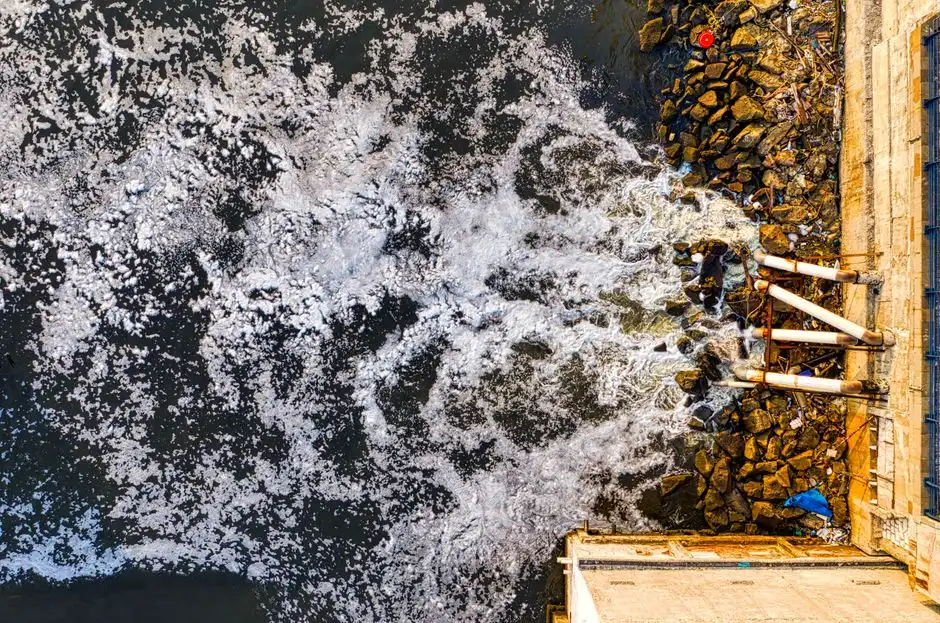
Design loadings must be set from peak rather than average influent, as Kazakhstan's seasonal dairy and food-processing cycles routinely push BOD5 to 2× the annual mean. The sector ranges below are working envelopes drawn from operating plants; site-specific jar testing remains non-negotiable before final design.
Food processing and dairy dominate the high-strength end at 800–2,500 mg/L BOD5, driven by milk fat, whey, and CIP chemicals. Refinery wastewater from the Atyrau, Pavlodar, and Shymkent refineries runs 150–600 mg/L BOD5 with very high COD and oil co-contamination. Mining and metallurgy sites (Kazchrome, Kazzinc, the copper operations in Zhezkazgan) are organically weak at 50–300 mg/L BOD5 but carry heavy metals that drive the treatment train, not the carbon removal step. Textile effluent from the Turkestan and Almaty clusters measures 400–1,800 mg/L BOD5 with high color and temperature. Municipal mixed influent at the Astana and Almaty POTWs typically tests 150–400 mg/L BOD5.
| Sector | Influent BOD5 Range (mg/L) | COD:BOD5 Ratio | Design Margin to Apply |
|---|---|---|---|
| Food processing / dairy | 800–2,500 | 1.6–2.0 | 2.5× average for peak load |
| Oil & gas / refinery | 150–600 | 3.0–5.0 | 2.0× for desalter upset |
| Mining / metallurgy | 50–300 | 2.0–4.0 | Driven by metals, not BOD5 |
| Textile | 400–1,800 | 2.0–3.0 | 3.0× for batch dyehouse peaks |
| Municipal mixed | 150–400 | 1.8–2.4 | 1.5× for diurnal peak |
Treatment Technologies That Hit the Kazakhstan BOD5 Limit
Technology selection depends on which of the three limit tiers the discharge must meet. A municipal-sewer permit at 10 mg/L is reachable with conventional activated sludge plus polishing, while the 3.0 mg/L fishery tier requires RO. The table below maps the working envelope for each option.
| Treatment Technology | Effluent BOD5 (mg/L) | Effluent TSS (mg/L) | Limit Tier Met |
|---|---|---|---|
| Conventional activated sludge (CAS) | 15–30 | 15–30 | Municipal sewer (with chemical P precipitation) |
| A/O (anoxic/aerobic) + secondary clarifier | 10–25 | 10–20 | Municipal sewer; marginal on sanitary-domestic |
| MBR (A/O + 0.1–0.4 μm PVDF membrane) | ≤10 (typically 3–8) | ≤5 | Sanitary-domestic reliably; municipal sewer comfortably |
| MBR + RO (industrial RO polishing system) | ≤3 | ≤1 | Fishery tier; reuse-quality permeate at 95% recovery |
| WSZ underground package unit | ≤20 | ≤30 | Small-flow municipal sewer (1–80 m³/h) |
A representative treatment train for a Kazakhstan food-processing plant discharging to sanitary-domestic waters is equalization (8–24 h retention) → DAF pre-treatment unit for fats, oils, and grease removal → A/O biological stage (HRT 18–24 h, MLSS 4,000–6,000 mg/L) → MBR membrane bioreactor system with PVDF hollow-fiber modules → UV or chlorination disinfection. This train routinely delivers BOD5 of 5–8 mg/L with TSS under 5 mg/L.
For sites targeting the fishery 3.0 mg/L BOD5 ceiling, an industrial RO polishing system downstream of the MBR is required. RO permeate at 95% recovery carries BOD5 below detection (<2 mg/L) and TDS under 50 mg/L, making it suitable for boiler feed or cooling tower makeup as well as compliant discharge. For small municipalities, remote camps, or industrial parks under 80 m³/h, the WSZ underground package plant provides a buried, factory-built alternative that reaches BOD5 ≤20 mg/L without separate civil works. A more detailed sector-specific breakdown is available in the food processing wastewater treatment in Kazakhstan engineering blueprint, and comparative international standards are tabulated in the BOD and TSS discharge limits by country reference.
Design Margins and Monitoring: Closing the Compliance Gap
Industrial wastewater plants must be designed for peak rather than average loads to maintain compliance. Hydraulic peaks from CIP releases in dairies, batch dumps from refineries, and seasonal slaughterhouse surges routinely push influent BOD5 to 2–3× the design value. Apply a 20–30% safety margin on the regulatory limit when sizing biological capacity — design for 7 mg/L BOD5 effluent when the permit ceiling is 10 mg/L, and 4.5 mg/L when the ceiling is 6.0 mg/L. For the 3.0 mg/L fishery tier, target 2.0 mg/L to leave headroom for membrane fouling and seasonal cold-water kinetics.
Equalization basin sizing should reflect the worst credible shock. Food and dairy operations typically need 8–24 hours of hydraulic retention, sized on the longest CIP or cleaning cycle. For refineries, 12–36 hours of equalization with oil-water separation upstream of biological treatment is the working norm.
Winter compliance is the recurring failure mode in Kazakhstan. Aeration basin temperatures drop to 0–4°C from December through February in Astana, Pavlodar, and Karaganda, cutting nitrification rates by 50–70% and slowing carbonaceous BOD removal by 20–30%. Enclosed or below-grade basins, sidestream heating from process streams, or biological selectors sized for cold-weather kinetics are typical mitigations. Online UV254 and TOC sensors give real-time BOD-equivalent trend data within ±15% of lab values; monthly composite BOD5 lab analysis remains the permit of record. Common non-compliance causes in operating plants — hydraulic overload (40% of excursions), nutrient imbalance with N:P drift outside the 5:1 to 10:1 window (25%), and cold-temperature biology slowdown (20%) — all map to design decisions made at the engineering stage, not to operator error after startup. For procurement decisions on equipment supply and QA/QC on Chinese-fabricated skid packages, the Chinese wastewater equipment manufacturer reliability buyer's guide covers vendor qualification and FAT protocols.
Frequently Asked Questions
What is the BOD5 discharge limit for industrial wastewater in Kazakhstan in 2026?
Kazakhstan sets the BOD5 limit by receiving water-body category under Water Code No. 481-V as amended: 3.0 mg/L for fishery waters, 6.0 mg/L for sanitary-domestic waters, and 10.0 mg/L for municipal sewer discharge with a valid POTW acceptance permit. The 2021 sanitary rules shifted the compliance test from BOD7 to BOD5.
How does BOD5 differ from BOD7 in Kazakhstan's permit framework?
Since 2