What Is the Philippines 2026 Ammonia Nitrogen Discharge Limit?
Under DAO 2016-08 (Water Quality Guidelines and General Effluent Standards of 2016) as amended by DAO 2021-19, the Philippines enforces the following maximum ammonia-nitrogen concentrations at the point of industrial discharge in 2026: 0.5 mg/L NH3-N for Class AA waters (sources of drinking water requiring no treatment), 0.5 mg/L for Class A (drinking water source with conventional treatment), 1.0 mg/L for Class B (recreational, fishery), 1.5 mg/L for Class C (industrial water supply, boatable), 7.5 mg/L for Class D (agricultural irrigation, industrial cooling), and 7.5 mg/L for Class SC/SD (industrial reuse, other inland waters). DENR-EMB enforces these limits through the facility's Discharge Permit, with grab-sample compliance measured at the outlet of the wastewater treatment facility, not in the receiving water body. The Philippine convention is mg/L as N (not as NH3); 1.0 mg/L NH3-N equals 1.22 mg/L as NH3. Because free NH3 toxicity rises sharply above pH 8.5 and at temperatures above 25°C, a compliant effluent sample at pH 7 may still exceed toxic thresholds once it mixes into warmer, more alkaline receiving water; receiving-water classification, not just the effluent number, drives real compliance risk.
| Water Body Classification | NH3-N Limit (mg/L) | Designated Use | Typical Discharger |
|---|---|---|---|
| Class AA | 0.5 | Drinking water source (no treatment) | Pharmaceutical, semiconductor |
| Class A | 0.5 | Drinking water source (conventional treatment) | Food, electronics |
| Class B | 1.0 | Recreational, fishery | Textile, slaughterhouse |
| Class C | 1.5 | Industrial water supply, boating | General manufacturing |
| Class D | 7.5 | Agricultural irrigation, industrial cooling | Heavy industry |
| Class SC | 7.5 | Industrial reuse, other inland waters | Discharging to land/cooling |
| Class SD | 7.5 | Industrial reuse, other inland waters | Discharging to land/cooling |
For cross-jurisdictional context on regional effluent standards, the Malaysia EQA 1974 chromium compliance guide shows how ASEAN neighbors are tightening heavy-metal limits in parallel with the Philippines' nitrogen-focused framework.
DAO 2016-08 vs DAO 2021-19: What Changed for Ammonia Compliance
DAO 2016-08 established the numerical NH3-N limits by classification and the Self-Monitoring Report (SMR) framework still in use today. DAO 2021-19, issued in 2021 and fully enforceable as of 2026, did not lower any ammonia-N numerical limits; instead, it updated procedural and monitoring requirements. The revision tightened SMR reporting cadence (quarterly submission with monthly data summaries, up from semi-annual), added parameters for emerging contaminants, and mandated online continuous NH3-N monitoring with data transmission to the EMB Central Water Quality Monitoring System for any facility discharging more than 500 m³/day. Industrial facilities covered by DAO 2003-30 (Revised Effluent Regulations) that discharge to a third-party sewer system follow a pre-treatment limits table, typically NH3-N 50–100 mg/L depending on the receiving STP's capacity. The legal hierarchy runs RA 9275 (Clean Water Act of 2004) → DAO 2016-08 → DAO 2021-19 → regional EMB orders, meaning the 2021-19 amendment is mandatory even though core numbers remained unchanged. For context on how Indonesia tightened its own nutrient framework, see the Indonesia BOD compliance guide.
Which Treatment Technology Achieves the 0.5–1.5 mg/L NH3-N Limit?
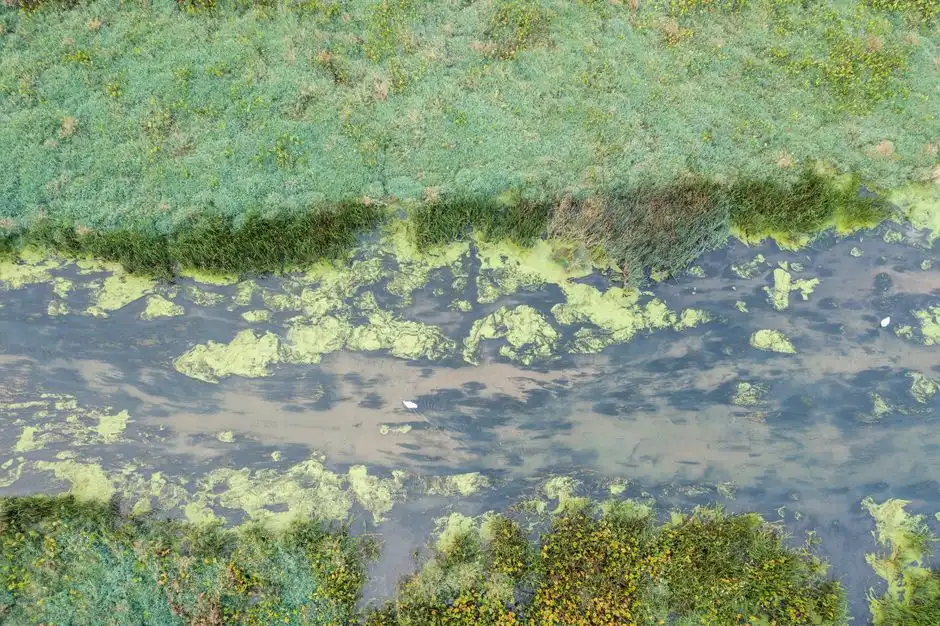
Treatment train selection depends on influent concentration. For influent NH3-N of 50–200 mg/L — typical of food processing, textile, landfill leachate, and slaughterhouse — conventional A/O (anoxic/oxic) activated sludge delivers 80–95% removal, producing an effluent of 5–20 mg/L, which is insufficient for Class A/B compliance. Inserting an MBR membrane bioreactor system downstream of the A/O stage pushes effluent to <1 mg/L NH3-N consistently, hitting Class AA and Class A limits directly; this is the most reliable retrofit for Philippine industrial plants facing the 0.5 mg/L threshold. For influent above 500 mg/L (leachate, some chemical plants), pre-treatment with ammonia stripping (pH 10.5–11.5, tower packing, air:water ratio 3,000:1) or breakpoint chlorination (Cl2:N mass ratio 8:1, contact time 30 min) is required before the biological stage to avoid nitrification inhibition. A DAF pre-treatment system ahead of the biological stage handles FOG and suspended solids (typical 200–800 mg/L TSS removal) that would otherwise starve the nitrifiers; this is standard for food and slaughterhouse plants. A PLC-controlled chemical dosing skid automates NaOH for pH control in stripping, HCl for pH trim post-stripping, and methanol as the denitrification carbon source when BOD:N falls below 4:1. MBR effluent NH3-N stability runs 0.1–0.8 mg/L across 10–2,000 m³/day flow range, fitting Class AA and Class A limits with margin for shock loads.
| Influent NH3-N (mg/L) | Typical Source | Required Treatment Train | Expected Effluent (mg/L) | Receiving Class Achievable |
|---|---|---|---|---|
| 50–200 | Food, textile, slaughterhouse | DAF → A/O → MBR | <1.0 | AA, A, B |
| 200–500 | Leachate, pharmaceutical | Stripping → A/O → MBR | <1.5 | A, B, C |
| >500 | Leachate, chemical | Breakpoint chlorination → A/O → MBR | <7.5 | D, SC, SD |
| <50 | Light manufacturing | A/O only (with chemical dosing) | <7.5 | D, SC, SD |
Receiving Water Body Determines the Limit — and the Engineering Risk
The water body receiving the discharge sets the NH3-N target, and most facilities do not control their assigned classification. A semiconductor fab in Laguna discharging to tributaries of Laguna de Bay (Class C) faces 1.5 mg/L; a slaughterhouse on the Cagayan River at Tuguegarao (Class B in upstream reaches, Class C downstream) faces 1.0–1.5 mg/L; a food processor with an outfall into Manila Bay (Class SB/SC depending on the bay segment) faces 0.5–7.5 mg/L. The Philippine classification maps are published by DENR-EMB per river basin; the engineering delta between a 7.5 mg/L target and a 0.5 mg/L target is roughly a 15× concentration reduction, which typically moves the treatment train from A/O alone to A/O + MBR — a CAPEX multiplier of 2.5–3.5×. Facilities near class boundaries should confirm the exact classification with the EMB regional office before committing to a design, because re-classification upward (toward AA or A) after permit issuance can force a mid-life plant upgrade. For instrumentation planning, the online ammonia nitrogen analyzer guide covers sensor selection against these class-specific limits.
| Receiving Water | Typical Class | NH3-N Limit (mg/L) | Engineering Implication |
|---|---|---|---|
| Manila Bay (inner) | SB/SC | 0.5–7.5 | Verify segment; MBR if inner |
| Laguna de Bay tributaries | C | 1.5 | A/O + MBR baseline |
| Cagayan River (upper) | B | 1.0 | MBR required |
| Pampanga River (mid) | C | 1.5 | A/O + MBR |
| Cebu industrial canal | D/SC | 7.5 | A/O sufficient if stable |
DENR-EMB Permitting, SMR Reporting, and Penalty Exposure
Discharge Permit applications are submitted to the DENR-EMB regional office covering the facility location; the typical review period is 60–90 days, validity is 5 years, and SMRs are submitted quarterly under DAO 2021-19. Reports must be signed by a DENR-accredited Pollution Control Officer (PCO) and analyzed at a DENR-ELACC accredited laboratory. For facilities above 500 m³/day discharge, DAO 2021-19 requires online continuous NH3-N monitoring transmitting to the EMB Central Water Quality Monitoring System. Penalties under RA 9275 Section 28 range from PHP 10,000 to PHP 200,000 per day per violation, plus permit revocation and — for willful or gross negligence — criminal charges carrying 6 months to 6 years imprisonment. A typical 90-day violation event at a Class B discharger exposes the operator to PHP 900,000 to PHP 18,000,000 in fines, excluding cleanup and production-loss costs. Practical compliance costs include monthly accredited lab fees of PHP 8,000–25,000 and online analyzer CAPEX of PHP 350,000–1,200,000. The online oil and grease monitoring sensor guide covers parallel analyzer requirements for FOG parameters under DAO 2021-19.
Frequently Asked Questions
What is the exact 2026 NH3-N discharge limit for industrial facilities in the Philippines?
The 2026 limit is set by DAO 2016-08 as amended by DAO 2021-19: 0.5 mg/L for Class AA and A waters, 1.0 mg/L for Class B, 1.5 mg/L for Class C, and 7.5 mg/L for Class D, SC, and SD, measured at the facility outlet.
Did DAO 2021-19 change the ammonia-nitrogen numerical limits?
No. DAO 2021-19 did not change the NH3-N numerical limits; it tightened SMR reporting to quarterly and mandated online continuous monitoring for facilities discharging more than 500 m³/day.
Which treatment technology reliably achieves 0.5 mg/L NH